

The Pyramide d`Authon-Ebeon in France isn't Egyptian—it's Roman! Built when this region was a major Roman center (1st-5th c. AD), experts believe it served as a cenotaph honoring a prominent ruler or local dignitary. Early excavations found only solid stone, no burial chamber—yet.
Roman Pyramid in France: Mystery Cenotaph with 2nd Century Lead Tablet
 EgyptConservation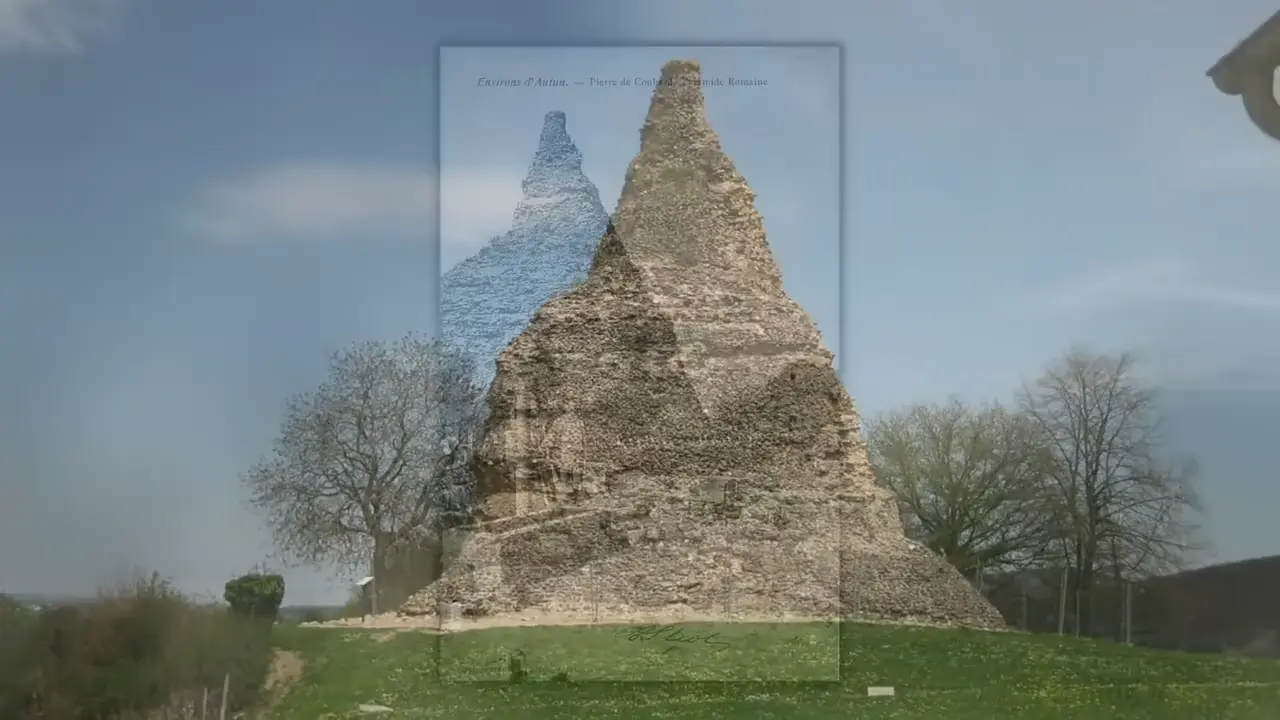
Key facts
- The Pyramide d`Authon-Ebeon (Pyramide de Quintilien) has a Roman origin, built when this part of France was an important Roman center
- Excavations in 1640 by the abbot of Castile found only solid stone, no internal chamber
- Additional excavations in the 19th century during renovation work uncovered nothing substantial
- In 1960, a lead 'magic tablet' (15.8 x 5.8 cm) was found, dating to the 2nd century AD during the Roman era of Autun
- The tablet bears inscriptions in Latin and Greek plus a large cross, now housed in the Rollin Museum in Autun
- The monument has a cavity and damage from antiquarian excavations
- Cement mortar applied in the 1980s caused further damage by preventing stone breathing
- 21st century restoration (completed 2024) involved removing cement and applying lime, costing €275,000
- Experts believe it was likely a cenotaph (memorial) for an important Roman ruler or local dignitary
- An undiscovered burial beneath the monument remains possible
- The lead tablet may be a relic related to the deceased or an offering
Sources
Pierre de Couhard in Autun - Atlas Obscuraatlasobscura.com
This structure is most likely a funerary monument, built near the road that linked Autun to Lyon. It is believed to have been constructed in the first century.
Top 10 Oldest Cities & Ancient Places to Visit in 2026efultimatebreak.com
Discover the world's oldest cities, from Rome's Colosseum to Machu Picchu. Dive into ancient history and explore the top historical ...
Pyramid of Couhard (Autun) - myCityHunt.commycityhunt.com
The monument is believed to have been constructed in the 1st century AD, possibly serving as a funerary monument or cenotaph. Its location within a ...
Pierre de Couhard - Autun Tourismeautun-tourisme.com
This pyramid, which overlooks the town of Autun, was probably built in the 1st century AD. The monument consists of the remains of a square pyramid ...
The Roman Wall of the “Castrum” of Autun in France, Discovered at ...labrujulaverde.com
A segment of the ancient Roman castrum wall, a fortification that defended the city of Augustodunum (now Autun) during Late Antiquity.
Was this story useful?
Keep exploring
Every site on this page sits on the globe, and the people who research them are on the Discord.
3D Globe · Sites by country · Story Archive · Research Library · Weekly Journal · Search
AI-generated text · images from the original sources · always verify with the sources.