

By 450 AD, Roman Britain's economy was undergoing significant transformation. Pottery production shifted from wheel-made glazed to simpler forms, though hand-made pottery continued alongside imported wares. Bathhouses and stone structures continued in use longer than previously assumed. Coinage circulation changed but did not simply disappear. The archaeological record shows economic complexity and regional variation, with recent geological core evidence from multiple UK universities (Nottingham, Cambridge, published in Antiquity) challenging the total collapse narrative, instead showing continued metal production and economic activity beyond traditional Roman withdrawal dates. 🏛️
Roman Britain's economic collapse by 450 AD marked by radical material simplification
Key facts
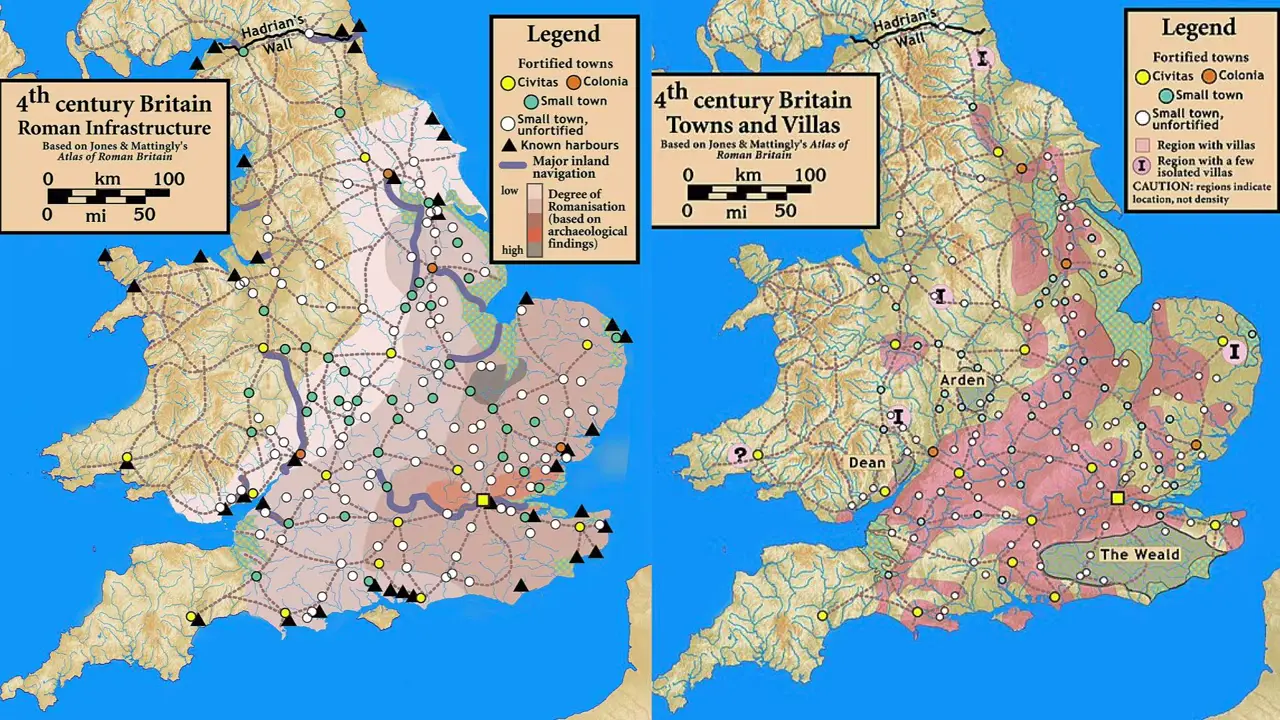
- After the crisis of the 3rd century, Roman Britain's integrated economies began to change and disappear from the archaeological record
- Cities continued to exist but their economic importance shrank, becoming governmental centers instead
- Small towns developed in the countryside as centers of manufacturing and trade
- Large estates were built, with urban revival after the 3rd century concentrated in the western province
- After about 360 AD, overall volume of goods produced, exported, and imported began to fall
- By about 425 AD, much of the economy collapsed, with full collapse evidenced by about 450 AD
- Radical material simplification occurred: pottery shifted from wheel-made glazed plates to hand-made crude plates
- Bathhouses stopped being constructed and people stopped living in stone structures
- Volume of coinage in Roman Britain decreased significantly by about 425 AD
Sources
google.com
Linked in video description
Was this story useful?
Keep exploring
Every site on this page sits on the globe, and the people who research them are on the Discord.
3D Globe · Sites by country · Story Archive · Research Library · Weekly Journal · Search
AI-generated text · images from the original sources · always verify with the sources.