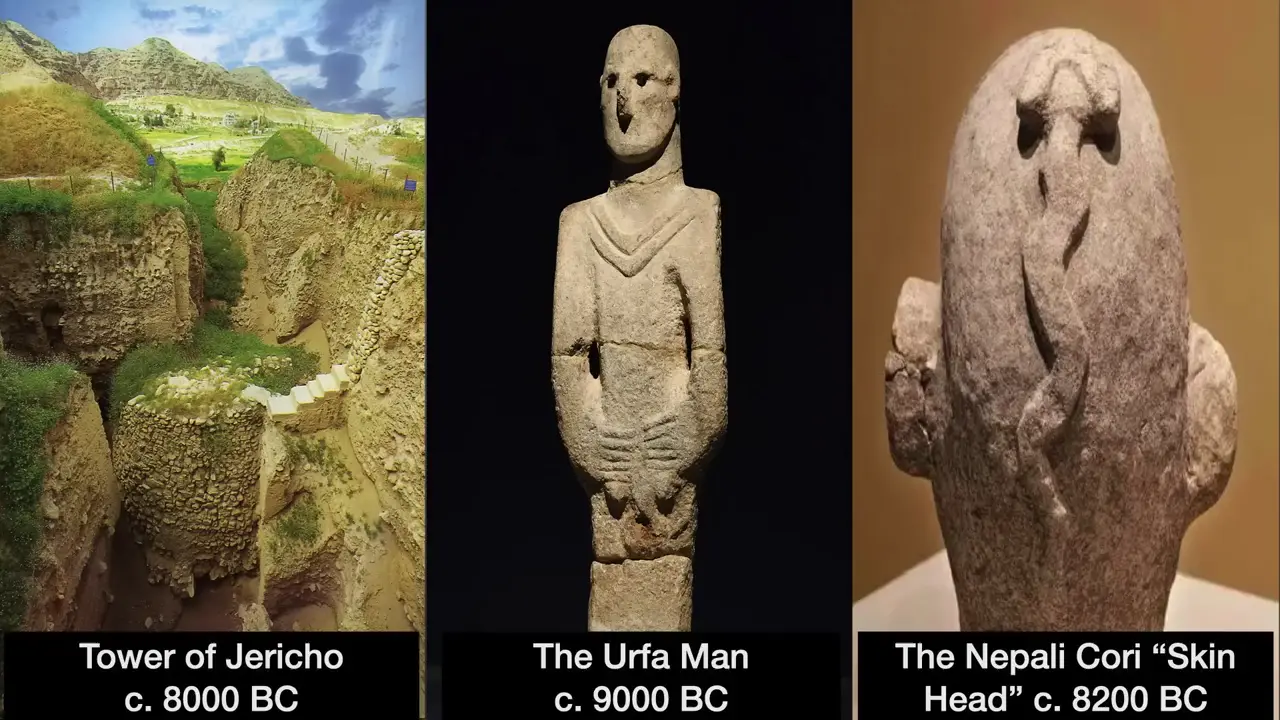
New research shows Near Eastern populations surged significantly during the Pre-Pottery Neolithic A period. Göbekli Tepe's region was lush with game and edible plants. People returned for centuries to expand the site and celebrate feasts. Skull cult evidence suggests ritual practice. Could monumental architecture have united people BEFORE settlements formed? 🏛️
Key facts corrected:
- The population increase occurred during the Pre-Pottery Neolithic A period (c. 9500–8000 BCE), not specifically 12,000–11,000 BC
- Göbekli Tepe was inhabited over approximately 1,500 years, with evidence of phased construction and repeated use
Sources
Gobekli Tepe | Michael Cope's Blogmcopesblog.wordpress.comGöbekli Tepe is a site in South-Eastern Turkey, about 20km from Şanlıurfa, and about 40km from the Syrian border. It lies between the Tigris and the Euphrates.
Ancient Göbekli Tepe and the Dawn of Village Life in the Cradle of ...brewminate.comThe settlement was inhabited from c. 9500 to at least 8000 BCE, during the Pre-Pottery Neolithic. It is famous for its large circular structures ...
So Fair a House: Göbekli Tepe and the Identification of Temples in ...architexturez.netThis paper explores the case of Göbekli Tepe, a large Pre-Pottery Neolithic site in Turkey that its excavator claims consisted only of temples, to illustrate ...
Göbekli Tepe and the Neolithic Process - Living in the Longue Duréelivinginthelongueduree.comAside from our main topic of Göbekli Tepe, perhaps the most notable site in illustrating the transitional world of the Pre-Pottery Neolithic A ...
(PDF) Göbekli Tepe – the Stone Age Sanctuaries. New results of ...researchgate.netThe transition from non-food producing to farming societies first took place during the Pre-Pottery Neolithic (PPN) of the Near East.
AI-generated text · images from the original sources · always verify with the sources.