

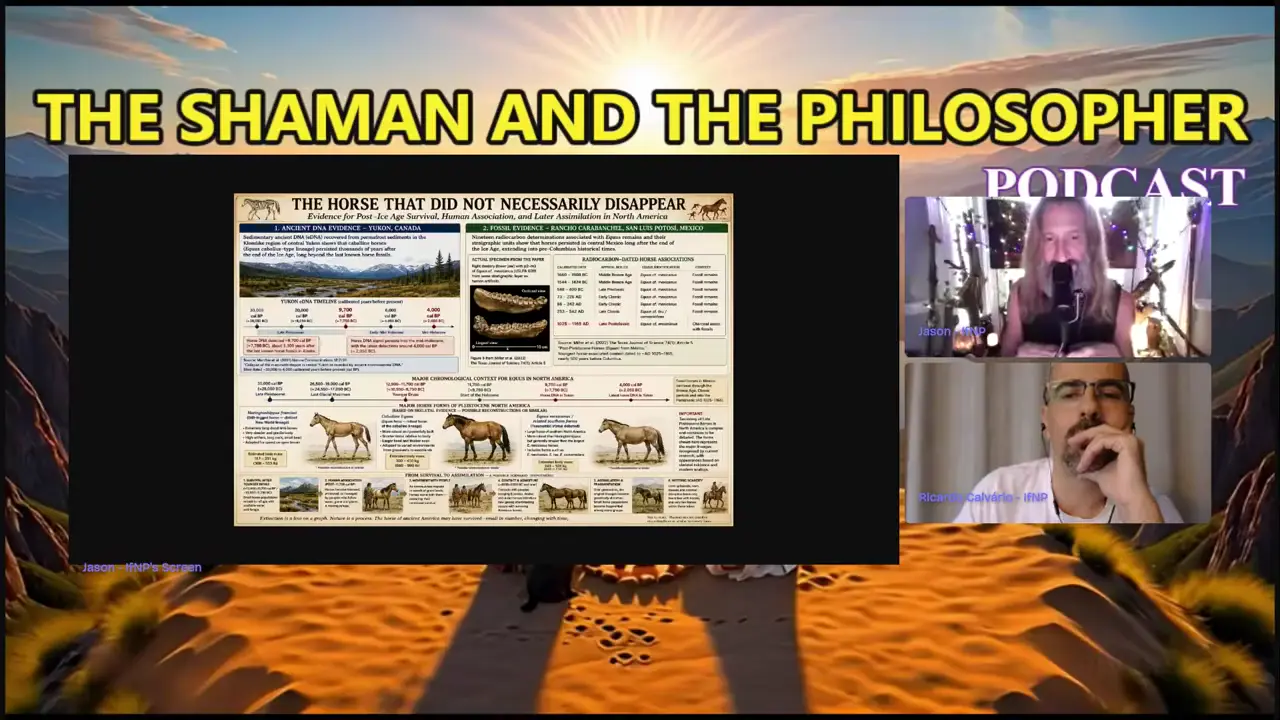
A 2022 Texas Journal of Science study by Wade E. Miller and colleagues reported Equus cf. mexicanus, E. cf. conversidens and E. cf. tau at Rancho Carabanchel, San Luis Potosí. The authors linked E. cf. mexicanus remains to charcoal calibrated to AD 1025–1165—about 330–470 years before Columbus. The date came from associated charcoal, not the horse bone itself.
Rancho Carabanchel study links horses to AD 1025–1165 charcoal
Site mentioned
📍 Rancho Carabanchel
Key facts
- Wade E. Miller and colleagues published “Post-Pleistocene Horses (Equus) from México” in the Texas Journal of Science in 2022, not in 2020 under “W.D. Miller.”
- Rancho Carabanchel is in San Luis Potosí, Mexico. The study reported 19 radiocarbon determinations associated with fossil and stratigraphic material.
- The reported taxa were Equus cf. mexicanus, E. cf. conversidens and E. cf. tau; the source retains the open “cf.” qualifiers.
- Reported calibrated horse-associated intervals include approximately 1660–1508 BC, 1544–1424 BC, 548–400 BC, AD 73–226, AD 86–242 and AD 253–542.
- A charcoal sample associated with E. cf. mexicanus calibrated to AD 1025–1165. That interval is roughly 330–470 years before 1492; “nearly 500 years before Columbus” describes only its early end.
- The youngest date came from associated charcoal, not direct dating of horse bone. An E. cf. mexicanus mandible was recovered from a layer containing human lithic artifacts.
Sources
Post-Pleistocene, Pre-Columbian Horses in Americatrentdeestephens.com
In 2022, Wade Miller and colleagues from Mexico and. They discovered 26 horse bones or bone fragments in layers
Wade Miller: Horses… - General Discussions - Mormon Dialoguemormondialogue.org
horses may have persisted in this region of México well after the classical Late Pleistocene extinction event. Post-Pleistocene, Pre-Columbian ...
POST-PLEISTOCENE HORSES (EQUUS) FROM MÉXICO - OUCIouci.dntb.gov.ua
The paleontological project presented here that focuses on Equus from Rancho Carabanchel, San Luis Potosí, México became chronologically intriguing to us in ...
Wade E. Miller et al. publishes evidence for horses in the Americas ...bhroberts.org
Wade E. Miller et al. publishes evidence for horses in the Americas during the Post-Pleistocene/Pre-Columbian era.
post-pleistocene horses (equus) from méxico - Semantic Scholarsemanticscholar.org
POST-PLEISTOCENE HORSES (EQUUS) FROM MÉXICO · W. Miller, Gilberto Pérez-Roldán, +3 authors. Isaí Ortiz-Pérez · Published in The Texas journal of science 1 January ...
Post-Pleistocene, Pre-Columbian Horses from a Site in ...gsa.confex.com
Three species of horses were found at Rancho Carabanchel. They are Equus cf. mexicanus, E. cf. conversidens and E. cf. tau. Sufficient numbers of specimens ...
POST-PLEISTOCENE HORSES (EQUUS) FROM MÉXICO intjs.kglmeridian.com
by W Miller · 2022 · Cited by 8 — Equus species (American horse) became extinct on the North American continent by about 13,000 calibrated years BP – all part of the Late ...
post-pleistocene horses ( equus ) from méxicoresearchgate.net
Abstract Using several bone elements, we report the presence of two species of Pleistocene horses in Presita Blanca, San Luis Potosí Mexico. A ...
Was this story useful?
Keep exploring
Every site on this page sits on the globe, and the people who research them are on the Discord.
3D Globe · Sites by country · Story Archive · Research Library · Weekly Journal · Search
AI-generated text · images from the original sources · always verify with the sources.