

Fascinating crossroads of philosophy! Pyrrho of Elis, a 4th-3rd century BC Greek thinker, accompanied Alexander's court into India, spending time at Taxila with gymnosophist ascetics. Scholars Adrien Kuzminski and Christopher Beckwith argue he absorbed Buddhist ideas — Pyrrhonism's pursuit of ataraxia (tranquility) through skepticism strikingly mirrors Madhyamaka Buddhism, and both use four-cornered logical tetralemmas. However, Richard Bett counters that translation barriers likely prevented real transmission. 🏛️✨
Pyrrho of Elis may have transmitted Buddhist philosophy to Greek world
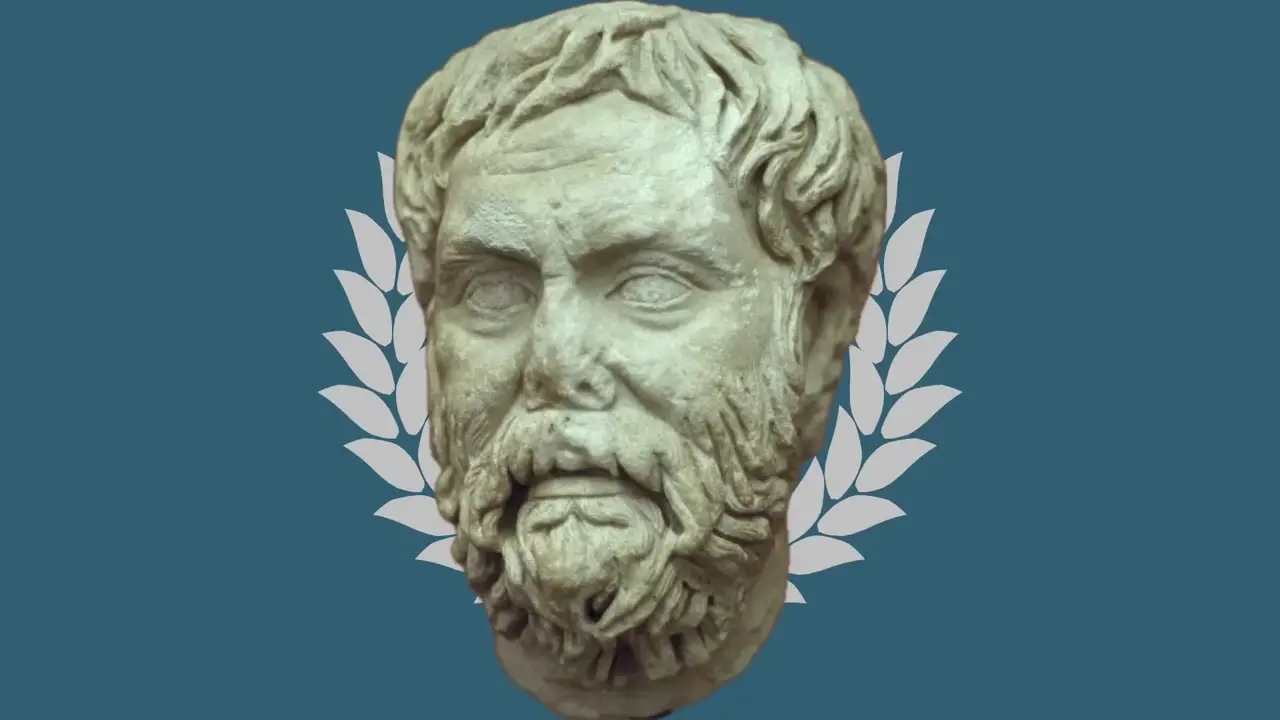
Key facts
- Pyrrho of Elis was a Greek philosopher of the 4th-3rd centuries BC who accompanied Alexander's court into India
- Pyrrho spent time at Taxila and interacted with gymnosophists (ascetic philosophers)
- Pyrrhonism aims at ataraxia (tranquility) through radical skepticism, resembling Madhyamaka Buddhism
- Both Pyrrhonism and Buddhist epistemology employ tetlemas (four-cornered logical system)
- Scholars Adrien Kuzminsky and Christopher Beckwith argue Pyrrho absorbed Buddhist teachings
- Richard Bett counters that two to three translation sequences would have prevented meaningful transmission
- Pyrrhonism was recorded by Diogenes Laertius (3rd century AD) and Sextus Empiricus (2nd century AD)
Sources
Ataraxia in the Age of Too Much Information | Issue 104philosophynow.org
Some grew anxious or excited, but not Pyrrho. He had accompanied Alexander on his expedition to India, where he met 'naked wise men' (yogis), but when he ...
Greek Philosopher Pyrrho: The Man Who Couldn't Be Botheredgreekreporter.com
Born in the forgotten corner of ancient Elis (western Peloponnese) around 360 BC, Pyrrho's early life remains a mystery. What is crystal clear, ...
Pyrrhoen.wikipedia.org
Pyrrho of Elis was a Greek philosopher of Classical antiquity, credited as being the first Greek skeptic philosopher and founder of Pyrrhonism. Pyrrho.
Outline of Gods Among Menstpeter.im
Pyrrho's philosophical awakening from his youth in Elis, through Alexander's campaigns in Egypt, Persia, and India, then home again
Pyrrho and the trouble with ethicswillbuckingham.com
Pyrrho returned home to Elis, where he took up a life of poverty and simplicity. He cultivated an indifference to worldly things.
Was this story useful?
Keep exploring
Every site on this page sits on the globe, and the people who research them are on the Discord.
3D Globe · Sites by country · Story Archive · Research Library · Weekly Journal · Search
AI-generated text · images from the original sources · always verify with the sources.