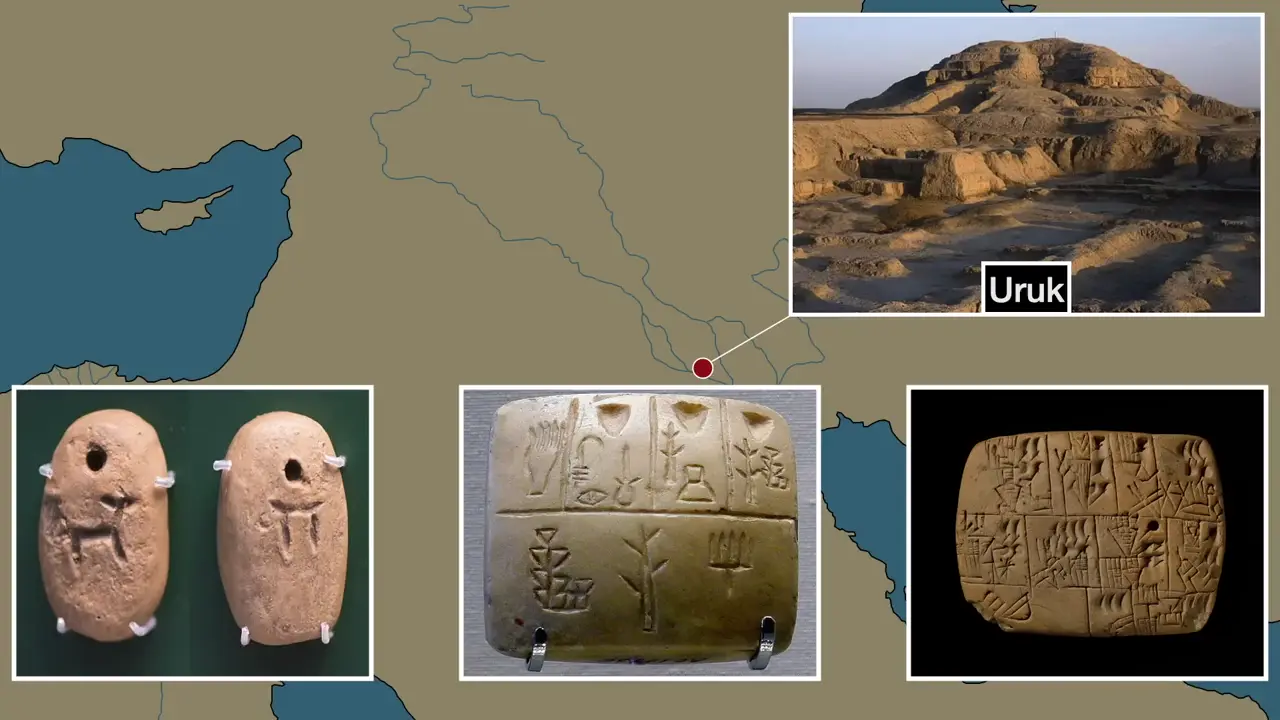
Population in the Near East surged dramatically between ~12,000-11,000 BC, just as monumental architecture like Göbekli Tepe emerged. Researchers theorize ritual/ceremonial spaces may have drawn humans together BEFORE permanent settlements and cities developed. The region was lush with abundant game and foraged plants. Built in phases over centuries, people returned repeatedly to expand the site and celebrate feasts together.
Key facts claimed:
- A plaqueette with series of markings has been found at Göbekli Tepe
- Some researchers argue this is evidence of pictographic proto-writing, predating the development of complex urbanism by thousands of years
- At least three other artifacts of this type have been discovered
- The site may have required some form of recordkeeping system to manage large groups working on it
Sources
Göbekli Tepe: The 12,000-Year-Old Ruins That Rewrite the Story of ...openculture.comThough it was once believed to be a site used for ritual purposes only, later research unearthed evidence that suggests it was host to a variety ...
Neolithic Revolution - Wikipediaen.wikipedia.orgIn fact, between 12,000 and 6,000 BCE, the coastline shifted up to 1,000 km inland, leading to the consequences typical of the Neolithic period: a denser ...
Gobeklitepe finds reshape view of early societies | The Jerusalem Postjpost.comArchaeologists said it was a unique discovery in terms of death rituals and symbolic expression among Neolithic communities. It was one of some ...
Göbekli Tepe: The Mysterious Site Older Than Stonehenge | HISTORYhistory.comMore than 11,000 years ago, hunter-gatherers built a monumental stone complex that is thought to be the world's first temple.
The Göbekli Tepe Ruins and the Origins of Neolithic Religionbiblicalarchaeology.orgThe massive stone enclosures of the Göbekli Tepe ruins (known to many as Turkey's “Stonehenge”) may be the earliest examples of Neolithic religion.
AI-generated text · images from the original sources · always verify with the sources.