

Fresh thinking on how the Great Pyramid's granite coffer sides could actually have been sawn. The presenter shows with a miter saw that a single out-of-true blade still produces a square result if every side is cut with that same blade, since the identical error repeats. He proposes two large copper drag saws held at a fixed angle to each other in a wooden frame — lashed or pegged, dismantled for end cuts, reused later — with wooden guides beside or around the blades, checked by markings between days. Cutting meant hauling the frame back and forth with loads of hard quartz sand as abrasive, grit refreshed between passes. A single blade as long as a sarcophagus side could weigh hundreds of pounds, which he argues was harder to balance than a paired frame set, and a lone unguarded blade lets two men hauling opposite ends fight for control. 🔧⏱️
Presenter proposes twin copper drag saws in a wooden frame cut coffer sides simultaneously
 EgyptGeneral
Key facts
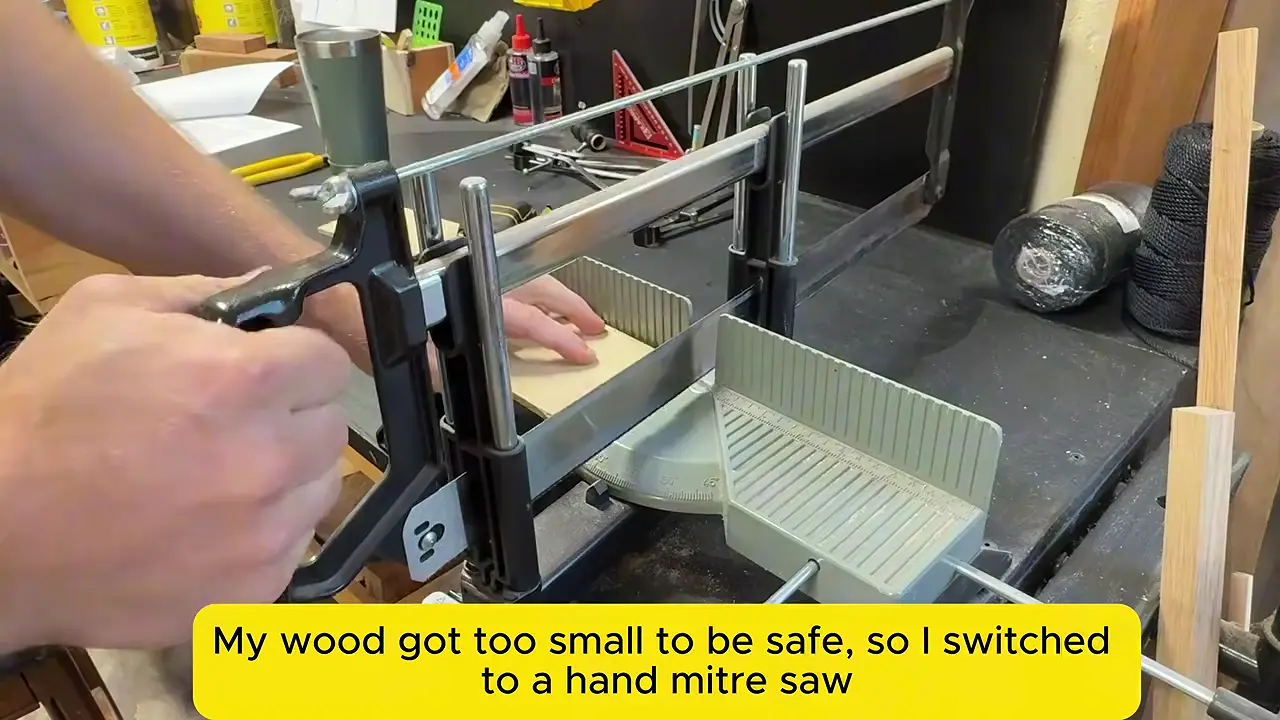
- The presenter demonstrates with a miter saw that cutting every side of a board with a single blade that is out of true square still yields a square result, because the same angular error is repeated on all sides
- Cutting two pieces stacked together guarantees identical angles, and cutting both long sides at once removes the need for repeated manual angle-setting
- The proposed mechanism is two large copper drag saws mounted in a wooden frame that holds each blade at a fixed angle to the other
- Blades could be lashed or pegged to the frame, with the frame disassembled and reset for the end cuts and reused on later work
- Wooden guides would be fixed beside the blade (table-saw style) or on both sides at the ends (miter-saw style), with the frame left in place between days and checked via markings
- Cutting was carried out by hauling the frame back and forth with copious amounts of hard quartz sand as abrasive, replenishing grit and lubricant between passes
- A long copper blade able to reach the length of a sarcophagus box could weigh several hundred pounds, which the presenter argues was harder to balance on edge than a paired, frame-mounted set
- The presenter argues wayward cuts appear when a single blade is used without a guide, because two men hauling opposite ends fight for control of the blade
Was this story useful?
Keep exploring
Every site on this page sits on the globe, and the people who research them are on the Discord.
3D Globe · Sites by country · Story Archive · Research Library · Weekly Journal · Search
AI-generated text · images from the original sources · always verify with the sources.