

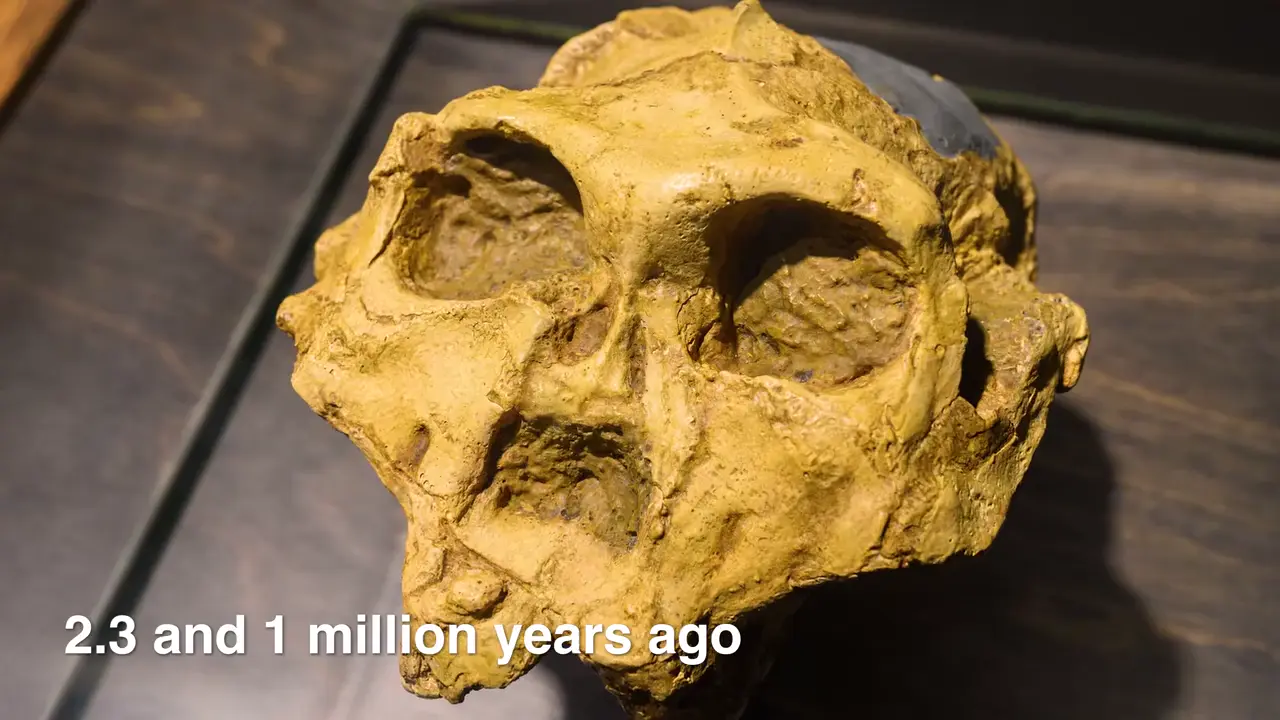
Meet Paranthropus robustus 👋 It lived about 2.3–1.2 million years ago in southern Africa. Males stood around 1.2–1.3 m; females just under 1 m. Massive jaws and teeth processed tough grasses, leaves and sedges, while its brain was roughly 450–550 ml—less than half the modern human average. Bone tools from Drimolen bear wear consistent with termite digging, but may have been made by P. robustus or Homo erectus. It is generally treated as a cousin of humans, not a direct ancestor. 🦴
Paranthropus robustus: anatomy, diet and possible tool use
 South AfricaBioarchaeology
Site mentioned
Key facts
- The genus Paranthropus lived from about 2.3 to 1 million years ago; P. robustus lived roughly 2.3–1.2 million years ago.
- P. robustus was a southern African species; the wider genus ranged across eastern and southern Africa.
- Males were approximately 1.2–1.3 m tall, while females were just under 1 m.
- It had very large jaws and broad teeth; “robust” refers to its tooth and face size, not body size.
- Cranial capacity was roughly 450–550 ml, less than half the modern human average.
- Males had a sagittal crest along the skull midline that anchored strong chewing muscles.
- Evidence points to a tough, fibrous diet including grasses, leaves and sedges.
- Bone tools from Drimolen bear wear consistent with termite digging, but their makers may have been P. robustus or Homo erectus.
- P. robustus is generally treated as a side branch of the hominin family, not a direct human ancestor.
Sources
Paranthropus robustusbradshawfoundation.com
Paranthropus robustushumanorigins.si.edu
Paranthropusen.wikipedia.org
Paranthropus boiseibecominghuman.org
Was this story useful?
Keep exploring
Every site on this page sits on the globe, and the people who research them are on the Discord.
3D Globe · Sites by country · Story Archive · Research Library · Weekly Journal · Search
AI-generated text · images from the original sources · always verify with the sources.