

Scientists analyzed 4 Paranthropus teeth ~2 million years old 🦷 Using dental enamel proteins, they identified 2 males & 2 females, revealing population variation. The amelogenin protein analysis allowed researchers to determine biological sex in these ancient hominin remains.
2-million-year-old tooth proteins reveal sex and variation
 South AfricaBioarchaeologyNew Research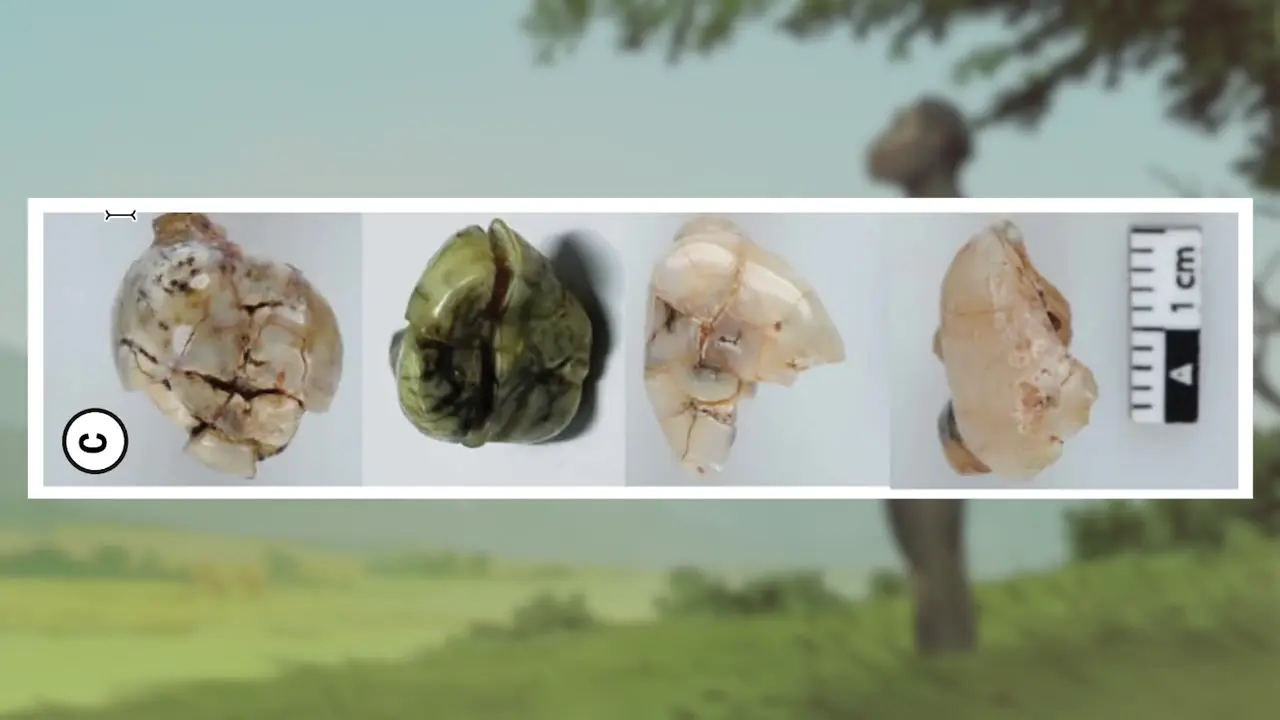
Site mentioned
Key facts
- Researchers analyzed four Paranthropus robustus teeth over 2 million years old
- They used amelogenin proteins to identify male and female specimens
- Amelogenin exists in two isoforms linked to sex chromosomes (X and Y)
- Two teeth were identified as male, two as female
- They found population variation within Paranthropus remains
- Three specimens had arginine at a specific position while Paranthropus had glutamine
- One specimen (DNH155) had the human version of the amino acid, causing initial panic
- One specimen showed both forms of amino acids, suggesting within-population variation
Sources
Teeth, Proteins, and Paranthropus: Cracking Open an Ancient Mysteryanthropology.net
How 2-Million-Year-Old Tooth Enamel Is Rewriting the Story ... "We identified six enamel proteins in all four samples," the team reports.
“New” species of an ancient human ancestor helps shape larger ...pbs.org
... scientists discovered fossilized teeth believed to be millions of years old in Ethiopia. He shares how this discovery is helping researchers ...
2 million-year-old teeth reveal secrets from the dawn of humanitysciencedaily.com
Ancient proteins from Paranthropus robustus teeth revealed unexpected genetic diversity, reshaping how scientists view this early human relative ...
Proteins from two-million-year-old teeth reveal ... - University of Yorkyork.ac.uk
Scientists have successfully extracted ancient proteins from two-million-year-old teeth, a breakthrough providing previously unobtainable details on the ...
Scientists Investigate 2.2-Million-Year-Old Tooth Enamel to Unravel ...smithsonianmag.com
By studying proteins preserved in teeth, researchers determined the sex of four Paranthropus robustus individuals that lived in southern Africa.
Was this story useful?
Keep exploring
Every site on this page sits on the globe, and the people who research them are on the Discord.
3D Globe · Sites by country · Story Archive · Research Library · Weekly Journal · Search
AI-generated text · images from the original sources · always verify with the sources.