

Göbekli Tepe's famous wild boar statue was painted white, red, and black — researchers detected pigment residues on its surface, making it the first-known painted statue from the Neolithic period. The tongue was colored red, with black and white pigment found elsewhere on its body. What is seen today is beige limestone, but the site may have been a place of vivid color in its time. This discovery challenges assumptions about pre-Pottery Neolithic art.
Paint pigments found on Göbekli Tepe pillars and statue
 TürkiyeArtSignificant Find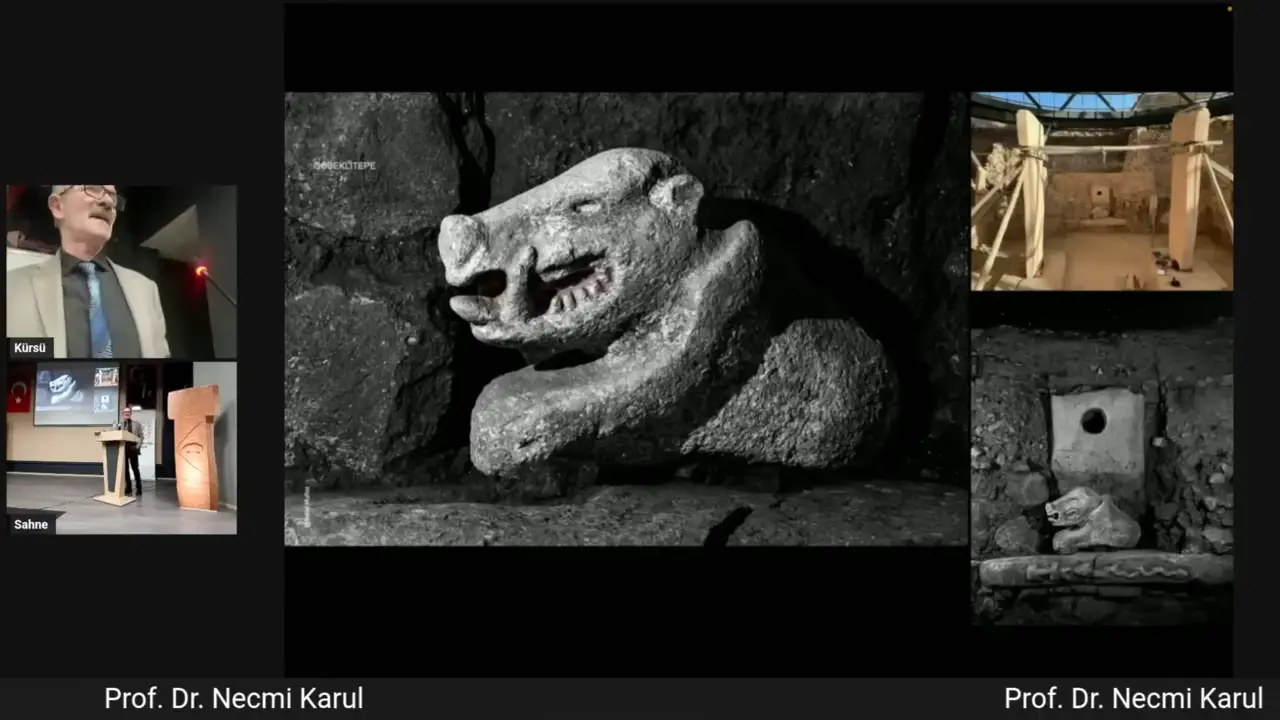
Site mentioned
Key facts
- A wild boar statue found at Göbekli Tepe was found to have white, red, and black color pigments, making it the oldest painted statue ever discovered
- Paint pigments have also been found on standing stones and pillars of communal buildings - the first time this has been reported
- What is seen today is beige limestone, but settlements may have been places of vivid color
- This discovery changes the perception of pre-Pottery Neolithic art and architecture
Sources
Outstanding discovery in Turkey: found prehistoric statue of a wild boarfinestresullarte.info
... Göbekli Tepe, on its surface can be seen residues of red, white and black pigment, making it the earliest known painted statue from the ...
11,000-Year-Old Painted Statue of Wild Boar Unearthed at Gobekli ...sci.news
“Red, white and black pigment residues can be seen on its surface, making it the first-known painted statue from the Neolithic period.” “The ...
11000-Year-Old Boar Statue Uncovered at Gobekli Tepebiblicalarchaeology.org
Archaeologists were also able to detect various pigments on the statue, including red, black, and white. While red was found on the boar's ...
Life-size statue of a wild boar found in Special Building D of Göbekli ...dainst.org
Remarkably, the residues of red, black and white pigments still adhered to the statue's surface. The tongue of the boar was coloured red, with black and ...
A painted, wild boar sculpture discovered at Göbeklitepeanatolianarchaeology.net
This sculpture, which exhibits red, white, and black pigment residues on its surface, marks the first painted sculpture from its era to the ...
Was this story useful?
Keep exploring
Every site on this page sits on the globe, and the people who research them are on the Discord.
3D Globe · Sites by country · Story Archive · Research Library · Weekly Journal · Search
AI-generated text · images from the original sources · always verify with the sources.