

The Abydos King List is one of Egyptian history's most famous inscriptions - a list of 76 pharaohs inscribed on the walls of Seti I's temple, completed by Ramesses II. But it deliberately omits the Amarna period: Akhenaten, Tutankhamun, and others were erased as heretics. The king lists served a ritual purpose - invoking the spirits of ancestors and glorifying the gods - rather than preserving history for future generations. Seti I used this to promote traditional religion and legitimize his rule - defining which versions of the past count as legitimate history.
Osirion at Abydos (Troad): Osiris symbolic tomb with cosmic design
 EgyptEpigraphy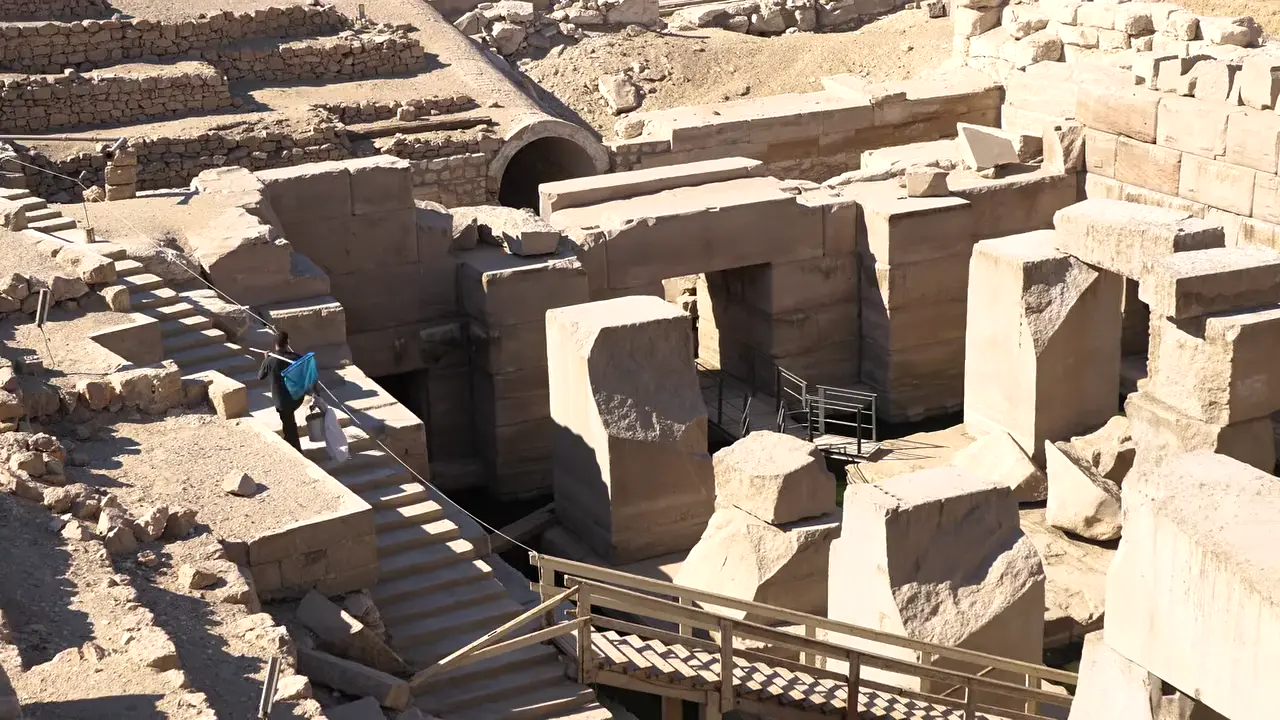
Key facts
- The Osirion is neither a temple nor a tomb but functioned as a symbolic tomb of Osiris
- Located more than 12 meters below modern ground level
- Features 10 enormous undecorated granite pillars weighing tens of tons
- Central raised platform (island) surrounded by water channel
- Sits directly above a natural aquifer reaching 9 meters deep
- Water represents Nun (primeval waters), island represents Benben (first mound of creation)
- Decoration includes Book of the Dead, Book of Gates, and Book of Caverns
- Ceiling shows goddess Nut arched over the sky, a scene from royal tombs
- Construction techniques (massive blocks, deep build) are atypical for New Kingdom
Site mentioned
Sources
abydos.org
Linked in video description
Was this story useful?
Keep exploring
Every site on this page sits on the globe, and the people who research them are on the Discord.
3D Globe · Sites by country · Story Archive · Research Library · Weekly Journal · Search
AI-generated text · images from the original sources · always verify with the sources.