

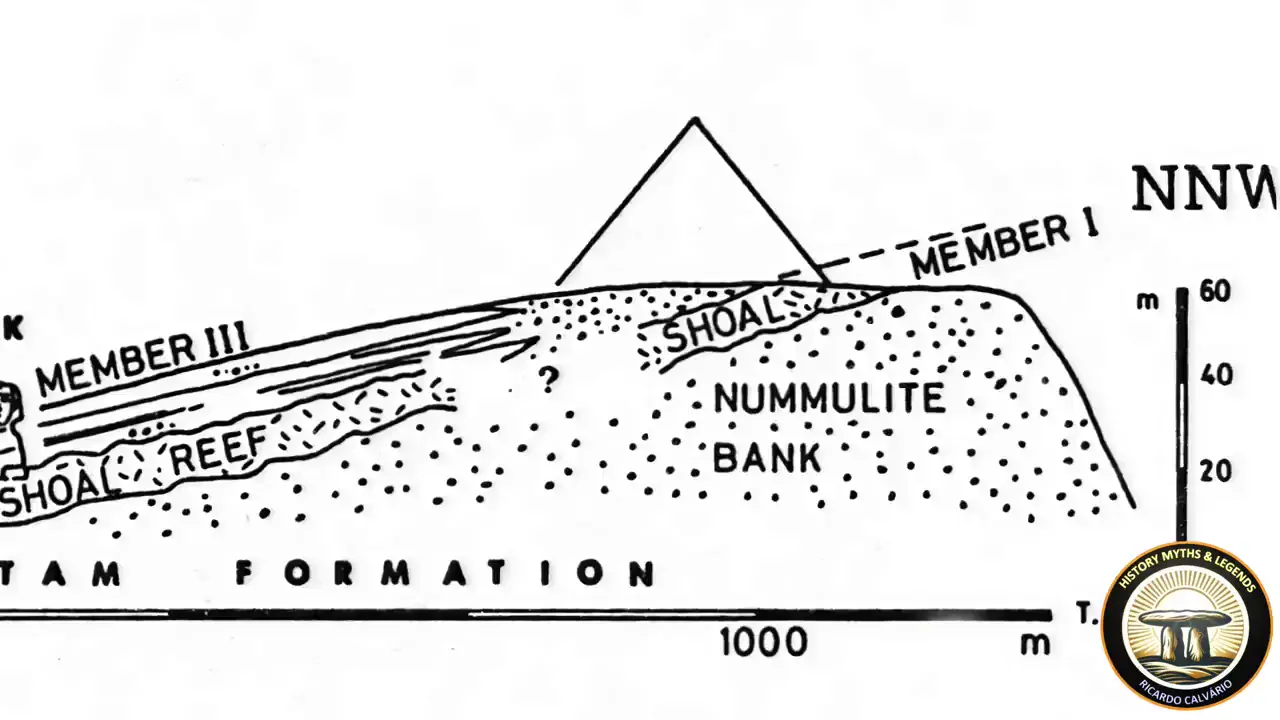
Nummulites—tiny, coin-shaped fossils of single-celled benthic foraminifera that flourished in warm, shallow Eocene seas (55.8–33.9 million years ago)—are packed into the nummulitic limestone used for Giza's pyramids, tombs and temples. Strabo recorded the 'petrified lentils' tradition associated with the pyramids.
Nummulite fossils reveal an Eocene sea in Giza's limestone
 EgyptGeneral
Key facts
- Nummulites are coin-shaped fossils of single-celled benthic marine foraminifera, not planktonic organisms.
- They flourished in warm, shallow tropical seas during the Eocene, about 55.8–33.9 million years ago.
- Eocene limestone in the Sahara is known as nummulitic limestone.
- Nummulites were especially abundant and widespread during the Eocene.
- Strabo (c. 64 BC–c. AD 24) recorded the local 'petrified lentils' tradition associated with the pyramids.
- Ancient Egyptians used nummulitic limestone for Giza's pyramids, tombs and temples.
Sources
Live long and prosper | New Scientistnewscientist.com
Is this fossil? - The Fossil Forumthefossilforum.com
nummulites – GeologyWriter.com - David B. Williamsgeologywriter.com
The power of symbiosis-the Great Pyramid of Egypt. ...researchgate.net
Pyramids, forams, and Red Sea reefs: Field notes ...ucmp.berkeley.edu
Was this story useful?
Keep exploring
Every site on this page sits on the globe, and the people who research them are on the Discord.
3D Globe · Sites by country · Story Archive · Research Library · Weekly Journal · Search
AI-generated text · images from the original sources · always verify with the sources.