

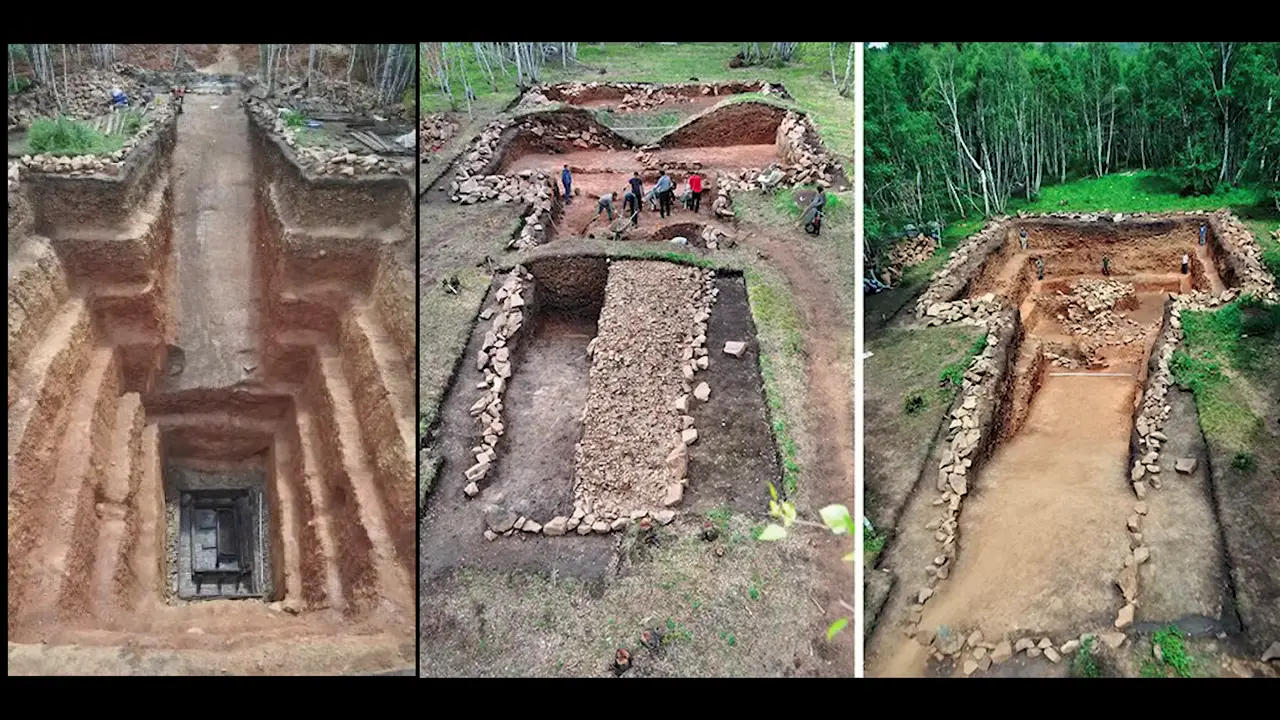
The contrast is striking: Xiongnu elite burials at Noin-Ula in Mongolia are architecturally complex with deep pits and structured layouts, while Hun-period graves in Europe are far simpler, embedded in local cemeteries without satellite burials. This suggests step elite symbols were selectively placed into a new context, not transplanted wholesale. 🏺
Noin-Ula Xiongnu elite burials contrast architecturally with simpler European Hun graves
Key facts
- Noin-Ula Xiongnu elite burials in Mongolia are large and architecturally complex, emphasizing hierarchy through deep pits and structured layouts
- Hun period graves in Europe are far simpler, lack monumentality, lack satellite burials, and are embedded in local cemeteries
- This contrast suggests step elite symbols were selectively placed into a new social environment rather than transplanted from Inner Asia
Sources
pubmed.ncbi.nlm.nih.gov
Linked in video description
link.springer.com
Linked in video description
pubmed.ncbi.nlm.nih.gov
Linked in video description
pmc.ncbi.nlm.nih.gov
Linked in video description
sciencedaily.com
Linked in video description
Was this story useful?
Keep exploring
Every site on this page sits on the globe, and the people who research them are on the Discord.
3D Globe · Sites by country · Story Archive · Research Library · Weekly Journal · Search
AI-generated text · images from the original sources · always verify with the sources.