

A new orthodoxy suggests only the front 2‑3 ranks of a phalanx actually fought, with looser spacing for a shield wall and limited dueling. Greeks relied on combined arms—cavalry, missile troops, terrain—to open gaps, while pitched battles were rare. The Peloponnesian War marks a peak of this mixed‑tactics approach, with Spartans as the notable exception of full‑time professionals.
New paradigm reveals Greek warfare was combined arms
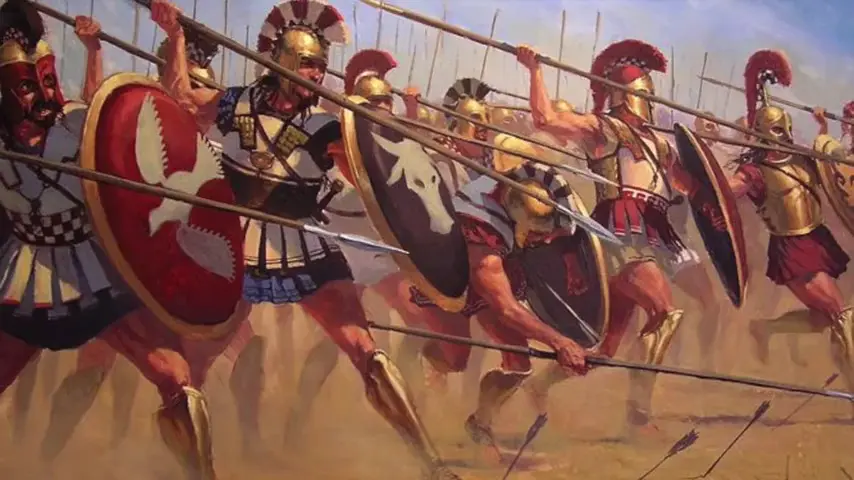
Key facts
- New orthodoxy: only first 2-3 ranks of phalanx could engage in combat, not entire formation
- Phalanx likely had looser spacing enabling shield wall and limited dueling
- Battle strategy focused on opening gaps in enemy formation rather than shoving match
- Greeks used combined arms: phalanx supported by cavalry, missile troops, geographical features
- Pitched battles were rare; skirmishes, sieges, raiding, and civilian massacres were norm
- The Delian War represents culmination of Greek warfare, not breakdown of phalanx
- Spartans were exception as full-time professional soldiers; most hoplites were citizen militia
Sources
Collections: Hoplite Wars, Part II: Hoplite Equipment, Hoplight or ...acoup.blog
... phalanx, and in particular outside of the 'massed shove othismos' phalanx (as opposed to looser phalanxes we'll get into next time). The ...
Collections: Hoplite Wars, Part IIIb: A Phalanx By Any Other Nameacoup.blog
Hans van Wees, meanwhile, in Myths and Realities, suggests a much looser spacing, with six foot intervals (c. 180cm) and expresses skepticism ...
Was this story useful?
Keep exploring
Every site on this page sits on the globe, and the people who research them are on the Discord.
3D Globe · Sites by country · Story Archive · Research Library · Weekly Journal · Search
AI-generated text · images from the original sources · always verify with the sources.