

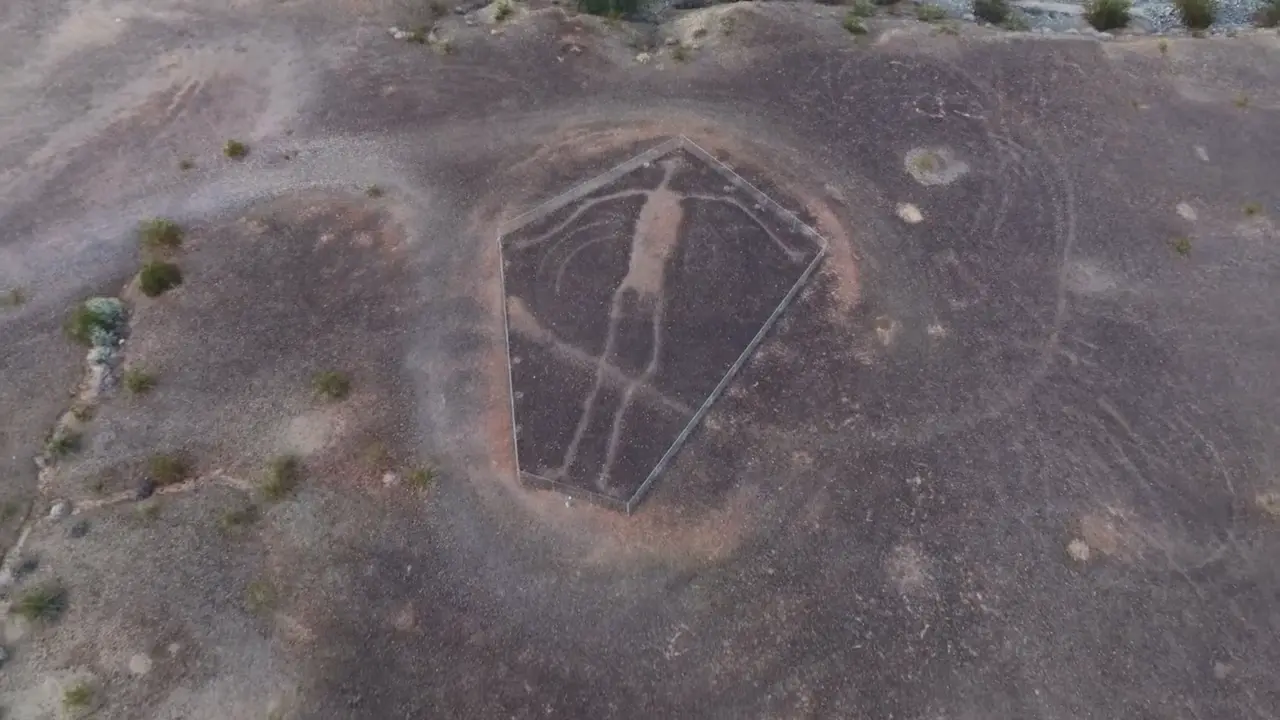
About 4 mm (0.16 in) of rain a year + minimal wind + a calcareous desert crust = long-term preservation! ☀️ The conditions slow erosion of the shallow markings, but they are not a perfect shield—rare downpours, flooding, vehicles and foot traffic have caused damage. The Nazca left no known written explanation for their purpose.
Nazca Lines endure in an arid climate with about 4 mm of annual rain
 PeruTheory
Site mentioned
Key facts
- Nazca has an average annual precipitation of about 4 mm (0.16 in), not 1–2 cm (10–20 mm).
- The region is hyperarid, with sparse vegetation and generally low wind.
- The shallow lines expose pale subsoil beneath the desert pavement, whose calcareous crust helps slow erosion.
- Regular rainfall would erode comparable shallow markings much faster than Nazca's hyperarid conditions.
- Preservation is not absolute: rare heavy rain, flooding, vehicles and foot traffic have damaged parts of the lines.
- The Nazca culture declined around 600 CE amid environmental stress and social disruption, and no known Nazca written records explain the lines' purpose.
Sources
[PDF] Soils and geomorphology in the Basin and Range area of southern ...geoinfo.nmt.edu
This book is intended primarily for use in field- study tours of the Desert Soil-Geomorphology Project of the U.S. Soil Conservation Service (informally.
eo_image_list.txt - NASA Scientific Visualization Studiosvs.gsfc.nasa.gov
... structure, rocks exposed in the center of the bulls-eye are older than rocks forming the outer rings. This structure measures 45 kilometers (28 miles) ...
[PDF] Mojave Desert Discovery - NPS Historynpshistory.com
Some sources define a desert as an area receiving no more than ten inches of precipitation annually. ... Some places in Death Valley receive less than one inch a ...
Desert - National Geographic Educationeducation.nationalgeographic.org
Deserts are arid ecosystems that receive fewer than 25 centimeters (10 inches) of precipitation a year. Death Valley, California, above, ...
[PDF] a history of the water resources branch, us geological survey ...cdn.ioos.noaa.gov
This volume is the first in a series of chronological summaries of the activities and achievements of the Water Resources Division of the U.S..
The Nazca Linesdosmanosperu.com
Nazca is one of the driest places on earth with an annual rainfall of just 4 mm. Temperatures range from 10° to 32° C (50° to 90° F) with an average daily high ...
Nazcaen.wikipedia.org
Nazca is one of the most arid regions in the world, with an average annual precipitation of 4 millimeters. Summer months from November to March are dry, sunny, ...
The Climate of Perubluegreenatlas.com
the eastern forests receive an average annual rainfall of 2,500 millimeters (100 inches); in some years these areas are deluged with up to 3,500 millimeters ( ...
Was this story useful?
Keep exploring
Every site on this page sits on the globe, and the people who research them are on the Discord.
3D Globe · Sites by country · Story Archive · Research Library · Weekly Journal · Search
AI-generated text · images from the original sources · always verify with the sources.