

A major puzzle: No human bones have ever been found inside these structures. The elephant skull theory for the Cyclops legend — proposed by Adrienne Mayor — suggests ancient Greeks may have encountered elephant skulls and misinterpreted the large nasal cavity as a single eye socket. Research supports this interpretation, noting that "huge fossil bones or skeletons, largely referable to Pleistocene mammals, have been interpreted in several countries as the remains of the mythological giants." However, scholar Adrienne Mayor's research actually demonstrates that Greeks and Romans had extensive knowledge of elephants, not limited understanding. References to elephant warfare involving Pyrrhus and Hannibal come from later periods (Hellenistic and Roman eras), but the Greeks had contact with elephants through trade and warfare much earlier than commonly assumed. The absence of expected human remains in certain Mycenaean-era structures does raise questions about who built them and why.
Mystery of missing bones in cyclopean structures
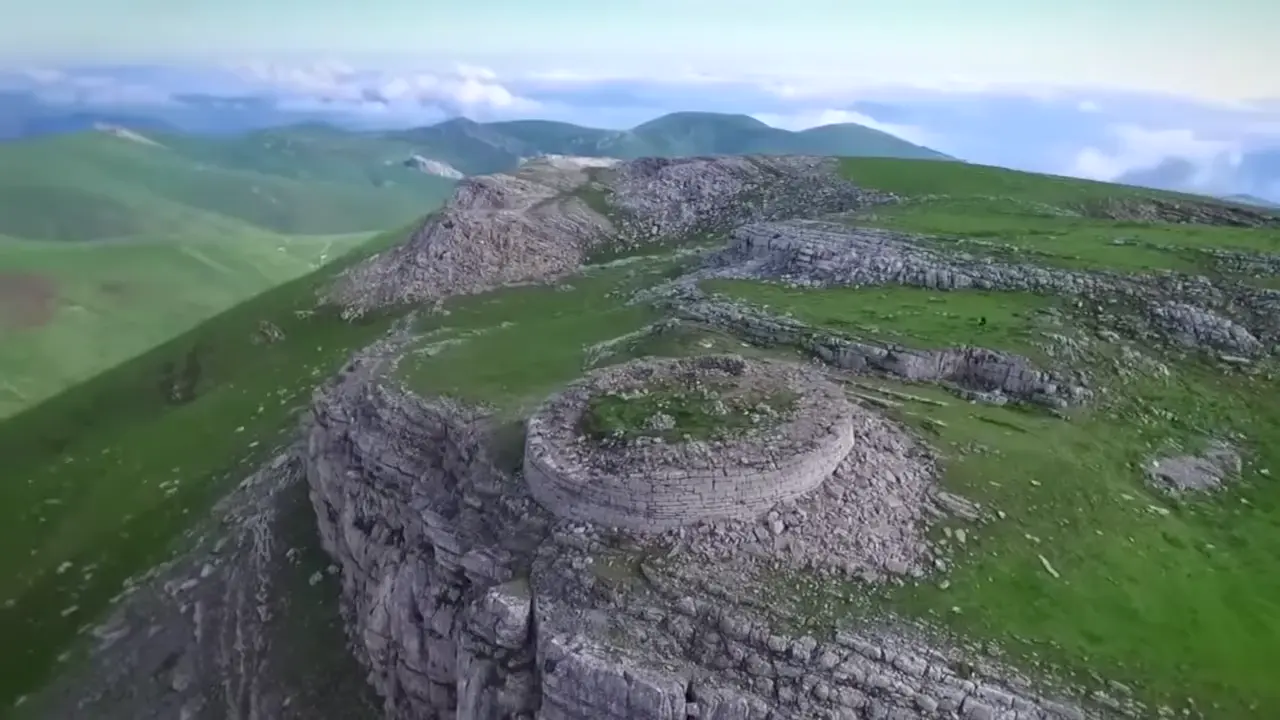
Key facts
- Major archaeological problem: No human bones found inside the pedestals or towers
- Elephant skull theory (cyclops from elephant skulls) ruled out - no elephant bones found in cyclopean contexts
- Ancient Greeks knew elephants well and used them in warfare (Pyrrhus, Hannibal)
- If people built and used these structures, they would normally leave human remains
- This absence led to theories about cyclopean origins being considered crazy
Sources
One-Eyed-Looking Mammoth Fossils May Have Inspired Origins of ...discovermagazine.com
“What you notice is the gigantic hole in the middle of the skull that looks like a single eye.” Did Mammoth Skulls Spur the Myth of the Cyclops?
Is Cyclops real? Author's book touches on the age-old mythhoumatoday.com
In this book, Adrienne Mayor, a classicist specializing in ancient folklore, contends that the Greeks and Romans had a much more-extensive knowledge of the ...
How a 400,000-year-old elephant skeleton solved a tantalising ...theconversation.com
They organised an ambitious research project which revealed – and solved – a tantalising puzzle of early human behaviour: what exactly did these ...
The skeletons of Cyclops and Lestrigons - ResearchGateresearchgate.net
In particular, huge fossil bones or skeletons, largely referable to Pleistocene mammals, have been interpreted in several countries as the remains of ...
Cyclopes - Wikipediaen.wikipedia.org
In Hesiod's Theogony, the Cyclopes are three brothers—Brontes, Steropes, and Arges—who create Zeus's thunderbolt, Poseidon's trident, and Hades' Helm of ...
Was this story useful?
Keep exploring
Every site on this page sits on the globe, and the people who research them are on the Discord.
3D Globe · Sites by country · Story Archive · Research Library · Weekly Journal · Search
AI-generated text · images from the original sources · always verify with the sources.