

Fresh radiocarbon dating reveals Mohenjo-daro was occupied between 3300 and 2600 BCE, challenging the belief that urban development suddenly began around 2600 BCE. Excavations of a massive mud-brick structure first uncovered in 1950 by Sir Mortimer Wheeler show a multi-phase city wall dating to 2700-2600 BCE. Deep coring uncovered early Harappan style pottery, confirming the settlement evolved from an already established community rather than being built from scratch.
Mohenjo-daro occupied 700 years earlier than previously thought
 PakistanExcavationBreakthrough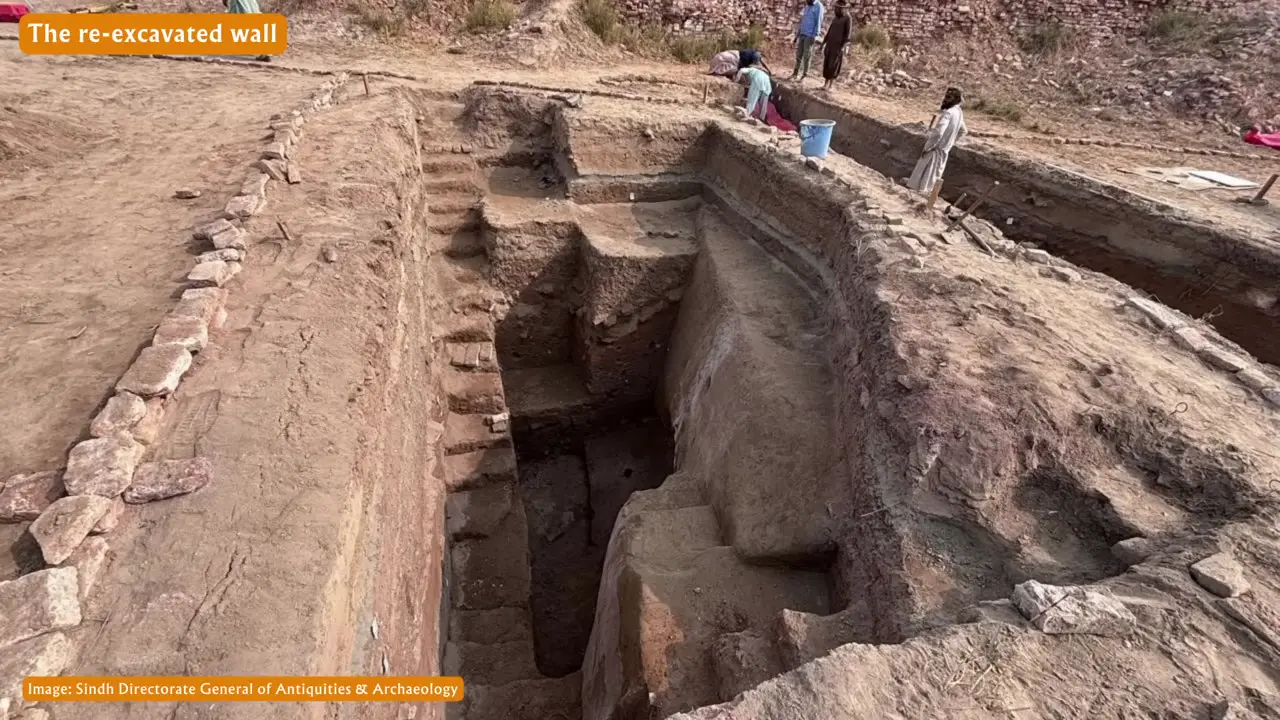
Site mentioned
Key facts
- Site spreads across more than 620 acres and supported up to 40,000 people at its height
- Fresh radiocarbon dating confirms occupation between 3300 and 2600 BCE
- Previously, urban development was thought to have suddenly begun around 2600 BCE
- Excavations focused on a massive mud-brick structure first uncovered in 1950 by Sir Mortimer Wheeler
- Structure identified as multi-phase mudbrick city wall constructed and expanded over centuries
- Earliest phase of wall dates around 2700 to 2600 BCE
- Deep coring uncovered early Harappan style pottery confirming substantial settlement predating the wall
- Evidence shows Mohenjo-daro evolved from an already established community rather than being built from scratch
Sources
Buried Treasure, Mohenjo-daro - BBCbbc.co.uk
First transmitted in 1957, Sir Mortimer Wheeler describes the results of his excavations of the 4,000 year-old, red brick Indus Valley civilization city of ...
[PDF] Wheeler Sir Mortimeria903202.us.archive.org
that the lowest and earliest strata of Mohenjo-daro and Chanhu-daro are not yet known. And there is one further factor that may have some bearing upon the ...
Buried Treasure Mohenjo-daro (1957) - Harappaharappa.com
Sir Mortimer Wheeler's tour, though outdated in many aspects, has some great footage, close shots of Indus objects, presented by this charismatic archaeologist.
Wheeler's Mohenjo-daro 1950 - Harappaharappa.com
A hitherto unknown box of 63 images in Sir Mortimer Wheeler's personal collection from excavations he led at Mohenjo-daro in 1950.
Mortimer Wheeler - Wikipediaen.wikipedia.org
Wheeler was fascinated by the Indus Valley civilisation, and excavated at Mohenjo-daro. Wheeler established a new archaeological journal, Ancient India ...
Was this story useful?
Keep exploring
Every site on this page sits on the globe, and the people who research them are on the Discord.
3D Globe · Sites by country · Story Archive · Research Library · Weekly Journal · Search
AI-generated text · images from the original sources · always verify with the sources.