

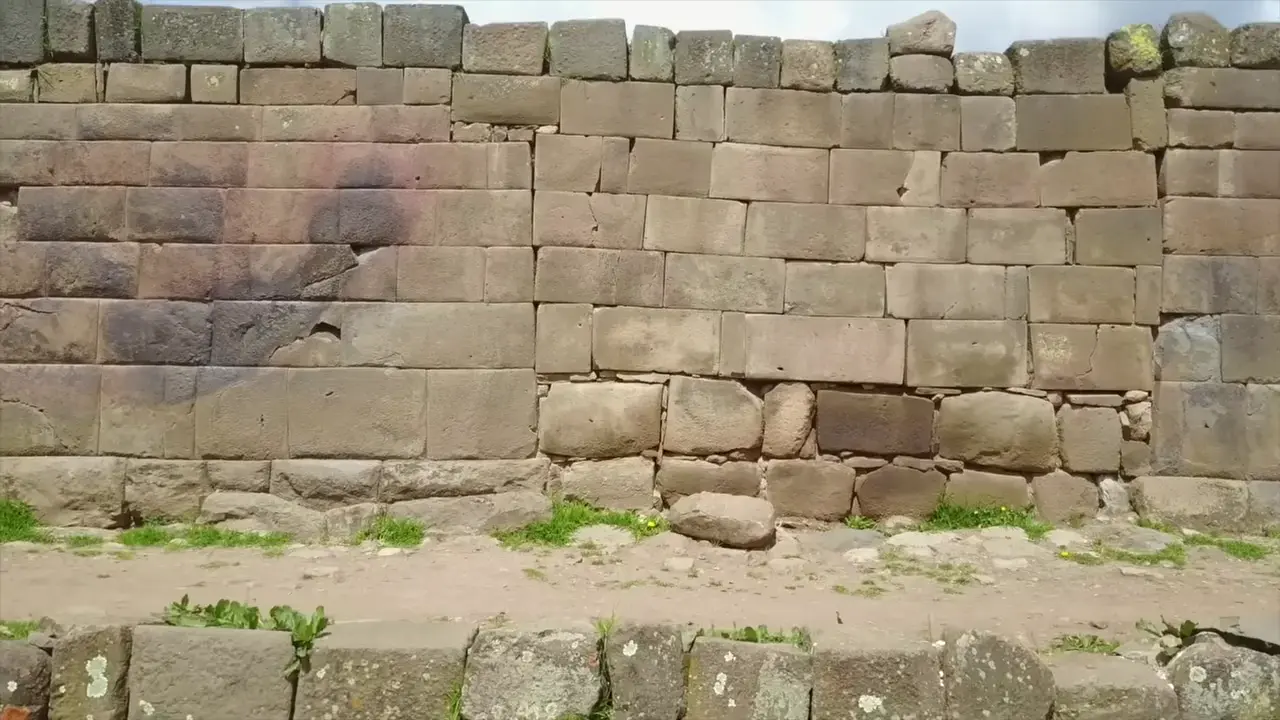
Stones at Vilcashuamán in Ayacucho, Peru, have been described as cracked and deformed, with surfaces that appear melted. Basalt melts at roughly 1,000–1,200°C, not at least 2,000°C, and no dating evidence links the stones to a 12,800-year-old cataclysm. Boston University professor Robert M. Schoch proposes that intense plasma-discharge events involving the sun could have damaged ancient sites worldwide. That remains his hypothesis, not an established cause.
Melt-like stones at Vilcashuamán do not establish a 12,800-year cataclysm
 PeruTheory
Site mentioned
Key facts
- Vilcashuamán is in Ayacucho, Peru. Its unusual stones have been described as cracked and deformed, with melt-like surfaces.
- Basalt melts at roughly 1,000–1,200°C, not at least 2,000°C.
- No dating evidence links the stones to cataclysmic events around 12,000 or 12,800 years ago.
- Robert M. Schoch is an associate professor of Natural Sciences at Boston University.
- Schoch proposes that intense plasma-discharge events involving the sun could have damaged ancient sites worldwide; this is his hypothesis, not an established cause.
- The site contains megalithic and Inca-era remains, but proximity does not establish the age or cause of the stone damage.
Sources
Younger Dryas cosmic impact of 12800 years ago (2018)news.ycombinator.com
The Great Sphinx - Robert M. Schochrobertschoch.com
The Story of Controversial Archeologist: Robert M. Schochinterestingengineering.com
Vilcashuamánen.wikipedia.org
Robert M. Schochscholar.google.com
Was this story useful?
Keep exploring
Every site on this page sits on the globe, and the people who research them are on the Discord.
3D Globe · Sites by country · Story Archive · Research Library · Weekly Journal · Search
AI-generated text · images from the original sources · always verify with the sources.