

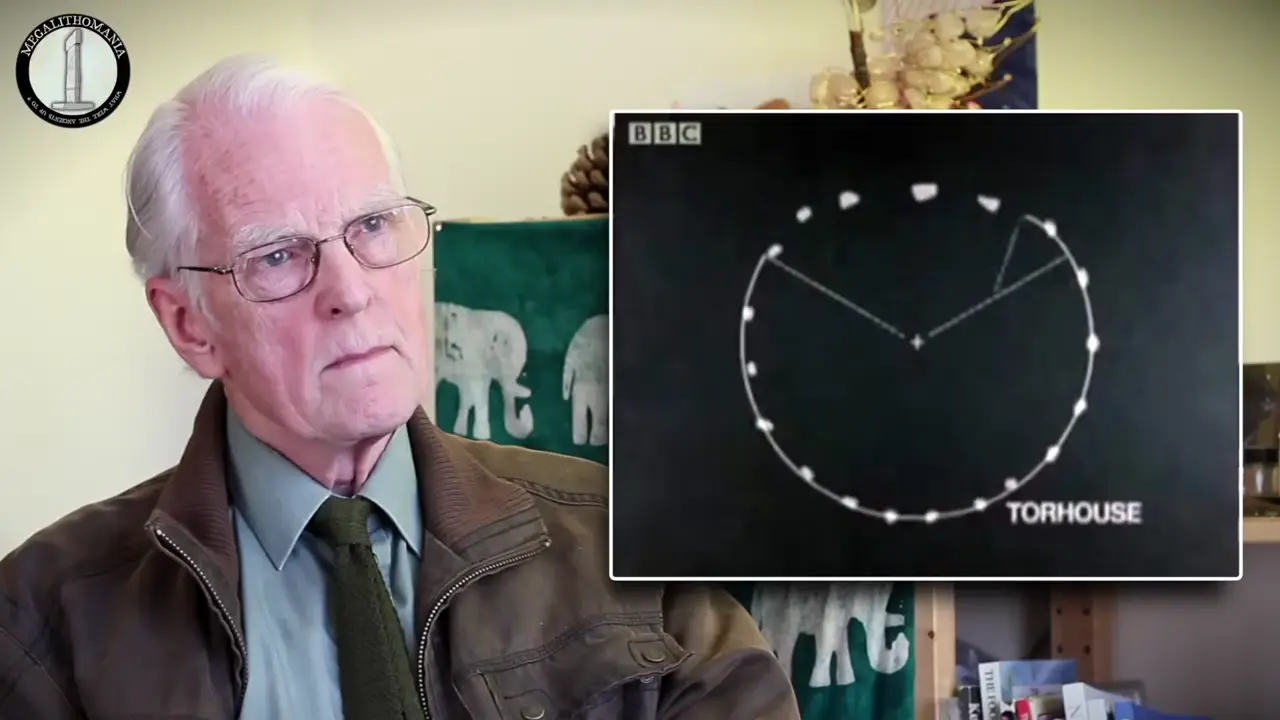
MacKie argued stone circles were ceremonial centers run by a professional priesthood. Colin Renfrew's 1973 'Before Civilization' proposed indigenous European innovation including prehistoric astronomy - MacKie tried to explain how known sites were training colleges for this priesthood. Academia resisted - Ruggles and others pushed back against Thom's astronomical alignments work.
MacKie's priesthood hypothesis and academic resistance to sophisticated prehistoric knowledge
Key facts
- MacKie proposes stone circles were ceremonial centers and instruments of a professional priesthood in the 3rd-2nd millennium BC
- Richard Atkinson argued in the 1950s that the labor at sites like Stonehenge and Silbury Hill required a powerful organizing group
- Colin Renfrew's 1973 book 'Before Civilization' proposed indigenous European innovation including prehistoric astronomy
- Clyde Ruggles' 1980s research attempted to disprove Thom's accurate astronomical alignments
- MacKie argues archaeology courses should teach surveying skills to assess alignments and stone circle geometry
- Orkney discoveries are beginning to suggest temples and priesthood existed, supporting Thom's predictions
Sources
[PDF] The structure of British Neolithic society - The Orkney Newstheorkneynews.scot
Renfrew pointed out that the unsuspected qualities of British stone circles then being unravelled by A. Thom fitted in well with the belief that these ...
New evidence for a professional priesthood in the European Early ...academia.edu
The text argues for the existence of a professional priesthood in Early Bronze Age Europe. Alexander Thom's work laid foundational insights into ...
[PDF] Roots of Nationhood - The Archaeology and History of Scotlandasau.ru
sites and ritual sites such as stone circles and henges, but not from the primary phases ... what was in their native land before they appeared you know?
Researching Stonehenge: Theories Past and Present - ResearchGateresearchgate.net
Mike Parker Pearson, who joined the Institute in 2012, has been leading a 10-year-long research programme on Stonehenge and, in this paper, he outlines the ...
[PDF] Researching Stonehenge: Theories Past and Present - UCL Discoverydiscovery.ucl.ac.uk
Conversely, Childe was in no doubt that it was an indigenous crea- tion. He had observed that stone circles were a peculiarly British ...
Was this story useful?
Keep exploring
Every site on this page sits on the globe, and the people who research them are on the Discord.
3D Globe · Sites by country · Story Archive · Research Library · Weekly Journal · Search
AI-generated text · images from the original sources · always verify with the sources.