

La Venta was abandoned by 400 BCE, possibly due to river changes disrupting trade 🏛️. The Olmec deliberately buried Complex A under 30cm of red clay. Izapa continued the tradition with ~90 stelae. Tres Zapotes expanded after 400 BCE. Stela C, excavated by the Sterlings in 1939, bears a Long Count date of September 3, 32 BCE.
La Venta's decline and Epi-Olmec culture with earliest Mesoamerican writing
 MexicoGeneral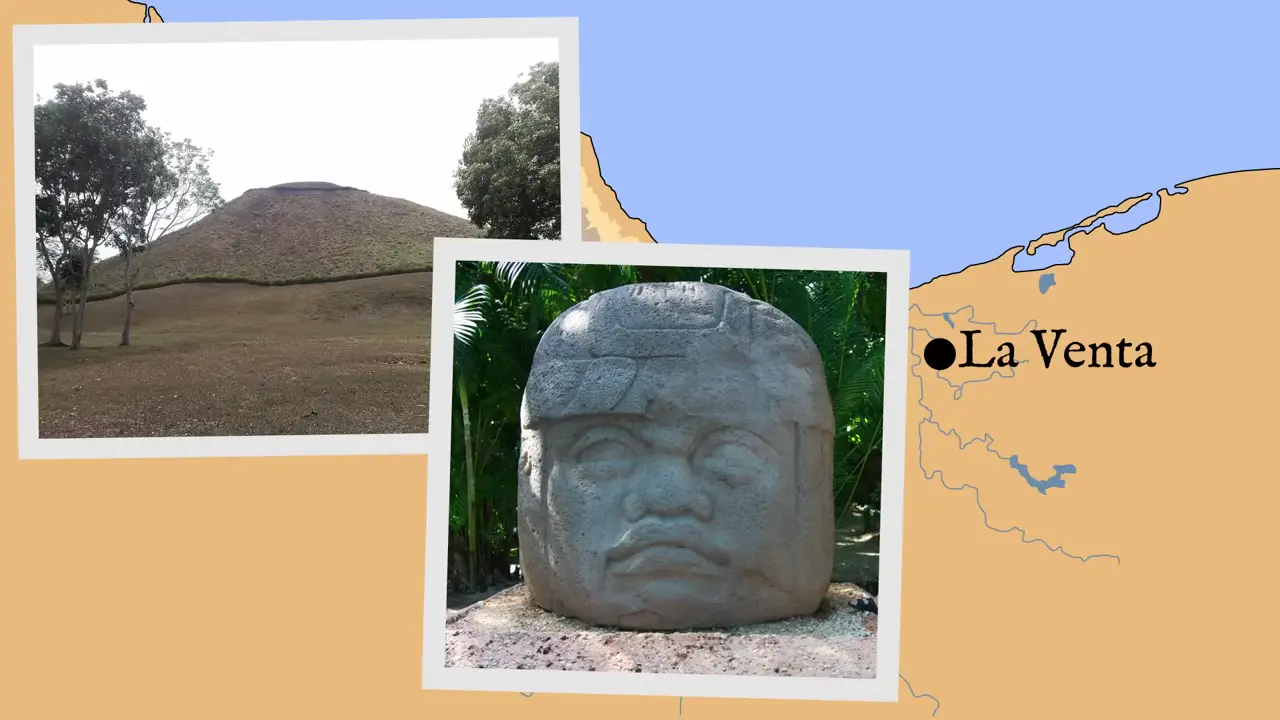
Key facts
- La Venta and its hinterland were abandoned by 400 BCE, possibly due to river course changes hampering trade
- The Olmec deliberately buried Complex A under a 30 cm thick cap of red clay before abandonment
- Izapa continued and developed the Olmec-inspired monumental tradition with almost 90 stelae and three colossal thrones in a detailed baroque style focusing on mythological scenes
- Tres Zapotes expanded from 80 to 500 hectares after 400 BCE following La Venta's fall, likely due to immigration
- Monument A at Tres Zapotes was the first colossal head ever discovered
- Tres Zapotes Stela C, excavated in 1939 by Matthew and Marian Sterling, bears a Long Count date of 7.16.6.16.18, equivalent to September 3, 32 BCE
- La Mojarra Stela, discovered in 1986, is 2 m tall and bears two Long Count dates of 143 and 156 CE with a long inscription
- The Mesoamerican Long Count calendar counts days from a mythological creation date of August 11, 3114 BCE
- Chalchijapan Stela 2 bears the oldest Long Count date outside the Olmec heartland: 7.16.3.2.13, or December 6, 36 BCE
- Epi-Olmec culture transitioned into Classic Veracruz culture around 200 CE, and Olmec ideology of rulership expressed in monumental art left a durable legacy influencing later Maya and Zapotec cultures
Site mentioned
Sources
docs.google.com
Linked in video description
Was this story useful?
Keep exploring
Every site on this page sits on the globe, and the people who research them are on the Discord.
3D Globe · Sites by country · Story Archive · Research Library · Weekly Journal · Search
AI-generated text · images from the original sources · always verify with the sources.