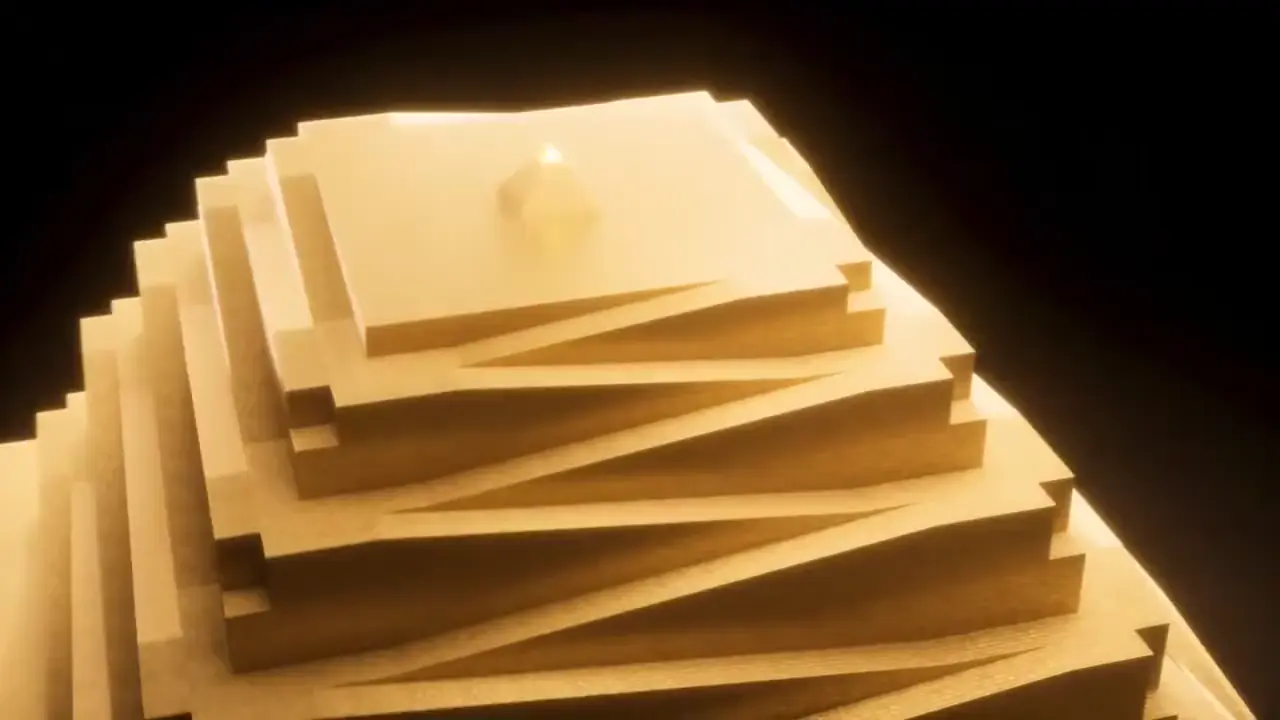
A new February 2026 hypothesis suggests builders constructed an oversized pyramid then carved it down. But Flinders Petrie's surveys show internal limestone courses in precise uniform layers. Casing stones are distinct imported material, not carved from local limestone. Engineering analysis shows this theory requires MORE labor than building it correctly the first time ⚠️
Key facts:
- New February 2026 hypothesis proposes builders first created an oversized 'step mass' with an integrated ramp system, then carved it down
- Flinders Petrie surveys reveal internal limestone courses are laid in precisely uniform horizontal layers
- Casing stones are imported distinct material, not carved from Giza limestone
- A competing theory proposes Egyptians used a pulley and counterweight system
- Engineering analysis shows the carve-down theory requires more total labor than building the pyramid correctly the first time
Sources
Scientists rubbish claims of 'giant structures' underneath Egyptian ...factcheck.afp.comOnline claims of "large underground structures" discovered under Egypt's famed pyramids of Giza are unfounded, experts in the field say.
Great Pyramid may hide an inner hoist for giant blocks, study suggestsearth.comConstruction of the Great Pyramid has been debated for decades. A recent study claims the workers may have used a hidden pully system, ...
New Theory Proposes Giza Pyramids Were Unbuilt from Massive ...cleveland13news.comUnder this model, the pyramid seen today emerged only after builders carved downward into the final shape from this larger mass. Choi estimates ...
Egypt's chief archaeologist skeptical of 'inside ramps' theory on ...historynewsnetwork.orgIn Cairo last week, Hawass heard Houdin's presentation of his belief that the pyramid builders constructed a series of ascending internal ramps to lift the ...
Were the Egyptian Pyramids Not Built Up, But Carved Down?openculture.comAccording to Choi, “the Great Pyramid wasn't built on its own, but through a chain of 'sacrificial' structures” designed to be “cannibalized.” ...
AI-generated text · images from the original sources · always verify with the sources.