

Wansleb first accurately counted 206 courses at the Great Pyramid in 1672, noting summit pits that may have held a statue. Later Egyptology dismissed this and other historical accounts as unreliable. 🔱
Historical testimonies about Great Pyramid summit overlooked by Egyptology
 EgyptTheory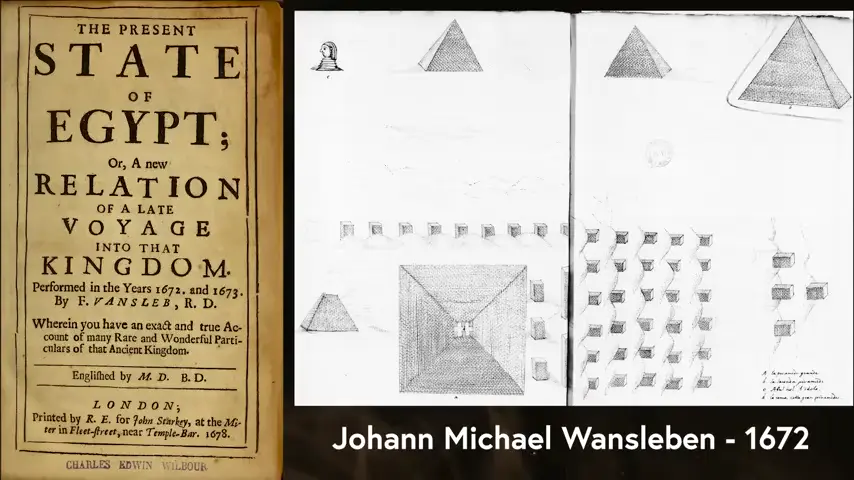
Site mentioned
Key facts
- Johan Michael Wansleb in 1672 was first explorer to accurately count 206 courses of the Great Pyramid
- Wansleb's 1678 English translation stated the summit had 'great pits which were to keep a colossus from falling over'
- Wansleb's original Italian manuscript described 'the top is not flat even but made in this manner' showing bases for a statue
- Nathaniel Davidson in 1765 sketched the remaining six stones of course 206 and measured its thickness
- James Dawkins in 1751 measured course 206 as 3 feet 1 inch thick
- Egyptology has historically dismissed inconvenient data about the Great Pyramid dating back to Strabo's account of a doorway in 23 AD
- The video argues Egyptology has greatly underestimated the reliability of past accounts and discarded important clues to fit modern narratives
- Wansleb's observations led him to believe a statue was once placed on top, likely based on Herodotus' account of statues on pyramids at Lake Maris
Sources
independent.academia.edu
Linked in video description
Was this story useful?
Keep exploring
Every site on this page sits on the globe, and the people who research them are on the Discord.
3D Globe · Sites by country · Story Archive · Research Library · Weekly Journal · Search
AI-generated text · images from the original sources · always verify with the sources.