

Around 450 BC, Herodotus visited the labyrinth at Hawara and described 12 courtyards with 3,000 rooms split between above and below ground. He claimed its construction effort and cost surpassed every Greek building combined and even the pyramids. The word "labyrinth" is Greek, inspired by its maze-like complexity. This enigmatic structure belonged to the broader complex of Pharaoh Amenemhat III, a Middle Kingdom ruler whose pyramid sits nearby.
Herodotus described a massive 3,000-room labyrinth surpassing the pyramids
 EgyptGeneral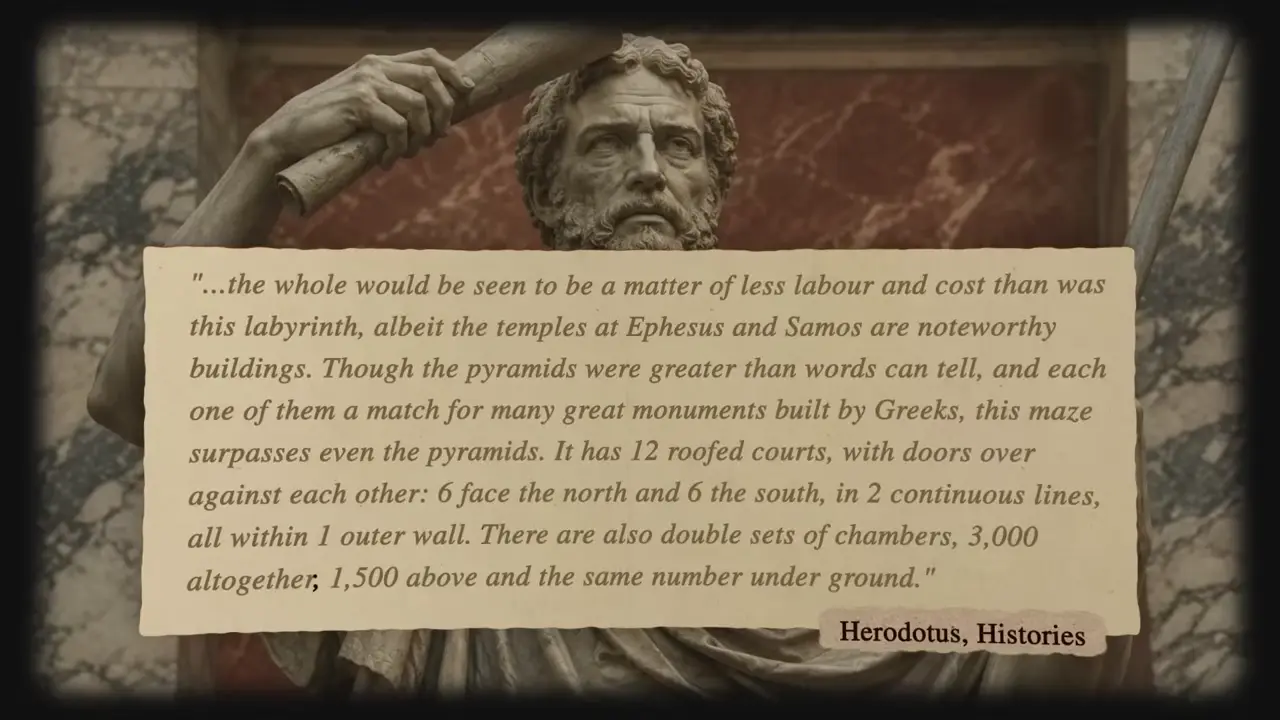
Key facts
- Herodotus visited the labyrinth around 450 BC
- Described 12 courtyards and 3,000 rooms, half above ground and half below
- Herodotus wrote the structure surpassed all Greek buildings combined and the pyramids in effort and cost
- The word 'labyrinth' is Greek, used because the building reminded him of an enormous maze
- The structure was part of the broader pyramidal complex of Pharaoh Amenemhat III
Site mentioned
Sources
The Lost Egyptian Labyrinth of Hawaratheancientconnection.com
The Pyramid of Hawara is attributed to the Pharaoh Amenemhet III of the 12th Dynasty in ancient Egypt and is located about 9 kilometers east of the oasis of ...
Labyrinth of Egypten.wikipedia.org
The Labyrinth of Egypt was a structure, or temple, built south of Amenemhat III's pyramid at Hawara. Not much is known about its use, but it was probably a ...
The lost Egyptian labyrinththe-past.com
Hawara is the location of the eroded mud-brick core of the pyramid of the Twelfth Dynasty pharaoh Amenemhat III (c.1855-1808 BC), which is ...
The Labyrinth of Hawara - by Louis De Cordierlabyrinthofegypt.substack.com
The area is dominated by the pyramid of Amenemhet III, which is thought to post-date his earlier "Black Pyramid" at Dahshur and served as his ...
Lost Labyrinth of Egypt | Location, Origin & Significancestudy.com
The pyramid of Hawara was built for Amenemhat III as his tomb. The lost labyrinth of Egypt is located in Hawara, about 60 miles southeast of Cairo.
Was this story useful?
Keep exploring
Every site on this page sits on the globe, and the people who research them are on the Discord.
3D Globe · Sites by country · Story Archive · Research Library · Weekly Journal · Search
AI-generated text · images from the original sources · always verify with the sources.