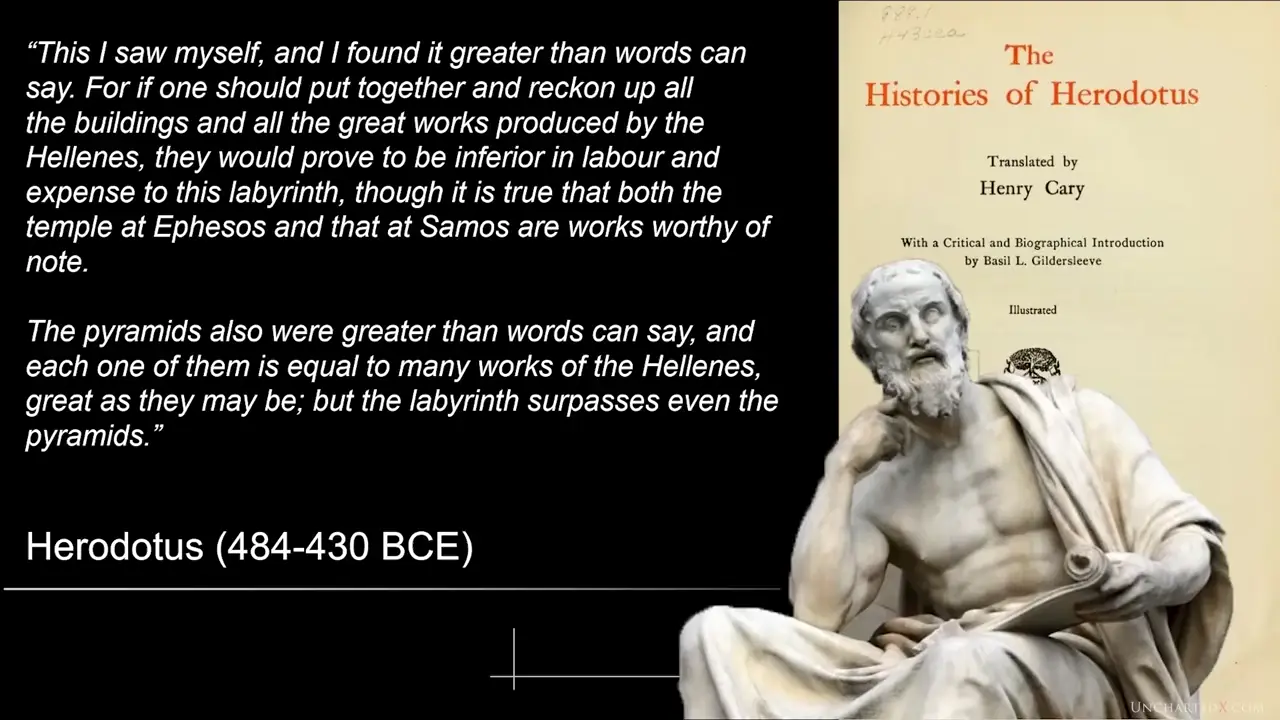
Ancient writers were awestruck by Egypt's Labyrinth at Hawara. Herodotus wrote it surpassed the pyramids in grandeur. Strabo noted 12 courts and 12 palaces. Pliny the Elder described 3,000 chambers with an attached pyramid. These classical accounts went largely unquestioned for centuries.
Key facts claimed:
- Herodotus (5th century BC) wrote the labyrinth surpasses the pyramids in grandeur
- Diodorus Siculus (1st century BCE) visited Egypt and described the labyrinth's impossible-to-navigate passages
- Strabo described it as equal to the pyramids in scale with 12 palaces
- Authors described 12 courts, 3000 chambers, and a pyramid attached to the structure
Sources
The Egyptian 'Labyrinth' at Hawara - egyptexperienceegyptexperience.wordpress.comHerodotus (fifth century BC) and other Greek and Roman writers described a magnificent labyrinth in Egypt, containing three thousand rooms on two levels.
The lost Egyptian labyrinth - The Pastthe-past.comSean Rigby investigates the mysterious monument that impressed Classical writers more than the Great Pyramid.
Labyrinth of Egypt - Wikipediaen.wikipedia.org... Herodotus ( c. 484 BC – c. 425 BC), who, in Book II of his Histories, wrote that the structure surpassed the greatness of even the Egyptian pyramids: [The ...
The Labyrinth of Hawara - by Louis De Cordierlabyrinthofegypt.substack.comAncient Greek and Roman authors, including Herodotus, Strabo, and Pliny, described a vast temple complex adjacent to a pyramid and a great ...
Herodotus and the Lost Labyrinth of Egypt: Found at Last?historicmysteries.comHerodotus, who lived during the 5th century BC, writes that he visited the labyrinth himself during his travels in Egypt.
AI-generated text · images from the original sources · always verify with the sources.