

Göbekli Tepe's ~11,000-year-old stamp seal shows hieroglyphic-style signs, pushing pictographic writing origins back thousands of years before cuneiform. 🏛️
Göbekli Tepe dates to approximately 9,600 BC, predating farming, cities, and conventional writing
 TürkiyeArtifact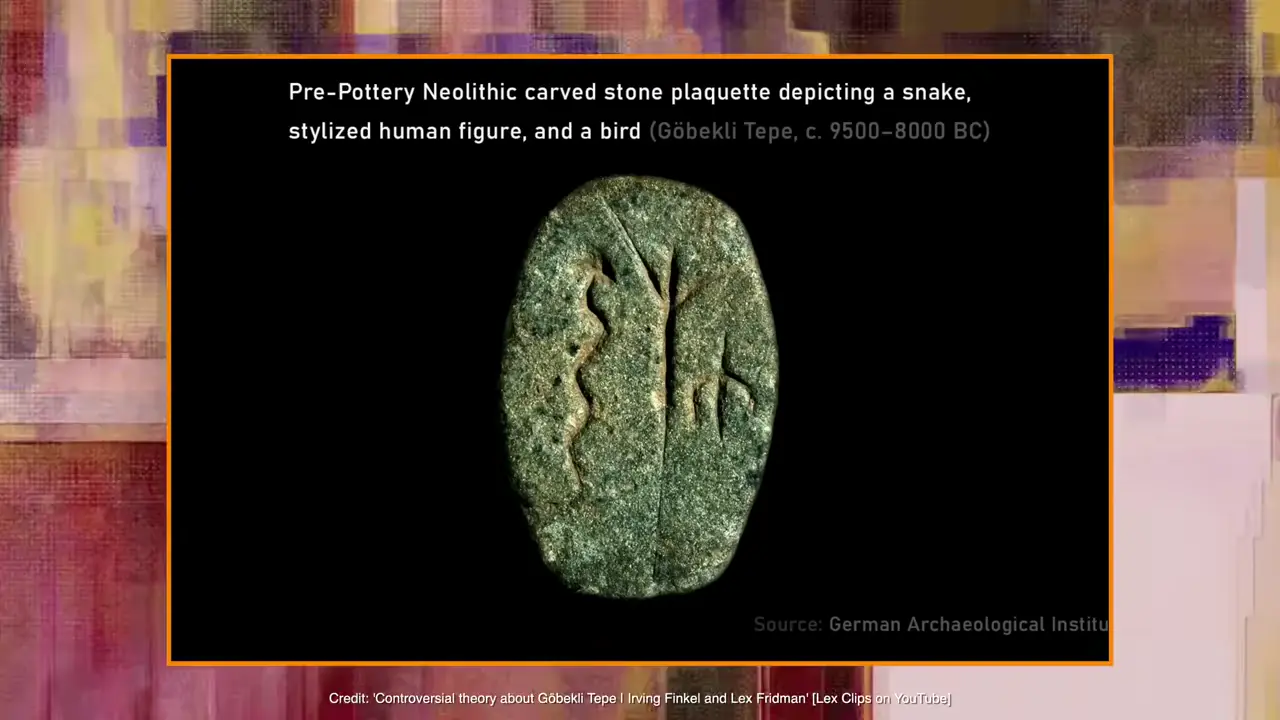
Site mentioned
Key facts
- Göbekli Tepe dates to approximately 9,600 BC, predating farming, cities, and conventional writing
- Site contains massive stone pillars weighing over 10 tons arranged in carefully planned circular enclosures
- Carved into pillars are repeated symbols and motifs including animals and abstract markings
- A small rounded green stone artifact with arched back and flat underside resembles later stamp seals from Egypt and Mesopotamia
- The seal's flat surface is carved with hieroglyphic-style signs, interpreted as a tool for pressing into clay to leave impressions
- Artifact dated to approximately 9,000 BC
- Interpretation suggests pictographic writing system thousands of years earlier than traditionally accepted (circa 3,000 BC Mesopotamian cuneiform)
- The site demonstrates organizational complexity requiring coordination and long-term planning on large scale
- Only 10% of the site has been excavated as of the video production
- Evidence suggests symbolic systems capable of recording and communicating information were in use at this period
Sources
dainst.blog
Linked in video description
historyworld.net
Linked in video description
livescience.com
Linked in video description
bradshawfoundation.com
Linked in video description
sites.utexas.edu
Linked in video description
Was this story useful?
Keep exploring
Every site on this page sits on the globe, and the people who research them are on the Discord.
3D Globe · Sites by country · Story Archive · Research Library · Weekly Journal · Search
AI-generated text · images from the original sources · always verify with the sources.