

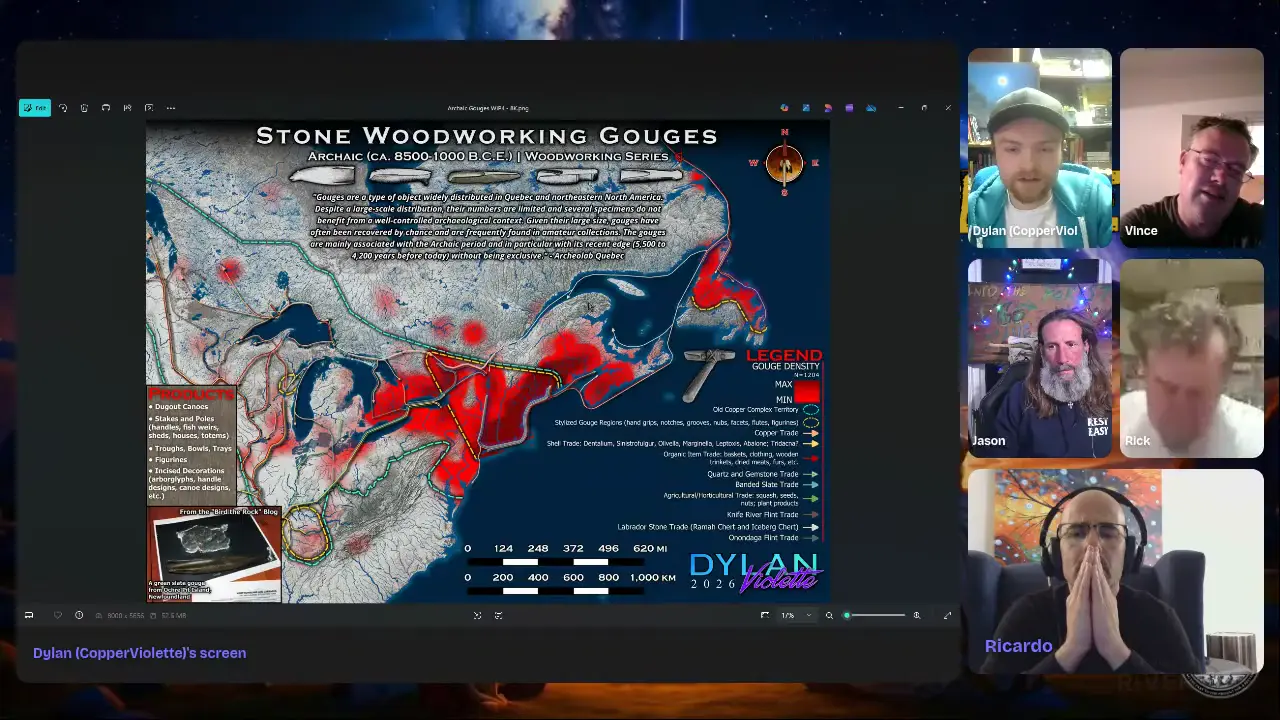
Gouges and woodworking tools show identical material culture between Baltic and Northeast North America. Gouges are ground stone woodworking tools found along coastlines and rivers, particularly in Gulf of Maine and Bay of Fundy Gouges used for hunting swordfish and making dugout canoes thousands of years ago Material culture similarities between eastern North America and Baltic/Scandinavian regions documented since 1940s by Guttorm Yesing

Researchers since the 1940s have noted striking similarities between stone gouges in the Gulf of Maine & Baltic/Scandinavia 🪨 Same green volcanic metatuff stone, same bone comb decorations, same bird-head designs. Coincidence or ancient maritime contact?

Key facts:

- Gouges are ground stone woodworking tools found along coastlines and rivers, particularly in Gulf of Maine and Bay of Fundy

- Gouges used for hunting and making dugout canoes thousands of years ago

- Material culture similarities between eastern North America and Baltic/Scandinavian regions documented since 1940s by Norwegian archaeologist Gustav M. Jesch

- Bone combs with line and dot decorations and bird heads found in both regions

- Green volcanic metatuff stone used for gouges in both Gulf of Maine and Baltic regions

Key Facts

  • Gouges are ground stone woodworking tools found along coastlines and rivers, particularly in Gulf of Maine and Bay of Fundy
  • Gouges used for hunting swordfish and making dugout canoes thousands of years ago
  • Material culture similarities between eastern North America and Baltic/Scandinavian regions documented since 1940s by Guttorm Yesing
  • Bone combs with line and dot decorations and bird heads found in both regions
  • Green volcanic metatuff stone used for gouges in both Gulf of Maine and Baltic regions
  • Gouges found in Norway, Sweden, Estonia, Finland, and heading east toward the Urals
  • Stylized gouges with bear heads, hand grips, and multi-tool designs discovered
  • Gouge distribution shows high density in Wisconsin and Michigan's Upper Peninsula