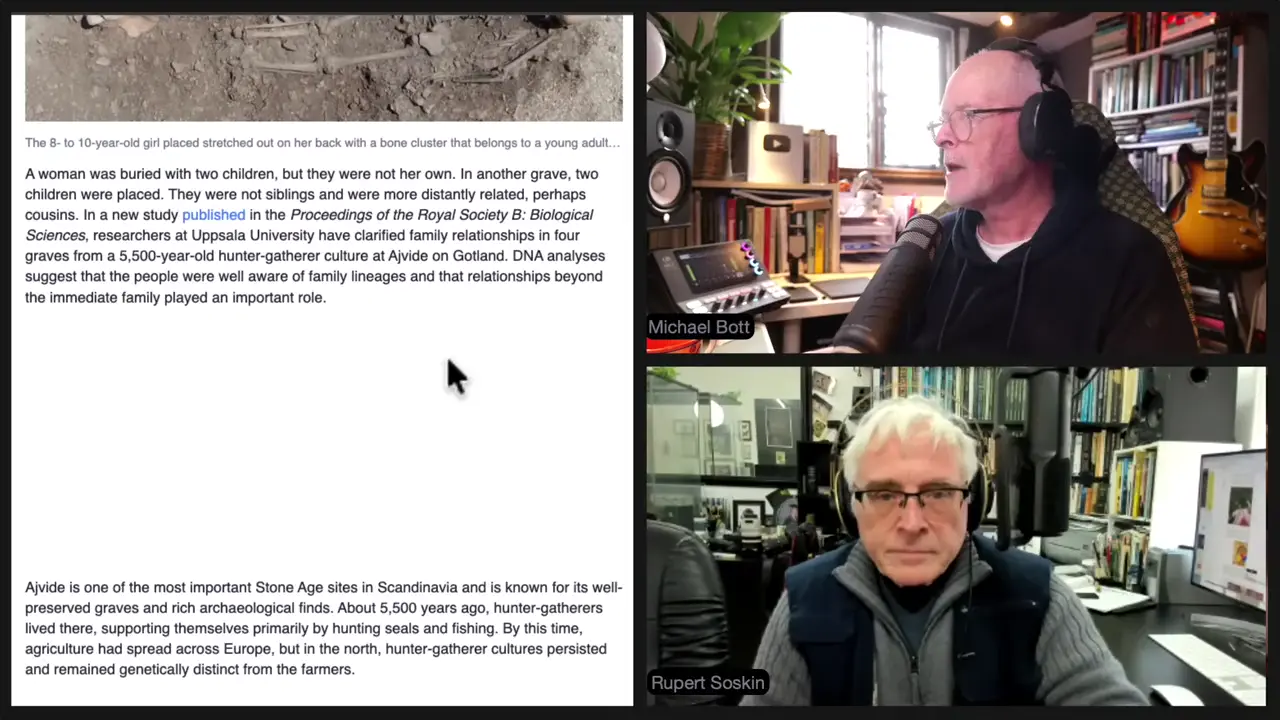
DNA from 5,500-year-old hunter-gatherer graves on Gotland reveals unexpected family ties. A woman buried with two children—a boy and a girl—shared no biological relation to them; DNA analysis shows she was most likely their father's sister or half-sister. The two children, however, were full siblings. In another grave containing two children, DNA revealed they were third-degree relatives (cousins), not siblings. Uppsala University research shows awareness of extended lineages 🧬
Key facts:
- Study of 5,500-year-old hunter-gatherer graves at Iivars on Gotland reveals family relationships
- DNA analysis shows a woman buried with two children was not their mother—she was most likely their father's sister or half-sister
- The two children buried with the woman were confirmed as full siblings
- In another grave, two children buried together were third-degree relatives (cousins), not siblings
- 85 known graves at site, 8 contain multiple individuals
- Hunter-gatherers lived by hunting seals and fishing, genetically distinct from contemporary farmers
Sources
Ancient DNA solves 5,500 year old burial mystery in Swedensciencedaily.comThe DNA results indicate that people at the site understood their family connections well and that extended relatives held meaningful roles in ...
Gotland hunter-gatherer graves hint at how Stone Age families ...phys.orgThe DNA analysis shows that the children—a boy and a girl—are full siblings, but that the woman is not their mother. She is most likely their ...
Who Gets Buried Together on a Stone Age Island - Anthropology.netanthropology.netAncient DNA from a 5500-year-old cemetery on Gotland reveals that hunter-gatherers tracked kinship well beyond the nuclear family.
DNA Reveals Kinship Ties in Sweden's Hunter-Gatherer Cemeteryarchaeology.orgThe first grave in the study held the remains of a woman and two young children. The children were found to be full brother and sister, while ...
5500 years ago, a teenage girl was buried with her father's bones on ...livescience.comA novel DNA analysis of skeletons excavated from a Neolithic hunter-gatherer cemetery in Sweden has revealed surprising family relationships.
AI-generated text · images from the original sources · always verify with the sources.