

Claims that Coricancha's stones came from the Rumicolca Formation and a 2021 petrographic study on Inca masonry techniques cannot be verified from available sources. General archaeological consensus does support that alien theories lack evidence, and dry-fit masonry techniques are documented in some colonial sources. However, the specific claims about Rumicolca Formation sourcing and the 2021 study require citation verification.
Geopolymer and alien theories rejected by archaeological evidence
 PeruGeneral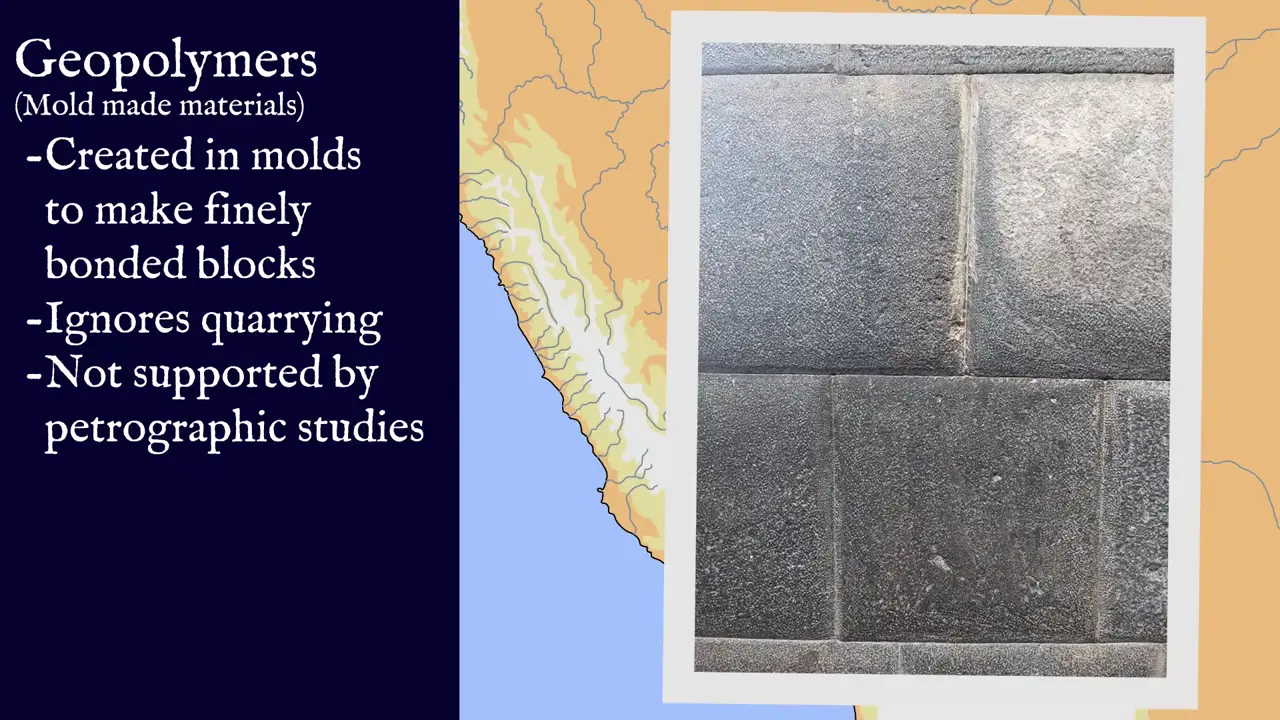
Key facts
- Acid theory proposed red clay dissolved stone faces but contradicts colonial accounts of dry-fit masonry
- 2021 petrographic study of Coricancha stones confirmed they are biotite andesites from Rumicolca Formation
- Polygonal blocks uniquely shaped, would require individual molds making technique impractical
- Adobe bricks vary in size with rounded edges proving Inca didn't use molds
- Alien theories unfalsifiable with no evidence, Inca masonry dates consistently to Inca period
- Colonial construction reused Inca ashlar blocks, demonstrating continuity of masonry techniques
Site mentioned
Sources
docs.google.com
Linked in video description
Was this story useful?
Keep exploring
Every site on this page sits on the globe, and the people who research them are on the Discord.
3D Globe · Sites by country · Story Archive · Research Library · Weekly Journal · Search
AI-generated text · images from the original sources · always verify with the sources.