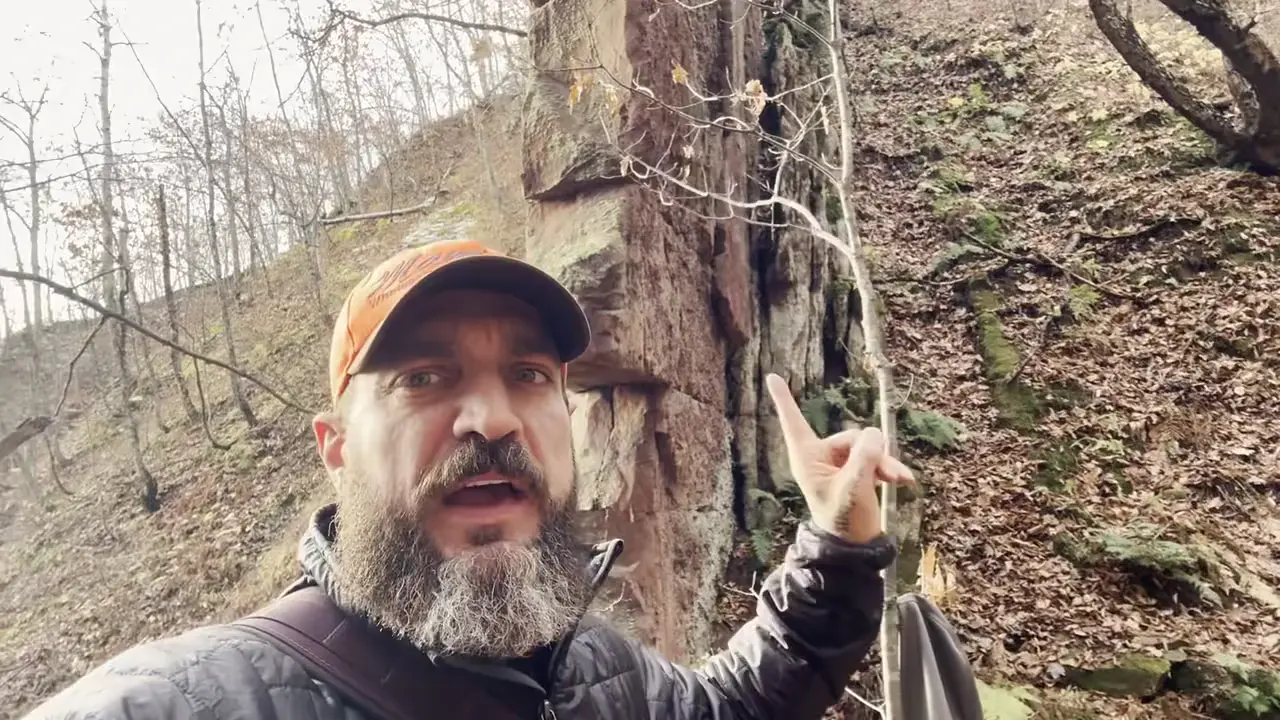
The Natural Wall remains a mystery. One side looks like a volcanic dyke, but the block-like appearance on the other side resembles megalithic structures found in Peru. Some blocks even have rolled edges like placed stones. Locals weigh in on the debate 🗿
Note: The formation is officially called the 'Natural Wall' and is described by geologists as a resistant vertical bed of Jacobsville Sandstone, not a volcanic dyke. The volcanic dyke hypothesis is one proposed by non-expert observers to explain its appearance.
Sources
Michigan's Great Wall: Is it Man-Made or Not? - 95.3 The Ticketwbckfm.com“Near the historic town of Laurium, on the Keweenaw Peninsula, there is an enigmatic wall,” said Rademacher. “It is in a deep ravine, is ...
Natural Wallgeo.mtu.eduA famous geological spot, the Natural wall is a resistant bed of the Jacobsville Sandstone, turned on its side, to near vertical.
Past-E-Mail - Pasty Centralpasty.comLooks like an exposed dike that has weathered and cracked to fool our eyes into thinking it's a man-made wall? I think dikes are formed when lava fills a ...
A Prehistoric Structure Under Lake Michigan Resembles a Mini ...news.artnet.comAn arrangement of 9000-year-old blocks of granite, 40 feet under the surface of Lake Michigan, resembles a smaller Stonehenge.
The Natural Wall, A Keweenaw wonder - Copper Rangecopperrange.orgThe Natural Wall is a vertical bed of resistant trough-bedded sandstone that forms an erosional wall on the south side of the ravine. The Jacobsville Sandstone ...
AI-generated text · images from the original sources · always verify with the sources.