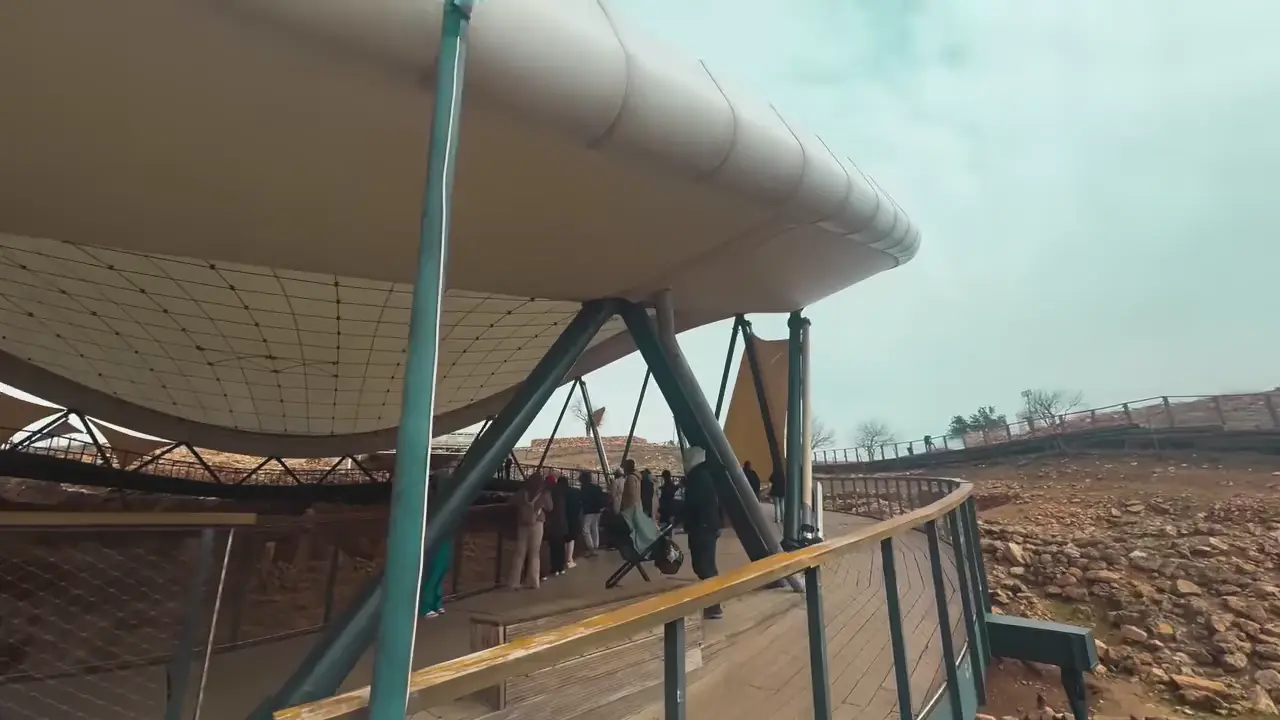
Göbekli Tepe dates back 11,000 years with T-pillars up to 20 ft tall carved with foxes, snakes, boars and birds. Only 10% excavated — researchers estimate 50+ years to complete. One of archaeology's greatest puzzles! 🏛️
Key facts:
- Noted by Turkish archaeologist B. K. Kökten in 1963; significance recognized by German archaeologist Klaus Schmidt in 1994, with excavations beginning in 1995
- Dated back 11,000 years, making it one of the oldest known man-made structures
- Features multiple limestone T-pillars arranged in circles, standing up to 20 ft tall and weighing up to 10 tons
- Pillars carved with intricate reliefs of animals (foxes, snakes, boars, birds) and abstract symbols
- Current theory suggests built by hunter-gatherers before the advent of agriculture
Sources
Göbekli Tepe - Wikipediaen.wikipedia.orgGöbekli Tepe is a Neolithic archaeological site in Upper Mesopotamia (al-Jazira) in modern-day Turkey. The settlement was inhabited from around 9500 BCE to ...
Göbekli Tepe: The Mysterious Site Older Than Stonehenge | HISTORYhistory.comMore than 11,000 years ago, hunter-gatherers built a monumental stone complex that is thought to be the world's first temple.
Göbekli Tepe (archaeological site) | Anthropology | Research Startersebsco.comGöbekli Tepe is an ancient archaeological site located in Southeast Turkey, dating back to the Neolithic Era, around 11,500 to 12,000 years ago.
Gobekli Tepe: The World's First Temple? - Smithsonian Magazinesmithsonianmag.comPredating Stonehenge by 6000 years, Turkey's stunning Gobekli Tepe upends the conventional view of the rise of civilization.
Göbekli Tepe - UNESCO World Heritage Centrewhc.unesco.org... T-shaped pillars, some of which are up to 5.50 meters tall. Some of the pillars, which are abstract depictions of the human form, also feature low reliefs ...
AI-generated text · images from the original sources · always verify with the sources.