

In 1925, Danish explorer Frans (Franz) Blom led Tulane's first expedition to southeastern Mexico, discovering La Venta Monument 1 (a colossal head) buried near the Great Pyramid. The pyramid contains 200,000+ tons of earth and may be North America's oldest. They also found the oldest known feathered serpent depiction and materials imported from 100-200 km away.
Frans Blom discovers La Venta, first major Olmec site in 1925
 MexicoGeneral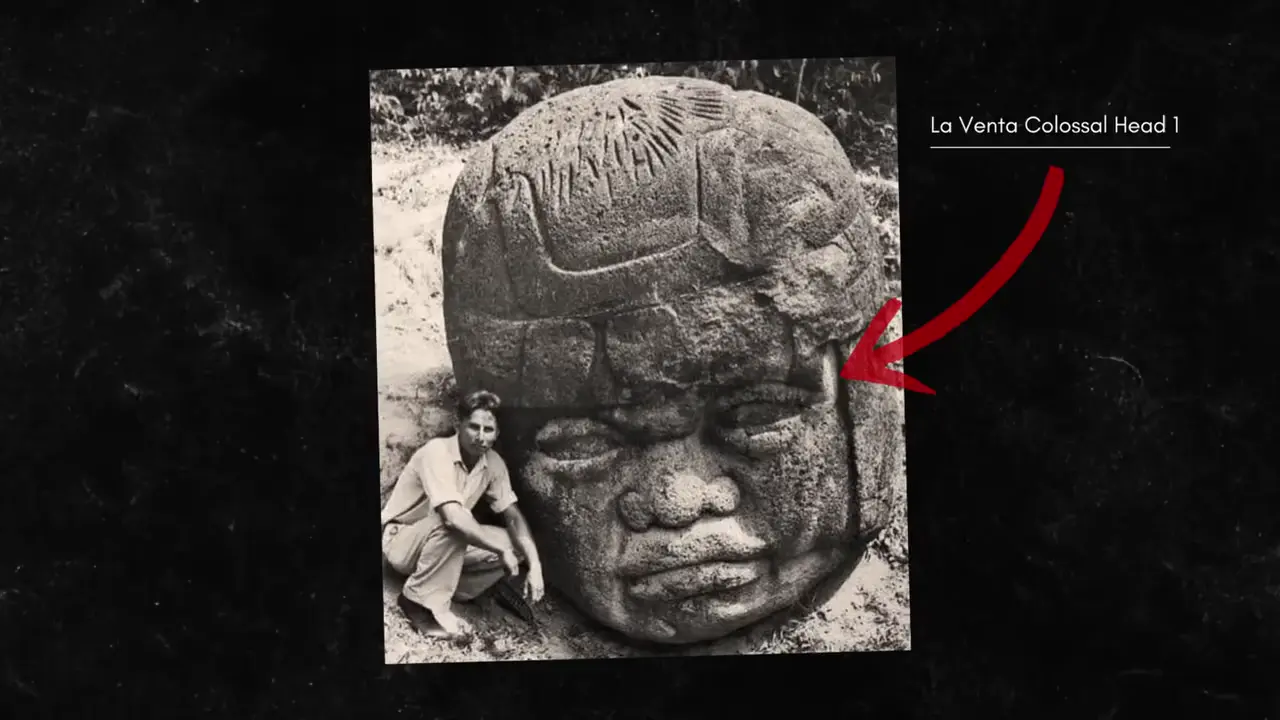
Site mentioned
Key facts
- In 1924, Tulane University organized the first expedition to explore Chiapas, Tabasco, and Veracruz
- Frans Blom, a Danish explorer, led the expedition and arrived in Veracruz in early March 1925
- Blom discovered La Venta Monument 1 (colossal head) partially buried near the Great Pyramid
- The Great Pyramid at La Venta contains over 200,000 tons of earth and fill
- Archaeologists believe La Venta's pyramid may be North America's oldest
- Discovered megalithic altar stones and the oldest known depiction of the feathered serpent in history
- Found five mysteriously buried caches of serpentine stone arranged in detailed patterns
- Materials were imported from 100-200 km away from the volcanic Tuxtla Mountains and Maya jungles of Guatemala
Sources
Olmec colossal head monument 1 from the La Venta site.lithiccastinglab.com
This colossal head was first described in 1925 by Franz Blom and Oliver La Farge while it was still half buried and later fully excavated in ...
Figure 3 - from Olmec archaeology: A half century of - Academia.eduacademia.edu
Tres Zapotes Monument A, the first discovered Olmec colossal stone head. A 1925 “ethnological exploration” of Mexico's southern Gulf Coast by Frans Blom and ...
[PDF] TRIBES AND TEMPLES - Mesowebmesoweb.com
Frans Blom was selected to take charge of the first expedi- tion, assisted by Mr. Oliver La Farge. They started from New. Orleans on the 19th of February, 1925.
Tulane University's John Geddings Gray Memorial Archaeological ...exhibits.tulane.edu
The first Tulane expedition, launched in 1925, traveled through southern Mexico and the Maya area from west to east; the results of which were published under ...
[PDF] Ten years of middle American archaeologyrevfrankhughesjr.org
... Frans Blom in charge of excavations, dug at Moxviquil, near San. Cristobal Las Casas; C. W. Weiant of the. Explorers' Club of New York assisted. Blom also ...
Was this story useful?
Keep exploring
Every site on this page sits on the globe, and the people who research them are on the Discord.
3D Globe · Sites by country · Story Archive · Research Library · Weekly Journal · Search
AI-generated text · images from the original sources · always verify with the sources.