

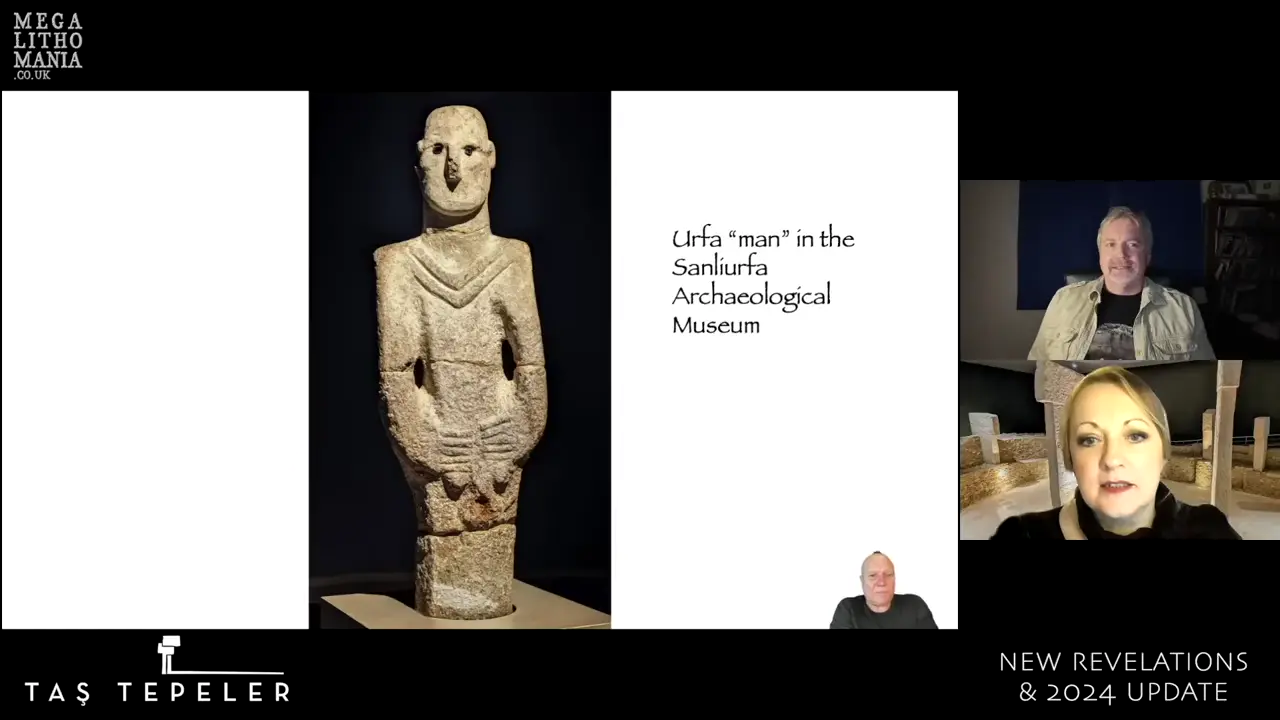
Urfa Man statue discovered in mid-1990s near Balıklıgöl (ancient pool) below the old city of Şanlıurfa. The statue shows a naturalistic figure with carved human face, ears, and nose, with obsidian pieces in the hollowed-out eyes. Hands positioned holding the genitals with both hands. It stands approximately 1.80 meters tall and dates to approximately 11,500 years ago (Pre-Pottery Neolithic A period). Note: Claims about an 'Erdman' name or 'Kizzle Column' as a discovery location are not supported by archaeological records—the statue is universally known as Urfa Man or Balıklıgöl statue, found near Balıklıgöl. Interpretations of the statue as representing intersex characteristics or specific religious symbolism are interpretive and not definitively established.
Erdman statue discovered c.1993 north of Urfa, in Kizzle Column area during road widening
Site mentioned
📍 Tas Tepe🌍 Show on the globe
Key facts
- Erdman statue discovered c.1993 north of Urfa, in Kizzle Column area during road widening
- Evidence of Taş Tepe site with terrazzo floors and T-pillars found at discovery location
- Statue interpreted as intersex/hermaphrodite being with both male and female genitalia
- Female curved hips visible from rear view, sexless frontal appearance
- Hands positioned on abdomen consistent with Vedic kundalini symbolism
- Red pigmentation present in carved opening below genitalia and on mouth
- Interpreted as representation of primal chaos, unified state before physical order and dualism
Sources
megalithomania.co.uk
Linked in video description
Was this story useful?
Keep exploring
Every site on this page sits on the globe, and the people who research them are on the Discord.
3D Globe · Sites by country · Story Archive · Research Library · Weekly Journal · Search
AI-generated text · images from the original sources · always verify with the sources.