

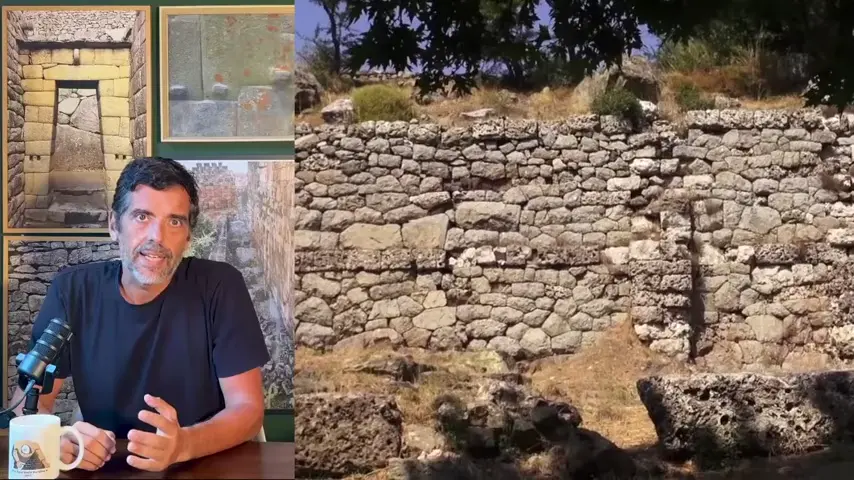
Cyclopean empty quarters reveal cultural boundaries. Empty quarters are areas with conditions to have cyclopean walls but have none Greek areas including ancient Epirus and Macedonia are empty quarters South Italy, South Bolivia, Ecuador, and northern Peru are empty quarters despite Inca presence

Cyclopean walls follow a striking pattern in European archaeology, with major Mycenaean citadel fortifications (Mycenae, Tiryns, Midea) concentrated in southern Greece and the Aegean region. North Africa's Maghreb region (Morocco to Tunisia) shows no cyclopean construction. The Phoenicians, originating from the eastern Mediterranean where cyclopean masonry developed, did not typically employ this specific Mycenaean fortification technique in their African settlements. This suggests cyclopean construction was characteristic of Bronze Age Mycenaean Greek culture rather than Phoenician building traditions. 🏺🗺️

Note: The 'key facts' section contains errors. South Bolivia, Ecuador, and northern Peru were the CORE AREAS of Inca civilization—the Inca WERE present there and built extensive cyclopean-style stonework (Sacsayhuamán, Machu Picchu). These regions are not 'empty quarters.'

Key Facts

  • Empty quarters are areas with conditions to have cyclopean walls but have none
  • Greek areas including ancient Epirus and Macedonia are empty quarters
  • South Italy, South Bolivia, Ecuador, and northern Peru are empty quarters despite Inca presence
  • Parallel 44 across Europe leaves all cyclopean walls south of it
  • The Maghreb (Morocco to Tunisia) has all needed conditions but no cyclopean walls except natural example
  • Cyclopean builders were a culture or family of cultures more limited than megalithic builders
  • North Africa was culturally different during the Bronze Age when cyclopean cultures prospered
  • The Phoenicians from Levant (where cyclopean works exist) never built cyclopean walls in Africa, suggesting those works predate the Phoenicians