

Critics push back on the geopolymer theory: No mixing facilities, molds, or production waste found at Giza. Why no casting in other Egyptian temples? Blocks show chisel marks—not smooth casting surfaces. Geologists say most blocks match quarried stone.
Criticisms and Limitations of Geopolymer Theory
 EgyptTheory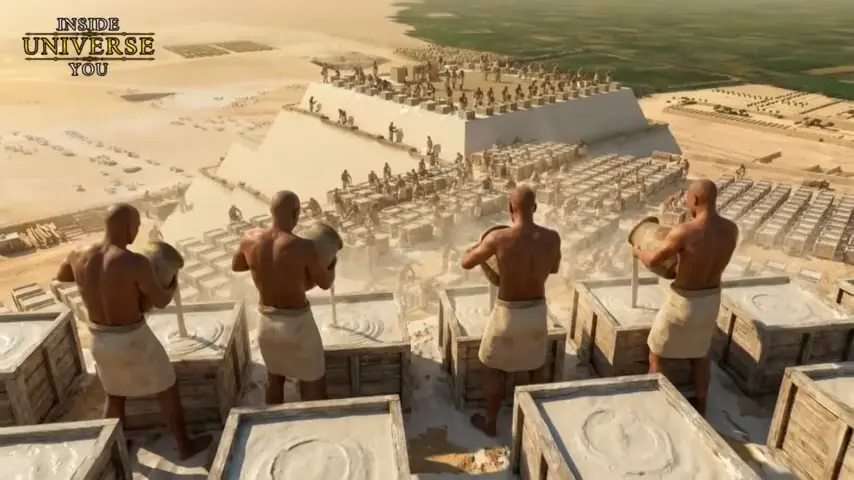
Site mentioned
Key facts
- An estimated 500-800 granite blocks inside the Great Pyramid, weighing up to 80 tons each, cannot be geopolymer cast
- Davidovits acknowledges these were quarried from Aswan and used for load-bearing chambers
- No remains of large-scale mixing facilities, mold yards, or production waste have been found at Giza
- No molds, mixing basins, geopolymer residues, or written instructions describing stone casting have been discovered
- If pyramids were built with geopolymer, why aren't the same methods seen in other Egyptian temples and structures?
- Geopolymer stone requires curing time, making it difficult to scale to millions of blocks without bottlenecks
- Most pyramid blocks closely match natural Giza limestone in composition, texture, and fossil structure
- Many blocks show chisel marks consistent with stone cutting, not casting which would produce smooth surfaces
Sources
Gathering 'concrete' evidence | MIT Newsnews.mit.edu
An MIT class is testing a controversial theory that some of the giant blocks that make up the great pyramids of Giza may have been cast in place from concrete.
Deep Misleading Publications by Geologists - Geopolymer Institutegeopolymer.org
It is well known to all experts on Egyptian geology, and well-published in Egyptological literature, that these two Giza sites (the wadi and the ...
The Surprisingly Plausible Theory that the Pyramids were Poured ...todayifoundout.com
In 1974 a French geochemist named Joseph Davidovits forwarded a radical new theory- that the pyramid blocks were not cut, but poured.
Was this story useful?
Keep exploring
Every site on this page sits on the globe, and the people who research them are on the Discord.
3D Globe · Sites by country · Story Archive · Research Library · Weekly Journal · Search
AI-generated text · images from the original sources · always verify with the sources.