

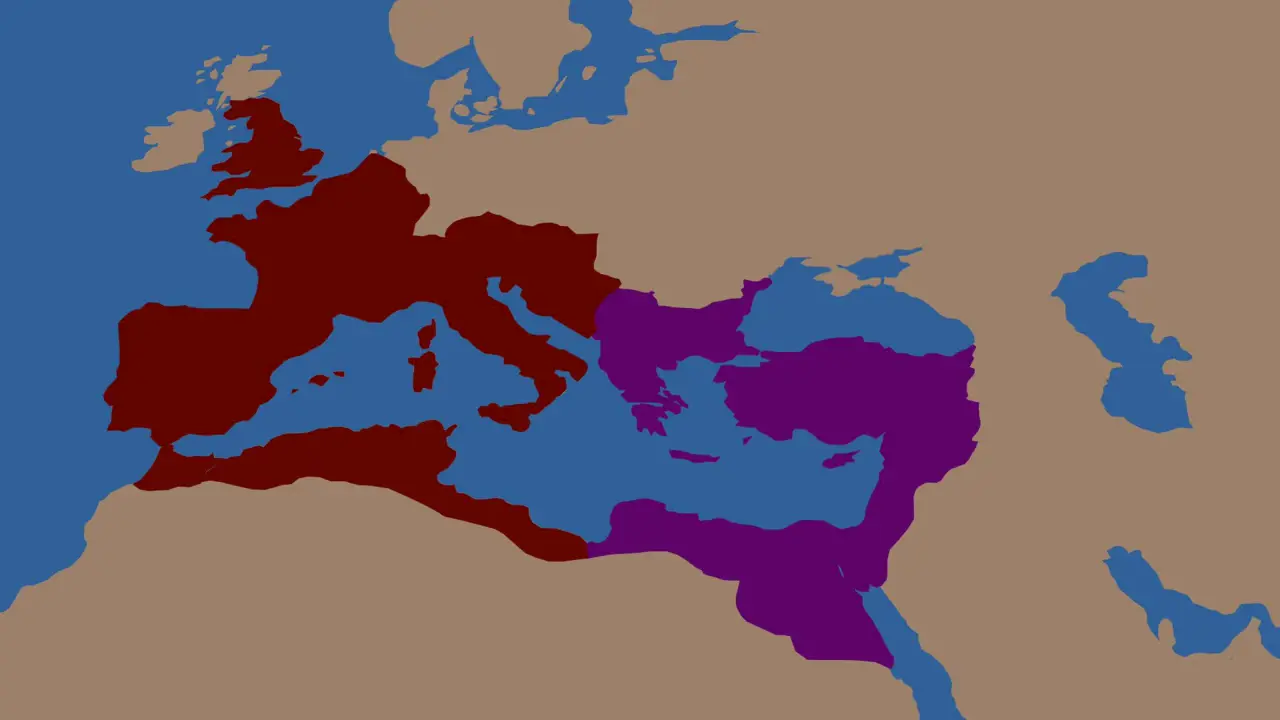
The 5th century Western Roman Empire faced civil wars, Hun pressure, and the Vandals devastating Spain and North Africa — wrecking Rome's tax base. Alaric and his Goths wanted integration into the Roman system! Attila's campaigns in the 440s-450s, culminating in the 451 invasion of Gaul and 452 Italian campaign, severely strained Western resources, and without wealthy provinces, they couldn't sustain the military or political structure needed to survive. The Battle of the Catalaunian Plains in 451 was a costly but strategically significant victory for Rome and its allies against Attila, not a mere stalemate. The Western army was significantly reduced following these campaigns and years of prior strain.
Civil wars and Huns, not barbarian troops, caused Western Empire's fall
Key facts
- The 5th century Western Roman Empire was characterized by constant civil wars and usurptions
- The arrival of the Huns created unprecedented pressure on both sides of the Roman frontier
- The Vandals devastated Spain and North Africa, wrecking Rome's tax base
- Alaric and his Goths wanted integration into the Roman system, not the sack of Rome as an end goal
- The Western army was significantly reduced in the 450s after defeats by Attila in 447 and the Catalaunian Plains stalemate in 451
- The loss of wealthy provinces eliminated funds to reconstitute the military
- Attributing the fall to increased non-Roman troops lacks evidence and is considered simplistic
Sources
goodreads.com
Linked in video description
google.com
Linked in video description
google.com
Linked in video description
Was this story useful?
Keep exploring
Every site on this page sits on the globe, and the people who research them are on the Discord.
3D Globe · Sites by country · Story Archive · Research Library · Weekly Journal · Search
AI-generated text · images from the original sources · always verify with the sources.