

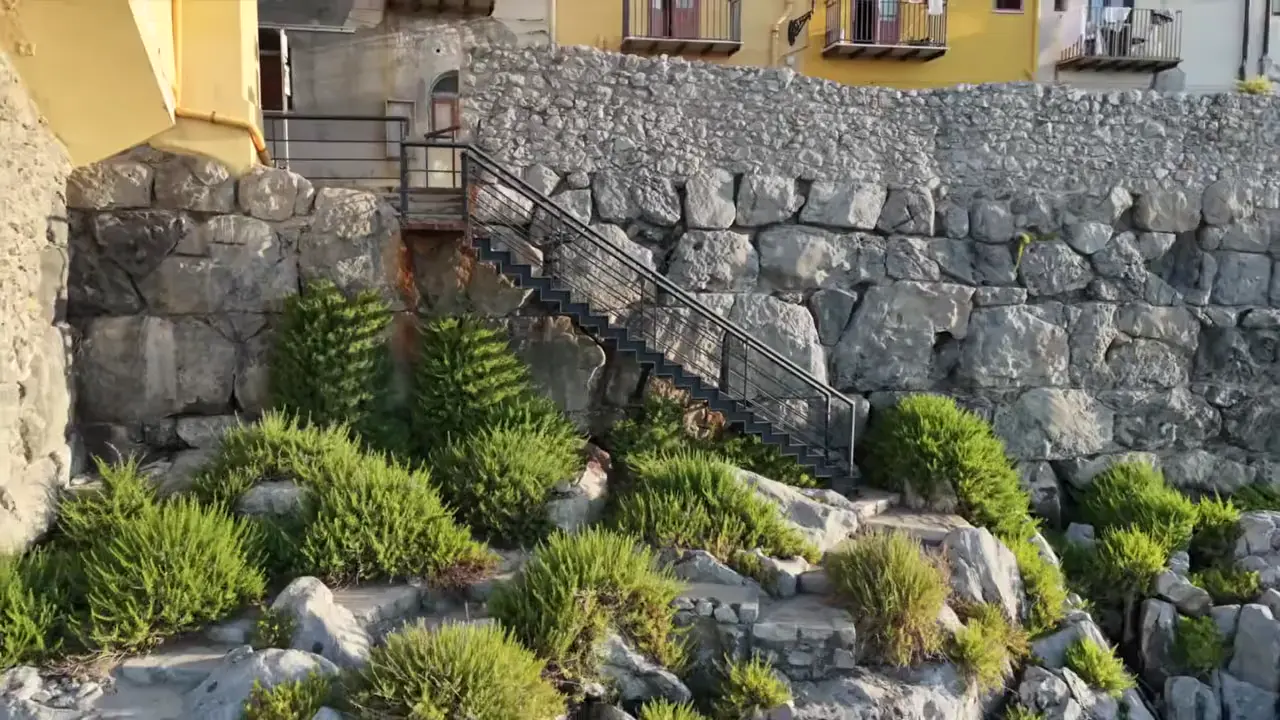
Cefalù’s ancient sea walls on the Rocca use large, irregular limestone blocks in the polygonal, or Cyclopean, style. The walls date to the 5th–4th centuries BC; a 6th-century rebuild is not the established date. The video interprets 6th-century BC Greek pottery in the fill behind the wall as evidence of rebuilding, and invokes a Mycenaean-era port at Cefalù in the 13th century BC to propose a Bronze Age origin. That Bronze Age interpretation is the video’s argument, not an established construction date. The masonry has close parallels in central Italy. The video also points to a second polygonal wall at Taormina with curved blocks. ⛏️🏛️
Cefalù's polygonal sea walls dated to the 5th–4th centuries BC; video proposes Bronze Age origin
Site mentioned
📍 Cefalù🌍 Show on the globe
Key facts
- Cefalù's ancient sea walls use large, irregular limestone blocks laid in the polygonal, or Cyclopean, style.
- The supplied descriptions date the walls to the 5th–4th centuries BC, not to a confirmed 6th-century BC rebuild.
- The video interprets 6th-century BC Greek pottery in the fill behind the wall as evidence of rebuilding and invokes a Mycenaean-era port at Cefalù in the 13th century BC to propose a Bronze Age origin.
- The polygonal style has close parallels in central Italy, and comparable polygonal remains exist at Taormina.
- The video identifies a second polygonal wall at Taormina with a distinct curved-block type.
Sources
Cefalùen.wikipedia.org
Cefalù Polygonal Walls — Italy - The Ancient Atlastheancientatlas.com
Cefalu Megalithic Walls in Sicily, Italy Stock Imagedreamstime.com
Cefalù Travel Guide | Cathedral, La Rocca & Beachesexpertoitaly.com
Was this story useful?
Keep exploring
Every site on this page sits on the globe, and the people who research them are on the Discord.
3D Globe · Sites by country · Story Archive · Research Library · Weekly Journal · Search
AI-generated text · images from the original sources · always verify with the sources.