

Philetaerus (r. 281–263 BC) turned Pergamon into a monumental capital in the Kaikos River valley, building sanctuaries and shaping the city. His successors Eumenes I and Attalus I expanded its power, with Attalus claiming kingship after defeating the Galatians. Eumenes II later fortified the citadel, added a massive gymnasium, and oversaw the Great Altar of Zeus — hailed as the pinnacle of Hellenistic art.
Building of Pergamon (Aiolis) under the early Attalid rulers
 TürkiyeGeneral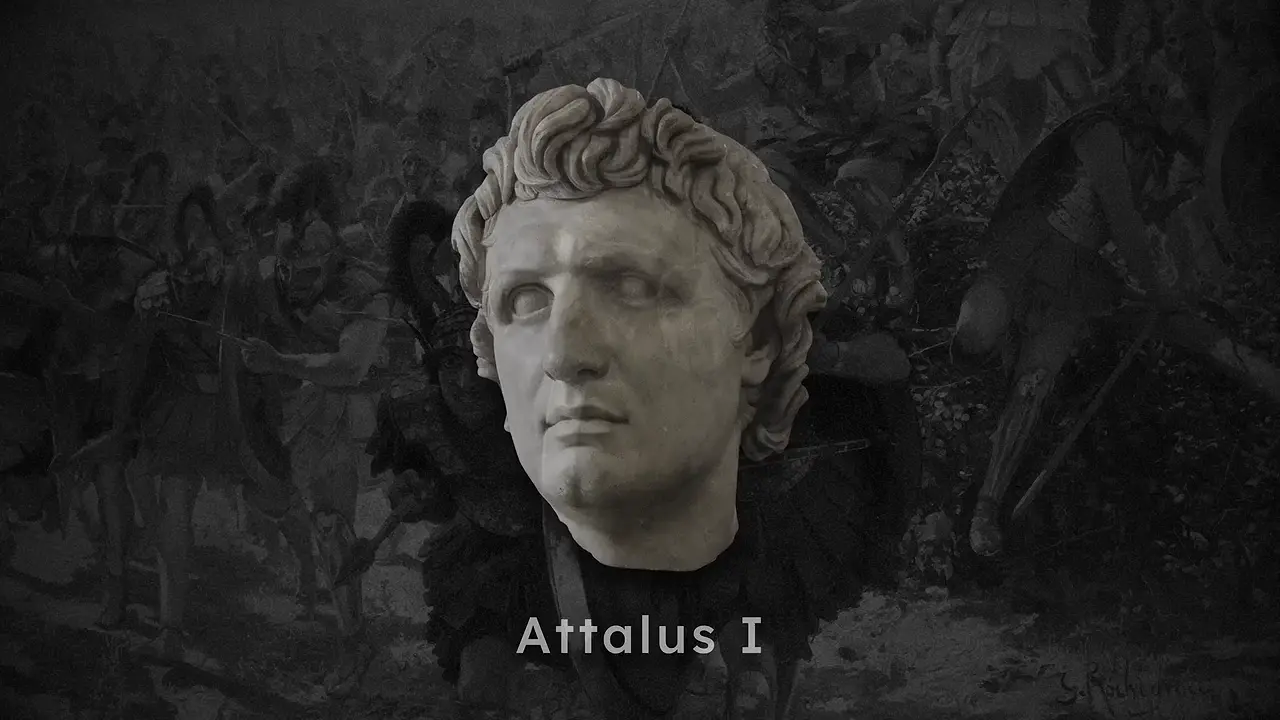
Key facts
- Philetaerus (r. 281–263 BC) built sanctuaries and transformed Pergamon (Aiolis) into a monumental capital in the Kaikos River valley
- Eumenes I succeeded Philetaerus in 263 BC and defeated the Seleucid king Antiochus, gaining independence
- Attalus I claimed the title of king after a publicized victory over the Galatians in Asia Minor
- Attalus I built a stoa at Delphi and established a key alliance with the Roman Republic
- Under Eumenes II, the Pergamon (Aiolis) citadel received its definitive fortifications and a vast gymnasium complex was built on the lower slopes
- The Great Altar of Zeus, described as the supreme achievement of Hellenistic art, was constructed in the shadow of the royal palaces
- Eumenes II secured control over most of Asia Minor after the Romans drove the Seleucids beyond the Taurus Mountains
Site mentioned
Sources
Philetaerus - Liviuslivius.org
Philetaerus remains loyal to the House of Seleucus and is lord of Pergamon and the valley of the Caicus. He also gains influence in the ...
History of Pergamon - My Favourite Planetmy-favourite-planet.de
Philetaerus was able to hold onto Pergamon's wealth and use it to increase his power and influence and found the Attalid dynasty.
Philetaerus - Wikipediaen.wikipedia.org
Philetaerus was the founder of the Attalid dynasty of Pergamon in Anatolia. Philetaerus. Marble bust of Philetaerus. Roman copy from 1st century AD of the ...
Philetaerus, the Eunuch Founder of the Kingdom of Pergamon and ...labrujulaverde.com
Philetaerus, the eunuch founder of the Kingdom of Pergamon and the Attalid Dynasty who knew how to manage Alexander's heirs.
Philetaerus - in ancient sources @ attalus.orgattalus.org
Philetaerus claims to have discovered a medicinal plant, called polem. 262/9 General remarks about the role of Philetaerus as ruler of Pergamon.
Was this story useful?
Keep exploring
Every site on this page sits on the globe, and the people who research them are on the Discord.
3D Globe · Sites by country · Story Archive · Research Library · Weekly Journal · Search
AI-generated text · images from the original sources · always verify with the sources.