

The Djedi Robot mission (2010-2011) revealed how blocking stones were installed: wedged from behind on a small ledge, not slid from above. The copper tools found on the exterior? They served as implements for insertion and removal. The same groove system was found in the Queen's Chamber southern shaft. 🛠️🔩
Blocking stones wedged from behind, copper pins are handles
 EgyptTechnology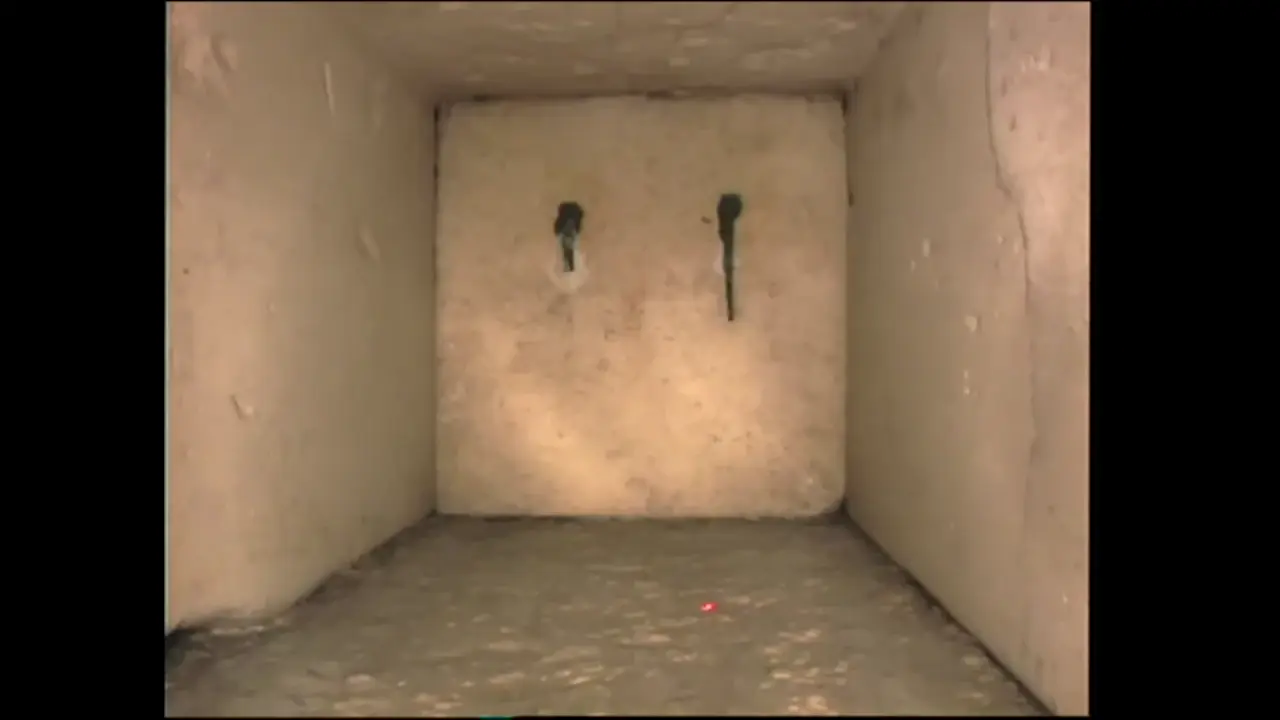
Site mentioned
Key facts
- 2011 Jetty Robot mission found blocking stone supported by 3mm ledge in west wall
- Superficial cracks in ceiling span both sides of slab
- Stone was inserted by wedging from behind, not sliding from above
- West wall behind slab has slightly rougher surface showing insertion method
- Channel end was tapered slightly for tight fit
- Copper loops allow claw end of hammer to give lateral leverage to free block
- Grooves found in King's Chamber southern channel served same blocking purpose
Sources
isida-project.org
Linked in video description
portlandbible.com
Linked in video description
mfa.org
Linked in video description
Was this story useful?
Keep exploring
Every site on this page sits on the globe, and the people who research them are on the Discord.
3D Globe · Sites by country · Story Archive · Research Library · Weekly Journal · Search
AI-generated text · images from the original sources · always verify with the sources.