

Bell Beaker was not one uniform people. Ancient DNA shows largely local ancestry in Iberian Beaker groups, substantial Steppe ancestry in central Europe, and migration-driven replacement in Britain. Cremation left genetic blind spots, while DNA turnover cannot prove genocide. The video argues for a no-movement spread; the evidence instead points to a mix of cultural borrowing and migration, with substantial movement in some regions.
Bell Beaker DNA shows regional diversity and major migrations
Key facts
- The Bell Beaker phenomenon dates to roughly 2800–1800 BCE and appeared in Iberia by about 2800 BCE, reaching Britain around 2500 BCE; burials varied, with inhumation and grave goods common in Britain and much of central Europe, while cremation was also practiced.
- The culture was named for its bell-shaped pottery, not for a single people.
- Ancient DNA shows regional variation rather than no genetic relationship: Iberian Bell Beaker groups largely retained local ancestry, while central European groups had substantial Steppe-related ancestry.
- Cremation destroyed much DNA and limited direct comparisons, but Corded Ware overlapped with Bell Beaker groups and was not simply an earlier population.
- Sharp ancestry shifts in Britain and parts of central Europe indicate migration and population replacement, but DNA alone cannot establish genocide.
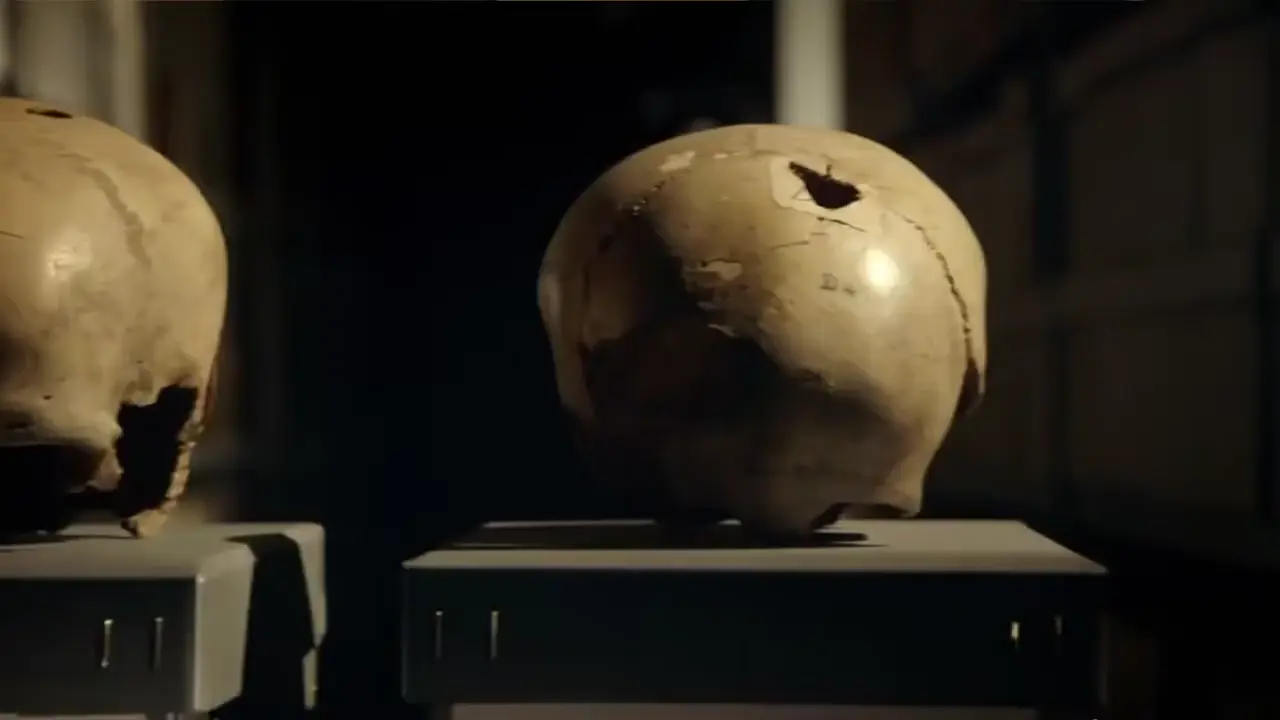
- No published ancient-DNA genomes are available from the cremated Stonehenge and Grim's Pound assemblages.
- The Bell Beaker phenomenon spread through both cultural borrowing and population movement; there was no single Europe-wide migration, nor a general absence of significant movement.
Sources
earth.google.com
Linked in video description
DNA study reveals 3000 years of genetic stability in ...archaeologymag.com
DNA study reveals 3,000 years of genetic stability in Europe's Low Countries before Bell Beaker expansion. by Dario Radley · February 16, 2026.
Bell Beaker cultureen.wikipedia.org
2023 analysed genome-wide data from 49 Guanche individuals, whose ancestry was modelled as comprising 73.3% Morocco Late Neolithic, 6.9% Morocco Early Neolithic ...
The Beaker Phenomenon and the Genomic Transformation of ...pmc.ncbi.nlm.nih.gov
by I Olalde · 2018 · Cited by 1166 — Genome-wide data have revealed high proportions of Steppe-related ancestry in Beaker Complex-associated individuals from Germany and the Czech Republic, showing…
ARTICLEreich.hms.harvard.edu
by DNA Ancient · Cited by 1165 — Here we present genome-wide data from 400 Neolithic, Copper Age and Bronze Age Europeans, including 226 individuals associated with. Beaker- ...
Ancient genomes are revolutionizing the study of human ...rpgroup.caltech.edu
by E CALLAWAY · 2018 · Cited by 41 — In the largest ancient-DNA study to date, scientists sequenced the remains of 400 Neolithic, Copper-Age and. Bronze-Age Europeans, including 226.
History and genetics of the Bell Beaker phenomenoneupedia.com
It is associated with the diffusion of Proto-Italo-Celto-Germanic speakers and haplogroup R1b-L11 (and subclades) across central and western Europe. Coincides ...
Bell Beaker Heritage and Red Hair: A Genetic Geography ...exploreyourdna.com
Bell Beaker populations from central Europe move south and replace nearly all Neolithic male lineages of Iberia. R1b-DF27 becomes dominant in ...
Was this story useful?
Keep exploring
Every site on this page sits on the globe, and the people who research them are on the Discord.
3D Globe · Sites by country · Story Archive · Research Library · Weekly Journal · Search
AI-generated text · images from the original sources · always verify with the sources.