

Carvings at Baphuon depict a Mahabharata scene: a flying severed head wearing a crown and long earrings, with an arrow attached. This illustrates Jayadratha, king of Sind (modern Pakistan), who had a boon that his head would burst if it touched the ground before sunset. Arjuna beheaded him with divine arrows and directed the head to land in the lap of his meditating father, who had cursed Arjuna for Abhimanyu's death. This Sanskrit epic made it into 11th-century Cambodian temple art. 📜
Baphuon carving illustrates Mahabharata episode of Jayatrada's decapitation
 CambodiaArt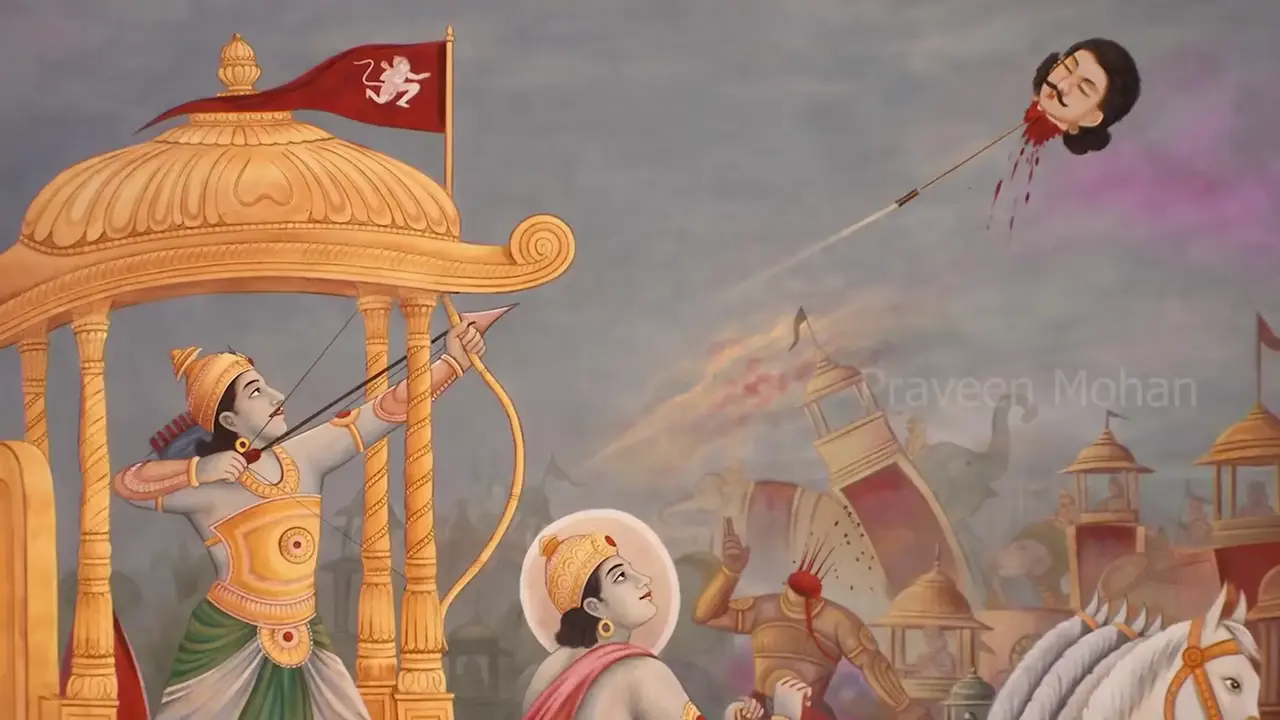
Site mentioned
Key facts
- Carving shows figure in namaste position with flying severed head wearing crown and long ears
- Head has arrow attached to neck; multiple arrows visible in scene
- Same head appears in separate carving on meditating figure's lap
- Episode references Mahabharata text: warrior Arjuna kills king Jayatrada of Sind (modern Pakistan) with arrow
- Jayatrada had boon that anyone making his head touch ground would explode; Arjuna directed head to land on king's father's lap
- Father stood up startled, head touched ground, father exploded into thousand pieces
Sources
[PDF] Serpents in Angkor Apotheosis of a Decorative Motifcdn.angkordatabase.asia
Airport of Bangkok where a large three-dimensional version embellishes the main hall. Viṣṇu, four-armed and wearing a tall pointed crown, dances on the peak ...
Was this story useful?
Keep exploring
Every site on this page sits on the globe, and the people who research them are on the Discord.
3D Globe · Sites by country · Story Archive · Research Library · Weekly Journal · Search
AI-generated text · images from the original sources · always verify with the sources.