

Only 5 of 37 extinct megafauna genera show human hunting signs. 2012 poll: 0% of 91 archaeologists blamed hunting alone. Page-Ladson site in Florida shows millennia of coexistence. Ice-free corridor was uninhabitable for 900 years after opening.
Archaeologists reject Overkill hypothesis for megafauna extinction
 United StatesTheory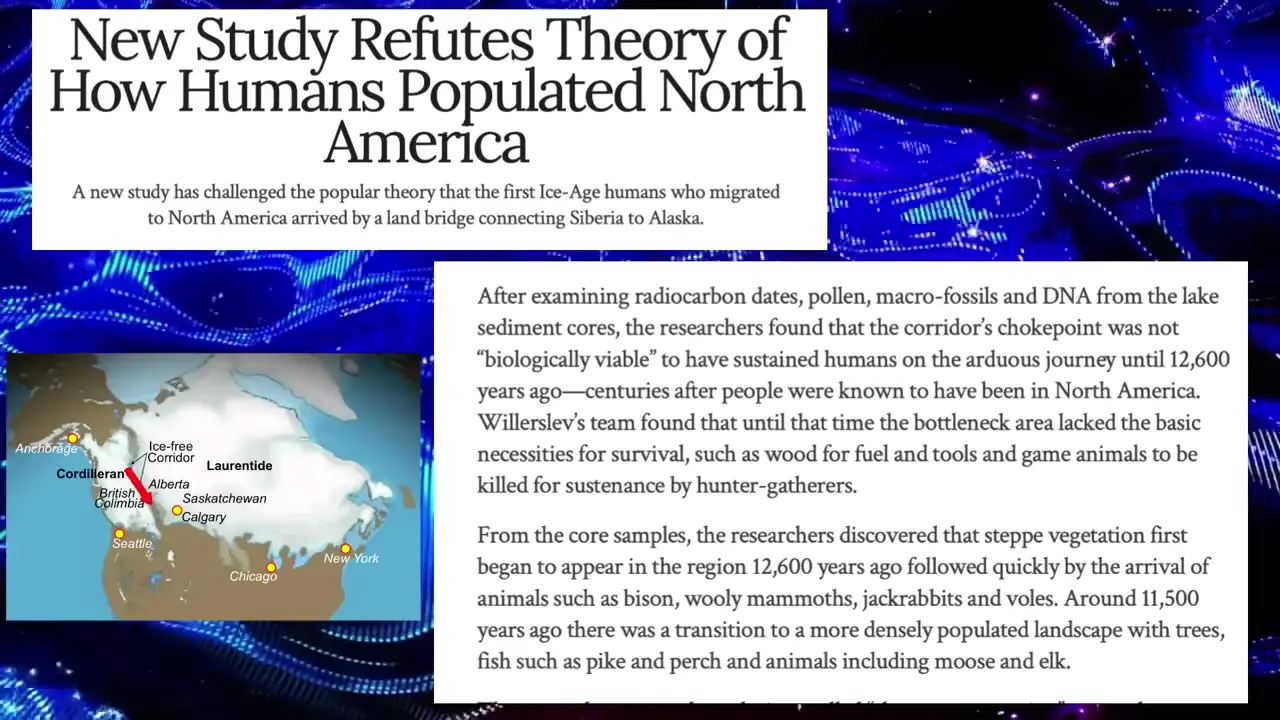
Site mentioned
Key facts
- The Pleistocene Overkill Hypothesis claims humans caused megafauna extinction through hunting
- Of 37 genera of extinct animals, only 5 show signs of human hunting - some archaeologists say only 2
- This leaves 32-35 species supposedly wiped out by humans with no evidence
- In 2012 at the Society for American Archaeology meeting, 82% of 91 archaeologists cited combination of factors, 18% cited climate change, 0% cited human hunting as main cause
- The Page-Ladson prehistory site in Florida shows humans coexisted with megafauna (mastodons, camelids, bison) for thousands of years
- The ice-free corridor on the Bering land bridge couldn't sustain life for 900 years after opening - thousands of years after humans were already in North America
- Genetic studies suggest as few as 70 people populated North America in the first wave
- The hypothesis uses assumptions from island species biology that don't transfer to mainland megafauna
Sources
pmc.ncbi.nlm.nih.gov
Linked in video description
iaa.uni-rostock.de
Linked in video description
history.com
Linked in video description
Was this story useful?
Keep exploring
Every site on this page sits on the globe, and the people who research them are on the Discord.
3D Globe · Sites by country · Story Archive · Research Library · Weekly Journal · Search
AI-generated text · images from the original sources · always verify with the sources.