

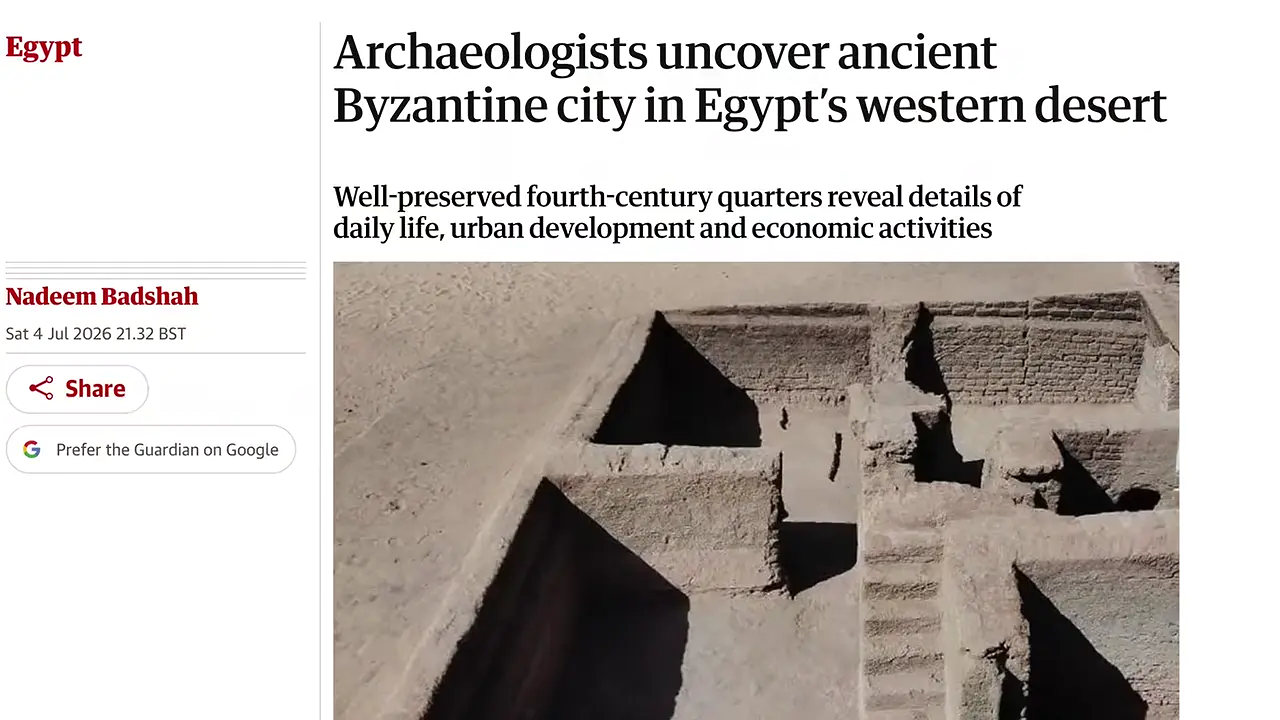
Ain el-Sabil in Egypt's Dakhla Oasis isn't a new find! The site was first identified in the 1980s, with major excavations from 2009-2011 uncovering mudbrick houses, a large basilica church, Christian artwork, and coins dating to the early 4th century AD. It was publicly announced in November 2011, making a recent 2026 'brand-new discovery' claim overlook decades of earlier work.
Ain el-Sabil Byzantine city first identified in 1980s, not a recent discovery
Key facts
- Site first identified in the 1980s in Egypt's Dakhla (Dler) Oasis
- Major excavations took place between 2009 and 2011
- In 2009, mudbrick houses, coins, pottery, and more were discovered and dated to early 4th century AD
- From 2010 to 2011, a large basilica church, more residential buildings, streets, Christian artwork, coins, and writings were uncovered
- The discovery was publicly announced in November 2011, 15 years before the video
- Archaeological work continued from 2019 onwards but has not been formally published
- Egypt's Ministry of Tourism and Antiquities' 2026 Facebook post presented the site as a brand-new discovery without referencing earlier excavation history
Sources
apnews.com
Linked in video description
Was this story useful?
Keep exploring
Every site on this page sits on the globe, and the people who research them are on the Discord.
3D Globe · Sites by country · Story Archive · Research Library · Weekly Journal · Search
AI-generated text · images from the original sources · always verify with the sources.