

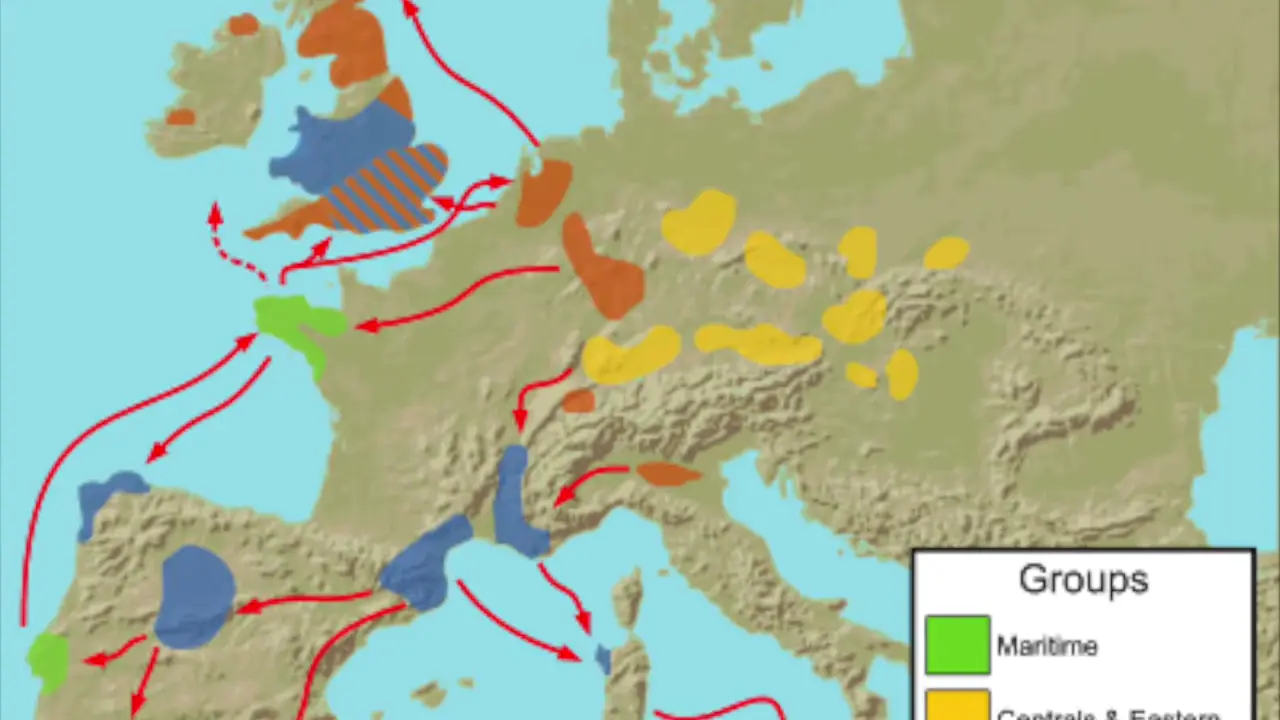
Bell Beaker pottery found across western and central Europe — some researchers note inconsistent dating and interpretations. The phenomenon remains debated, with questions about whether certain artifacts have been over-attributed to Beaker culture. Some scholars note that limited data may have been extrapolated into broader narratives about population change and cultural spread
Academic misrepresentation of Bell Beaker evidence and pottery attribution
Key facts
- Bell Beaker pottery found across Portugal, Germany, Sardinia, and Scotland with inconsistent dating
- Same bell-shaped pots used for incompatible functions: food storage and ash storage
- Curved pottery sherds attributed to Bell Beakers despite different construction styles and death rituals
- Academic papers mass-produced citing previous Bell Beaker papers rather than primary evidence
- Funding incentives led to extrapolation of findings into sensational headlines about genocide and continental expansion
- DNA evidence contradicts unified Bell Beaker culture theory but academic consensus persists
Sources
earth.google.com
Linked in video description
Was this story useful?
Keep exploring
Every site on this page sits on the globe, and the people who research them are on the Discord.
3D Globe · Sites by country · Story Archive · Research Library · Weekly Journal · Search
AI-generated text · images from the original sources · always verify with the sources.