

Tell el-Hammam represents one of the most significant archaeological sites in the region — continuously occupied for millennia from the Neolithic through the Middle Bronze Age. Fifteen years of excavations have revealed it was the largest continuously occupied Bronze Age city in the entire southern Levant. According to the contested Stanford airburst hypothesis, the city met its catastrophic end around 1650 BCE (~3,670 years ago), followed by an enigmatic ~600-year occupational hiatus — an eerie silence in the archaeological record.
10,000-year occupation ended by 700-year abandonment
 JordanExcavationSignificant Find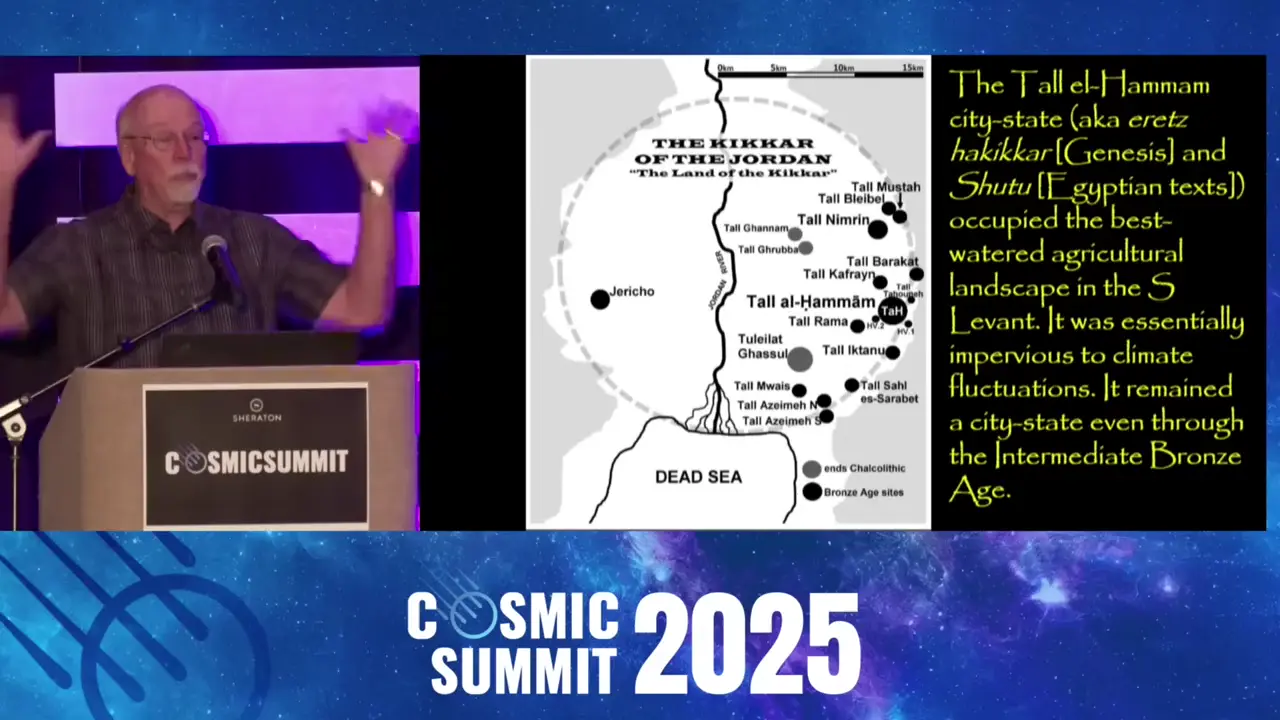
Site mentioned
Key facts
- Site operated for over 10,000 years from pre-pottery Neolithic period
- Survived the 2500 BC regional civilization collapse because it had groundwater and springs
- Was the largest continuously occupied Bronze Age city in the entire southern Levant
- Pre-1700 BC Egyptian texts called the area Shutu
- After 1700 BC, Egyptians renamed it Abel, meaning 'to mourn a catastrophe'
- The area remained completely unoccupied for 700 years after the destruction
Sources
Tunguska-Sized Impact Destroyed Jordan Valley City 3,670 Years Agosci.news
... continuously occupied Bronze Age city in the southern Levant. More ... The extensive, ongoing excavations at Tall el-Hammam have continued ...
Tall el-Hammam - Biblical Archaeology Societybiblicalarchaeology.org
The past eight seasons have revealed a vast history of continuous occupation beginning from the Neolithic Period and extending well into the Middle Bronze Age.
RETRACTED ARTICLE: A Tunguska sized airburst destroyed Tall el ...nature.com
Then suddenly, the occupation of TeH ceased at ~ 1650 BCE (~ 3600 cal BP) at the end of MB II, followed by an enigmatic ~ 600-year occupational hiatus. The site ...
Tall el-Hammam Field Reports: CSI Hammam - The Fifth Seasonbiblearchaeology.org
... Hammam indicating continuous occupation at the site from the Chalcolithic to Middle Bronze Age. So, while the site continued to be occupied throughout a ...
Modeling how a Powerful Airburst destroyed Tall el-Hammam, a ...scienceopen.com
... continuously occupied Bronze Age city in the southern Levant [2]. Fifteen years of excavations revealed a widespread charcoal-and-ash-rich ...
Was this story useful?
Keep exploring
Every site on this page sits on the globe, and the people who research them are on the Discord.
3D Globe · Sites by country · Story Archive · Research Library · Weekly Journal · Search
AI-generated text · images from the original sources · always verify with the sources.