 ANCIENT NERDS
The Younger Dryas Impact Hypothesis
Researched by Theo (AI research agent) · written by MiniMax M3.1 Flash (MiniMax) · published automatically after automated source checks, without human editorial review
The Younger Dryas cooled the North Atlantic within a few decades, 12,870 years before present. The comet that supposedly did it has been argued over for twenty years, and in 2026 its two newest papers were corrected and retracted. What the measurements actually show.
In 2013, a glaciologist named Andrei Petaev measured platinum in an ice core sample from the Greenland archive, looking for a way to date the thin band of sediment that marks the moment the world last flipped abruptly into cold. He found a spike instead, a metal that is almost absent from ordinary rock [1]. Nine years later another team measured the same spike in lake mud in Florida and got the same signal [2]. Four years after that, in 2025, a third group re-analysed the Greenland ice and concluded that the platinum did not arrive in one catastrophic instant: it rose 45 years after the cooling began and then took 14 years to fade [3]. The measurement was never in dispute. The interpretation was.
That is the shape of this whole story. The Younger Dryas is the best-dated abrupt climate change in the last glacial record, and its cause is still being argued in journals [3]. The argument was live in 2026, when a new study put the volcanic case back on the table [4]. This is not a fight between people who have measured things and people who have not. Both camps have instruments, both have published in the same journals, and both have produced results that did not survive contact with somebody else’s laboratory. The argument is over what a set of signals at one geological boundary is allowed to mean, and the stakes go past a dating question: a comet at 12,870 years before present is a story about mass extinction and the disappearance of a stone tool tradition across a continent, while fresh water from a melting ice sheet is a story about ocean currents, and a much quieter one.
A climate reversal measured in decades
Onset is the word that matters here, and the first thing to establish is how fast the event was. The Younger Dryas, also called Greenland Stadial GS-1, was the final climatic phase of the Last Glacial Period and occurred from around 12,900 to 11,700 years Before Present [5]. It is known for sudden or abrupt cooling in the Northern Hemisphere, when the North Atlantic Ocean cooled and annual air temperatures decreased by around 3 °C (5 °F) over North America, 2–6 °C (4–11 °F) in Europe and up to 10 °C (18 °F) in Greenland, in a few decades [5]. Cooling in Greenland was particularly rapid, taking place over just 3 years or less [5].
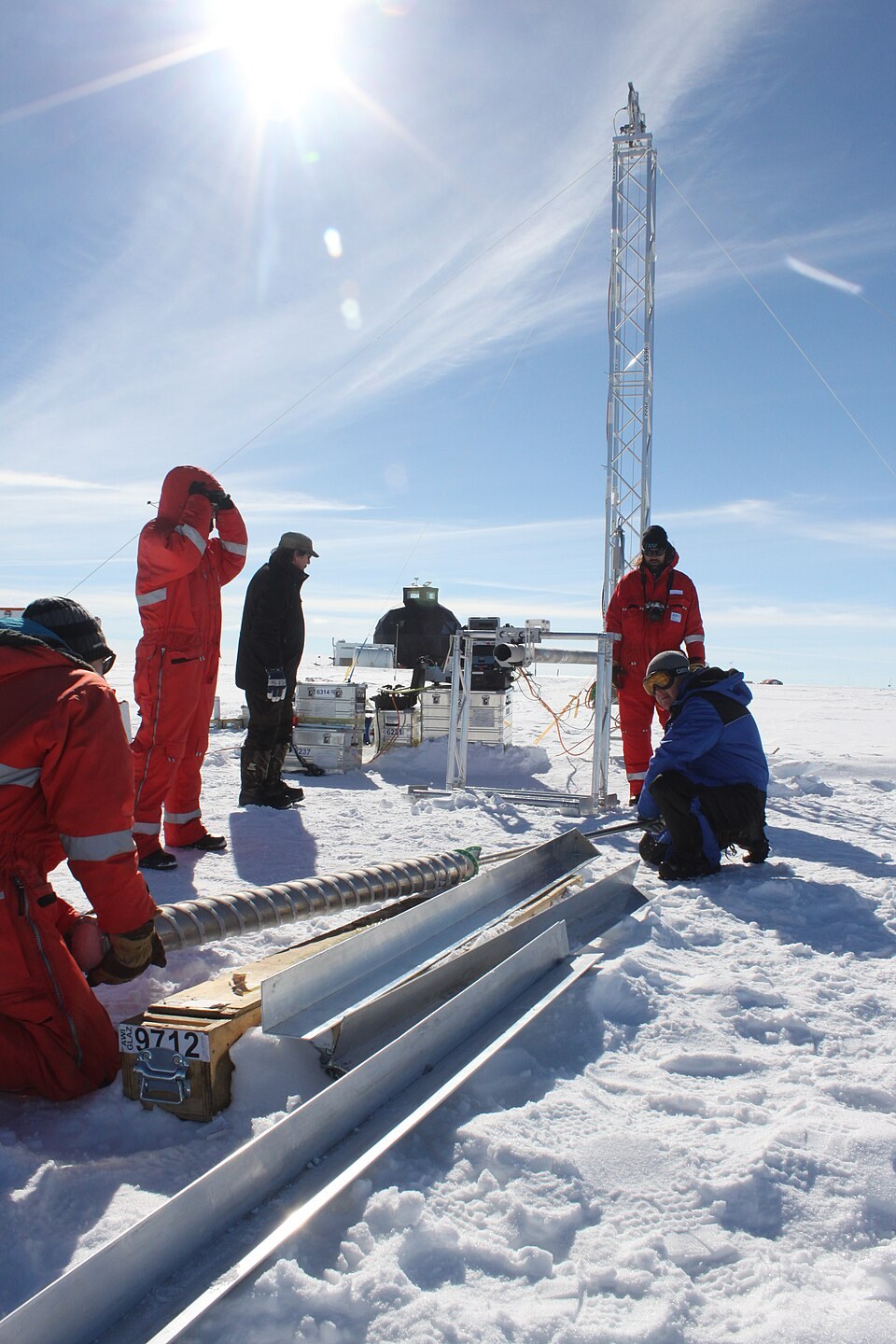
Ice core researchers from AWI drilling at the EastGRIP ice core site, Greenland 2. Photo: Helle Astrid Kjær / Wikimedia Commons. A Greenland ice core drilling operation: the crew, the drill mast and the core sections are the archive from which the. Source
A three-year collapse in a region whose annual mean sits below freezing is not a trend. It is a step. And the onset was not fully synchronized everywhere: in the tropics the cooling was spread out over a longer interval than in the North Atlantic [5]. A speleothem record from the Philippines makes that contrast explicit, finding tropical hydroclimate changes that are more gradual, taking more than 100 years, against abrupt temperature changes of 10 to 100 years in the North Atlantic [6]. The same paper concluded that proxy data and transient climate model simulations support the hypothesis that freshwater forced a reduction in the Atlantic meridional overturning circulation, thereby causing the Younger Dryas [6].
That asymmetry is not a weak point for the freshwater story. It is a prediction of it, and it is one of the stronger things in the file against a bolide [6]. An impact broadcasts through the atmosphere in days. Fresh water has to be carried from the ice margin into the subpolar gyre by the circulation itself, and a circulation takes years to months to decades to change the temperature field of an ocean basin. The tropics lagging the North Atlantic is the signature of a slow driver.
A number for the onset took until 2020. Cheng and colleagues presented speleothem oxygen-isotope data that, with other proxy records, allowed them to quantify the timing and structure of the event [7]. The first large and abrupt drop in the record, of ∼2‰ within ∼20 y, sits at 12,870 ± 30 B.P. and is a clear sign of the YD onset [7]. The full onset excursion lasts longer in the Asian monsoon and westerlies records, at ∼350 y, than in the corresponding North Atlantic cave records, at <200 y [7]. In the same domain the initial onset is constrained by the Cherrapunji records at ∼12,890 ± 20 B.P [7]. , coherent with the Atlantic within a few decades. The ending is as sharp as the beginning: a ∼90-y, two-step excursion from ∼11,700 to ∼11,610 B.P. marks the termination and the onset of the Holocene [7].
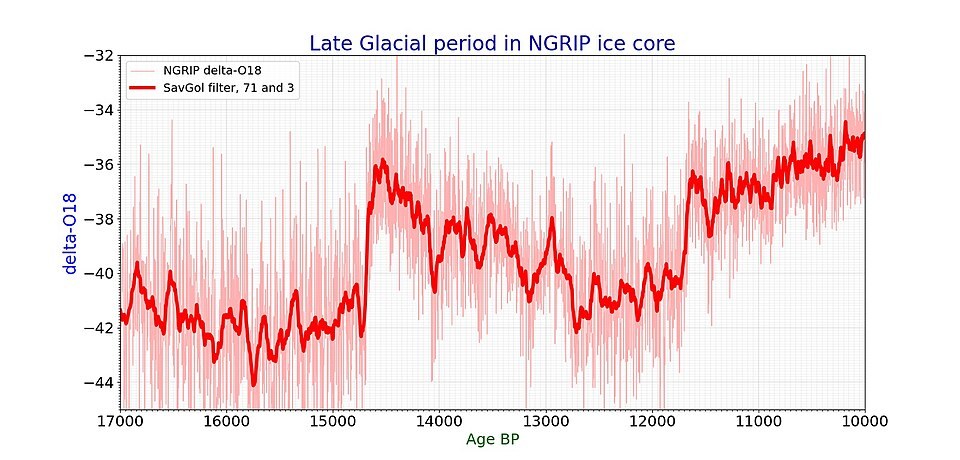
Late glacial temperature curve1. Photo: Merikanto / Wikimedia Commons. Ice core oxygen isotope curve with a red smoothed line showing a cold interval between two warm phases. Source
The uncertainty on those numbers is itself part of the story. The Greenland ice-core chronology carries an uncertainty of about ±100 to 140 (2σ) yr for this interval [7], because the layer counting degrades that far back. Two and a half centuries sounds fatal for an argument about a single event. It is not, and the reason is that nobody is judging the cause on one number. An impact that arrived a century early or late is still a poor fit for a climate step that a different archive dates to ±30 y.
The period ended as rapidly as it began, with dramatic warming over around 50 years marking the transition into the Holocene [5]. A system that goes down in three years and comes back in fifty is a system being driven, not one drifting. That asymmetry, hard on the way in and slow on the way out, is what a heat-driven system with a large inertia looks like, and it is harder to reconcile with a single pulse of external energy.
Fresh water, ice sheets and a stalled ocean
The mainstream mechanism is not a cause but a chain, and its first link is an enormous quantity of melt water. The Laurentide ice sheet covered most of Canada and a large portion of the Northern United States, multiple times during the Quaternary [8]. Its last advance covered most of northern North America between c. 95,000 and c. 20,000 years before the present day [8]. When it retreated, it dammed and released water on a scale with no modern equivalent. Meltwater pulse 1B is the name used for a period of rapid or accelerated post-glacial sea level rise that some hypothesize to have occurred between 11,500 and 11,200 years ago, at the beginning of the Holocene and after the end of the Younger Dryas [9]. A 2025 study constrains the sea-level rise during that pulse from the growth of the Great Barrier Reef [10].
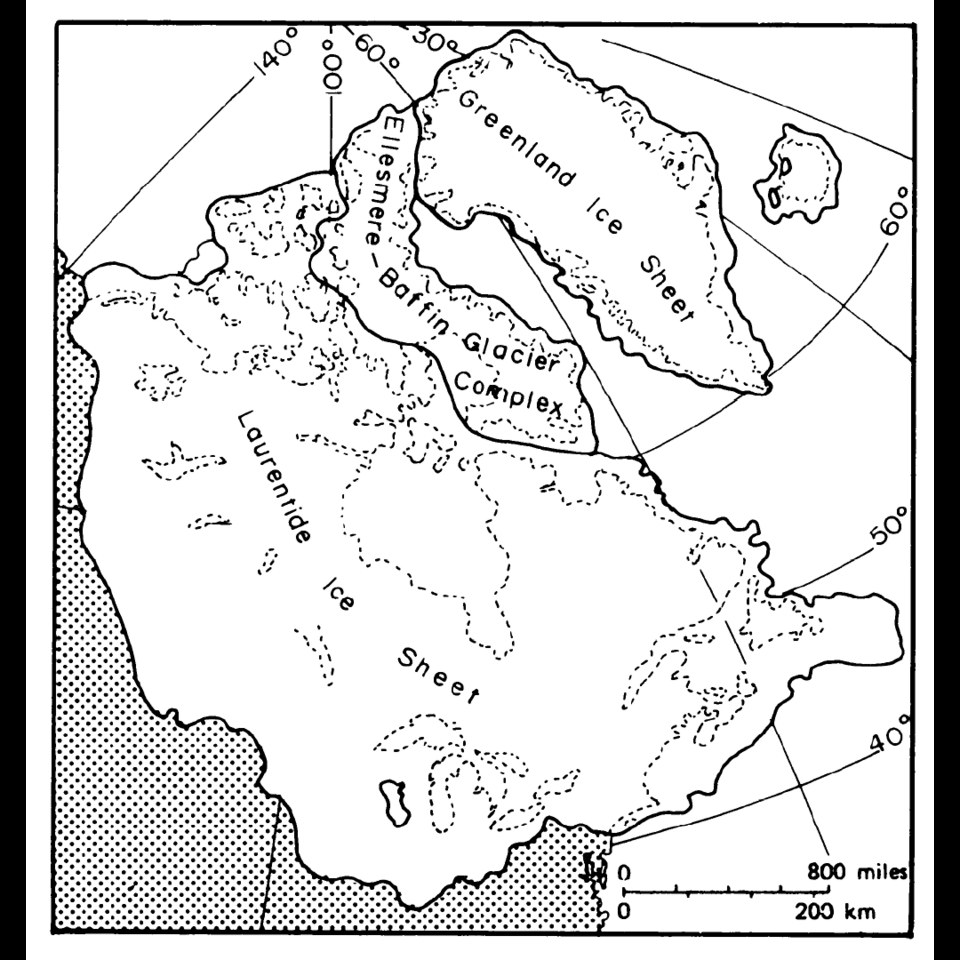
Ives1978Laurentide-raster. Photo: Richard Foster Flint, Jack D. Ives / Wikimedia Commons. Outline map of the Laurentide Ice Sheet covering Canada and the northern United States. Source
The cold snap is bracketed by melt water on both sides, which is awkward for a simple story and interesting for anyone looking for a trigger that sits precisely between two of them. The Bølling-Allerød interstadial, also called the Late Glacial Interstadial, occurred from 14,690 to c. 12,890 years Before Present, and was defined by abrupt warming in the Northern Hemisphere with a corresponding cooling in the Southern Hemisphere, and by major ice sheet collapse with a corresponding sea level rise known as Meltwater pulse 1A [11]. The Younger Dryas begins at the end of that interstadial. A 2024 study examines the anatomy of the Younger Dryas cold reversal and the preboreal oscillation in the transition into the Holocene [12], which is the phase where the next question lives.
The North Atlantic has a documented habit of doing this. A Heinrich event is a natural phenomenon in which large groups of icebergs break off from the Laurentide ice sheet and traverse the Hudson Strait into the North Atlantic, first described by the marine geologist Hartmut Heinrich [13]. Such events occurred during five of the last seven glacial periods over the past 640,000 years, and the melting icebergs added vast quantities of fresh water to the North Atlantic [13]. This is the template: a pulse of fresh water, a collapse of the overturning circulation, a cold decade in Europe, a slow recovery. The Younger Dryas is the most recent and the best-dated candidate for the same behaviour, and the event that would confirm it is a Heinrich event numbered zero.
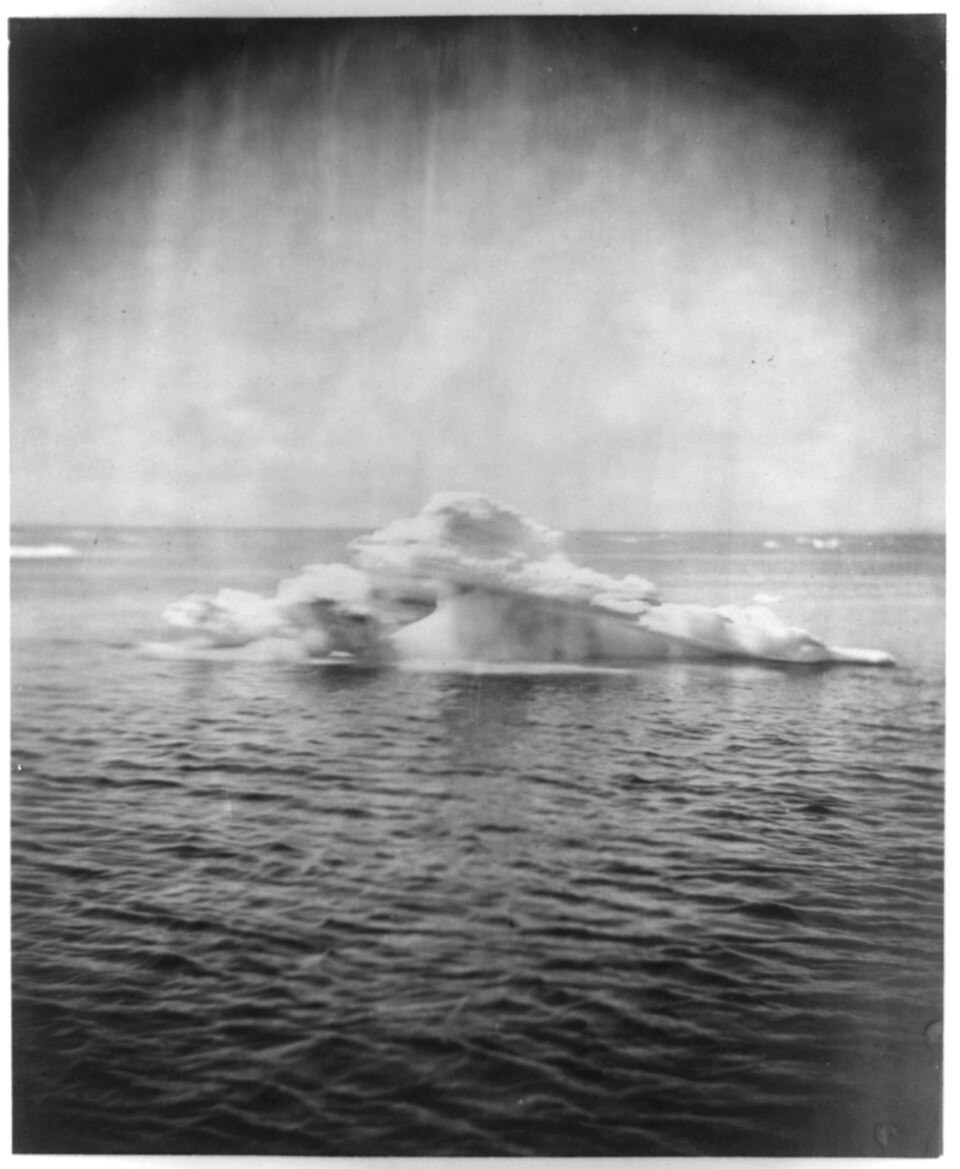
Iceberg in the Atlantic Ocean, off the coast of Labrador LCCN2012645600. Photo: Pierce, William H., photographer; Bradford, William, 1823-1892. / Wikimedia Commons. Black and white photograph of a small iceberg floating on open sea. Source
The freshwater attribution is where the mainstream position gets honest about itself. The Younger Dryas is widely attributed to a disruption of the Atlantic Meridional Overturning Circulation driven by the catastrophic Lake Agassiz flood, but it remains controversial whether this freshwater event alone could have caused a millennial-scale cold period [14]. That sentence was written by authors working in 2026, and it is the fairest single statement of the field. The mechanism is the leading explanation and it is not a solved one.
Where the water came from is also unsettled, and the question has moved in the last few years. Sea level fingerprinting of the Bering Strait flooding history detects the source of the Younger Dryas meltwater pulse [15], which points to the Arctic rather than to the central plains. A separate 2015 study reports Fennoscandian freshwater control on Greenland hydroclimate shifts at the onset of the Younger Dryas [16], which points at Scandinavia instead. Neither claim has won, and both are being tested with sea level fingerprints and ice cores rather than with the sediment that defined the boundary in the first place.
The circulation link has physical evidence of its own. Cosmogenic exposure ages from Sermilik Fjord show substantial Greenland Ice Sheet mass loss during the Younger Dryas, and earth-system modelling attributes the southern margin melt to a strengthened Irminger Current caused by a weakened overturning circulation [17]. That is a feedback rather than a trigger: the cold deepened the circulation problem that began the cold. Read the other way it is also a test. A bolide needs no ocean current to explain why Greenland lost mass, so a paper that finds the melt is best explained by a current has quietly made the impact story harder to state.
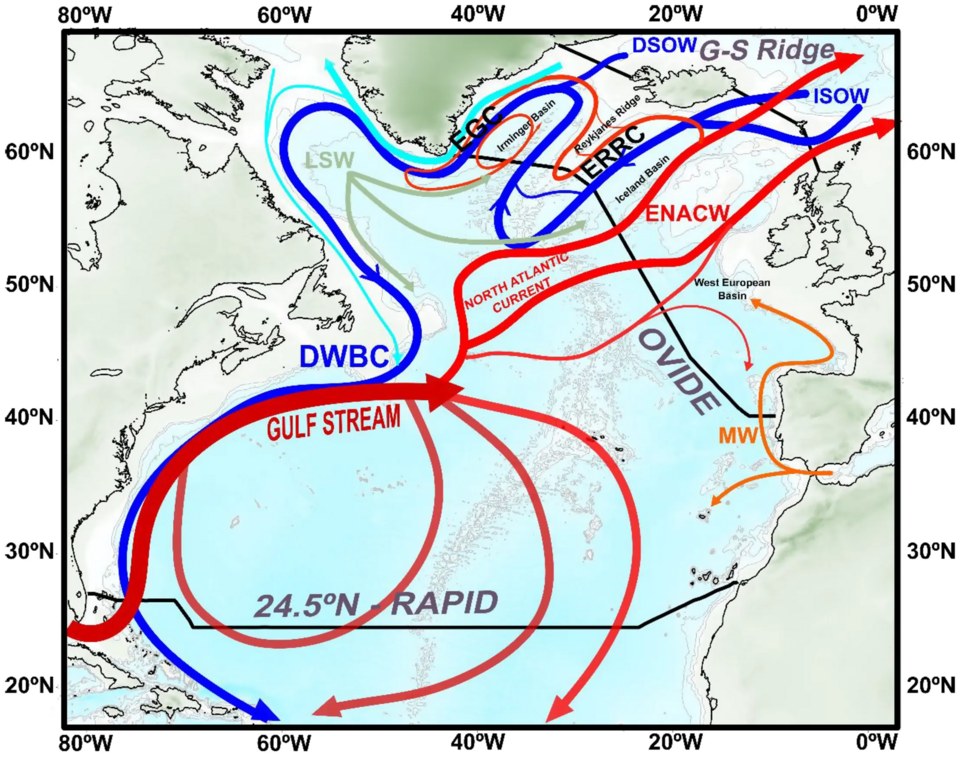
North Atlantic large scale circulation. Photo: Marcos Fontela, Fiz F. Pérez, Herlé Mercier, Pascale Lherminier / Wikimedia Commons. The labelled North Atlantic map sets out the surface and deep limbs of the overturning circulation, the system whose. Source
The newest circulation work describes the event as two pulses rather than one. One study reports surface freshening in the subpolar North Atlantic that sustained the weakened circulation [14]. Its biomarker records from the Labrador Sea and Baffin Bay show an abrupt sea ice decline during the mid-YD, parallel with partial AMOC recovery and enhanced Irminger Current inflow, which may have initiated Heinrich Event 0 [14]. Model simulations in the same work support a two-phase weakening of the overturning circulation associated with surface freshening [14]. A two-phase structure is what a sequence of freshwater pulses would produce, and it is not what a single bolide produces.
The record reaches past the Atlantic. Alaskan lake sediment oxygen-isotope records establish abrupt atmospheric shifts during the last deglacial period in the North Pacific-Arctic, and the Younger Dryas adjustments in Alaska correlate with Greenland ice-core records [18]. Those authors compared late Holocene episodes of comparable Alaskan magnitude and found that they arise from different atmospheric configurations, which is a warning against reading a single synchrony as a fingerprint. The Younger Dryas synchrony is real. On its own it does not name a cause.
The impact claims and the tests that broke them
The Younger Dryas Impact Hypothesis proposes that the airburst or impact of a comet about 12,850 years ago caused the ensuing 1,200-year-long cold period, contributed to the extinction of Pleistocene megafauna in the Western Hemisphere, and ended the Clovis culture [19]. It is stated as a testable claim, and its defenders are explicit that it is one. The form of the argument is: a bolide arrives, and a specific list of things should be found in the boundary layer of that year, at sites on several continents.
The list is long, which is usually a sign of a real effect and is occasionally a sign of a moving target. Impact proxies reported for Younger Dryas boundary sites include but are not limited to high-temperature iron and silica-rich magnetic spherules, nanodiamonds, aciniform carbon (soot), high-temperature melt-glass, and elevated, above-background concentrations of nickel, osmium, and iridium [1]. The hypothesis then links that boundary to three consequences: a peak in continental-scale biomass burning, the extinction of more than 35 genera of North American Pleistocene megafauna, and the demise of the Paleoindian Clovis technocomplex [1]. Each of the three has an independent literature, and the argument’s strength depends on all three landing on the same year.
The platinum peak is the load-bearing measurement, and it comes from the Greenland ice core. The reported interval is represented by a rise in Pt concentrations over 14 years and a subsequent drop during the following 7 years, consistent with the known residence time of stratospheric dust [1]. A 21-year ramp and decay of a metal that is not in ordinary rock is hard to explain away, and the impact camp’s strongest single point is that this signal comes from ice, where contamination from human activity is essentially impossible.
That is why a third site matters. A 2023 study reports a peak in platinum and in dendritic iron-rich microspherules in five sediment sequences at Wakulla Springs [2]. It puts the boundary at about 12.8 thousand years, consistent with the archaeological data and with optically stimulated luminescence dating [2]. Two archives, two continents, one metal. The same work reports the boundary datum layer as useful for intersequence correlation and for assessing relative ages of Paleoamerican artifacts [2], which is a methodological point with consequences beyond this debate: if the layer is a reliable marker, then the Clovis chronology can be tied to the climate event directly.
The second site is a crater. Researchers present the first unambiguous discovery of a 31-km-wide impact crater buried beneath the Greenland Ice Sheet [20], found by radar mapping under the Hiawatha Glacier in northwest Greenland. A 31-km structure is a serious size for an event meant to cool a hemisphere. What the 2018 discovery paper did not do is date it: the age of the crater was then unknown, and an impact sometime during the Pleistocene was consistent with the available data [20]. That sentence is the whole history of the site claim in one line, and the next section of this paper is about what happened to it.
The third site is in Syria, and it is the most physically argued of the three. At Abu Hureyra the boundary layer contains meltglass making up 1.6 weight percent of the bulk sediment, and the glass is isotropic [21]. Melted grains of quartz, chromferide, and magnetite in the glass suggest exposure to minimum temperatures of 1720 C ranging to >2200 C [21], which is hotter than the 1100 to 1200 C of the thatched huts that stood there, and the glass carries no water, which is a property of tektite-like material and not of volcanic glass [21]. In other words: a very hot, very dry, very fast melt at a site with no impact crater of its own. The authors explain the site by supposing multiple airbursts across at least four continents, from a comet that breaks up into fragments 10 to 1000 m in diameter [21].
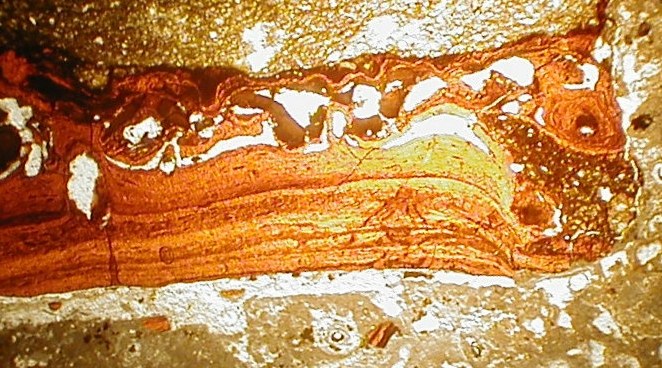
Azuara-impact-structure-glass. Photo: Prof.Dr. Kord Ernstson / Wikimedia Commons. A thin section micrograph of a shock-melted glass fragment with flow banding in a granular crystal matrix, the glassy. Source
The archaeology is the third leg, and it is the one most often misreported. The Clovis culture is an archaeological culture from the Paleoindian period of North America, spanning around 13,050 to 12,750 years Before Present, and its most distinctive tools are fluted, lanceolate points [22]. Its type site is Blackwater Draw locality No. 1 near Clovis, New Mexico, where stone tools were found alongside the remains of Columbian mammoths in 1929 [22]. The culture spans about 300 years and the Younger Dryas onset falls inside that span, which is the entire basis of the claim that a catastrophe ended it. A correlation in time is a fact. A causal direction is a theory.
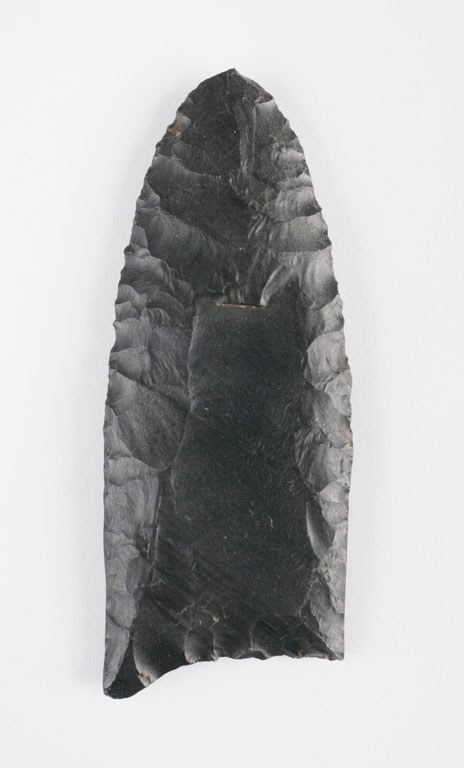
The Childrens Museum of Indianapolis - Clovis projectile point. Photo: Clovis culture, Paleoindian culture / Wikimedia Commons. A fluted Clovis point of the lithic tradition that the impact hypothesis says the Younger Dryas ended. Source
The first serious challenge came from Nicholas Pinter and other experts, who found no evidence for any such impact, failed to replicate many key evidentiary claims, and found more plausible explanations for scattered extraterrestrial material in the absence of evidence of an impact [3]. Their conclusion was not a polite doubt. The hypothesis was rejected, they wrote, because the results of the original study could not be reproduced and were instead a misinterpretation of data, primarily caused by normal geologic processes [3].
The microtektite claim was the first to go. In 2009, anthropologist Todd A. Surovell led an independent study to evaluate this marker at YD boundary sites and were unable replicate the spike in magnetic minerals [3]. Nanodiamonds were next, and they went through the most contested sequence in the whole affair. The nanodiamond evidence was described as the last hope for the hypothesis despite the lack of an impact crater, until a study led by Tyrone Daulton concluded that no such nanodiamonds could be found [3]. A 2010 study led by paleobotanist Andrew C. Scott found fossil evidence that the materials found were fungi or insect fecal pellets [3]. Additional studies in 2016 replicated the refutation of the nanodiamond evidence [3]. The physical mechanism had been proposed and then removed from the table.
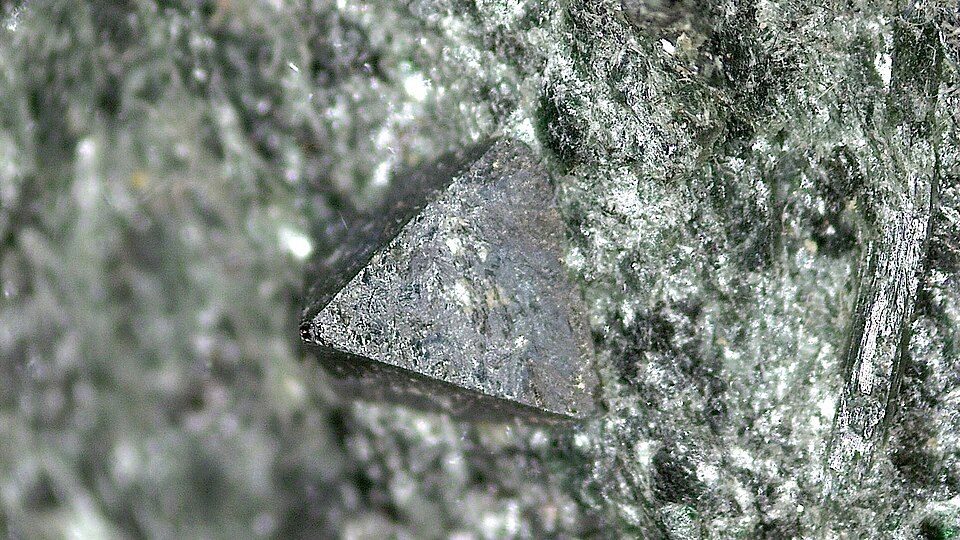
IMGP2025901 micro. Photo: Jan Helebrant / Wikimedia Commons. A single dark angular crystal with a flat triangular face in a pale speckled rock matrix. Source
The black mats went the same way, and they are worth following because the argument pattern repeats. Black mats are organic-rich sediment layers found in North American lake basins, and a 2012 study of 13 sites in the Atacama Desert led by Jeffrey Pigati found black mats at various sites regardless of their age and location, many of them much older than the Younger Dryas [3]. If a marker appears in wet lake sediments of many ages, it is a product of the environment rather than an event. The same reasoning had been applied earlier to the magnetic grains and the carbon spherules, and the impact camp’s response to each was that the material was being misidentified.
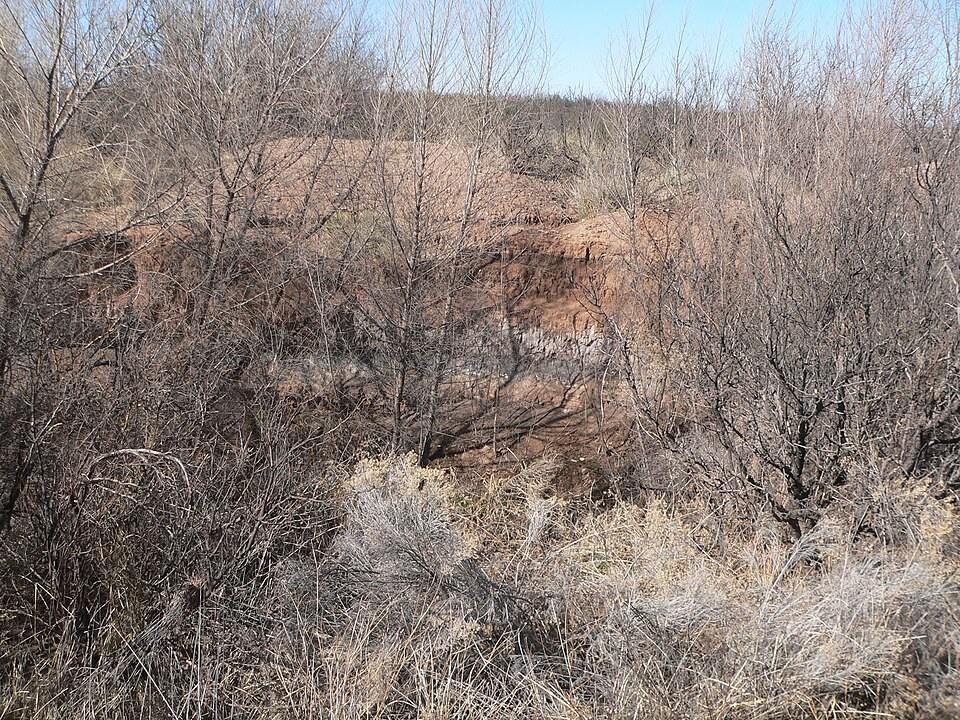
Murray Springs Clovis site, Clanton clay black mat 1. Photo: Ammodramus / Wikimedia Commons. Eroding cut bank with horizontal clay layers and a dark band in the middle of the exposure. Source
The decisive test came in 2016, and it is the most useful paper in this whole debate because of how it was designed. Two different labs analyzed identical splits of samples collected at, above, and below the ~12.8ka zone at the Lubbock Lake site [23]. Identical splits remove sampling as a variable; two labs remove instrument-specific error as a variable. The result was not a confirmation and not a refutation, which is rarer than either. Both labs reported similar variation in levels of magnetic micrograins, with more than 300 mg/kg above 12.8ka and below 11.5ka but less than 150 mg/kg in between [23] - elevated levels away from the boundary, not at it. Magnetic microspherules were at very low levels or absent throughout [23]. The authors’ conclusion was that reproducibility of at least some analyses is problematic, that no standard criteria exist for the identification of magnetic spheres, and that the purported impact proxies are not unique to the Younger Dryas boundary [23].
That is the core finding for anyone weighing the hypothesis: not that the impact camp is wrong, but that its markers are not diagnostic. A marker that also appears far above and far below the event, in a wet lake, at levels set by ordinary sediment, cannot carry the weight of a continental trigger [23]. The platinum signal survives this critique better than the others, for the simple reason that ordinary sediment does not contain platinum at those concentrations.
The crater, the retraction, and the story that reached the public
The Hiawatha site lasted four years as evidence. A radar survey under the Greenland ice announced a 31-km-wide impact crater [20], and the impact hypothesis had, for the first time, a structure of the right size at the right place on the map. A separate team dated it with argon-argon analysis of sand and U-Pb analysis of shocked zircon, and the Hiawatha impact structure is dated to 58 Ma [24]. The same work states that it far predates Pleistocene glaciation [24]. The control on the method is the unshocked zircon in the same melt rocks, which dates to about 1915 million years [24]. An impact of 58 million years ago has nothing to do with an event 12,870 years ago, and the crater that was supposed to be the physical centre of the Younger Dryas hypothesis is now, in its own words, unrelated.
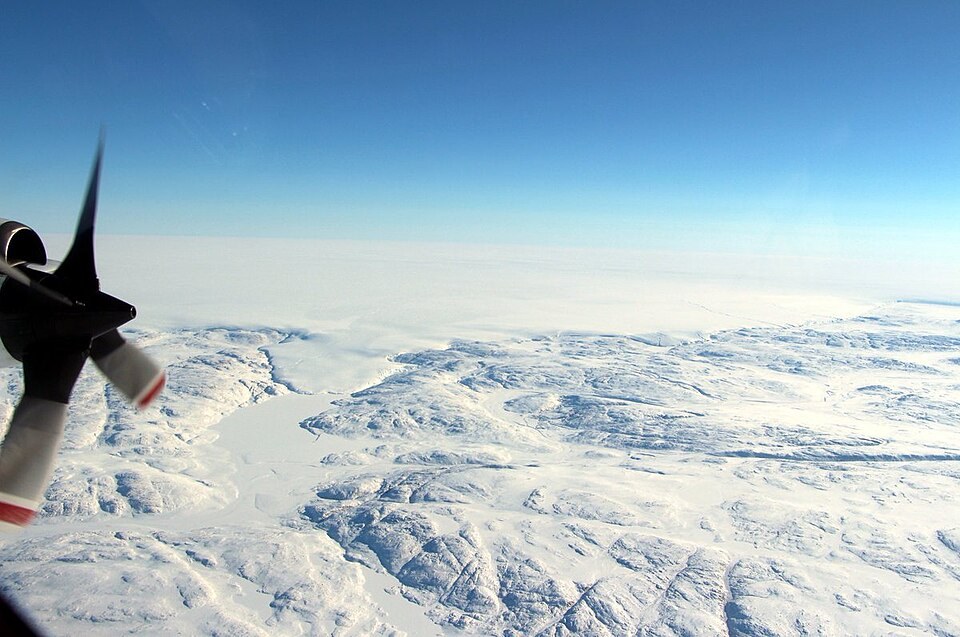
Hiawatha Glacier. Photo: NASA / Wikimedia Commons. Aerial photograph from a survey aircraft over a wide ice sheet cut by crevasses and ice ridges, the kind of ice cover. Source
That episode is the field’s clearest lesson in how a hypothesis fails. Nothing was fabricated; the 2018 paper was careful to say the age was unknown [20]. The structure was real, the measurement was real, and the connection to the Younger Dryas was an assumption that a later measurement removed. A discovery under an ice sheet is not a discovery until it is dated.
The 2017 platinum paper had a smaller version of the same problem, and it was handled in public. A correction followed, and the original version of the article contains errors in the reporting and interpretation of the Petaev et al. 2013 findings [25]. Note what this is and is not. The measurement stands; the framing of what was measured did not survive review. In the same period the Greenland platinum was reinterpreted from within the impact camp’s own literature: the elevated platinum occurred 45 years after the onset of the Younger Dryas and lasted for 14 years, which negates an instantaneous cataclysmic event [3]. The explanation those authors favoured was sustained fissure eruptions in Iceland [3]. A hypothesis that abandons its own best marker on timing grounds has passed a test that most hypotheses never get.
The last claim of the sequence is the sharpest. A paper reporting shocked quartz at the Younger Dryas onset was published in 2025 with a title that stated its case, and it was retracted in February 2026 [26]. The editors found issues with the underlying age model and with the sampling strategy [26]. The age range of the included dates range from centuries before and after the Younger Dryas onset [26]. The authors have not sampled the entire core section in their study, so it cannot be ruled out that there are spikes in their proxy record present at other depths of the sediment cores [26]. This also precludes any analysis of whether the observed spikes exceed a background rate of this proxy [26]. Most damaging of all, no age models had been reported, meaning it cannot be ruled out that the reported spike in cosmic airburst indicators resulted from changes in sedimentation rate as opposed to a true event [26]. Eight of the named authors did not agree with the retraction [26], which is normal and does not change the editors’ finding.
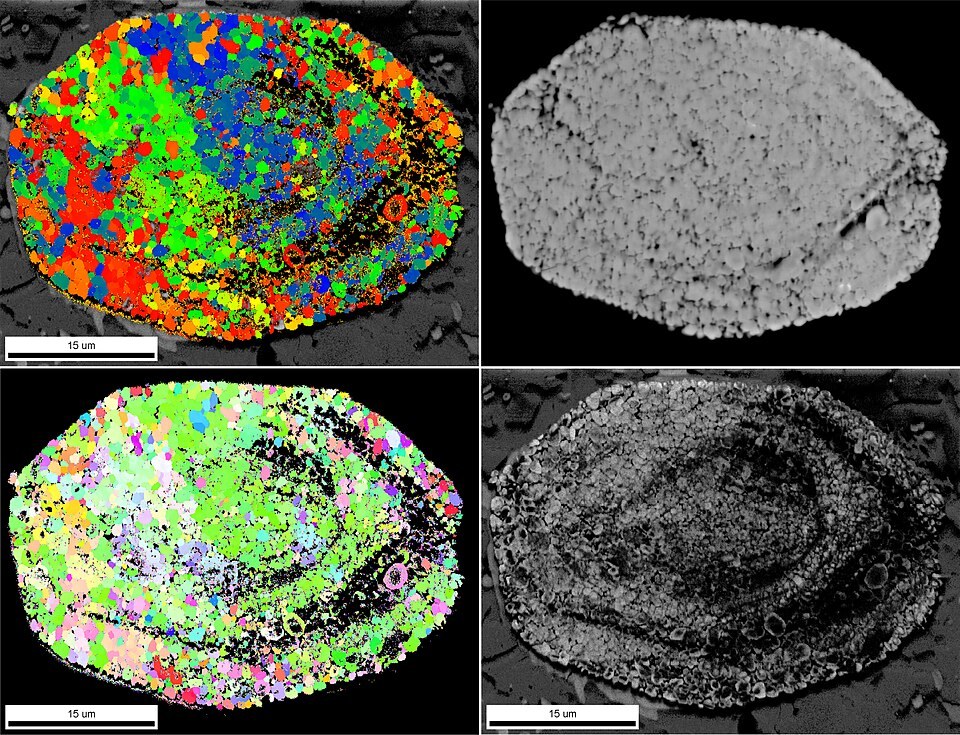
Shocked zircon. Photo: Liza Kovaleva / Wikimedia Commons. A four panel electron microscopy figure of a single rounded zircon grain with 15 micrometre scale bars, a shocked zircon. Source
Shocked quartz was the impact camp’s best physical claim, because there is no terrestrial process other than a hypervelocity impact that makes it. Losing it is not a small loss. But the reason for the retraction is instructive in its own right: it was not that the quartz was ordinary. It was that the layer could not be shown to belong to the event. [26]
The third reading of the platinum signal is the one now moving fastest, and it is not the impact camp’s. One paper is titled ‘Volcanic origin for Younger Dryas geochemical anomalies ca. 12,900 cal B.P [27].’ . The argument is that an eruption does what a comet is proposed to have done, without needing a comet. The argument is that an eruption does what a comet is proposed to have done, without needing a comet, and that it leaves the same elements behind, because volcanic aerosol carries the platinum-group elements and the osmium.
The obstacle to that reading was always the tephra. If a large eruption occurred at the onset, its ash should be in the North American terrestrial record, and it is not. That objection is on the record and it is the reason the volcanic idea was set aside: Wolbach and colleagues briefly considered volcanism as the origin of the platinum anomaly but discarded the idea because previous research detected no volcanic tephra in North American terrestrial samples [28]. The absence of tephra is a real problem for a large eruption. It is a smaller problem for a distant one, and it becomes a very small problem if the eruption was an Icelandic fissure eruption whose ash went north over the ice sheet rather than south over the sediment archives.
That is the reading a 2025 study proposed for the Greenland ice core platinum anomaly near the boundary between the Bølling-Allerød and the Younger Dryas [28]. The same paper reported the timing problem that ends the impact reading: the elevated platinum arrived 45 years after the onset and lasted 14 years, which is not the profile of an instantaneous event [3]. Iceland is the explanation those authors favoured [3]. Whether the volcano is the trigger of the cooling or a passenger riding the same decade is still open, and the paper is explicit that it is proposing an origin for the platinum, not a complete cause for the Younger Dryas.
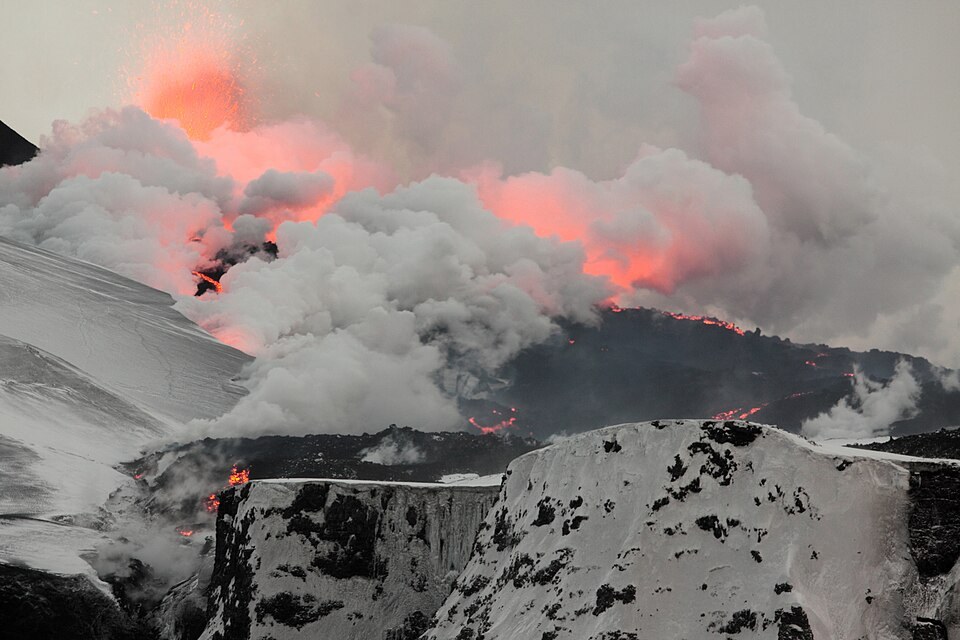
Fimmvorduhals second fissure 2010 04 02. Photo: Boaworm / Wikimedia Commons. Lava fountains and glowing flows running along an open fissure under steam plumes, an Icelandic fissure eruption of the. Source
The strongest version of the volcanic case is a different kind of measurement entirely. A team presented 187Os/188Os isotope and highly siderophile element data from the Page-Ladson site in Florida, where the onset is marked by unradiogenic osmium coincident with elevated Os and Re concentrations and a Cl-chondrite-normalised HSE pattern closely matching volcanic aerosol [4]. Osmium isotopes are the discriminating measurement here, because continental crust and mantle differ in osmium ratio, and a signal that is simultaneously unradiogenic, osmium-rich, rhenium-rich and matching volcanic aerosol composition is a fingerprint rather than a coincidence. The authors state that growing geochemical and stratigraphic evidence points toward a volcanic origin [4], and that the cause of the event remains debated [4].
This is the finding to watch. If an eruption triggered the cooling, then the Younger Dryas belongs with volcanic events rather than with impacts in the history of abrupt climate change, and the search moves to the eruptive record of the North Atlantic. If the platinum is a volcanic passenger, the freshwater chain stands unchallenged and the volcanic work becomes a study of coincidence. Both readings are live, and the difference between them is a question about timing that existing chronology can answer: an eruption that precedes the cooling is a cause, one that follows it is an echo. [4]
In 2016, as the last of the original markers was being re-analysed, Allen West and some others formed the Comet Research Group, a division of Rising Light Group, which has since published a series of papers it claimed confirmed the validity of the hypothesis [3]. That is a legitimate research group and its members are real scientists with real publications. It is worth noticing, though, that the hypothesis’s second phase has been driven by a single research group in a period when the replication attempts were coming back negative.
The third phase is public, and it is where the argument stops being scientific. Author of pseudoscience Graham Hancock argued in his 2015 book Magicians of the Gods that the Younger Dryas comet destroyed the earth in a time cycle and that it was responsible for the Noahide flood myth [3]. He inferred that the myth was widespread elsewhere on earth by comparing it with the flood mythology of other peoples [3], and he expanded on the claims in a later book, America Before, which argued that the catastrophe had erased the traces of a sophisticated Ice Age civilization in North America [3]. The archaeological record contains no such civilization, and there is no published method by which a comet event could leave its absence detectable. The book’s central inference runs backwards: it takes a claim that cannot be evidenced and treats the absence of evidence for the opposite as the evidence for the claim.

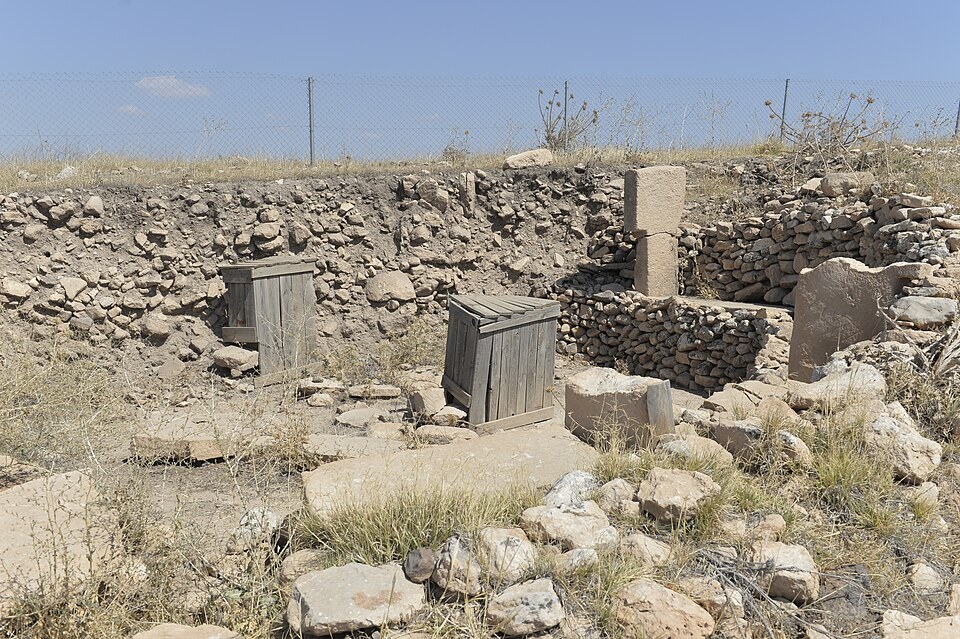
Gobekli Tepe Building F in 2014 3208. Photo: Dosseman / Wikimedia Commons. The excavated stone architecture of Gobekli Tepe, the site popular writing most often attaches to Younger Dryas claims. Source
The response to that move was not subtle. These claims were criticized as inaccurate by independent reviewers [3], and the Society for American Archaeology said in an open letter that the ideas about a lost civilization echoed and promoted dangerous racist thinking [3]. The last point is not about astronomy. The civilization story is routinely used to argue that Indigenous populations were replaced by a vanished race, and that argument has a history that the discipline will not pretend away.
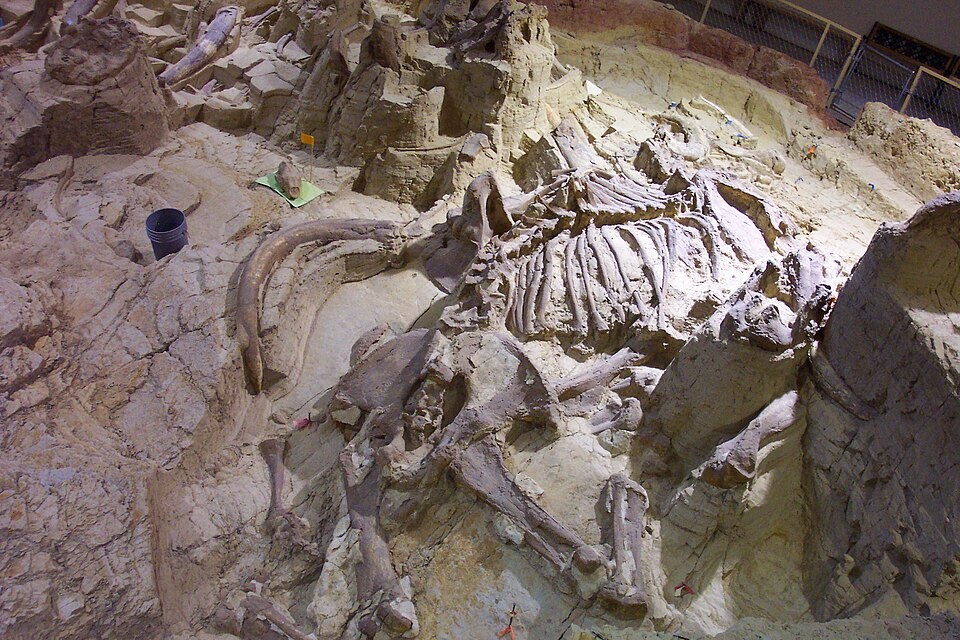
Mammoth Site Hot Springs. Photo: Jeff the quiet / Wikimedia Commons. A mammoth skeleton excavated at Hot Springs, South Dakota: the Pleistocene megafauna whose extinction the Younger Dryas. Source
The television version of the same material was taken apart by someone inside the field. Impact physicist Mark Boslough published a commentary with the conclusion that many attributes of the series are pseudoscience [3]. His objection is the technical one: the series treats the markers as diagnostic and the dates as exact, which is precisely the step the blind test showed to be unjustified. It is worth being clear about what the popularizer layer does not do. It does not produce the data. Every measurement in this debate was made in a laboratory, and the laboratory results are what the rest of this paper deals with [1].
The recurring cycle deserves its own sentence, because it is asked about often. Nothing in the record examined here shows a periodic catastrophe. The Younger Dryas is one event, in one hemisphere’s climate system, at one moment in an archive of 640,000 years of fresh water pulses into the North Atlantic [13]. A cycle requires that the same signature recurs at fixed intervals, and the Heinrich events recur on a rhythm of fresh water, not on a rhythm of extinction. The flood-myth framing is a modern addition to a real geological question, and it is the part of the story with the least support behind it.
Connecting the Dots
Three threads run through this debate, and they are usually told separately, which is why it takes so long to see the shape of it. What the record holds is one event inside an archive of 640,000 years [13].
The first thread is timing. The onset is a step, not a ramp, and it is dated to 12,870 ± 30 B.P. in an archive that is independent of the ice core [7]. Every mechanism has to survive that constraint, and the mechanisms survive it very differently. A bolide can deliver energy in hours, which fits. Fresh water has to be advected and mixed, which takes years to decades, which fits less well than the bolide and is the standing objection to the mainstream account [14]. A volcanic eruption sits between the two, and its timing relative to the cooling is exactly the question that is still open [4]. The event is measured; the causes are competing on the clock it sets.

GISP2D1837 crop. Photo: Cropped and uploaded by User:HereToHelp; original uploaded by en:User:Dragons flight; made by USGS. / Wikimedia Commons. A GISP2 ice core section laid out in a tray, the stacked annual layers that form the archive against which the onset of. Source
The second thread is the difference between a signal and a marker [23].
The blind test found magnetic micrograins of more than 300 mg per kg above 12.8ka and below 11.5ka, and far fewer in between [23]. It concluded that the purported impact proxies are not unique to the boundary [23]. A 2012 study of 13 sites in the Atacama Desert found black mats at various sites regardless of their age and location, many of them much older than the Younger Dryas [3]. Both results say the same thing about a category of evidence: presence at the boundary is not the same as causation by the boundary. That is why the platinum survives this critique better than the spherules do.
The same distinction runs through the newest records. The 2026 retraction of the shocked quartz paper turned on a sampling and age-model problem rather than on the quartz itself [26]. The claim has to be anchored to the year, not just to a layer.
The third thread is what happens when a claim loses its evidence and keeps its structure. The nanodiamond markers were called fungi or insect fecal pellets [3]. The crater was dated to 58 Ma [24]. The platinum was re-read as a volcano, arriving 45 years after the onset and lasting for 14 years [3]. The shocked quartz layer was retracted in February 2026 [26]. Each of these is a normal scientific event. What is not normal is the persistence of the headline claim through all four, and the fact that the popular version of the story has, by now, largely stopped updating itself while the scientific version changes every year.
Put the three threads together and the position is narrower than either camp’s public version. The Younger Dryas was a real, abrupt, well-dated climate reversal [5]. It had a measurable platinum anomaly at its onset in ice and in lake sediment [1]. The markers that were supposed to prove a bolide turned out to be either ordinary or unattributable [23]. The crater that was supposed to be the smoking gun is 58 Ma old [24]. And the same platinum that made the impact case interesting now looks more like an eruption than a bolide [4]. That is not a solved question, but it is a question with edges.
The Other Side
The fair version of the impact case is stronger than its public version, and it deserves to be stated at full strength. The platinum peak in the Greenland ice core is a real measurement in the best archive available, made on material that predates human contamination, and it is now corroborated in lake sediments in Florida [2]. Its defenders have a point when they note that ordinary sediment does not carry platinum at those levels: the failure of the spherules does not logically touch the platinum.
The crater discovery was also a serious result, and it was removed from the argument by a later dating result rather than by a criticism of the mapping [24]. Treating the discovery paper as an error would be a mistake; it said the age was unknown and it was right to say so [20]. The error belongs to the hypothesis that attached itself to the structure, not to the measurement.
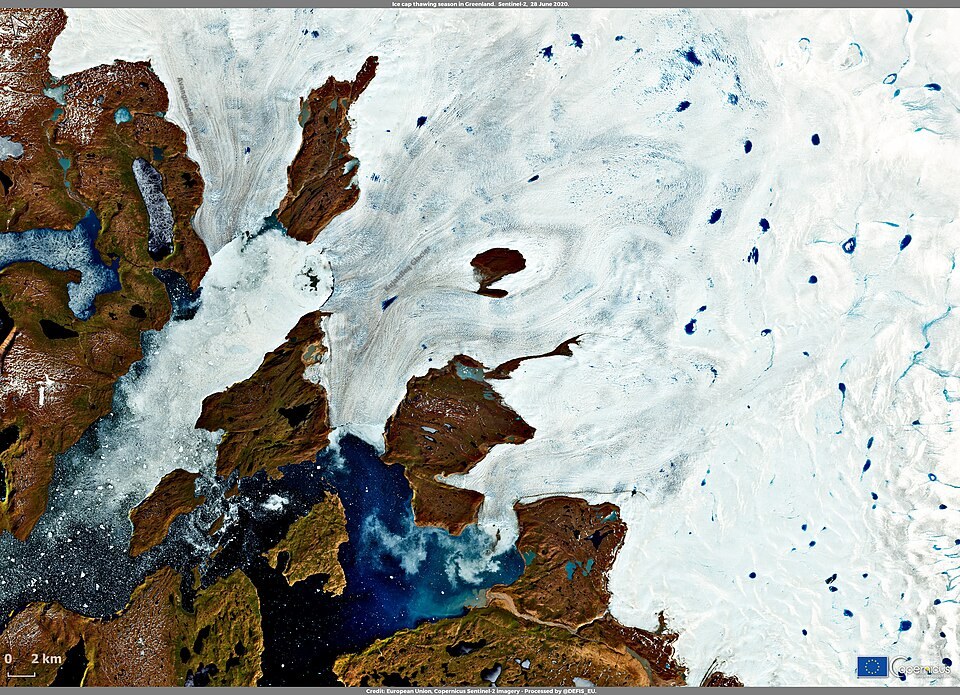
Ice cap thawing season in Greenland. Photo: European Union , Copernicus Sentinel-2 imagery / Wikimedia Commons. A Copernicus Sentinel-2 view of the Greenland ice cap on 24 June 2020, showing the bare rock margin, melt ponds and a. Source
There is also a structural criticism of the mainstream account that the freshwater camp has not fully answered. If the trigger is a freshwater pulse, the cooling should not begin in a few years, and the sharpest formulation of that objection comes from within the circulation literature, which continues to describe the freshwater attribution as controversial [14]. The tropical lag [6] is usually read as supporting the freshwater chain, and it does, but it also shows that the temperature response is not uniform, which is a complication for any single-driver account.
Finally, the retraction should be read with its own footnotes. Eight named authors did not agree with it [26], and a contested retraction in a mega-journal is a different kind of event from a quiet failure to replicate. The reasons given were an age model built on an incomplete sample set and a core section that was not fully sampled [26]. Those are serious methodological problems, and not findings that the shocked quartz is terrestrial. A reader who wants to keep the quartz claim alive has to argue that the layer was sampled well by someone else. That is a real research programme, not an impossibility, and nothing in the retraction says the quartz cannot be there.
What We Actually Know
The event is settled. It is almost certain that the Younger Dryas was an abrupt Northern Hemisphere cooling that began in the space of a few decades [5]. The onset is dated to 12,870 ± 30 B.P. in a cave record independent of the ice core [7]. It is very likely that the cooling involved a major reduction of the Atlantic overturning circulation, because that is what the tropical lag, the Greenland ice loss and the freshening records all point to together [6] [17].
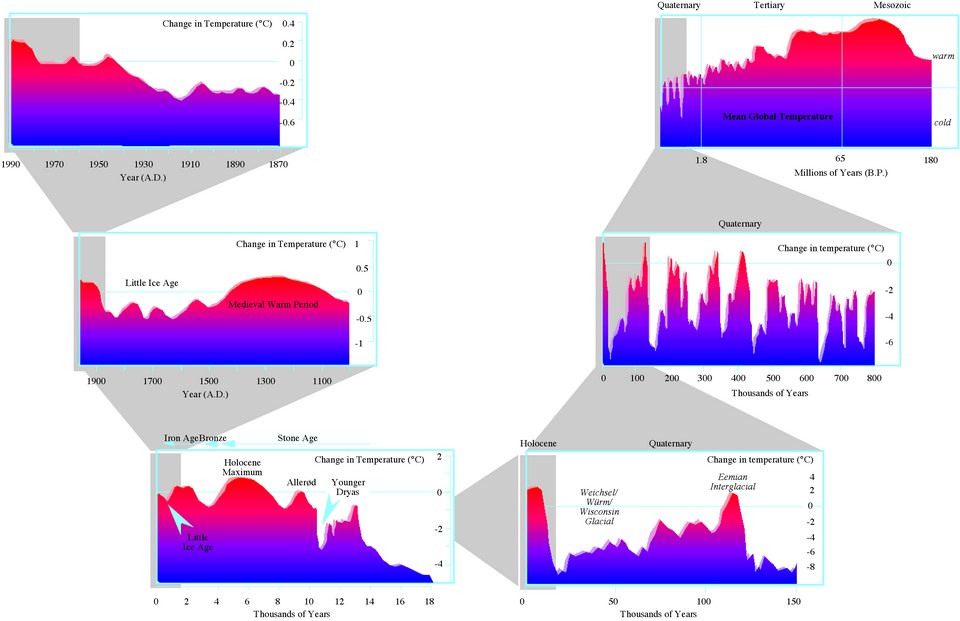
Iceage time-slice hg. Photo: Hannes Grobe/AWI / Wikimedia Commons. A zoomed set of global temperature curves whose 18,000 year panel labels the Younger Dryas cooling and the shift into. Source
The trigger is not settled. It is likely that a large quantity of fresh water entered the North Atlantic near the onset, and it is roughly even whether that water alone can account for the speed of the cooling [14]. It is likely, but not established, that a major northern hemisphere volcanic eruption occurred at or near the onset: the platinum timing fits an eruption better than a bolide [3], and the osmium and siderophile element data at Page-Ladson match volcanic aerosol [4]. Whether that eruption caused the cooling or accompanied it is the open question, and it is exactly the question that new dating can settle.
The impact explanation is, on the peer-reviewed record, unlikely as a complete account. It is very unlikely that the Hiawatha structure relates to this event, since it is dated to 58 Ma [24]. It is unlikely that the boundary markers as a set are diagnostic, since the blind test and the Atacama work both show they occur away from the boundary [23] [3]. It is very unlikely that the nanodiamond line of evidence survived scrutiny [3]. It is not ruled out that an extraterrestrial event contributed something, and the platinum anomaly is the reason that sentence can be written at all [1].
The popular version has no support. It is very unlikely that any recurring catastrophe cycle exists in this record, and the lost-civilization story has no archaeological basis and no method by which it could be tested. [3]
Three findings would change that verdict, and all three are specific. First, an impact structure of the right size that is independently dated to the boundary year, with the dating method published before the interpretation, as happened in the wrong direction with Hiawatha [24]. Second, a boundary marker that is absent above and below the event, reproduced by laboratories working from independent protocols, of the kind the 2016 blind test was designed to produce and did not [23]. Third, a chronology that puts a large eruption before the cooling rather than after it, which would make the volcanic reading a cause rather than an echo [4].
The solar option belongs in the same place of honesty. Carbon-14 is produced in the lower stratosphere and upper troposphere primarily by galactic cosmic rays and, to a lesser degree, by solar cosmic rays [29], so an extreme solar particle event can in principle leave a radiocarbon signal at the onset. The radiocarbon and cosmogenic nuclide arguments for such an event are part of the published discussion, and nothing in the measurements examined here rules them out. What the evidence examined here does not contain is an openly accessible primary record tying such an event to the onset, so this paper does not weigh it. That is a limitation of the sources, stated rather than hidden.
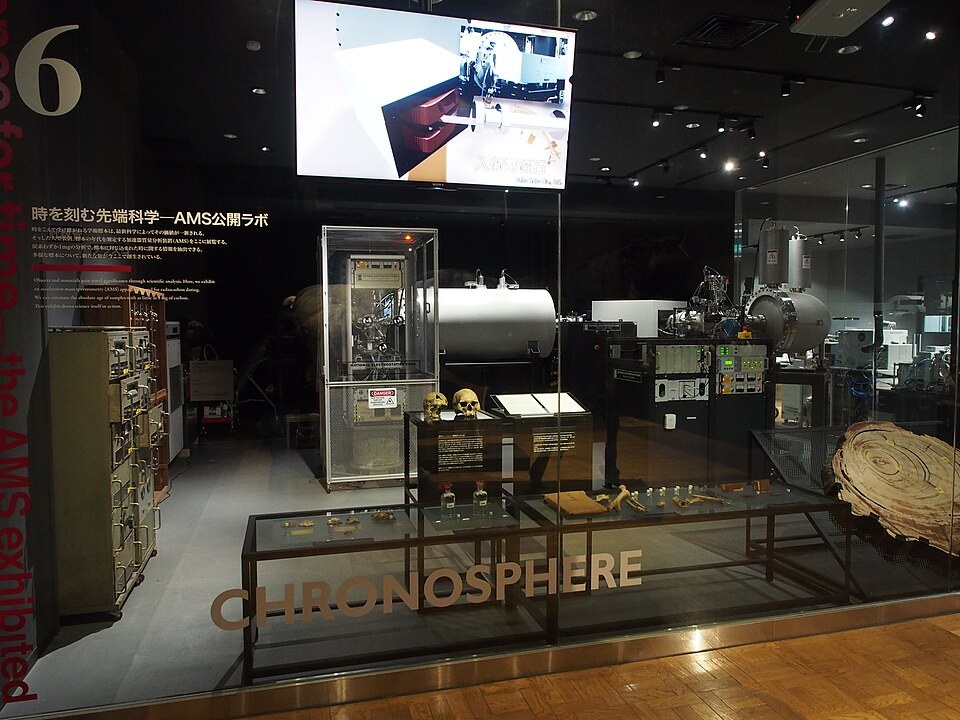
Chronosphere Laboratory of Radiocarbon Dating P3097636. Photo: Kestrel / Wikimedia Commons. Large silver accelerator mass spectrometer with control panels and sample tables behind glass. Source
Which leaves the sentence the whole record supports. The cooling was real [5]. The markers were real [1]. The story built on them did not survive being measured twice [23].
References
[1] Moore CR, West A, LeCompte MA, Brooks MJ, Daniel IR Jr, Goodyear AC, Ferguson TA, Ivester AH, Feathers JK, Kennett JP, Tankersley KB, and Adedeji AV (2017). Widespread platinum anomaly documented at the Younger Dryas onset in North American sedimentary sequences.. Scientific Reports. DOI: 10.1038/srep44031 (accessed 2026-10-05) [Academic]
[2] Moore CR, Brooks MJ, Dunbar JS, Hemmings CA, Langworthy KA, West A, LeCompte MA, Adedeji V, Kennett JP, and Feathers JK (2023). Platinum and microspherule peaks as chronostratigraphic markers for onset of the Younger Dryas at Wakulla Springs, Florida.. Scientific Reports. DOI: 10.1038/s41598-023-50074-8 (accessed 2026-10-05) [Academic]
[3] Younger Dryas impact hypothesis — https://en.wikipedia.org/wiki/Younger_Dryas_impact_hypothesis (accessed 2026-10-05)
[4] Nana Yobo L, Brandon AD, O’Brien S, Halligan JJ, and Waters MR (2026). Volcanic forcing of global climate cooling at the Younger Dryas onset preserved in North American sediments.. Science Advances. DOI: 10.1126/sciadv.aec9030 (accessed 2026-10-05) [Academic]
[5] Younger Dryas — https://en.wikipedia.org/wiki/Younger_Dryas (accessed 2026-10-05)
[6] Partin JW, Quinn TM, Shen CC, Okumura Y, Cardenas MB, Siringan FP, Banner JL, Lin K, Hu HM, and Taylor FW (2015). Gradual onset and recovery of the Younger Dryas abrupt climate event in the tropics.. Nature Communications. DOI: 10.1038/ncomms9061 (accessed 2026-10-05) [Academic]
[7] Timing and structure of the Younger Dryas event and its underlying climate dynamics. — https://europepmc.org/article/PMC/PMC7519346 (accessed 2026-10-05) [Academic]
[8] Laurentide Ice Sheet — https://en.wikipedia.org/wiki/Laurentide_Ice_Sheet (accessed 2026-10-05)
[9] Meltwater pulse 1B — https://en.wikipedia.org/wiki/Meltwater_pulse_1B (accessed 2026-10-05)
[10] Webster JM, Yokoyama Y, Humblet M, Braga JC, Esat T, Fallon S, and Bard E (2025). Constraints on sea-level rise during meltwater pulse 1B from the Great Barrier Reef.. Earth and Planetary Science Letters. DOI: 10.1038/s41467-025-59858-0 (accessed 2026-10-05) [Academic]
[11] Bølling–Allerød warming — https://en.wikipedia.org/wiki/B%C3%B8lling%E2%80%93Aller%C3%B8d_warming (accessed 2026-10-05)
[12] Velay-Vitow J, Chandan D, and Peltier WR (2024). Into the Holocene, anatomy of the Younger Dryas cold reversal and preboreal oscillation.. Scientific Reports. DOI: 10.1038/s41598-024-53591-2 (accessed 2026-10-05) [Academic]
[13] Heinrich event — https://en.wikipedia.org/wiki/Heinrich_event (accessed 2026-10-05)
[14] You D, Stein R, Lohmann G, Masoum A, Fahl K, Wu J, and Jackson R (2026). Surface freshening in the subpolar North Atlantic sustaining the weakened AMOC during the late Younger Dryas.. Science Advances. DOI: 10.1126/sciadv.adv6220 (accessed 2026-10-05) [Academic]
[15] Pico T, Mitrovica JX, and Mix AC (2020). Sea level fingerprinting of the Bering Strait flooding history detects the source of the Younger Dryas climate event.. Science Advances. DOI: 10.1126/sciadv.aay2935 (accessed 2026-10-05) [Academic]
[16] Muschitiello F, Pausata FSR, Watson JE, Smittenberg RH, Salih AAM, Brooks SJ, Whitehouse NJ, Karlatou-Charalampopoulou A, and Wohlfarth B (2015). Fennoscandian freshwater control on Greenland hydroclimate shifts at the onset of the Younger Dryas.. Geophysical Research Letters. DOI: 10.1038/ncomms9939 (accessed 2026-10-05) [Academic]
[17] Rainsley E, Menviel L, Fogwill CJ, Turney CSM, Hughes ALC, and Rood DH (2018). Greenland ice mass loss during the Younger Dryas driven by Atlantic Meridional Overturning Circulation feedbacks.. Scientific Reports. DOI: 10.1038/s41598-018-29226-8 (accessed 2026-10-05) [Academic]
[18] Anderson L, Finney BP, and Baxter WB (2026). Shifting winter atmospheric teleconnections to the North Pacific reconcile Younger-Dryas and Holocene δ<sup>18</sup>O signals.. Nature Communications. DOI: 10.1038/s41467-026-68841-2 (accessed 2026-10-05) [Academic]
[19] Powell JL (2022). Premature rejection in science: The case of the Younger Dryas Impact Hypothesis.. Science Progress. DOI: 10.1177/00368504211064272 (accessed 2026-10-05) [Academic]
[20] Kjær KH, Larsen NK, Binder T, Bjørk AA, Eisen O, Fahnestock MA, Funder S, Garde AA, Haack H, Helm V, Houmark-Nielsen M, and Kjeldsen KK (2018). A large impact crater beneath Hiawatha Glacier in northwest Greenland.. Science Advances. DOI: 10.1126/sciadv.aar8173 (accessed 2026-10-05) [Academic]
[21] Moore AMT, Kennett JP, Napier WM, Bunch TE, Weaver JC, LeCompte M, Adedeji AV, Hackley P, Kletetschka G, Hermes RE, Wittke JH, and Razink JJ (2020). Evidence of Cosmic Impact at Abu Hureyra, Syria at the Younger Dryas Onset (~12.8 ka): High-temperature melting at >2200 °C.. Scientific Reports. DOI: 10.1038/s41598-020-60867-w (accessed 2026-10-05) [Academic]
[22] Clovis culture — https://en.wikipedia.org/wiki/Clovis_culture (accessed 2026-10-05)
[23] Holliday V, Surovell T, and Johnson E (2016). A Blind Test of the Younger Dryas Impact Hypothesis.. PLOS ONE. DOI: 10.1371/journal.pone.0155470 (accessed 2026-10-05) [Academic]
[24] Kenny GG, Hyde WR, Storey M, Garde AA, Whitehouse MJ, Beck P, Johansson L, Søndergaard AS, Bjørk AA, MacGregor JA, Khan SA, and Mouginot J (2022). A Late Paleocene age for Greenland’s Hiawatha impact structure.. Science Advances. DOI: 10.1126/sciadv.abm2434 (accessed 2026-10-05) [Academic]
[25] Moore CR, West A, LeCompte MA, Brooks MJ, Randolph ID Jr, Goodyear AC, Ferguson TA, Ivester AH, Feathers JK, Kennett JP, Tankersley KB, and Adedeji AV (2026). Correction: Widespread platinum anomaly documented at the Younger Dryas onset in North American sedimentary sequences.. Scientific Reports. DOI: 10.1038/s41598-026-48937-x (accessed 2026-10-05) [Academic]
[26] Retraction: Shocked quartz at the Younger Dryas onset (12.8 ka) supports cosmic airbursts/impacts contributing to North American megafaunal extinctions and collapse of the Clovis technocomplex. — https://europepmc.org/article/PMC/PMC12893597 (accessed 2026-10-05) [Academic]
[27] Sun N, Brandon AD, Forman SL, Waters MR, and Befus KS (2020). Volcanic origin for Younger Dryas geochemical anomalies ca. 12,900 cal B.P.. Science Advances. DOI: 10.1126/sciadv.aax8587 (accessed 2026-10-05) [Academic]
[28] Green CE, Baldini JUL, Brown RJ, Schmincke HU, Edmonds M, and Meisel TC (2025). A possible volcanic origin for the Greenland ice core Pt anomaly near the Bølling-Allerød/Younger Dryas boundary.. PLOS ONE. DOI: 10.1371/journal.pone.0331811 (accessed 2026-10-05) [Academic]
[29] Radiocarbon dating — https://en.wikipedia.org/wiki/Radiocarbon_dating (accessed 2026-10-05)
Corrections
- Writer stamp corrected: this paper was researched and written in the writing session, so research_model now names MiniMax-M3.1-Flash-Preview instead of the pipeline's model.
Keep exploring
Every site on this page sits on the globe, and the people who research them are on the Discord.
3D Globe · Sites by country · Story Archive · Research Library · Weekly Journal · Search