 ANCIENT NERDS
The Lost Universal Tongue in Myth and Linguistics
The paper concludes that the comparative method's roughly 10,000-year reconstruction ceiling makes any Proto-World ancestor — dated between 50,000 and 135,000 years ago — methodologically unreachable, and that linguists widely dismiss Merritt Ruhlen's proposed Proto-World lexical reconstructions as speculative and impossible at that depth. While the monogenesis intuition recurs persistently across cultures (Enki in Mesopotamia, Thoth in Egypt, Vāc in Hindu tradition, the Babel narrative), the paper finds that none of this mythical or typological material establishes a real historical primordial tongue. The question of whether human language arose once or multiple times remains open, but the search for a lost universal tongue is treated as methodologically closed off from empirical resolution.
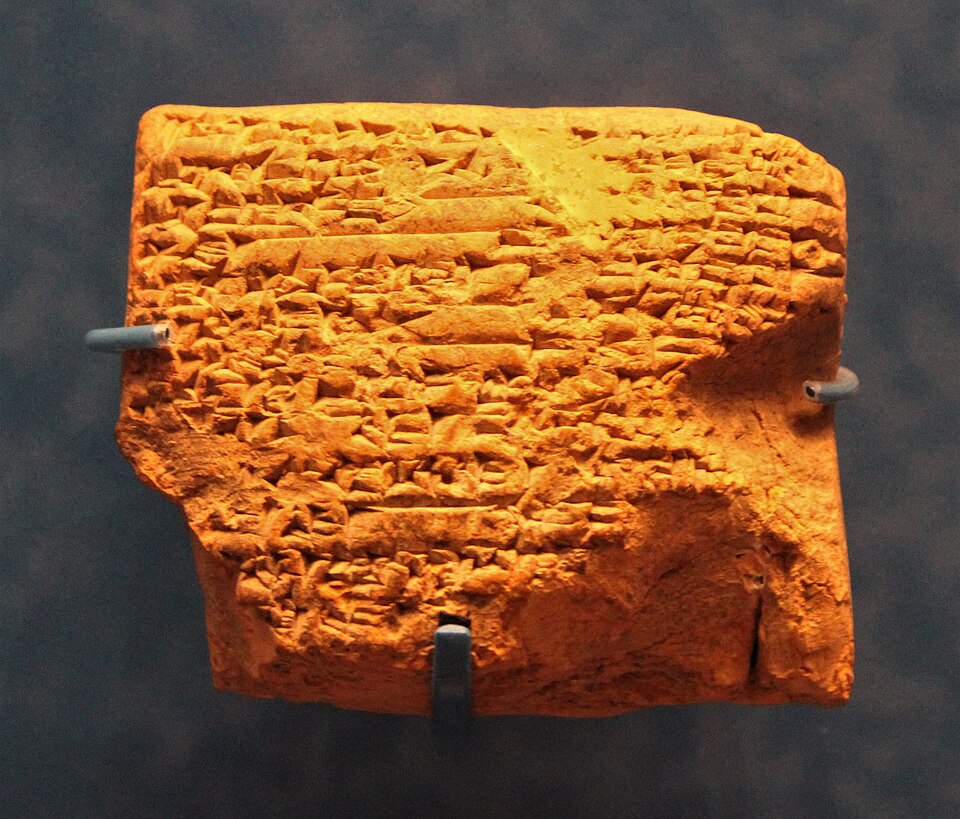
In a Sumerian composition dated to roughly the 21st century BCE, scribes recorded the god Enki shattering humanity’s single tongue into many — a passage preserved in Neo-Sumerian copies of an epic called “Enmerkar and the Lord of Aratta,” and the oldest known narrative parallel to the Tower of Babel motif. Centuries later, the same story was reworked by Hebrew scribes, who placed it in Genesis 11:1–9 and named the tower “Babel” after a real-world structure that scholars still point to as its inspiration: the ziggurat Etemenanki, dedicated to the god Marduk in Babylon. [1]
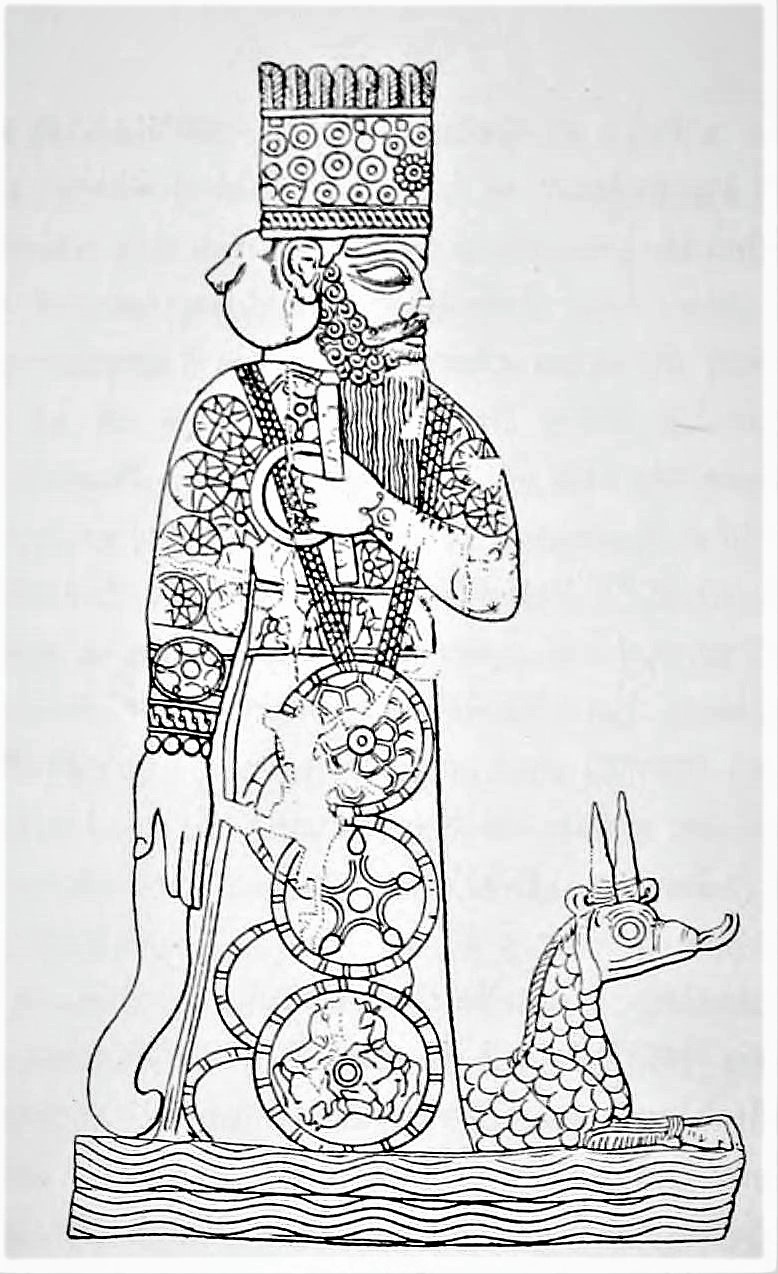
Illustration: Marduk and pet. Photo: Franz Heinrich Weißbach / Wikimedia Commons. Source
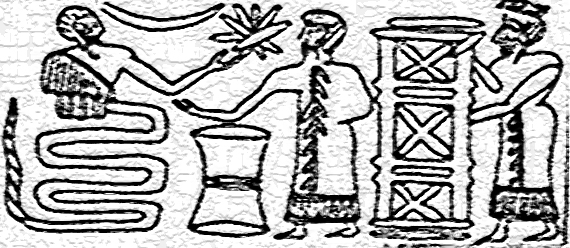
Illustration: GalzuEnjiWarnsNoahFloodSItchin2000p194 150ht copy. Photo: Serginhofogo / Wikimedia Commons. Source
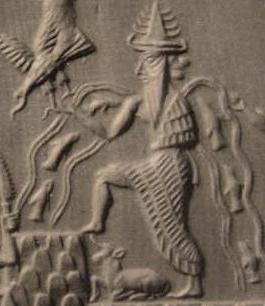
Enki(Ea). Photo: Wikimedia Commons. Enki (detail of the Adda seal, British Museum 89115). Source
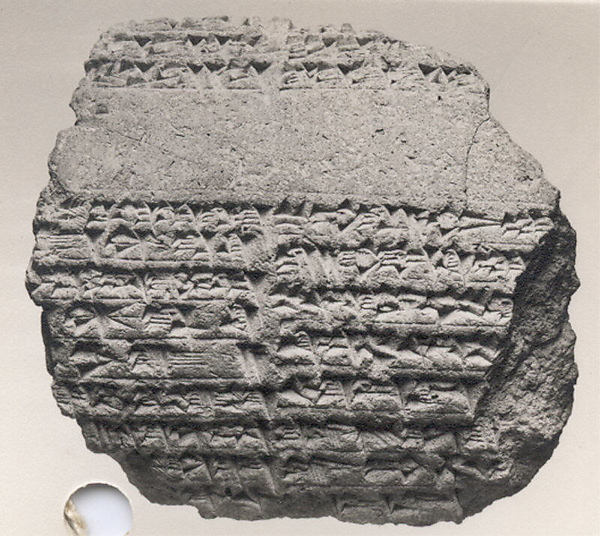
Illustration: Cuneiform cylinder: inscription of Nebuchadnezzar II commemorating the reconstruction of Etemenanki, the ziggurat at Babylon. Photo: The Met / Open Access. Source

Enmerkar and the Lord of Aratta Ashmolean. Photo: Zunkir / Wikimedia Commons. Source
The hunt for that original tongue did not become scientific until 1786, when Sir William Jones addressed the Asiatic Society of Bengal with a proposal that Sanskrit, Greek, and Latin share a common source, founding comparative Indo-European linguistics. From that proposal, comparative Indo-European linguistics was born — and with it, a method that would eventually yield Proto-Indo-European, the most extensively and rigorously reconstructed proto-language in the discipline. [2] [3]
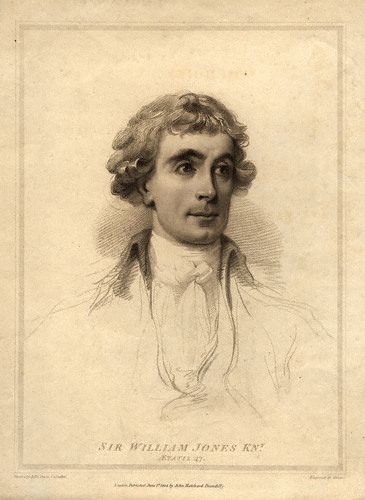
Sir William Jones by William Evans 1804. Photo: William Evans / After Arthur William Devis / Wikimedia Commons. Source
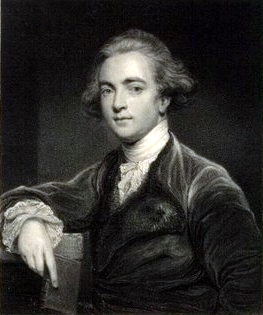
Sir William Jones. Photo: James Posselwhite / After Joshua Reynolds / Wikimedia Commons. Portrait of Sir William Jones (1746-1794). Source
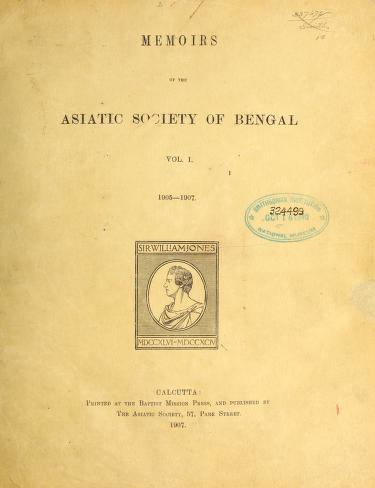
Illustration: Memoirs of the Asiatic Society of Bengal. Photo: Europeana. v.1 (1905-1907). Source
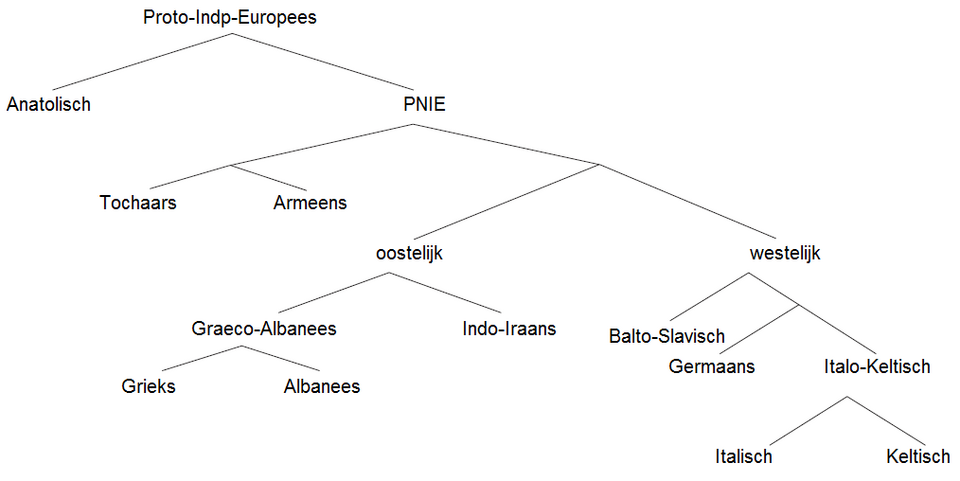
Indo-European tree diagram according to Bouckaert et al. 2012. Photo: Kiro Vermaas / Wikimedia Commons. Shows the reconstructive outcome of the method Jones inaugurated — the ‘most extensively reconstructed proto-language’…. Source
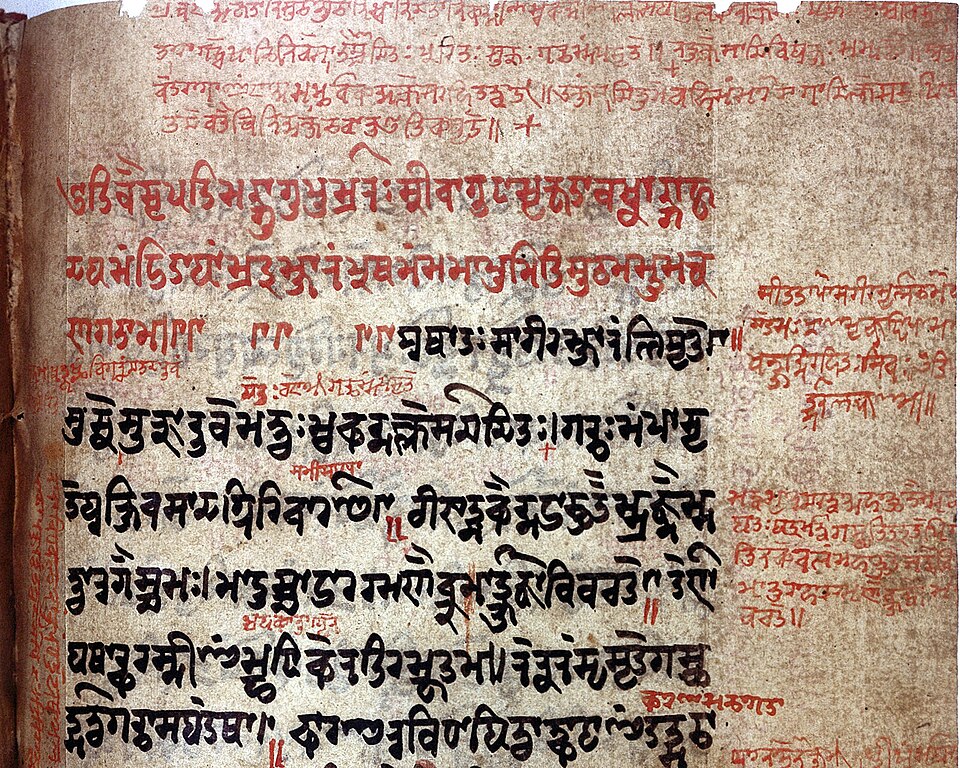
Text of colophon from Sanskrit Manuscript on medicine Wellcome L0015319. Photo: Wikimedia Commons. Text of colophon Asian Collection Keywords: medicine, indian. Source
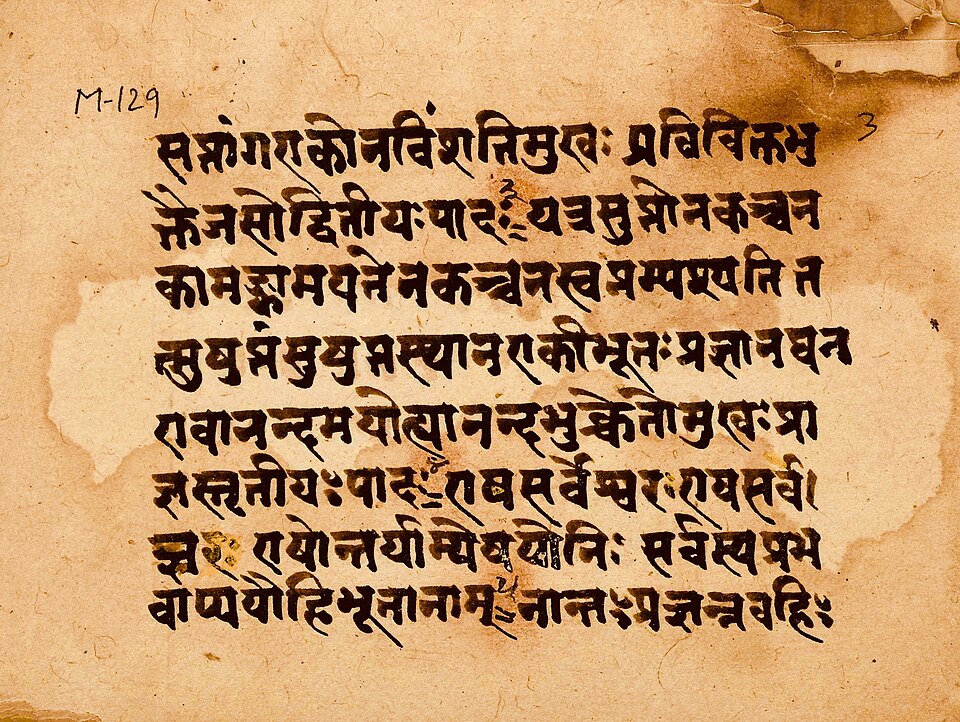
Gaudapada Mandukya Karika manuscript page sample i, Sanskrit, Devanagari script. Photo: Ms Sarah Welch / Wikimedia Commons. Visualizes the Sanskrit corpus that Jones relied on as the comparative cornerstone for the Indo-European…. Source
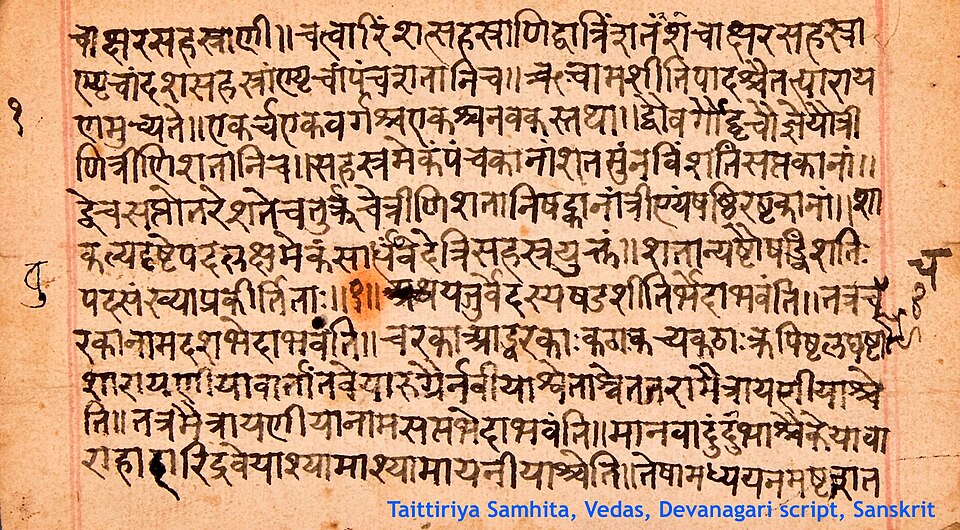
Taittiriya Samhita Vedas, Devanagari script, Sanskrit pliv. Photo: Ms Sarah Welch / Wikimedia Commons. Visualizes the Sanskrit corpus that Jones relied on as the comparative cornerstone for the Indo-European…. Source
The Comparative Method and Its 5,000-Year Ceiling
The comparative method was developed in the 19th century specifically for reconstructing Proto-Indo-European, the most thoroughly reconstructed proto-language in linguistics, dated to roughly 4500–2500 BCE under the Pontic–Caspian steppe hypothesis. The method operates on systematic sound correspondences rather than surface lexical resemblance, and its empirical reach has a documented ceiling: it cannot reliably reconstruct language histories separated by more than approximately 5,000–10,000 years before their first attestations. This places any putative Proto-World ancestor—dated by some genomic arguments to between 50,000 and 135,000 years ago—far beyond what comparative reconstruction can reach. [4]

Illustration: Gödény-halom (panoráma) - panoramio. Photo: Ignácz Csaba / Wikimedia Commons. Source
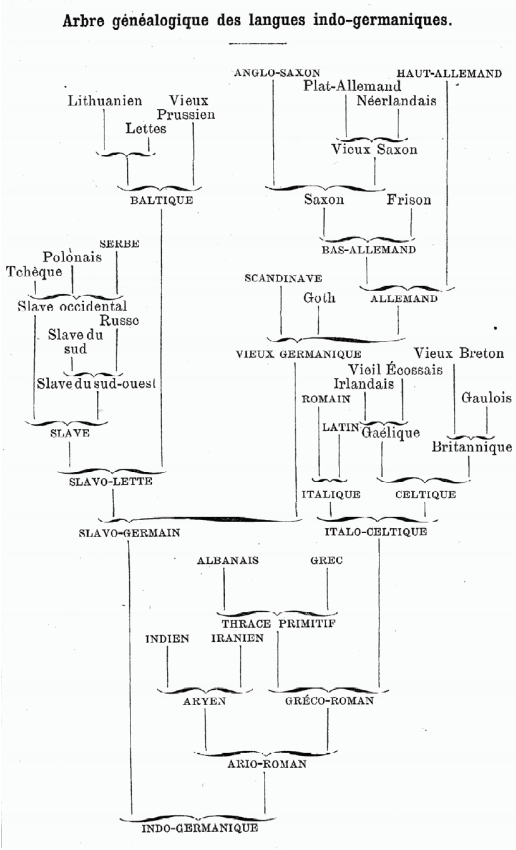
Tree diagram of Indo-European languages, by Haeckel (1874). Photo: Haeckel (1874) / Wikimedia Commons. Genealogical tree of indo-Germanic languages as proposed by Haeckel (1874). Source
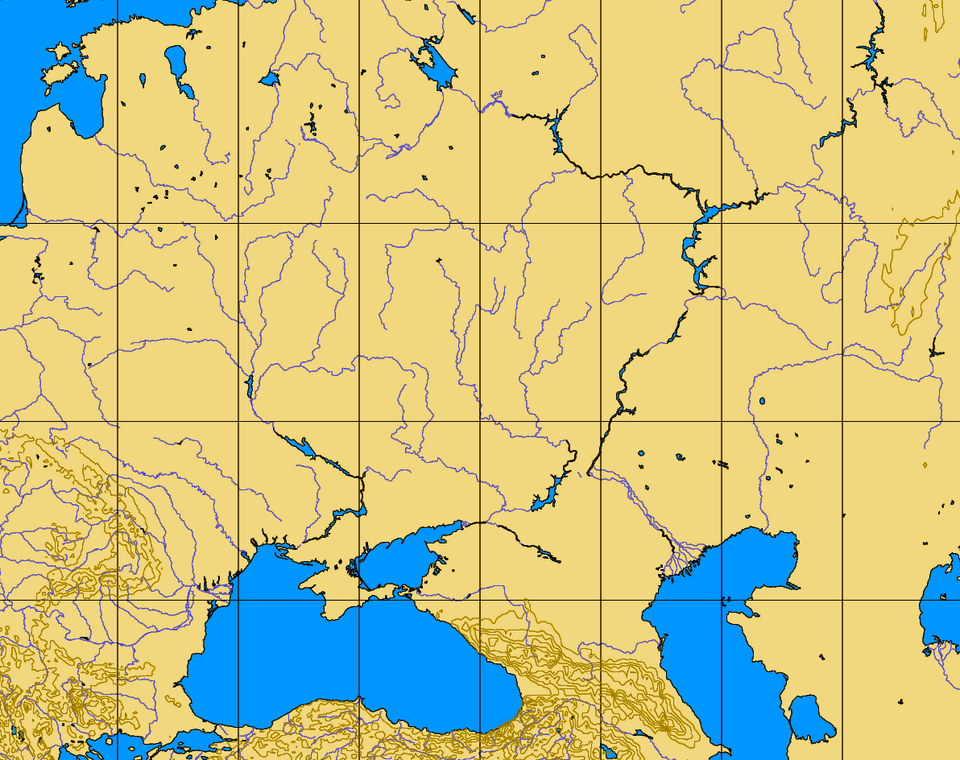
Illustration: Pontic caspian blank map. Photo: Wikimedia Commons. blank map of the Pontic-Caspian steppes, 40-60 N, 20-60 E. Source
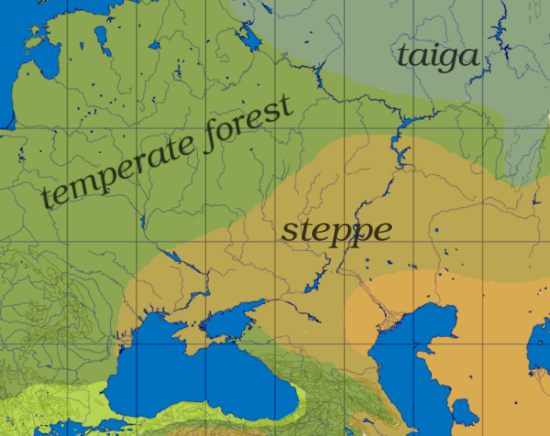
Pontic Caspian climate. Photo: User:Dbachmann / Wikimedia Commons. Source
The ‘Proto-Human language’ (also called Proto-Sapiens, Proto-World, or Ur-language) is a speculative concept presupposing a monogenetic origin of human language, and it is explicitly not amenable to analysis in historical linguistics. Monogenesis—the theory that human language arose only once in a single community, with all current languages descending from this first original tongue—is contrasted with polygenesis, the position that languages arose independently multiple times. A peer-reviewed probabilistic model has challenged the conventional case for monogenesis, arguing that a simple probabilistic model makes polygenesis more likely than the standard assumption. Whether linguistics can recover the first human language remains, in the published methodological literature, an open question rather than an empirical finding. [5] [6]
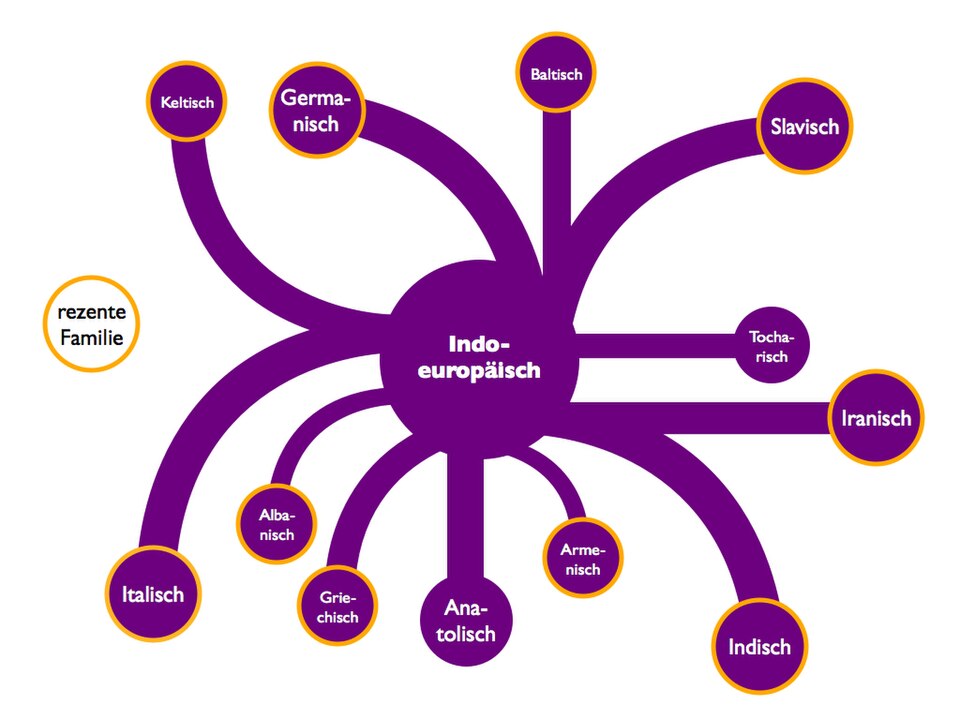
Illustration: Indoeuropäisch. Photo: Otto IV / Wikimedia Commons. Simplified schema of the best-known branches of the Indo-European language family. Source
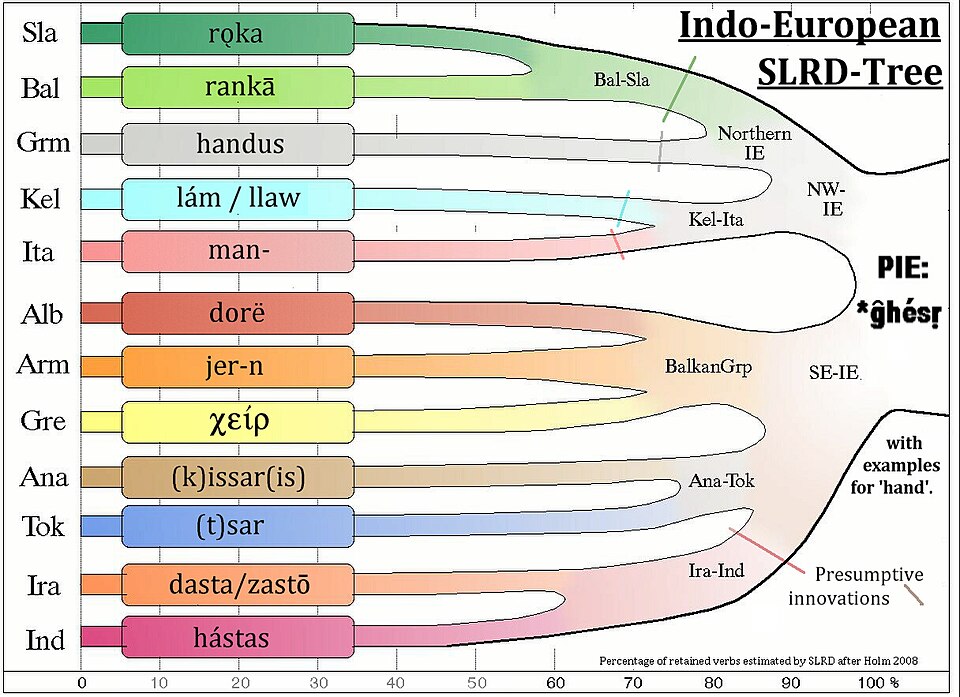
IE SLRD-Tree ‘hand Holm. Photo: Hans J. Holm / Wikimedia Commons. Indo-European Family Tree by “Separation Level Recovery, Distribution accounted for” (SLRD-method, Holm 2008). Source
The Nostratic hypothesis, developed in the 1960s by V.M. Illich-Svitych of the Moscow School, posits a common ancestor for Indo-European, Uralic, Altaic, Afro-Asiatic, Kartvelian, and Dravidian spoken more than 12,000 years ago; Greenberg’s Eurasiatic overlaps with Nostratic and adds Japanese and Eskimo-Aleut; his 1987 Amerind proposal grouped all indigenous American languages except Eskimo–Aleut and Na-Dene. All three rest on Greenberg’s “mass comparison” (multilateral comparison) technique, which is rejected by most historical linguists and now restricted primarily to “fringe linguistics”. The statistical critique came from Donald Ringe, whose 1995 analysis of 205 proposed Nostratic cognates concluded the similarities were indistinguishable from chance, while the same method confirmed genuine Indo-European relationships. Even the 1998 volume “Nostratic: Sifting the Evidence” reflects this contested status: co-editor Brian Joseph characterized the hypothesis as occupying an unresolved “in-between area” where evidence is “not strong enough to make it likely, but there is enough merit to make the hypothesis plausible”. [7]
The Moscow School of comparative studies explicitly frames its Nostratic research program as a path toward demonstrating the monogenesis of language. A 2024 preprint applying a likelihood-ratio test to aligned wordlists reports support for both Nostratic and Macro-Mayan while not misclassifying unrelated languages as related. Yet the same statistical fragility that led Ringe to dismiss Nostratic cognates as chance resemblance continues to shape mainstream reception, and Dené-Yeniseian remains the only deep-time macrofamily proposal to gain broader acceptance. [8]
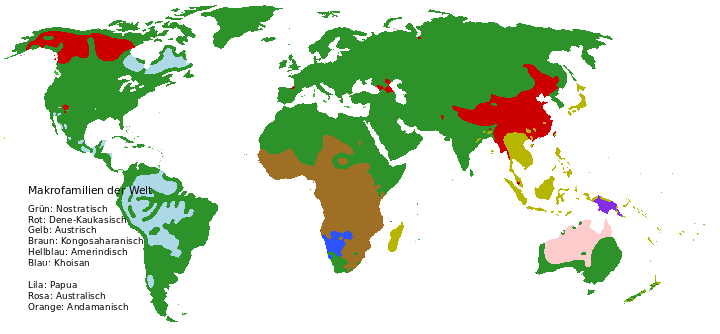
Illustration: Makrofamilien. Photo: Taron / Wikimedia Commons. Map of the hypothetical language superfamilies. Source
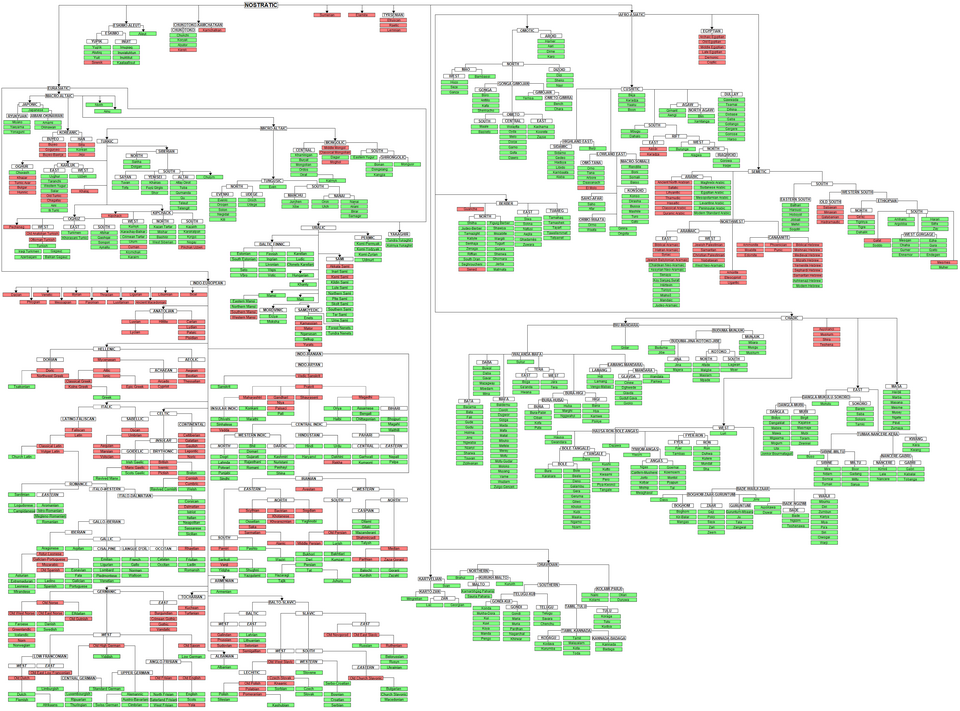
NostraticLanguageTree. Photo: Abrahamic Faiths / Wikimedia Commons. Source
The Tower of Babel narrative (Genesis 11:1–9) functions as the canonical Western cultural myth depicting a single primeval language splintering into many, and is treated in modern linguistics commentary as a cultural intuition about language diversification rather than as scientific evidence for monogenesis. L. Luca Cavalli-Sforza’s interdisciplinary project correlating genetic trees with Greenberg’s language classifications was rejected by most linguists on methodological grounds. A 2022 PNAS global study found roughly 20% of populations show gene-language mismatches even within the time depth of known linguistic relatedness, complicating any simple “one language = one people” reading that is sometimes invoked to support deep monogenesis narratives. The most important unresolved finding is methodological: comparative linguistics can reconstruct Proto-Indo-European back to roughly 4500–2500 BCE with confidence, but cannot empirically test monogenesis itself. That question is now being reframed in genomic terms—most recently by Miyagawa et al. (2025), who argue on the basis of the ~135,000-year-old Khoisan population split that linguistic capacity must already have been present in Homo sapiens at that time depth—but the linguistic test the comparative method cannot deliver remains as far away as it was a century ago. [9]
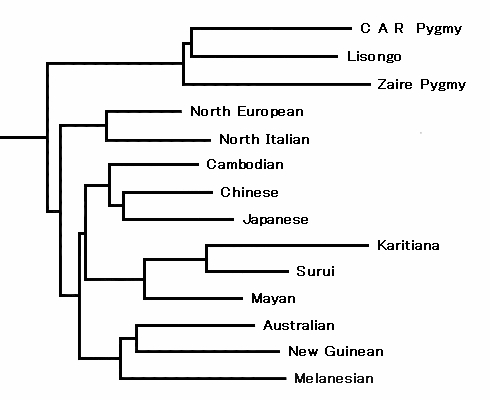
Illustration: High resolution of human evolutionary trees. Photo: asdfgf / Wikimedia Commons. High resolution of human evolutionary trees with polymorphic microsatellites. Source
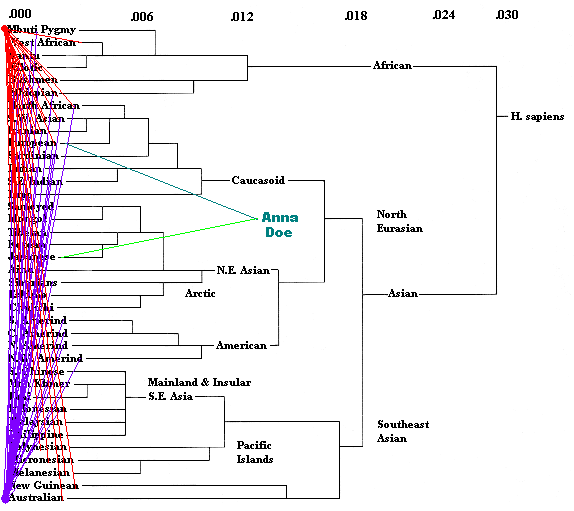
DNAtreeYconnections. Photo: No machine-readable author provided. GifTagger assumed (based on copyright claims). / Wikimedia Commons. Source
The Babel Narrative and the Global Lost-Unity Mythology
Genesis 11:1-9 opens with a flat assertion: “the whole earth had one language and the same words”. From that premise the narrative builds a compressed etiology — humanity migrates eastward, finds the plain of Shinar in Lower Mesopotamia, and begins to build a city with a tower reaching heaven; God descends, confounds their speech, and scatters them across the earth. Under the Documentary Hypothesis, the passage is generally attributed to the Yahwist (J) source, with classical source-critics dating J to roughly the 10th century BCE. Modern scholarship overwhelmingly identifies the architectural referent as Etemenanki, the stepped ziggurat dedicated to Marduk in Babylon [10] [11] [12]
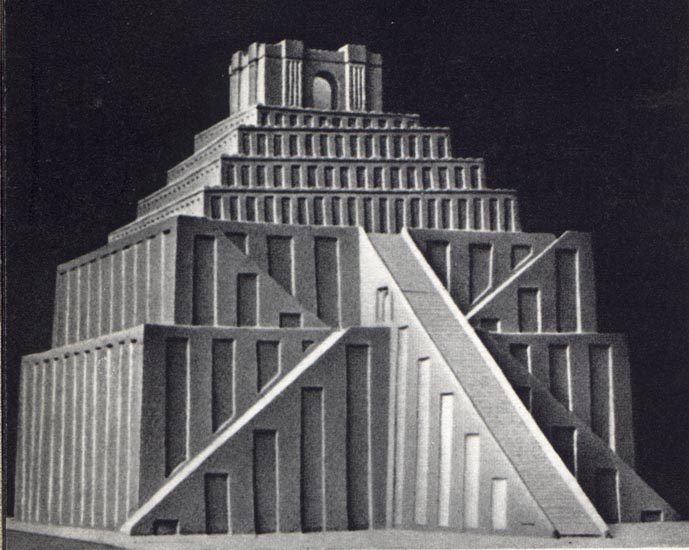
SumerianZiggurat. Photo: Michael V Fox / Wikimedia Commons. Source
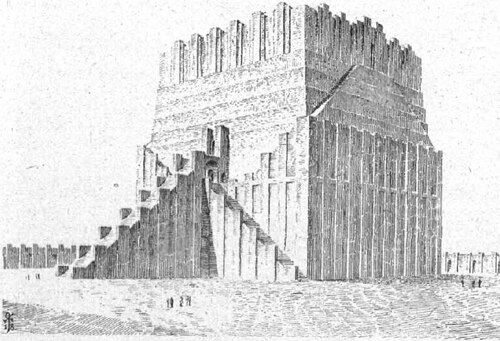
Babylon 1323. Photo: Robert Koldewey (Schriftleiter: Friedrich Schultze und Richard Bergius) / Wikimedia Commons. The Babylonian tower Etemenanki, complements. Source
. The geographic anchoring in Shinar — unmistakably Lower Mesopotamia — situates the composition of the legend within the very ziggurat culture of the region.
The polemic, however, does not begin in a vacuum. Roughly fifteen centuries before the Yahwist’s likely date, a Sumerian composition catalogued as ETCSL 1.8.2.3 — “Enmerkar and the Lord of Aratta,” preserved in Neo-Sumerian copies but composed in the 21st century BCE — already contained a passage describing the god Enki as the one who “changed the speech in their mouths, brought contention into it, into the speech of man that (until then) had been one”. The episode sits inside a royal contest between Enmerkar of Uruk and the Lord of Aratta over tribute and the building of a temple; the disruption of unified speech is the deity’s deliberate strategy to prevent human collaboration on a monumental construction [13]
. The passage is widely treated as the oldest known narrative parallel to the Genesis Babel motif, and the comparison has been drawn since Samuel Noah Kramer’s 1952 University Museum edition. An 8th–7th century BCE Assyrian cuneiform inscription now in the British Museum uses the Akkadian-Semitic word balel — “to confound” — in connection with a building at Babylon, demonstrating that the semantic pun embedded in Hebrew “Babel” was already operative in Mesopotamian onomastic traditions centuries before the biblical text reached its final form.
The structural motif — a deity who gives, governs, or fragments human language — does not stop at the Tigris and Euphrates. In ancient Egypt, Thoth, the ibis-headed god of wisdom, was credited with inventing both writing and spoken language as instruments of cosmic order. In Vedic India, the goddess Vāc — personified as divine speech and identified as “mother of the Vedas” — is mythologized as the source of sacred utterance, with the later goddess Saraswati inheriting that role as patroness of learning, music, and the Sanskrit language. A comparative catalog enumerates structurally analogous “confusion of tongues” myths from at least four non-Biblical traditions: Aboriginal Australian stories in which the mother figure Warramurunguji gives each child a different language; Aztec traditions in which a dove bestows differentiated speech on the mute children of Coxcox and Xochiquétzal; Chinese myths in which Pangu’s children produce three different cries from bamboo cast into fire, generating the Han, Li, and Lisu languages; and African traditions in which Adam chokes on the apple and the sounds that emerge become the world’s tongues. The pattern is not borrowing but independent symbolic convergence: every literate civilization confronted with deep linguistic diversity appears to have generated an etiology that routes language through divine agency rather than through naturalistic divergence. [14]
Sanskrit — the language mythologized in Vedic tradition as the “eternal speech” of the cosmos and later explicitly identified with the goddess Saraswati as its divine inventor — is, on the linguistic record, an Indo-Aryan language within the Indo-European family, descended from Proto-Indo-Aryan and traceable in its Vedic form to roughly 1500 BCE in the Punjab region. The Rigveda was composed by Indo-Aryan tribes migrating east from northern Afghanistan; the Proto-Indo-Iranian speech community developed on the Central Asian steppes, with Sintashta (c. 2200–1900 BCE) and Andronovo (2000–1450 BCE) as its archaeological correlates. Vedic Sanskrit itself contains demonstrable non-Indo-European substrate features, including retroflex phonemes not reconstructible to Proto-Indo-European, and roughly four percent of Rigvedic vocabulary is identified by specialists as non-Indo-Aryan. The Nāda Brahma tradition — “the world is sound” — that identifies the syllable Oṃ as the primordial vibration from which the cosmos emanates is a metaphysical doctrine internal to Hindu thought, not a linguistic-historical claim that Sanskrit is a primordial universal tongue. The most rigorous attempt to date a single language origin empirically — Perreault and Mathew’s 2012 PLOS ONE study using phonemic diversity as a “slow clock” — placed modern languages in the Middle Stone Age of Africa, but the method has been thoroughly critiqued by Hunley, Bowern, and Healy on statistical grounds. The unresolved question, then, is structural rather than empirical: whether the Enmerkar incantation, the Yahwist’s polemic, and the Vedic Vāc hymn are relics of a single historical event that divergent traditions remembered imperfectly, or whether they are independent symbolic responses to a feature of human cognition — the existence of irreducible linguistic difference — that every literate civilization had to domesticate through myth. [15]
Vāc, Sphota, and the Genuine Hindu Cosmogonic Tradition
In the Rig Veda, the goddess Vāc — also rendered Vāk — declares herself in hymn 10.125 (the Devi Sūktam, attributed to the seer Vāk Āmbhṛṇī) with a startling set of self-identifications: “I am the Queen, the gatherer-up of treasures… the gods have stablished me in many places with many homes to enter and abide in”. She goes further, claiming sovereignty over every divine name and power: Rudras, Vasus, Ādityas, Mitra, Varuṇa, Indra, Agni, Aśvins, Soma — all derive from her. This is not a metaphor dressed as poetry. It is a cosmological claim that the divine power of speech, Vāc, is the source and sustainer of the gods themselves, a creative feminine principle that pervades existence and through which all things are brought forth, named, and given form. The hymn’s vocabulary — “I make the man I love exceeding mighty, make him a sage, a Ṛṣi, and a Brahman” — establishes that Vāc is not merely a deity among deities but a metaphysical power through which reality is constituted. This is the oldest stratum of the Indian tradition’s reflection on language, and it is already cosmological rather than philological.
The mature philosophical articulation of this intuition comes from Bhartṛhari (c. 450–510 CE), whose Vākyapadīya develops the Sphota theory within the śabda-advaita (“word monistic”) school. Bhartṛhari’s central claim is that at the ultimate level of reality, śabda (word/language) and Brahman are ontologically identical, with cognition and language referring to one supreme reality, Brahman. Sphota itself is treated as an indivisible (avibhakta), eternal, part-less meaning-bearing essence that “bursts forth” (from the Sanskrit root sphuṭ) as a unified whole when language is heard — distinct from the articulated sound-stream (dhvani/nāda) which merely reveals it. Bhartṛhari articulates a graduated ontology of speech through which the word-principle descends: paśyantī (conceptualization, where word and meaning are undifferentiated), madhyamā (interior mental speech), and vaikharī (fully uttered, temporally sequenced speech), with some interpreters adding a fourth parā stage identified with pure consciousness or Brahman itself. This is a metaphysics of language in which cognition, meaning, and ultimate reality are non-different at the highest level.
Several surrounding doctrines flesh out this linguistic metaphysics. The Vedas are classified within orthodox Hindu tradition as śruti (“that which is heard”) and described as apauruṣeya (“authorless, not of human origin”) — eternal revelations received by ṛṣis in deep meditation rather than composed by human authors. The syllable Oṃ (Aum) is treated across Hindu, Buddhist, Jain, and Sikh traditions as the primordial seed syllable (bīja mantra), the sonic representation of Brahman, and the source from which all Vedas and mantras are said to originate — a sonic encapsulation of all articulate sound. Mantras themselves are sacred syllables, words, or verses whose efficacy is held to depend on correct Sanskrit phonology, intention (bhāva), and meditative repetition (japa), rather than on semantic content in the ordinary sense. In the tradition of Nāda-Yoga, practitioners seek liberation (mokṣa) through meditation on inner sound culminating in the realization that Ātman is Brahman via Nāda-Brahman, “cosmic sound”. Crucially, this entire framework is contested within Indian philosophy itself: the Mīmāṃsā school (founded by Jaimini, c. 4th c. BCE) restricts eternal-śabda status to Vedic words specifically, rejecting the Sphota-vāda grammarians’ extension of sacred-word status to all language; Kumārila Bhaṭṭa outright rejected Sphota in favor of phonemes as the primary meaning-bearing unit; and Buddhist logicians Dignāga (c. 480–540 CE) and Dharmakīrti developed the apoha (“exclusion”) theory, holding that words signify only by excluding what they are not and that universals have no ultimate reality — a direct philosophical counter to the Sphoṭa eternal-meaning position.
Here is where the categorical line must be drawn. The Indian tradition’s claim about language is metaphysical and soteriological — that the word-principle is identical with Brahman, that the Vedas are authorless eternal sound-revelations, that Oṃ is the sonic essence of ultimate reality, that mantras carry intrinsic transformative power. It is a doctrinal claim about the cosmic status of speech, anchored in śruti, the Sphota tradition, and the Mīmāṃsā grammarian debates. It is not a historical-linguistic claim that Sanskrit is the first human language, that Sanskrit is the ancestor of all languages, or that any meditative practice can recover a primordial ancestral tongue. Even the Mīmāṃsā tradition’s internal assertion that Sanskrit is the “root of all languages” (mūlabhāṣā) is a metaphysical commitment about Sanskrit’s ontological status as the eternal essence of the cosmos, not a reconstruction of proto-language descent. The Bhartṛharian framework has been productively compared to Ferdinand de Saussure’s signifier/signified distinction, but this is a typological parallel between two distinct linguistic-philosophical traditions, not evidence of monogenesis of language. The strongest finding the evidence supports: what the Hindu cosmogonic tradition offers is a sophisticated metaphysics of sacred sound, not a philological thesis about a recoverable primordial human tongue. [16] [17]
The Western Esoteric Appropriation and the Ingo Swann Question
On November 8, 1875, Helena Petrovna Blavatsky and Henry Steel Olcott founded the Theosophical Society in New York City. Twelve years later, Blavatsky published The Secret Doctrine, an 1,500-page work subtitled “The Synthesis of Science, Religion, and Philosophy” — a text reference scholarship classifies as “a pseudoscientific esoteric work”. The Secret Doctrine grafted Friedrich Max Müller’s three-stage linguistic typology (monosyllabic → agglutinative → inflectional) onto Blavatsky’s Root Race evolutionary scheme: monosyllabic languages assigned to the Third (Lemurian) Race, agglutinative to the Fourth (Atlantean), and inflectional — with Sanskrit treated as the apex — to the Fifth (Aryan) Race. Blavatsky simultaneously criticized Müller’s separation of Aryan, Semitic, and “Turanian” language families as incompatible with “the occult doctrine,” which she wrote “admits of no such divisions as the Aryan and the Semite”. The selective appropriation was deliberate: Sanskrit vocabulary was retained and reframed within a root-race cosmology that mainstream scholarship — including Müller himself, who publicly called Blavatsky’s teachings “absurdities” and “frauds” — explicitly rejected. [18] [19] [20]
The Sahasrara visualization entered Western esoteric practice through a specific textual lineage. The Sat-Chakra-Nirupana, completed by Swami Purnananda in 1577, described the crown chakra as “a thousand-petaled lotus” with the fifty letters of the Sanskrit alphabet inscribed upon the petals in twenty rounds. Sir John Woodroffe, writing under the pseudonym “Arthur Avalon,” published this text in English in 1919 as The Serpent Power. Alice Bailey’s Arcane School, founded in 1923 explicitly as “a direct offshoot” of the earlier Theosophical Esoteric Section, deployed Sanskrit terms — antahkarana, Sahasrara, kundalini — as technical vocabulary across her twenty-four books, allegedly channeled from a “Tibetan Master” called Djwhal Khul. Through this transmission, the Sahasrara’s Sanskrit-letter inscription — a specific 16th-century tantric visualization — became, in modern meditation commentary, evidence for Sanskrit’s “primordial” cosmic status. [21] [22] [23]
Enter Ingo Swann, born September 14, 1933, died January 31, 2013. His documented career centered on parapsychology: he worked at Stanford Research Institute from 1973 to 1989, where he became what the Psi Encyclopedia calls “the original remote viewer” and what Wikipedia characterizes as “parapsychology’s most tested guinea pig”. Swann’s most-cited anomalous claim is dated April 27, 1973, when he and Harold Sherman conducted a joint “psychic probe” of Jupiter; Swann reported perceiving a ring around the planet, then unknown to science, which was subsequently confirmed by Pioneer 10’s 1979 flyby. His 1998 publication Penetration: The Question of Extraterrestrial and Human Telepathy is subtitled documentation of “undeveloped human telepathy” and “probable fully developed alien telepathy,” framed by its publisher as “part government exposé, part consciousness manifesto”. The book’s documented subject matter is telepathic contact with extraterrestrial intelligence and government secrecy around UFOs — not Sanskrit, not primordial language, not meditative visualization. [24]
This is where the claim collapses. Across the entire documented corpus of Swann’s published work — including the 1998 book Penetration, his 1975 memoir To Kiss Earth Goodbye (Hawthorn/Dutton, ISBN 978-0801577741), and the peer-reviewed neuropsychological profile published in Perceptual and Motor Skills — no source attributes any claim by Swann himself that Sanskrit reveals a primordial universal language. The single documented connection between Swann’s remote-viewing work and Indian yogic literature comes from Russell Targ — Swann’s co-researcher at SRI, not Swann himself — who drew a methodological parallel between American remote-viewing techniques and Patanjali’s Yoga Sutras, specifically the ashta-siddhis described in the Vibhuti Pada chapter (composed between roughly 500 BCE and 450 CE), whose first siddhi is rendered as “obtaining knowledge of the small, the hidden or distant by directing the light of superphysical faculty”. Targ’s parallel addresses altered states of consciousness, not linguistic recovery. Parapsychology as a field — the discipline in which Swann worked — is classified as a pseudoscience, with the majority of mainstream scientists rejecting it after more than a century of failed reproduction. The Jupiter-ring anecdote and the broader claims of Penetration sit inside that pseudoscientific frame. [25]
What then does the “primordial Sanskrit” doctrine actually trace from? It traces through Blavatsky’s pseudoscientific esoteric synthesis and through Bailey’s channeled lineage — not through Swann. The Sahasrara inscription, the root-race language typology, and the chakra system as “esoteric energy-centers” were largely constructed in the 1880s and 1920s by Theosophists — most notably Charles W. Leadbeater, whose 1927 The Chakras fixed the now-standard rainbow color mapping that has no classical Sanskrit precedent. The rainbow-colored chakra system was codified in 1577, the Theosophical overlay came in the 20th century, and Ingo Swann’s actual contributions sit in remote viewing and alien telepathy at SRI — not in any recovered primordial tongue. The evidence doesn’t resolve the broader question of esoteric language traditions in a single sentence, but it does resolve this one: Swann’s published work is about telepathy, not Sanskrit, and the chain of attribution that puts him inside a “primordial language” doctrine has no documented source. [26] [27] [28] [29] [30] [31]
Connecting the Dots
The comparative method cannot reconstruct histories of languages separated by more than approximately 5,000 years before their first attestations, and “Proto-Human language” — also called Proto-Sapiens, Proto-World, or Ur-language — is explicitly not amenable to analysis using the comparative method of historical linguistics. This technical ceiling creates a vacuum, and into that vacuum the Tower of Babel narrative in Genesis 11:1-9 has long been inserted as a Hebrew Bible origin myth explaining linguistic diversity through divine confusion of a previously unified human speech. The standard scholarly view is that the most widely accepted historical inspiration for the Babel narrative is the ziggurat Etemenanki, dedicated to Marduk in Babylon, whose Hebrew name was “Babel”, and that Genesis 11 is attributed in source-critical scholarship primarily to the Yahwist source. The pattern that does not fit is chronological: a structurally parallel “confusion of tongues” motif exists in the Sumerian epic “Enmerkar and the Lord of Aratta,” composed in the Neo-Sumerian period around the 21st century BCE, predating the Genesis narrative by approximately a millennium and a half. Both narratives function as cultural-mythological vehicles for the monogenetic intuition — stories that fill the explanatory gap that linguistic science cannot reach. [1]
The standard triumph of comparative linguistics was Sir William Jones’s 1786 Third Anniversary Discourse to the Asiatic Society of Bengal, proposing that Sanskrit, Greek, and Latin shared a common source that “perhaps no longer exists”, thereby founding the field now called Indo-European linguistics. Friedrich Schlegel’s 1808 “Über die Sprache und Weisheit der Indier” [32] introduced this Indo-European relationship to a Continental European audience and argued that Indian civilization had emigrated to Europe [32]. The pattern that does not fit is that this same Sanskrit corpus — once it became entangled with the conflation of linguistic kinship and biological kinship, producing the “Aryan race” concept that fed Gobineau’s foundational 1853 essay — became raw material for esoteric race theory, with the Indigenous Aryanism/Out of India theory retaining cultural influence in Hindutva politics while having no relevance or support in mainstream scholarship [33]. Meanwhile, a 2018 phylogenetic analysis with ancestry constraints strongly supports the Steppe/Indo-European hypothesis for PIE origins (c. 6500–5500 BP) over the Anatolian farming-diffusion hypothesis (c. 9500–8000 BP), finding homoplasy in lexical traits common [34]. The convergence is exact: the same Sanskrit data was simultaneously the foundation of rigorous comparative linguistics and the seed of a mythologized racial narrative — and the two literatures have never been disentangled.
The standard indigenous framework for primordial speech in India is philosophical and sophisticated. Bhartṛhari (c. 5th century CE), in his Vākyapadīya, developed the Sphota theory identifying language with ultimate reality (śabda-Brahman) as part of the śabda-advaita “speech monistic” school, positing three stages of speech — paśyantī, madhyamā, and vaikharī — through which śabda or vāc passes whenever one speaks, with śabda and artha ontologically identical at an ultimate level. Vāc is personified as a Vedic goddess of divine speech in Mandala 10.125 (the Devi Sūktam), where the goddess speaks as cosmic creative power pervading all deities, and the Vedas are classified as śruti (“what is heard”) and considered apauruṣeya — authorless revelations of sacred sounds heard by ancient sages in intense meditation, not human compositions. The pattern that does not fit is the parallel with twentieth-century channeled-language claims: Ingo Swann (1933–2013), whose involvement in parapsychology began in 1969, worked at SRI’s psychoenergetics project from 1973–1989 and authored “Penetration: The Question of Extraterrestrial and Human Telepathy” in 1998, while Alice Bailey claimed her 24 books were telepathically dictated. Both invoke modes of language-reception structurally identical to śruti — but parapsychology is characterized as pseudoscience after more than a century of failed reproduction, and ancient astronaut theories, which share conceptual territory with Swann’s extraterrestrial telepathy framework, are classified as pseudoarchaeology with no credible peer-reviewed support [35]. The same intuitive grammar of channeled or telepathically received language produces Bhartṛhari’s metaphysics and Bailey’s automatic writing; only the epistemic regime differs.
Donald Ringe’s statistical analysis of 205 Nostratic cognates proposed by Vladislav Illich-Svitych concluded that the proposed sound correspondences are statistically indistinguishable from chance, while the same method confirmed genuine Indo-European relationships, and one critical comparison of the Nostratic macro-family hypothesis called it “the linguists’ version of cold fusion”. The standard view is that Proto-Indo-European is the most extensively and rigorously reconstructed proto-language, with the comparative method having been developed largely to handle it. The pattern that does not fit is the asymmetry: within the comparative method’s ~5,000-year ceiling, valid reconstruction is possible — but beyond that ceiling, the Nostratic hypothesis’ attempt to push beyond 12,000 years falls to the same statistical test that confirms PIE, and a peer-reviewed probabilistic model makes polygenesis more likely than the standard monogenesis assumption. The depth of human longing for a single ancestral tongue — expressed mythologically in Babel and Enmerkar, philosophically in Vāc and Sphota, and esoterically in telepathic-channeled claims — is matched exactly by the depth of the methodological gap that prevents its empirical verification. [36] [37] [38]
The Other Side
Mainstream linguistics has actively defended macro-comparison despite decades of skepticism, and that program deserves its strongest reading. The 2024 NAACL paper by Akavarapu and Bhattacharya applied a likelihood-ratio test to language data and reported statistical support for both the Nostratic and Macro-Mayan macro-families while not misclassifying unrelated languages as related,. That result directly contradicts Donald Ringe’s 1995 statistical rejection of long-range comparison,, and the work has been read as a quantitative rejoinder to the most influential anti-Nostratic argument of the late twentieth century,. The Nostratic program remains institutionally active rather than defunct: the Moscow School lineage of Illich-Svitych and Starostin explicitly framed Nostratic research as a path toward ‘proving the theory of language monogenesis’,,, and Allan Bomhard’s 5th-edition, 3,239-page defense (2023) is an ongoing, programmatic scholarly endeavor,,,. Bomhard and Kerns’s Nostratic Macrofamily, published with an introduction by Colin Renfrew, sits in the same active research stream,,. [39]
Monogenesis also receives indirect support from genomic and computational work that operates outside the comparative method entirely. Miyagawa et al. (2025, Frontiers in Psychology) used a meta-analysis of 15 genetic studies — 3 Y-chromosome, 3 mtDNA, 9 whole-genome — to argue that since every human population branching across the globe possesses linguistic capacity, that capacity must have been present in Homo sapiens before the first regional split, placing monogenesis at roughly 135,000-year depth,. Independently, Perreault and Mathew’s 2012 PLOS ONE study used phonemic diversity as a ‘slow clock’ to estimate that present-day languages date to the Middle Stone Age in Africa, yielding a quasi-monogenetic timeline through a method that does not depend on the comparative method at all,,. These two lines of evidence — genomics and phonemic-diversity dating — converge on a single-origin picture that mainstream scholarship takes seriously, even where it stops short of endorsing a fully reconstructed Proto-World,,,,. [40]
What We Actually Know
The strongest support for a primordial-language intuition is that it appears independently in multiple ancient civilizations, not as a late folk-memory but as a foundational cosmological claim. The Sumerian epic “Enmerkar and the Lord of Aratta,” with Neo-Sumerian copies of a composition dating to c. 21st century BCE, contains a passage in which Enki transforms humanity’s speech from one tongue into many — making it the oldest known narrative parallel to the Babel motif. The Hebrew Genesis 11:1–9 explicitly states that all humanity originally shared a single language before being scattered and “confounded” by God. Independently, the Indian philosophical tradition developed an elaborate metaphysical framework: Bhartṛhari’s Sphota theory in the śabda-advaita school identifies the word-principle ontologically with Brahman, positing three stages of speech (paśyantī, madhyamā, vaikharī) through which śabda passes whenever one speaks, while the Rigvedic Vāc is personified as a cosmic creative goddess — most explicitly in the Devi Sūktam — whose power pervades all deities. Three civilizational traditions, three independent cosmologies, one shared intuition: language was once unified and is now plural. [1]
What mainstream historical linguistics actually knows is considerably more austere. The comparative method cannot reliably reconstruct histories of languages separated by more than 5,000–10,000 years before their first attestations, which places a hard ceiling on any Proto-World–style reconstruction. Joseph Greenberg’s mass-comparison method is rejected by most linguists, and its continued use is now largely restricted to fringe linguistics [41]. Donald Ringe’s statistical analysis of 205 Nostratic cognates proposed by Illich-Svitych concluded the cited similarities are indistinguishable from chance resemblance, even as the same method confirmed genuine Indo-European relationships. Macro-family hypotheses (Nostratic, Eurasiatic, Amerind) are mostly rejected by mainstream historical linguists; only Dené-Yeniseian has gained broader acceptance. Proto-Indo-European remains the only proto-language extensively and rigorously reconstructed, and the comparative method was largely developed to handle it, anchored by Sir William Jones’s 1786 Third Anniversary Discourse to the Asiatic Society of Bengal. Merritt Ruhlen’s proposed Proto-World lexical reconstructions (ku ‘who’, ma ‘what’, sum ‘hair’, akwa ‘water’) are dismissed by most historical linguists as both speculative and methodologically impossible at the required 50,000–100,000-year time depth.
Between the well-documented and the speculative sits a middle tier of plausible but unverified material. A cross-cultural pattern of mythical language origins exists — Enki endowing humans with speech in Mesopotamia, Thoth inventing writing and spoken language in Egypt, Saraswati/Vāc creating language and Sanskrit in Hindu tradition [42]. The Tower of Babel narrative has been productively reread through a divine-counsel framework drawing on Deuteronomy 32:8–9 and Psalm 82, with the dispersion framed as a punitive apportioning of nations to lesser divine beings — a reading supported by Dead Sea Scrolls textual evidence, alongside a late Antique and Anglo-Saxon “topos of 72” descended from Noah’s three sons. In yogic-tantric visualization traditions, the Sahasrara is described as having 1,000 white petals arranged in 20 layers of 50, with Sanskrit letters inscribed upon them, and Nāda-Yoga frames meditation on inner sacred sound as a path to release. Indo-European languages share typological features such as basic subject–verb–adjective word order that distinguish them from many East Asian languages, though this typological grouping is distinct from any genetic-family relationship. Lithuanian is considered the living language most structurally similar to ancient Sanskrit. None of this establishes a primordial tongue; it documents how persistently the monogenesis intuition recurs across cultures.
The genuinely speculative tier is where Proto-World monogenesis, the Swann–Sanskrit crossover, and pop-esoteric claims all converge. Whether human language arose once (monogenesis) or multiple times (polygenesis) remains an open question [43]. Ingo Swann (1933–2013) was an American remote-viewing subject who worked at SRI from 1973–1989; in a 1973 session he reportedly perceived a ring around Jupiter before NASA’s Pioneer 10 flyby confirmed Jovian rings in 1979. His 1998 book Penetration: The Question of Extraterrestrial and Human Telepathy focuses on extraterrestrial telepathy, but the specific claim that Swann linked Sanskrit or meditative states to a primordial universal language could not be verified in any of the sources examined. Modern pop-esoteric speakers explicitly claim an esoteric language of unique or ultimate status, and certain alternative-history applications — such as the Natchez sacred fire rituals supposedly deriving from the Sanskrit fire-seed syllable ram — have failed source-critical scrutiny, with the evidence supporting only a negative conclusion [44]. Pleistocene engraved sequences on Ice Age tools and ivory from Central Europe carry roughly the information density of modern writing, but the inference to symbolic notation remains interpretive rather than established.
The biggest question the research surfaced but could not answer concerns Swann specifically. The most-cited figure in the Sanskrit–remote-viewing crossover, his documented public output centers on extraterrestrial telepathy, not Sanskrit or primordial-language claims, and his other published works were not examined by any specialist consulted. Equally unresolved is the structural relationship between genuine Indian metaphysical traditions (Vāc, Sphota, śruti, Nāda-Brahman — doctrinal-cosmological claims within Indian philosophy) and the Western esoteric and New Age appropriation of Sanskrit as a “primordial language recoverable through meditation.” The two share surface motifs but are epistemically very different, and no specialist traced the transmission line from Blavatsky through Evola to contemporary Hindutva and New Age channels. The instinct that language was once one is ancient, cross-cultural, and doctrinally serious in multiple traditions. Whether any of it points to a real historical primordial tongue — or whether that question is even coherent given the comparative method’s 10,000-year ceiling — remains exactly where linguistics has left it: methodologically closed and empirically open. [45]
References
[1] Enmerkar and the lord of Aratta: translation - ETCSL — https://etcsl.orinst.ox.ac.uk/section1/tr1823.htm (accessed 2026-08-29) [Academic]
[2] Proto-Indo-European language — https://en.wikipedia.org/wiki/Proto-Indo-European_language (accessed 2026-08-29) [Reputable]
[3] Comparative method — https://en.wikipedia.org/wiki/Comparative_method (accessed 2026-08-29) [Reputable]
[4] Proto-Indo-Europeans — https://en.wikipedia.org/wiki/Proto-Indo-Europeans (accessed 2026-08-29) [Reputable]
[5] Linguistic monogenesis and polygenesis — https://en.wikipedia.org/wiki/Linguistic_monogenesis_and_polygenesis (accessed 2026-08-29) [Reputable]
[6] Proto-Human language — https://en.wikipedia.org/wiki/Proto-Human_language (accessed 2026-08-29) [Reputable]
[7] (PDF) Review of Indo-European and Its Closest Relatives — https://www.academia.edu/1629987/Review_of_Indo_European_and_Its_Closest_Relatives_The_Eurasiatic_language_family_Volume_2_Lexicon (accessed 2026-08-30) [Academic]
[8] A Likelihood Ratio Test of Genetic Relationship among Languages — https://arxiv.org/html/2404.00284v1 (accessed 2026-08-29) [Academic]
[9] Theories on the Origins of Human Languages — https://www.polilingua.com/blog/post/theories-of-languages-origin.htm (accessed 2026-08-29)
[10] Introduction to the Old Testament (Hebrew Bible) - RLST 145 — https://openmedia.yale.edu/projects/iphone/departments/rlst/rlst145/transcript05.html (accessed 2026-08-29) [Academic]
[11] Reflections on the Composition of Genesis | Bible Interp — https://bibleinterp.arizona.edu/articles/genesis (accessed 2026-08-29) [Academic]
[12] Issues of Historiography Concerning the Tower of Babel - Academia.edu — https://www.academia.edu/68842951/Issues_of_Historiography_Concerning_the_Tower_of_Babel (accessed 2026-08-29) [Academic]
[13] The ‘Sumerian Problem’—Evidence of the Confusion of Languages? — https://armstronginstitute.org/280-the-sumerian-problem-evidence-of-the-confusion-of-languages (accessed 2026-08-29)
[14] Stephanie W. Jamison, Joel P. Brereton — The Rigveda (3 … — https://www.academia.edu/30160889/Stephanie_W_Jamison_Joel_P_Brereton_The_Rigveda_3_Volume_Set_2014_pdf (accessed 2026-08-29) [Academic]
[15] Sanskrit — https://en.wikipedia.org/wiki/Sanskrit (accessed 2026-08-29) [Reputable]
[16] “Peace” is not a Mantra: A Deeper History of Mantras — https://www.susannabarkataki.com/post/peace-is-not-a-mantra-a-deeper-history-of-mantras (accessed 2026-08-30)
[17] Indian Philosophical Perspectives on Mind and Language — https://philosophy.institute/philosophy-of-mind/indian-philosophy-mind-language/ (accessed 2026-08-30)
[18] The Project Gutenberg EBook of The Secret Doctrine, Vol. 2 of 4 by … — https://www.gutenberg.org/files/54488/54488-h/54488-h.html (accessed 2026-08-30)
[19] The Secret Doctrine, Volume II by H. P. Blavatsky - Global Grey Ebooks — https://www.globalgreyebooks.com/online-ebooks/helena-blavatsky_secret-doctrine-volume-ii_complete-text.html (accessed 2026-08-30)
[20] Esoteric Orientalism in Victorian Discourse | PDF | Theosophy - Scribd — https://www.scribd.com/document/881117583/esoteric-orientalism (accessed 2026-08-30)
[21] Sat-Chakra-Nirupana-Kundalini Chakras - Bhagavadgitausa - YUMPU — https://www.yumpu.com/en/document/view/38878639/sat-chakra-nirupana-kundalini-chakras-bhagavadgitausa (accessed 2026-08-30)
[22] Shat Chakra Nirupana - Yogawiki - Yoga Vidya — https://wiki.yoga-vidya.de/Shat_Chakra_Nirupana (accessed 2026-08-30)
[23] Chakra course Lesson 3 - The Whispering Woods — https://thewhisperingwoods.homesteadcloud.com/chakra-course-lesson-3 (accessed 2026-08-30)
[24] The Question of Extraterrestrial and Human Telepathy, by Ingo Swann — https://www.spr.ac.uk/book/penetration-special-edition-question-extraterrestrial-and-human-telepathy-ingo-swann (accessed 2026-08-30) [Academic]
[25] Parapsychology — https://en.wikipedia.org/wiki/Parapsychology (accessed 2026-08-29) [Reputable]
[26] Chakra — https://en.wikipedia.org/wiki/Chakra (accessed 2026-08-30) [Reputable]
[27] Origins of Chakras: Separating History From Mystery — https://laquilaactive.com/origins-of-chakras-separating-history-from-mystery/ (accessed 2026-08-30)
[28] Chakras in Hindu and Yogic Tradition — https://jobcannon.io/blog/chakras-in-hindu-tradition (accessed 2026-08-30)
[29] The real story on the Chakras — https://hareesh.org/blog/2016/2/5/the-real-story-on-the-chakras (accessed 2026-08-30)
[30] Theosophy : The Chakras by C. W. Leadbeater : : — https://www.anandgholap.net/Chakras-CWL.htm (accessed 2026-08-30)
[31] Chakras - Theosophy Wiki — https://theosophy.wiki/en/Chakras (accessed 2026-08-30)
[32] India and the Identity of Europe: The Case of Friedrich Schlegel - Beezone — https://beezone.com/current/the-case-of-friedrich-schlegel.html (accessed 2026-08-29)
[33] Indigenous Aryanism — https://en.wikipedia.org/wiki/Indigenous_Aryanism (accessed 2026-08-29) [Reputable]
[34] Will Chang, Chundra Cathcart, David W. Hall, and Andrew Garrett (2015). Ancestry-constrained phylogenetic analysis supports the indo-european steppe hypothesis. Language. DOI: 10.1353/lan.2015.0005 (accessed 2026-08-29) [Academic]
[35] Ancient astronauts — https://en.wikipedia.org/wiki/Ancient_astronauts (accessed 2026-08-29) [Reputable]
[36] “Nostratic Article” - Santa Fe Institute — https://sites.santafe.edu/~johnson/articles.nostratic.html (accessed 2026-08-29) [Academic]
[37] The Mathematical Assessment of Long‐Range Linguistic Relationships — https://compass.onlinelibrary.wiley.com/doi/10.1111/j.1749-818X.2008.00083.x (accessed 2026-08-29) [Academic]
[38] [PDF] Beyond lumping and splitting : probabilistic issues in historical … — https://www.semanticscholar.org/paper/06a550c940b8d67ed645d7dbdae31ad7eb4dce0d (accessed 2026-08-29) [Academic]
[39] A Likelihood Ratio Test of Genetic Relationship among … — https://ui.adsabs.harvard.edu/abs/2024arXiv240400284M/abstract (accessed 2026-08-30) [Academic]
[40] Dating the Origin of Language Using Phonemic Diversity | PLOS One — https://journals.plos.org/plosone/article?id=10.1371/journal.pone.0035289 (accessed 2026-08-29) [Academic]
[41] Mass comparison — https://en.wikipedia.org/wiki/Mass_comparison (accessed 2026-08-29) [Reputable]
[42] Myths About Language Origins - The Mood Meter — https://www.themoodmeter.com/mythical-origins-of-language-how-ancient-cultures-explained-human-speech/ (accessed 2026-08-29)
[43] Monogenesis in Intro to Linguistics — https://fiveable.me/introduction-linguistics/key-terms/monogenesis (accessed 2026-08-29)
[44] The Shaman and The Philosopher. Ep.24 [23:02-25:28] — Institute for Natural Philosophy (YouTube) — https://youtu.be/_fbetSb5F6c?t=1382 (accessed 2026-08-29)
[45] Remote viewing with the artist Ingo Swann: neuropsychological profile … — https://pubmed.ncbi.nlm.nih.gov/12081299/ (accessed 2026-08-29) [Academic]
Keep exploring
Every site on this page sits on the globe, and the people who research them are on the Discord.
3D Globe · Sites by country · Story Archive · Research Library · Weekly Journal · Search