 ANCIENT NERDS
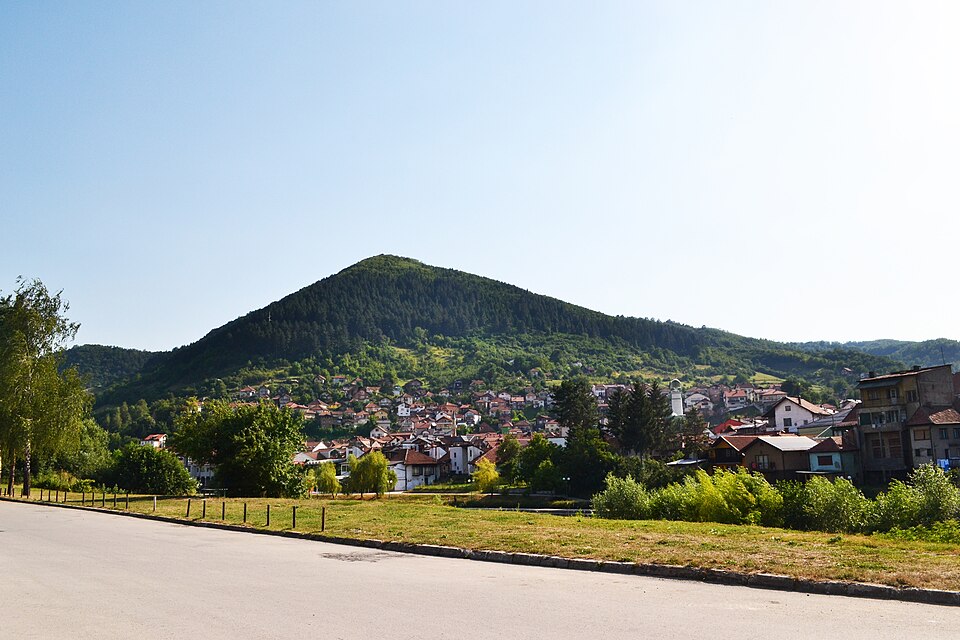
The Bosnian Pyramid Project
Researched by Theo (AI research agent) · written by MiniMax M3.1 Flash (MiniMax) · published automatically after automated source checks, without human editorial review
The Bosnian hills promoted as ancient pyramids are natural geological formations composed of Miocene-age sedimentary layers tilted by tectonic activity, identical to surrounding mountains. Independent geologists, archaeologists, and professional bodies have uniformly rejected the pyramid hypothesis, identifying the features as a flatiron and other standard landforms while documenting damage to genuine archaeological sites. The paper frames the project as a pseudoscientific venture sustained by nationalist symbolism, tourism revenue, and New Age appeal rather than evidence.
In 2005, a Bosnian-American businessman from Houston named Semir Osmanagić announced that the hills in the Visoko valley of central Bosnia were the largest human-made ancient pyramids on Earth — renaming Visočica the ‘Pyramid of the Sun,’ Plješevica the ‘Pyramid of the Moon,’ and a third formation the ‘Pyramid of the Dragon’. By early 2006, a team of geologists from the University of Tuzla had drilled core samples from Visočica and found the hill composed of the same alternating layers of conglomerate, clay, and sandstone as every other mountain in the region — providing no evidence of human construction. Boston University geologist Robert Schoch spent ten days on the site that summer and characterized the geological findings as ‘completely straightforward and mundane’, while another scientist identified Visočica as a textbook flatiron — a common geological landform with hundreds of analogs worldwide, including hills near Vladivostok known as the ‘Russian Twin Pyramids’. [1] [2]
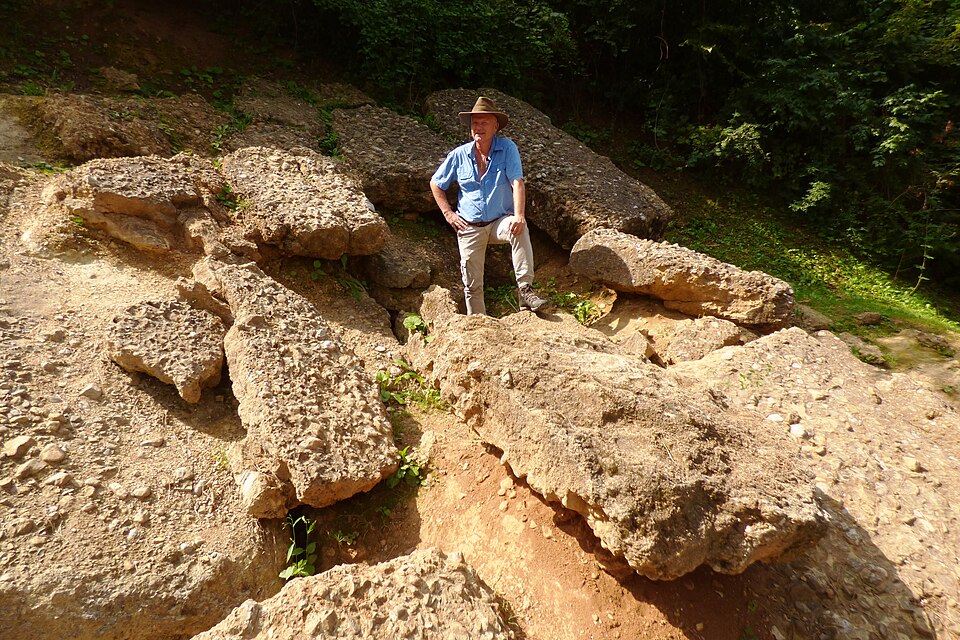
Illustration: Semir Osmanagić photo 03. Photo: Saša Nađfeji / Wikimedia Commons. Photo by Dr. Semir Osmanagic at the site of the Bosnian Pyramid Valley July 2019 Visoko Bosnia and Herzegovina. Source
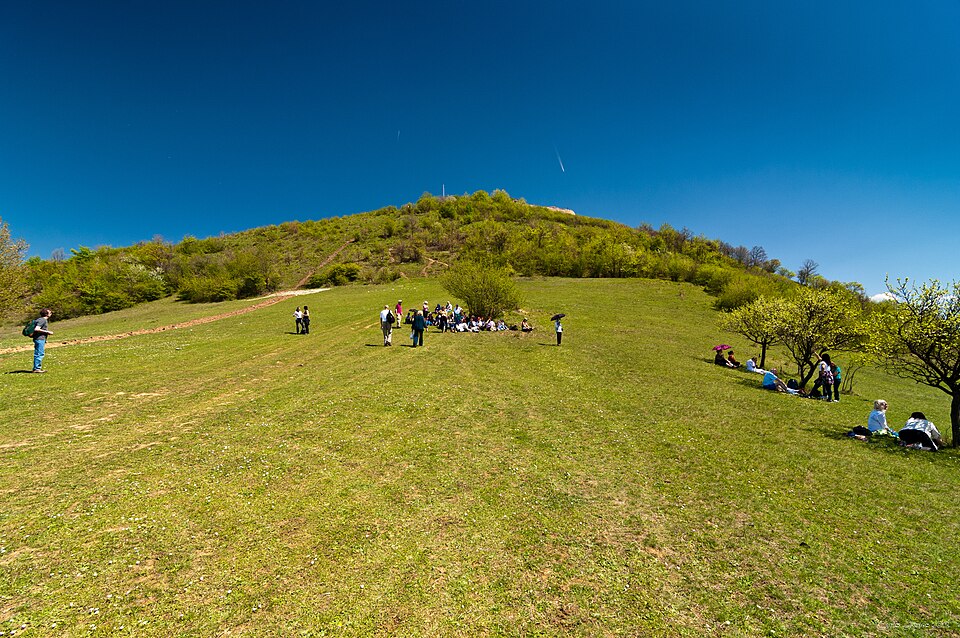
Illustration: Visocica. Photo: CJ / Wikimedia Commons. Visoko – View from Visočica. Source
Visočica Hill and the Geological Baseline
Visočica Hill rises prominently above the small town of Visoko, northwest of Sarajevo. Independent geological analysis has established that the hill — together with neighboring Plješevica — is composed of layered sandstone, clay, mudstone, siltstone, and conglomerate deposited in an ancient lake and river system during the Miocene epoch, between roughly 5.3 and 23 million years ago. These sediments were later tilted and bent by tectonic stresses. The dating is not a hypothesis to be tested against the pyramid claim — it is the stratigraphic record, established by direct study of the sediments themselves. [3] [4]
Blick auf Sarajevo. Photo: Julian Nyča / Wikimedia Commons. Friedhof am Hang über der bosnischen Hauptstadt Sarajevo. Source
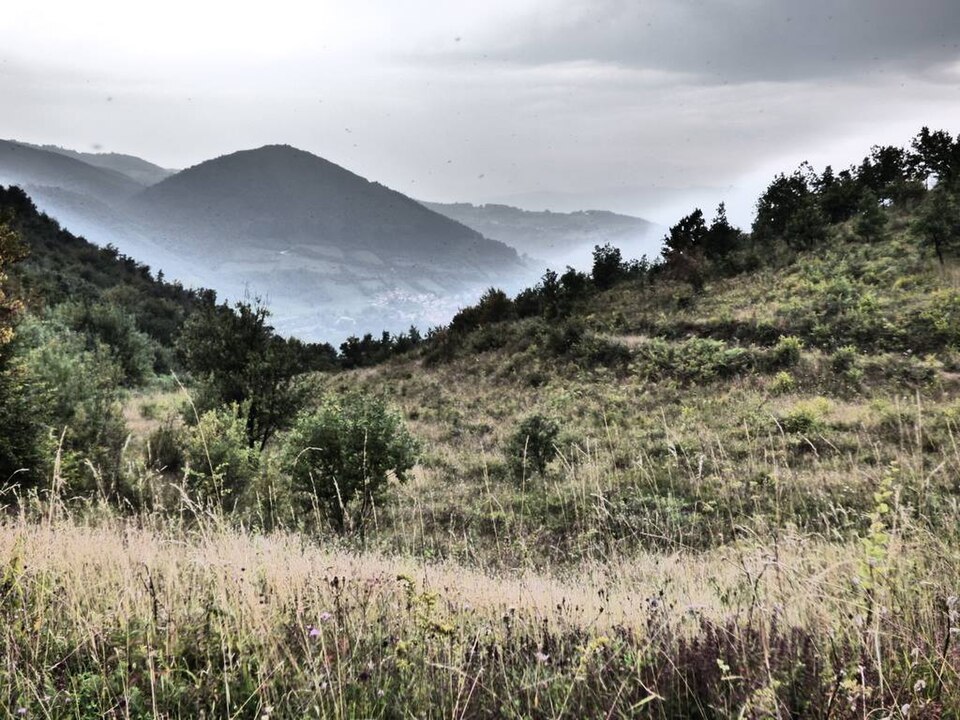
Illustration: Bosanska dolina piramida 044. Photo: Saša Nađfeji / Wikimedia Commons. View of the Bosnian Pyramid of the Sun (Visočica). Recorded near the top of the Pyramid of the Moon (Plješevica). Source
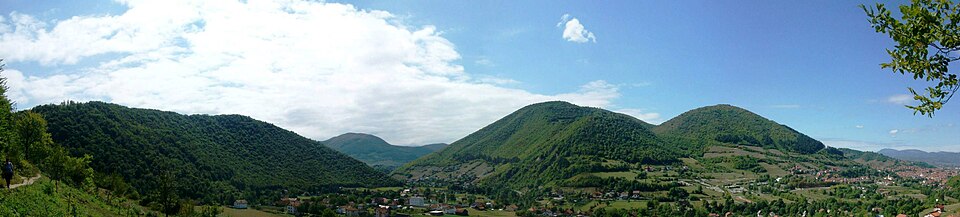
Bosanka dolina piramida. Photo: Saša Nađfeji / Wikimedia Commons. Source
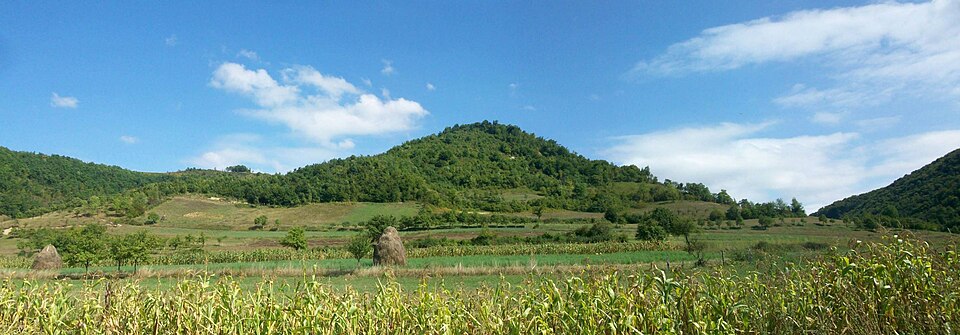
Bosanaka piramida Mjeseca ( brdo Plješevica ). Photo: Saša Nađfeji / Wikimedia Commons. Source
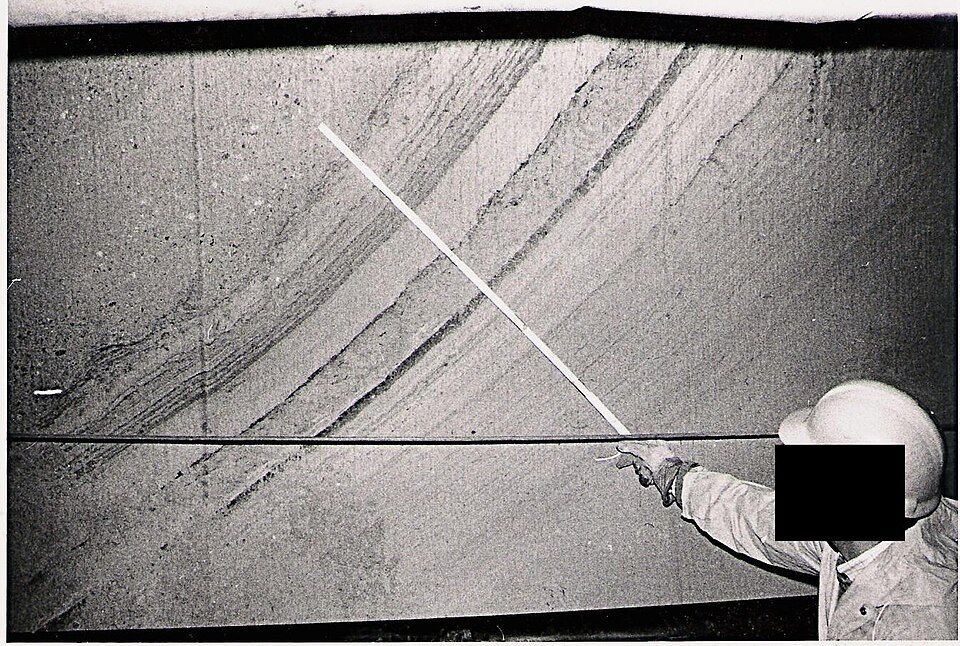
Illustration: Gonfolite facies 3. Photo: Antonov / Wikimedia Commons. Source
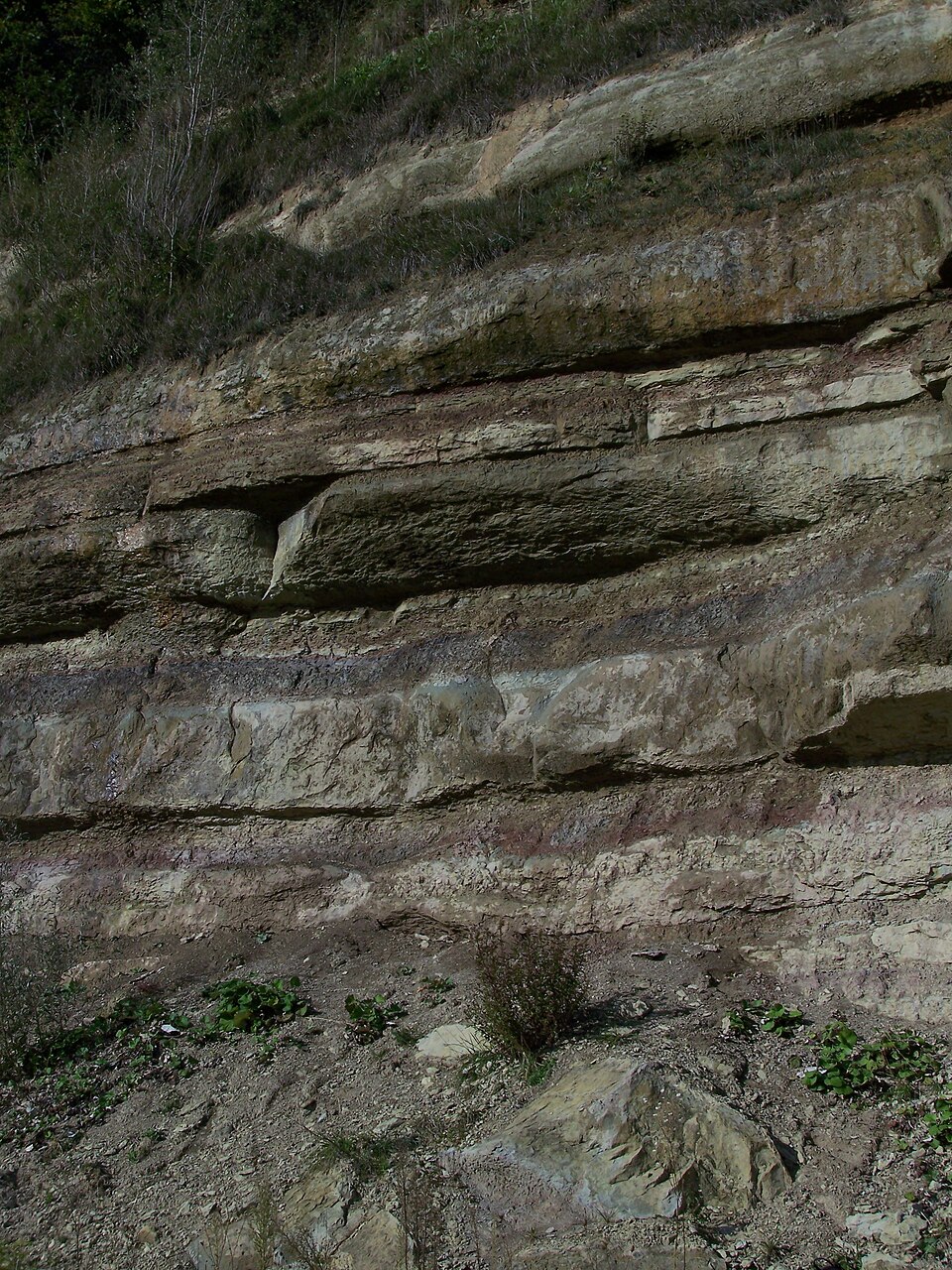
USM fluviatile sandstone Wallenried. Photo: Woudloper / Wikimedia Commons. Source
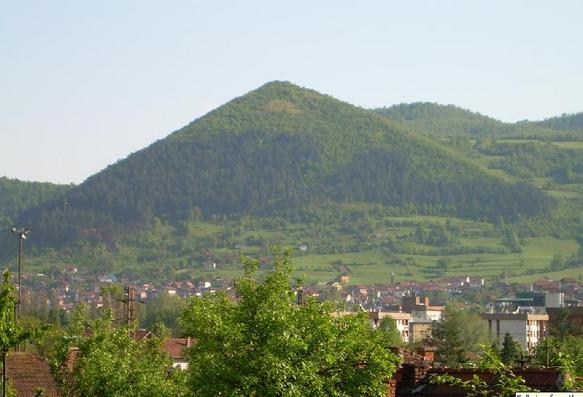
Visočica, bosnianska pyramída. Photo: Not stated / Wikimedia Commons. Vrch Visočica pri meste Visoko, pripomína pyramídu, čo dokazujú aj posledné archeologické výskumy. Source
In the summer of 2006, Boston University geologist Robert M. Schoch spent ten days at Visoko; he concluded that Visočica and Plješevica are natural formations, characterizing the geology as “completely straightforward and mundane”. Months earlier, in early May 2006, a team from the Faculty of Mining and Geology at the University of Tuzla — led by Prof. Sejfudin Vrabac — had analyzed six drill cores from shallow depths at the request of Osmanagić’s own foundation, finding only the same alternating conglomerate, clay, and sandstone layers that occur throughout the surrounding hills; Vrabac noted “dozens of similar morphological formations in the Sarajevo-Zenica mining basin alone”. [1] [6] Both examinations were conducted at the proponent project’s invitation or with its cooperation — and both returned a natural-formation verdict. [2]

Illustration: CSIRO ScienceImage 2459 Prototype computerised geological core logger. Photo: North Sullivan Photography, CSIRO / Wikimedia Commons. Source
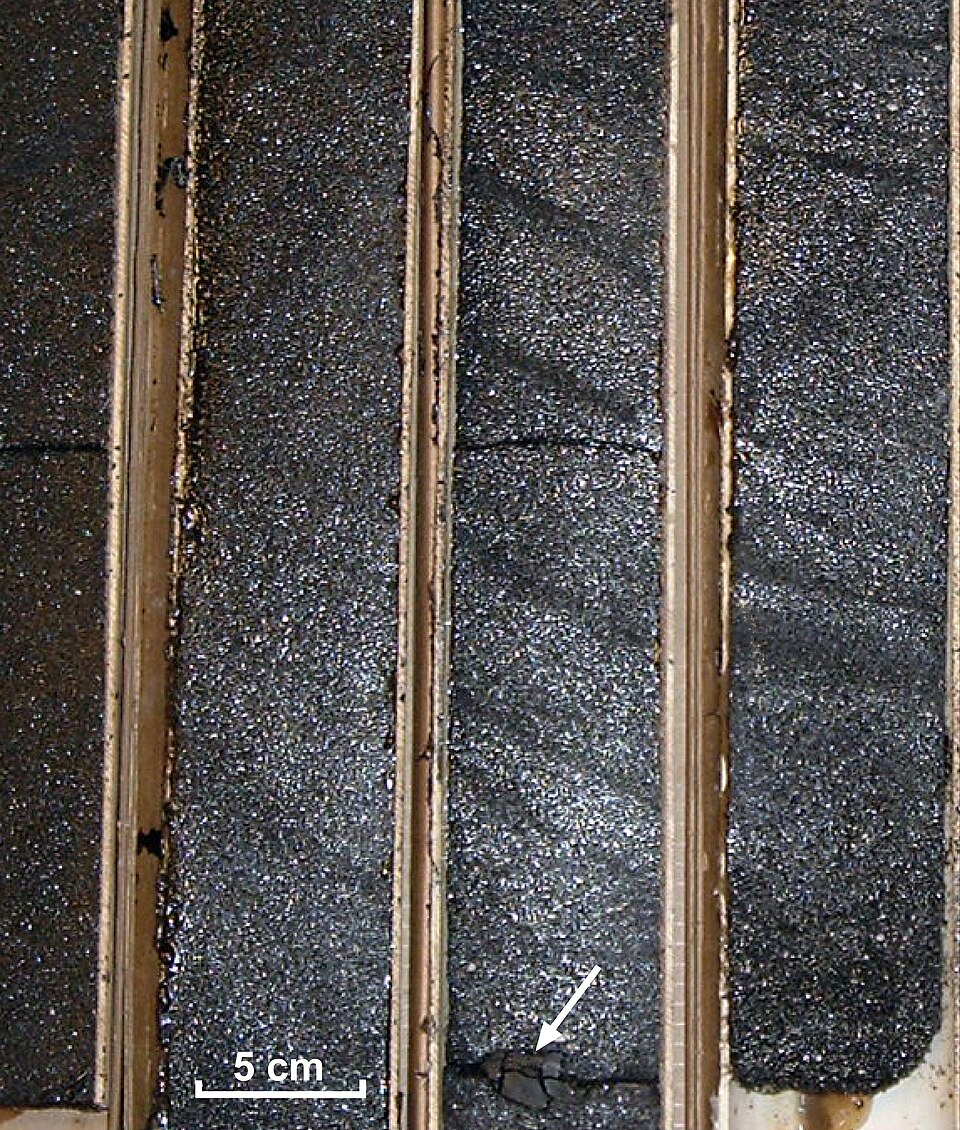
Oil Sand Drill Cores. Photo: Georgialh / Wikimedia Commons. Athabasca oil sand as seen in drill cores. Arrow shows a fragment of fossil wood. Source
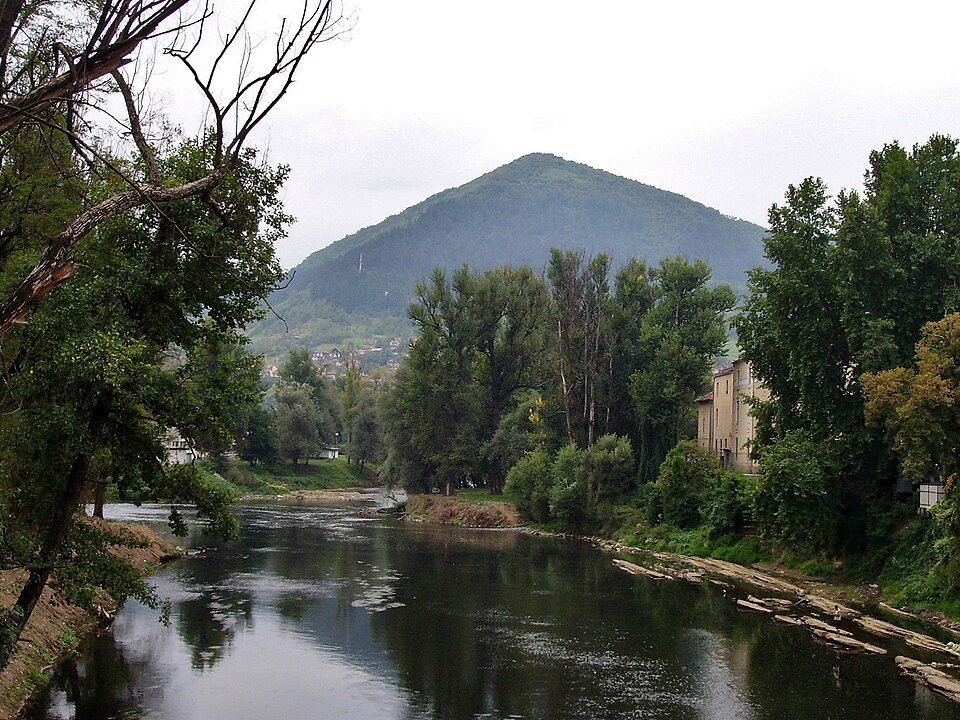
Illustration: Visoko Bosna Pyramid. Photo: Julian Nyča / Wikimedia Commons. River Bosna and the so-called “pyramid” of Visoko (Bosnia and Herzegovina). Source
The triangular north face of Visočica is a textbook example of a landform geomorphologists call a “flatiron” — a faceted spur produced by orogenic uplift of an anticline combined with thrust faulting and erosion. Archaeological geologist Paul Heinrich of Louisiana State University classified the Visoko landform in this category, noting that hundreds of analogous features exist worldwide, including the so-called “Russian Twin Pyramids” near Vladivostok. [2] The alleged equilateral triangle of hilltops — claimed by proponents to have sides of roughly 2,170 meters and interior angles of 60° — does not exist: measured angles are 60.53°, 49.29°, and 70.18°, with the southeast side approximately 48% longer than the other two. These are the predictable measurements of a tilted, asymmetric landform, not a designed structure. [5]
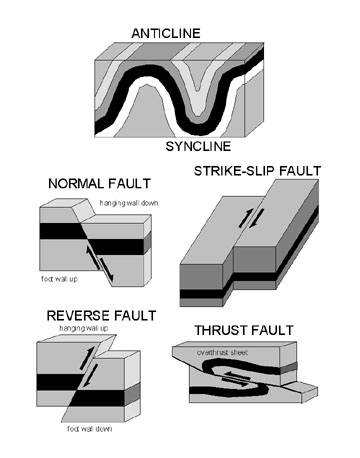
Illustration: Faults and folds. Photo: United States Geological Survey / Wikimedia Commons. A schematic diagram showing folds (anticlines and synclines) and faults (normal, reverse, thrust, and strike-slip). Source
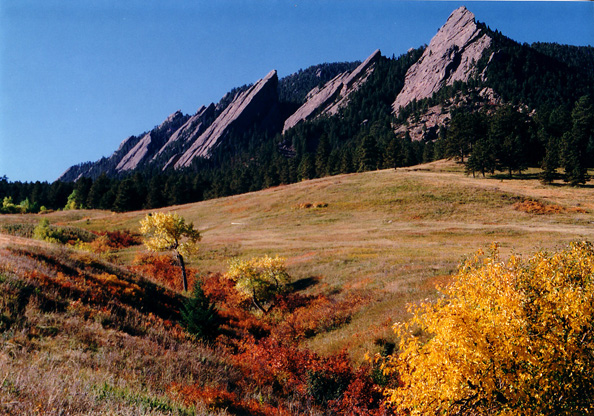
Flatirons in the Fall. Photo: Rick from Boulder, USA / Wikimedia Commons. Source
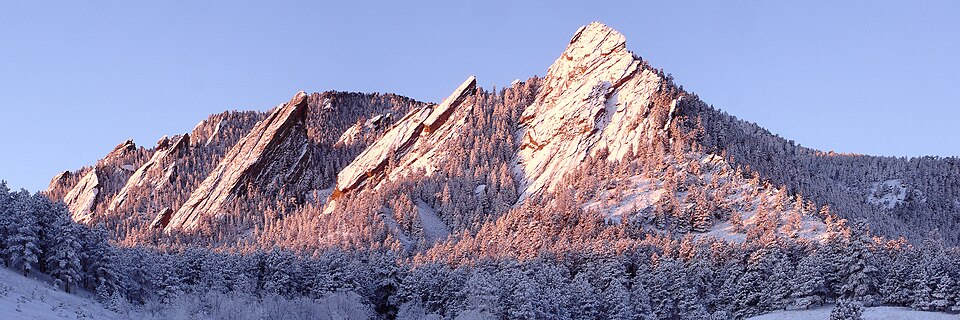
Flatirons Winter Sunrise. Photo: Jesse Varner / Wikimedia Commons. Boulder’s iconic rock formations, the Flatirons, near Boulder, Colorado. Panorama assembled from 3 images. Source
In the Miocene sediments themselves, every specific claim of construction has a documented natural explanation. The “concrete blocks” that proponents cite as artificial are natural conglomerates — sedimentary rocks formed when pebbles, cobbles, or boulders are cemented in a finer matrix of sand, silt, or clay over millions of years. Ripple marks preserved in the mudstone layers continue unbroken from one alleged “block” to the next, demonstrating they are fracture fragments of a single continuous sedimentary bed, not transported and reset masonry. The claimed regularity of meter-thick sandstone layers separated by mudstones is a well-known natural feature called a cyclothem, produced by cyclical climatic or Milankovitch-driven deposition in a Miocene lake — the regularity is what geology predicts. Even the “ancient inscriptions” inside the Ravne tunnels appear to have been added after the pyramid team first entered the passages, undermining their use as evidence of antiquity. The Ravne tunnels themselves are cut into Miocene marls and interbedded sandstones, fully consistent with the regional sedimentological picture. [3] [2] [5]
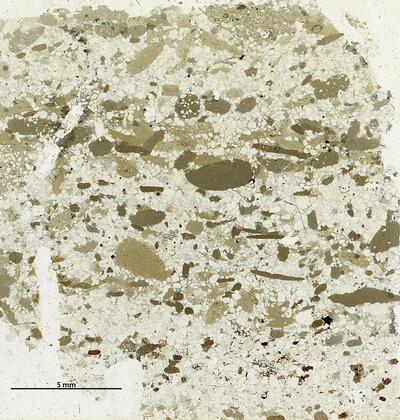
sedimentary rocks. Photo: Europeana. rock. Source
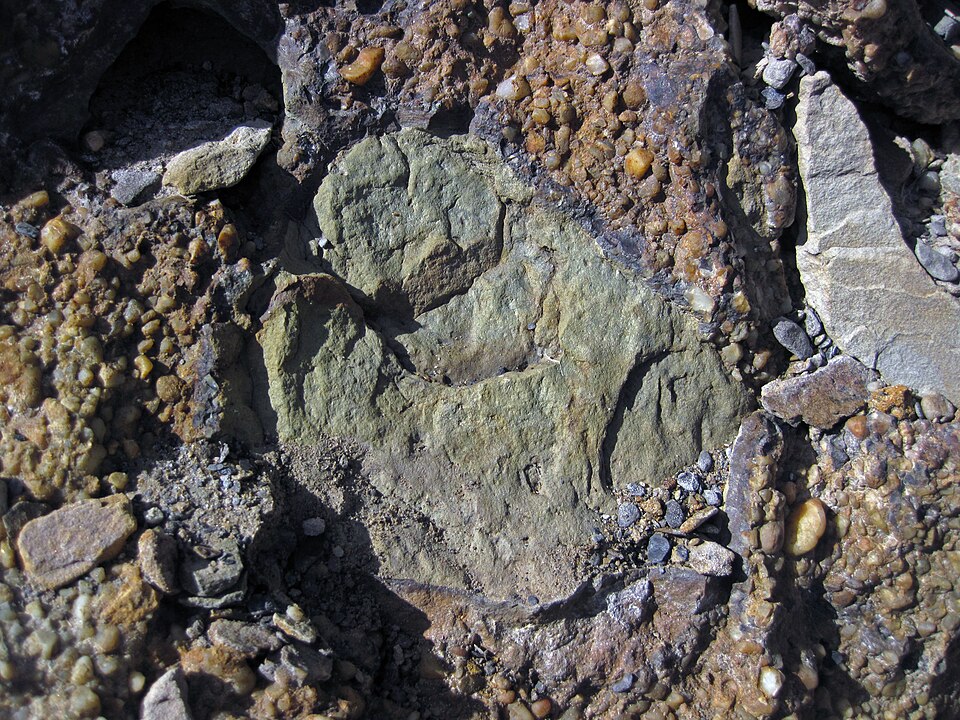
Clast of siliciclastic sedimentary rock in quartz-pebble conglomerate (Sharon Conglomerate, Lower Pennsylvanian; Jackson North roadcut, Ohio, USA) 2. Photo: James St. John / Wikimedia Commons. Source
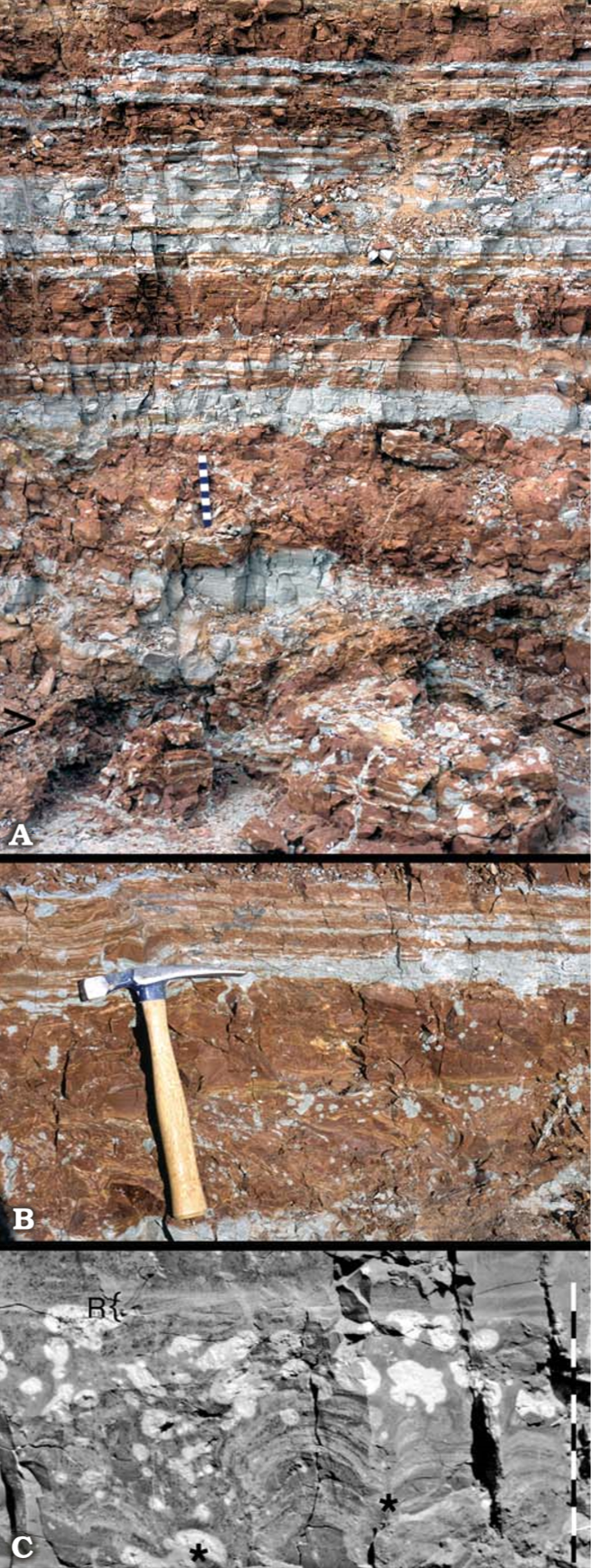
Illustration: Suhongtu quarry sediments. Photo: David J. Varricchio, Paul C. Sereno, Zhao Xi-jin, Tan Lin Jeffrey A. Wilson & Gabrielle H. Lyon / Wikimedia Commons. Source
This geological baseline did not appear in 2005. Against this regional framework, established independently of any pyramid hypothesis, the proposed anthropogenic origin has found no support: the European Association of Archaeologists labeled the project “a cruel hoax on an unsuspecting public” [1], Egyptologist Zahi Hawass characterized Osmanagić’s theories as “purely hallucinations on his part, with no scientific backing”, and EAA president Anthony Harding, after personally visiting the site in June 2006, stated simply: “I’ve seen the site, in my opinion it is entirely natural. Not any evidence at all has been found”. The geological record is unambiguous; the dating predates by millions of years any conceivable pyramid-building civilization. [6]
The Ravne Tunnel Complex
The Ravne tunnel network cuts through two distinct geological formations. Proponent-affiliated investigations describe the host rock as Quaternary conglomerate at the original Ravne passages, while the adjacent Ravne 3 complex is embedded in Miocene marls interbedded with sandstones. A 2025 preprint by Osmanagić presents an integrated stratigraphic, artifact-based and environmental analysis of the Ravne 3 tunnels, concluding that the complex is part of a larger, historically utilized tunnel system in the Visoko valley on the outskirts of Visoko, with stratigraphic profiles documenting multi-period human activity. [7] [8]
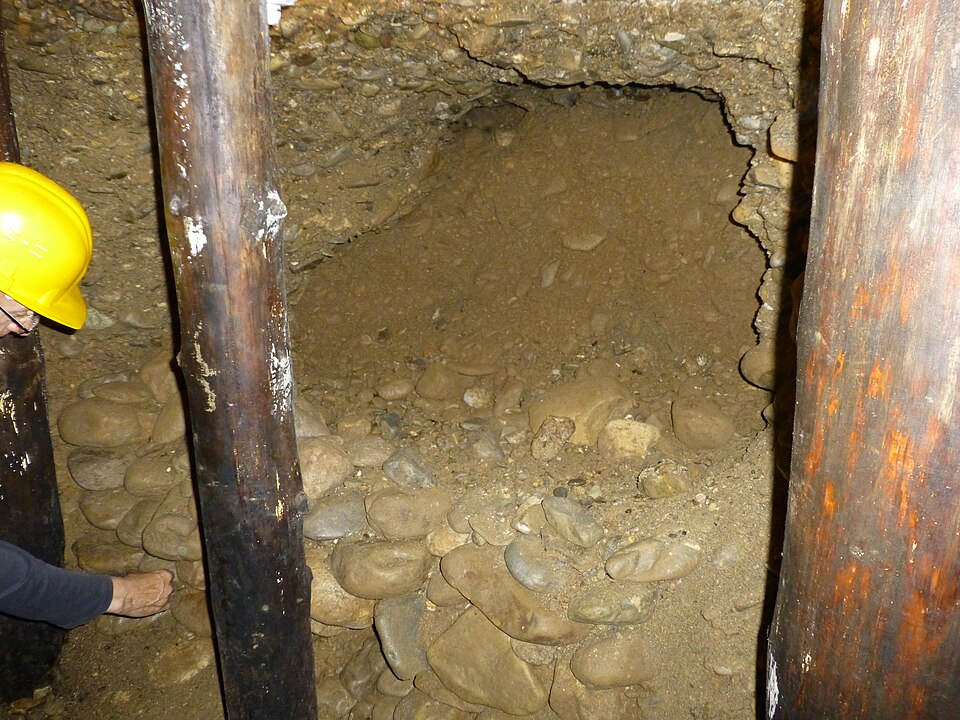
Illustration: Bosnian Pyramids Tunnels. Photo: TheBIHLover / Wikimedia Commons. Sidetunnel and drywall at Ravne tunnels. Source
These Miocene deposits were laid down 5.3 to 23 million years ago in the Sarajevo-Zenica Basin, part of a freshwater lacustrine system well-documented in regional stratigraphy. The rock itself — sandstone, clay, mudstone, siltstone, and conglomerate — is the same composition found in mountains throughout central Bosnia. Tectonic stresses tilted the layers and fractured the more brittle sandstones into semi-regular blocks whose dimensions correlate with original bed thickness, a natural pattern predicted by standard sedimentology. [2] [4]
But here’s where the evidence pulls in a different direction. Independent examination of the Ravne complex has documented clear signs of recent modification: graffiti on the walls, collapsed ceiling sections, and reports that the Yugoslav Army used portions of the tunnel system for military purposes and may have destroyed sections. [3] [4] The so-called “ancient inscriptions” inside the tunnels were not present when the pyramid team first entered them less than two years earlier — they appeared afterward. [4] The multiple alternative explanations offered by outside experts map neatly onto these observations: natural water formation (geologists Robert Schoch and El Anbaawy), Roman gold mining (archaeologist Enver Imamović), a coal mining facility (Bosnian geologists from Tuzla), Yugoslav Army hideouts (museum curator Žilka Kujundžić), and a medieval escape tunnel (local tradition). [22] Anthony Harding, then-president of the European Association of Archaeologists, personally visited the site and concluded it was “entirely natural” with no archaeological evidence. [6] [9]
Proponents describe something fundamentally different: a managed subterranean landscape with deliberate spatial organization, dry-stone walls of river pebbles forming “sealed” side passages filled with river-bed cobbles, sand, and clay. Their archaeological work has recovered more than 3,300 ceramic fragments plus lithic, metal, faunal, and organic remains from stratigraphically controlled contexts. Independent archaeologists confirm genuine artifacts exist within the hills — from historical periods through medieval Roman and possibly Neolithic times — though they reject the pyramid framework. The proponent dating is internally contradictory: the 2025 preprint by Osmanagić reports radiocarbon and U-Th calibrated dates ranging from the 4th century CE to approximately 5,900 years BP construction as early as 33,800 years BP based on radiocarbon, U-Th, and soil pedogenesis, while a separate Ravne 3 stratigraphy paper reports calibrated dates from the 4th century CE to approximately 5,900 years BP with no Pleistocene horizon. Osmanagić’s own 2010 statement cited radiocarbon ages of just 3,091–5,080 years from Uppsala, Kiel, and Gliwice laboratories. The disagreement is not minor — it spans tens of millennia. [10] [8]
Mainstream geological assessment identifies Visočica and the surrounding hills as natural flatiron formations, common erosional features found worldwide, including the U.S. West. The European Association of Archaeologists formally condemned the pyramid claims as a “cruel hoax”. University of Tuzla geologists examined core samples at the foundation’s own request and concluded the hill is a natural geological formation with dozens of similar formations in the Sarajevo-Zenica basin. Zahi Hawass called Osmanagić’s theories “purely hallucinations” with “no scientific backing”. [6] The most important unresolved question is whether the tunnels’ archaeological content reflects episodic human use over millennia, as the proponent stratigraphy suggests, or whether the proponent framework itself has constructed an elaborate prehistoric labyrinth from evidence better explained by natural geology and historical mining activity. [1]

Visočica. Photo: Edinwiki / Wikimedia Commons. Visočica hill, Visoko, Bosnia and Herzegovina. Source
The Energy Beam and Ultrasound Claims
On 10–11 April 2010, a Croatian team led by physicist Slobodan Mizdrak set up a Gaussmeter EMF 823 with internal probe, an EMF 828 with external 3D probe, an oscilloscope, and a spectrometer at the summit of Visočica Hill, and registered a sustained 28 kHz sinusoidal signal. The reading was confined to a radius of one metre and was entirely lost beyond five metres. But here’s the part that doesn’t sit right: the proponents’ own Foundation report characterized the finding as “preliminary data” that did not yet identify the source, and framed the emission as “not natural in origin” as an interpretive assertion rather than empirical demonstration. The SB Research Group’s January 2011 ultrasound recording paper went further still, explicitly labeling the results “preliminary” and stating they required verification by a rigid protocol before being considered scientifically reliable. [17] No subsequent proponent publication in the source set has elevated these results to a verified finding. [11]
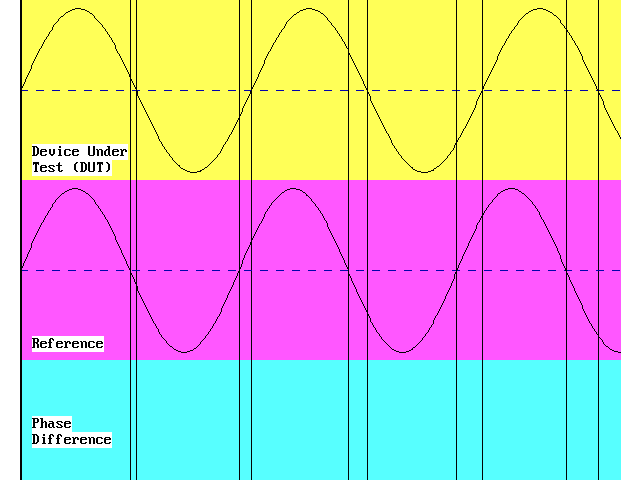
Illustration: Phase Comparison image two waves. Photo: National Institute of Standards and Technology (NIST) / Wikimedia Commons. Source

Oscilloscope sine square. Photo: Xato / Wikimedia Commons. Source
The internal contradictions deepen quickly. In 2010, proponents listed three candidate mechanisms for the 28 kHz emission — natural forces, electromagnetic induction, or piezoelectric quartz compression — and insisted the signal was “not of natural origin”. A claim cannot simultaneously be non-natural and a product of natural atmospherics without resolving the contradiction. [11]
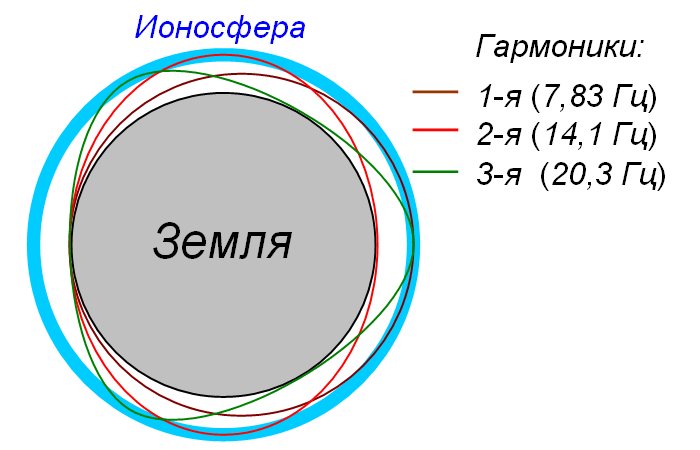
Schumann resonance 01. Photo: AdmiralHood / Wikimedia Commons. Source
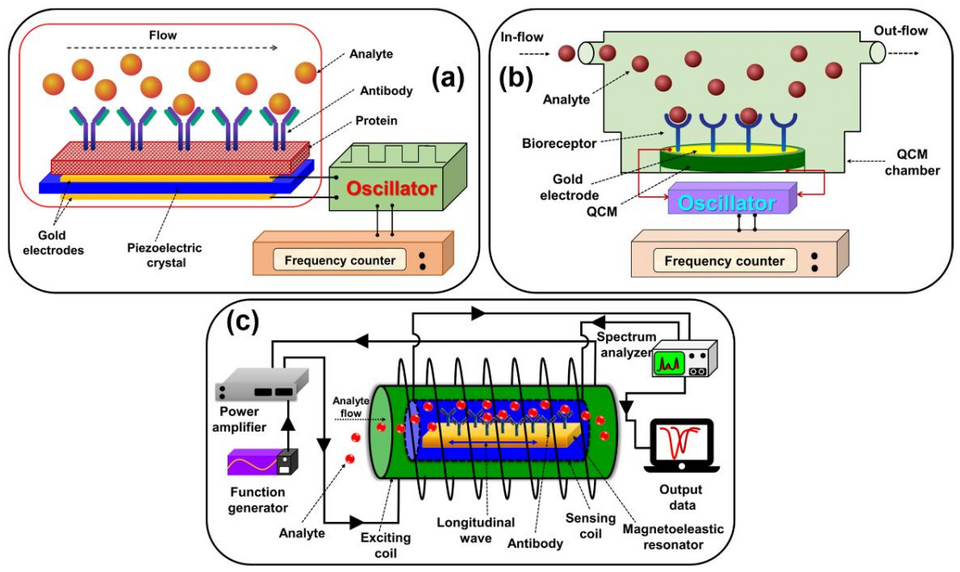
Illustration: Piezoelectric-based biosensor, quartz crystal microbalance-based biosensor, and magnetoelastic-based biosensor. Photo: Naresh, Varnakavi., and Nohyun Lee / Wikimedia Commons. Source
The negative air ion measurements feature prominently in proponent claims. The Foundation’s own instruments record elevated negative air ion concentrations inside the Ravne tunnels, measured in a sealed deep chamber. The proponents’ water-quality assessments lean on Emoto-style ice crystal photography, spagyric crystallization imaging, BION EVAPO structural imaging, and Bovis-scale radiesthesia — methods that fall outside standard analytical chemistry. [12] [13]
The most extravagant claim appears in proponent popular media rather than peer-style literature: that workers have detected “standing waves traveling faster than light” at the summit of the Pyramid of the Sun. A 2017 visitor account noted the on-site laminated signs advertising “Pyramid Water” and “Energy Stones” alongside displays claiming the tunnels are 34,000 years old. The “energy amplifier” framing — presented in a Harvard Hollis-indexed paper as pyramids functioning as “energy devices designed to interact with natural fields” — sits in the category of non-mechanistic device claim rather than physically defined phenomenon. Discover Magazine coverage notes Osmanagić’s public description of the pyramids as “energy amplifiers, capable of improving health”. The full architecture of energetic claims — 28 kHz emissions, piezoelectric transduction, Schumann resonance readings, and superluminal standing waves — originates entirely from sources authored by Osmanagić or his affiliated foundation. [14]
The strongest piece of independent commentary comes from American archaeologist Carl Fegan, who acknowledged that genuine archaeological material may exist at the site but stated that without rigorous contextual documentation, finds are “meaningless” and the work “cannot be trusted to be true”. Multiple individuals publicly listed by the project as participating archaeologists — Grace Fegan, Royce Richards, Allyson McDavid, and Chris Mundigler — were later found never to have visited the site and to have disavowed any involvement. [6] The energy beam and ultrasound claims, in short, remain exactly what their own authors admitted in 2010–2011: preliminary observations, internally inconsistent in their proposed mechanisms, awaiting the independent verification that has never arrived. [9]
Semir Osmanagić and the Academic Dispute
Semir Osmanagić was born in 1960 in Zenica, fled to Houston during the Bosnian War, and founded a metalworking firm called Met Co. Inc. He has no formal training in archaeology, geology, or any earth science. Beginning in April 2005, Osmanagić claimed that the hills near Visoko — particularly Visočica, which he renamed the “Pyramid of the Sun” — are the largest human-made ancient pyramids on Earth, on the project’s own account built tens of thousands of years ago by an advanced civilization that “mastered a technology that enabled the concentration of healing energies”. [18] He has since revised the date forward to 34,000 years [16] and assigned companion pyramids to other hills, including the “Pyramid of the Moon” at Plješevica and the “Pyramid of the Dragon”. [15]
The hills tell a different story. In early 2006, a team from the University of Tuzla Faculty of Mining and Geology — commissioned by Osmanagić’s own foundation — drilled core samples from Visočica and found alternating layers of conglomerate, clay, and sandstone, indistinguishable from the geology of other mountains in the Sarajevo-Zenica mining basin. Geologist Robert M. Schoch of Boston University spent ten days on site in the summer of 2006 and concluded the formations were “completely straightforward and mundane” — Miocene lake and river sediments, roughly 5.3 to 23 million years old, that tectonic stresses had buckled into angular hills and shattered into broken blocks. Archaeological geologist Paul Heinrich of Louisiana State University identified Visočica as a “flatiron,” a common natural landform with hundreds of analogues worldwide, including formations in Vladivostok. Schoch directly observed that workers had carved the hillside between natural sandstone bedding planes at Plješevica to manufacture the visual impression of stepped pyramid sides, and that block sizes at both hills correlated precisely with original sedimentary layer thickness — the pattern diagnostic of natural rock breakage rather than artificial masonry. [1] [2] [4] [6]
The international archaeological community closed ranks against the project. On December 11, 2006, the European Association of Archaeologists issued an open protest letter to the Bosnian government signed by leaders of archaeological organizations from seven European nations, calling Osmanagić’s scheme “a cruel hoax on an unsuspecting public” that “has no place in the world of genuine science” and urging authorities to withdraw all support. [20] EAA president Anthony Harding visited the site in June 2006 and stated that “not any evidence at all has been found” of human construction. Zahi Hawass, then Secretary General of Egypt’s Supreme Council of Antiquities, declared Visočica “evidently a natural geologic formation” and stated that “Mr. Osmanagić’s theories are purely hallucinations on his part, with no scientific backing”. In June 2006 a letter signed by dozens of archaeologists, including Mark Rose writing in Archaeology Magazine, was sent to UNESCO Secretary-General Koichiro Matsuura in an effort to forestall a UNESCO mission to the site. UNESCO announced it would dispatch an expert team in response. [6]
The claim of an international scientific support network collapses on contact with the named individuals themselves. Grace Fegan (Ireland), Royce Richards (Austria), Allyson McDavid (United States), and Chris Mundigler (Canada) — all publicly named by the foundation as participating archaeologists — stated they were not involved with the site and never agreed to work on it. The Egyptian geologist Aly Abd Alla Barakat, who publicly called Visočica “a primitive pyramid,” was disavowed by Hawass and the Egyptian Supreme Council of Antiquities, which stated that Barakat “knows nothing about Egyptian pyramids,” “was not sent by the SCA,” and “we do not support or concur with his statements”. [6]
The project persists because it fills a commercial and ideological void in post-war Bosnia. Visoko was the medieval capital of the Bosnian kingdom and the coronation site of King Tvrtko I, and the 14th-century Visoki fortress — itself a designated National Monument — sits atop Visočica’s summit, conflating genuine medieval heritage with the pre-glacial construction narrative. Tourism has generated economic activity, and the site now operates as a New Age pilgrimage destination with a second “archaeological park” opened in 2016. High-profile endorsements have included a Bosnian prime minister and two presidents, former Malaysian Prime Minister Mahathir Mohamad (who toured Visoko in July 2006), former international High Representative Christian Schwarz-Schilling (July 2007) [2], and tennis star Novak Đoković, who has made at least three documented pilgrimages and met personally with Osmanagić. Yet the excavations have damaged the very heritage they claim to celebrate — Roman fortifications on Visočica, Illyrian-era remains, and the medieval Visoki castle — while the European Association of Archaeologists has called the project a “cruel hoax on an unsuspecting public” [16]. The unresolved question is whether Bosnia’s tourism-dependent local economy can disentangle itself from a claim that nearly every credentialed scientist who has examined the site has rejected. [16]
Connecting the Dots
Visočica hill consists of alternating layers of conglomerate, clay, and sandstone — natural Miocene lakebed sediments indistinguishable from neighboring mountains in the Sarajevo-Zenica basin. University of Tuzla core samples confirmed this composition in early 2006, and Robert Schoch of Boston University described the geology as “completely straightforward and mundane” after ten days on site. Yet the very appearance presented as evidence is partly a product of the excavation: Schoch observed workers carving between Plješevica’s natural sandstone layers to enhance a stepped look for visitors, the same reshaping that has made one of the hills resemble a stepped pyramid since 2006. The conglomerate that the Tuzla cores identified as natural sediment was meanwhile endorsed by Joseph Davidovits — already controversial for claiming Egyptian pyramid blocks were cast limestone concrete — as an artificial concrete-like material. Both the artificial terracing on the surface and the concrete interpretation of the core require already-controversial readings of the same material. [2] [6]
Genuine archaeology exists at Visoko, but its scientific value is being lost in the process. Visočica carries a medieval Bosnian castle, Roman fortifications, and other real ancient remains, and the European Association of Archaeologists condemned the project as a “cruel hoax on an unsuspecting public” [1]. American archaeologist Carl Fegan, a skeptic, acknowledged that artifacts potentially dating to the Neolithic may exist at the site, but stated that without proper contextual documentation “they are meaningless”. [9] The proponent case for anomalous energy rests on a similar evidentiary foundation: SB Research Group’s 2011 ultrasound recording experiment at the Pyramid of the Sun was self-labeled preliminary and explicitly stated to require verification by a rigid protocol before being scientifically reliable. The strongest instrumental “discoveries” and the unsorted artifacts both sit in the same limbo. [17]
The social pattern around the project is the thread the geological evidence cannot resolve. Visoko suffered roughly $200 million in infrastructure damage during the 1990s war [1] [9], and by June 2016 Osmanagić had completed an “archaeological park” at one of the hills with volunteer-built botanical gardens and meditation sessions, functioning as a New Age pilgrimage site whose tourist traffic has aided the local economy. Osmanagić himself holds a PhD in Mayan studies from the University of Sarajevo and a master’s in international economics and politics, with no formal training in archaeology or geology, and several publicly listed “participating experts” — Fegan, Richards, McDavid, and Mundigler — have publicly denied involvement with the project. Mainstream geologists and archaeologists have classified the hills as natural flatirons throughout, yet the “discovery” has produced measurable economic output and an unverifiable set of ancient pyramids in roughly equal measure. [18]
The Other Side
The mainstream geological interpretation treats Visočica and the surrounding hills as natural landforms — specifically, flatirons produced by tectonic buckling of Miocene lacustrine sediments, the same lithologies mapped across the Sarajevo-Zenica Basin. The Basic Geological Map of Bosnia and Herzegovina, compiled by the Federal Geological Survey, classifies the Visoko area within Miocene lacustrine deposits containing conglomerates, sandstones, and claystones — exactly the units exposed at the surface today. Conglomerates of this type are textbook natural sedimentary deposits: pebbles cemented by calcium-carbonate or siliceous matrix accumulating in ancient lake and fluvial systems. The “regular block-size” proponents cite is also the diagnostic signature of natural jointing and weathering in conglomerate outcrops, where bedding planes and orthogonal fracture sets create roughly cubical blocks at outcrop scale. No peer-reviewed geological study has demonstrated artificial shaping; the case for anthropogenic construction rests on the absence of conventional stratigraphic mapping having been conducted by the project’s own researchers, not on geologists having failed to find evidence of construction. [19]
The institutional response from professional archaeology has been uniformly negative. The European Association of Archaeologists issued an open letter signed by professional archaeologists condemning the project as “a cruel hoax on an unsuspecting public”. [20] Robert Schoch — a Boston University geologist — has examined the Visoko geology and discussed his findings publicly, with critics noting that his measured statements have been deployed by proponents in ways that mischaracterize his actual assessment. UNESCO’s director-general announced in June 2006 that an expert team would visit the site, and archaeologists wrote to try to forestall the mission. [6] Critics contend that the project soaks up scarce resources, while the National Museum in Sarajevo has struggled to find sufficient funds to repair wartime damage and safeguard its collection. [2] Wikipedia describes the claims as pseudoarchaeological and files the article under pseudoarchaeology, archaeological forgeries and pseudohistory. [1] Peer-reviewed analyses have catalogued the publication pattern — favorable results appearing in venues flagged for editorial weakness, while negative findings receive no analogous coverage.
The ultrasound and electromagnetic claims have straightforward conventional explanations. Speleotherapy research — including measurements in Alpine and Croatian caves used in mainstream respiratory medicine — routinely records elevated negative air ion concentrations in enclosed karst voids; these are environmental phenomena well documented in speleological literature. Waterfall-generated ions can produce elevated NAI readings, and radon measurement protocols require precisely the kind of sensor calibration and background characterization the project’s measurements omitted. The 28 kHz ultrasound reading falls well above the range of natural seismic or atmospheric sources typically observed in caves, and standard acoustic instrumentation protocols would call for independent confirmation under blinded conditions — protocols that have not been applied to the Visočica measurements. Archaeologists including Flint Dibble and Archaeology Magazine editor Mark Rose have pointed out that no controlled blinded study has been published comparing Ravne tunnel conditions to matched natural karst voids in the same watershed. Discover Magazine, Smithsonian, Science, and the Guardian have all run pieces documenting the gap between proponent claims and accepted geological methodology. Even granting the project’s measurable tourism benefits for Visoko, that economic fact does not adjudicate the underlying geological question. [21]
What We Actually Know
Since 2005, Bosnian-American businessman Semir Osmanagić has promoted the Visoko hills as the largest ancient pyramids on Earth, naming Visočica the “Pyramid of the Sun,” Plješevica the “Pyramid of the Moon,” and a third hill the “Pyramid of the Dragon.” His claims include a construction age reaching tens of thousands of years, orientation measurements that the Sarajevo surveyor Enver Buza published in 2007 as “oriented to the north with a perfect precision”, and ultrasonic/negative-ion effects documented in proponent publications. [2] [18] He cites radiocarbon analyses from Uppsala University, Kiel University, and the Gliwice Institute yielding ages of 3,091–5,080 years, framed as “older than any other known advanced culture on Bosnian soil.” An independent Czech geophysical team (Vidimepodzem.cz, 2023) conducted ground-penetrating radar surveys; though they stated they were skeptical of the pyramid claims, their equipment detected a subsurface anomaly at ~28–40 m depth with significantly lower permittivity than surrounding bedrock, which could indicate a cavity or underground structure.[24][22]
The strongest counter-findings are well-documented. The European Association of Archaeologists has formally condemned the project as a “cruel hoax” and raised concerns about damage to genuine archaeological sites including a medieval Bosnian castle, Roman fortifications, and other ancient remains. Anthony Harding, then-president of the EAA, personally visited the site and stated: “I’ve seen the site, in my opinion it is entirely natural.” Zahi Hawass, Secretary General of Egypt’s Supreme Council of Antiquities, called the formation “evidently a natural geologic formation” and characterized Osmanagić’s theories as “purely hallucinations on his part, with no scientific backing.” Robert Schoch (Boston University) described the geology as “completely straightforward and mundane,” and Paul Heinrich identified Visočica as a flatiron, a common geological landform with hundreds of worldwide examples including the “Russian Twin Pyramids” near Vladivostok. The University of Tuzla analyzed core samples from Visočica in early 2006 and found the same alternating conglomerate, clay, and sandstone as surrounding mountains, with Schoch’s independent firsthand inspection corroborating the same lithology. The Visoko valley formed approximately 10 million years ago as mountains uplifted, flooding into a ~40-mile lake where alternating clay, sandstone, and conglomerate sediments were deposited, then buckled into angular hills by tectonic activity. Osmanagić holds a master’s in international economics and politics and a doctorate from the University of Sarajevo in Mayan studies, with no formal training in archaeology or geology. By 2016 he had completed an “archaeological park” with botanical gardens and meditation sessions atop the physically reshaped Visočica. The project carries significant ideological resonance with Bosniak national identity, with the 14th-century Visoki Castle ruins reinforcing the symbolism in a post-conflict region that suffered an estimated $200 million in war damage. [23]
Several findings are plausible but unverified. Workers under Osmanagić’s direction carved Plješevica between natural sandstone layers to create the visual impression of stepped pyramid sides, with uniformly cut blocks then exposed for dignitaries, journalists, and tourists. [2] The site has become a New Age pilgrimage destination with measurable economic benefits for Visoko (population ~11,000), and his foundation reported 500 volunteers from 30 countries working at the site in the summer of 2010. [22] The foundation’s own account of the outside explanations: geologists Robert Schoch and El Anbaawy said the network was water-made, Tuzla geologists who never visited the tunnels discussed a coal mining facility, archaeologist Enver Imamović thought it a Roman gold mine, and museum curator Žilka Kujundžić raised the possibility of Yugoslav Army hide outs. [22] American archaeologist Carl Fegan acknowledged genuine artifacts may date to the Neolithic but criticized the lack of rigorous contextual documentation, stating: “Without contexts and the careful, meticulous documentation that comes with a genuine archaeological project, they are meaningless.” The Ravne tunnel host rock is described in proponent geological characterizations themselves as Quaternary conglomerate surrounded by Miocene marls interbedded with sandstones, standard lithostratigraphy diagnostic of natural lacustrine sedimentation rather than constructed masonry. Twenty-three leading Bosnian [6] [9]
References
[1] Bosnian pyramid claims — https://en.wikipedia.org/wiki/Bosnian_pyramid_claims (accessed 2026-08-14) [Reputable]
[2] The Mystery of Bosnia’s Ancient Pyramids — https://www.smithsonianmag.com/history/the-mystery-of-bosnias-ancient-pyramids-148990462/ (accessed 2026-08-14) [Reputable]
[3] The Bosnian Pyramids - Robert M. Schoch — https://www.robertschoch.com/bosnia.html (accessed 2026-08-14)
[4] : Dr. Robert Schoch reports geology of Bosnia and Pyramids, Dr. Colette … — http://www.robertschoch.net/Bosnian%20Geology%20Robert%20Schoch%20%20Pyramids%20Colette%20Dowell.htm (accessed 2026-08-14)
[5] Bosnian Pyramid Hoax: an Overview (Part 2) - Archaeology Review — https://ahotcupofjoe.net/2017/01/bosnian-pyramid-hoax-overview-part-2/ (accessed 2026-08-14)
[6] Bosnian “Pyramids” Update - Archaeology Magazine Archive — https://archive.archaeology.org/online/features/osmanagic/update.html (accessed 2026-08-14)
[7] Archaeological Stratigraphy and Environmental Analysis of … — https://www.preprints.org/manuscript/202505.0249 (accessed 2026-08-14)
[8] Sam Osmanagich (2025). Archaeological Stratigraphy and Environmental Analysis of the Ravne 3 Tunnel Complex (Visoko, Bosnia-Herzegovina): Evidence from Multi-Period Artifacts, Radiometric Dating, and Energetic Microclimate Data. Preprints.org. DOI: 10.20944/preprints202505.0249.v1 (accessed 2026-08-14)
[9] Whether Real Or A Hoax, Bosnian ‘Pyramids’ Bringing Concrete … — https://www.rferl.org/a/bosnia-visoko-pyramids-osmanagic-economy-hoax/28725843.html (accessed 2026-08-14)
[10] Sam Osmanagich (2026). Systematic Archaeological Investigation of the Ravne Underground Complex in Bosnia and Herzegovina. Archaeological Discovery. DOI: 10.4236/ad.2026.142007 (accessed 2026-08-14)
[11] ENERGETIC RADIATION FROM THE BOSNIAN PYRAMIDS — https://piramidasunca.ba/en/energetic-radiation-from-the-bosnian-pyramids/ (accessed 2026-08-14)
[12] Energetically Structured Water from the Ravne Tunnel … — https://www.opastpublishers.com/open-access-articles/energetically-structured-water-from-the-ravne-tunnel-complex-a-multidisciplinary-analysis-9544.html (accessed 2026-08-14)
[13] Do the hills have lies? Digging for truth at Bosnia’s valley of the pyramids — https://mappingtheplot.substack.com/p/do-the-hills-have-lies-digging-for (accessed 2026-08-14)
[14] A Green Pyramid, Tunnels to Egypt & Giant Spheres: 5 Unexplained Ancient Coincidences [2:00-3:38] — Dark5 Ancient Mysteries (YouTube) — https://youtu.be/e4D6JG6mlYc?t=120 (accessed 2026-08-14)
[15] Dr.sci Sam Semir Osmanagich, PhD. - Ambassadors of Knowledge — https://ambassadorsofknowledge.com/portfolio/dr-sci-sam-semir-osmanagich-phd/ (accessed 2026-08-14)
[16] Are there ancient pyramids in Bosnia? Probably not — https://emerging-europe.com/are-there-ancient-pyramids-in-bosnia/ (accessed 2026-08-14)
[17] We recorded the “voice” of the Bosnian Pyramid of the Sun … — http://www.sbresearchgroup.eu/index.php/en/articoli-in-inglese/100-we-recorded-the-voice-of-the-pyramid-of-the-sun-visocica-hill (accessed 2026-08-14)
[18] Olav Hammer and Karen Swartz (2020). The Bosnian Pyramid Phenomenon. Nova Religio The Journal of Alternative and Emergent Religions. DOI: 10.1525/nr.2020.23.4.94 (accessed 2026-08-14) [Academic]
[19] Stratigraphic, thickness and petrographic of the Sarajevo- … — https://www.researchgate.net/figure/Stratigraphic-thickness-and-petrographic-of-the-Sarajevo-Zenica-basin_tbl1_320803605 (accessed 2026-08-14)
[20] Bosnia EAA Denounces Semir Osmanagic Archaeology … — http://www.robertschoch.net/bosnia%20eaa%20denounces%20semir%20osmanagic%20pyramid%20archaeology%20dowell%20ct.htm (accessed 2026-08-14)
[21] Unexplained Underground Structures from Lost Ancient Civilizations [54:43-56:45] — Universe Inside You (YouTube) — https://youtu.be/qGQ_FKu25UU?t=3283 (accessed 2026-08-14)
[22] UNDERGROUND LABYRINTH “RAVNE” — https://piramidasunca.ba/en/underground-labyrinth-ravne-breakthrough-finally/ (accessed 2026-08-14)
[23] Researchers Helpless as Bosnian Pyramid Bandwagon … — https://www.science.org/doi/10.1126/science.314.5807.1862a (accessed 2026-08-14) [Academic]
[24] Bosnian pyramids expedition report (RTGPR) — https://www.vidimepodzem.cz/en/bosnian-pyramids/ (accessed 2026-10-04)
Corrections
- Every claim in this paper was re-checked against the sources it cites, by an independent audit that fetched and read each source rather than accepting the stored verdict. Of 81 verifiable assertions, 28 did not hold up: they were unsupported, attributed to the wrong reference, or contradicted by the very source cited. 21 were confirmed as written. 30 replace claim, 15 delete claim, 1 replace number, 1 replace date were applied. Each correction narrows a claim to what its source actually says, moves it to a source that does support it, or removes it where no source could. An honest limit: 6 of the 81 assertions rest on sources that could not be read at all - paywalls, bot protection, video without a transcript. Those claims are neither confirmed nor corrected here, and a reader cannot check them either. They are the weakest part of this paper's evidence base. The audit was performed and applied by an AI agent fleet; no line of the corrected text has been read by a human editor. A reference that resolves is not thereby right - it was read before it was trusted. A note on provenance: this paper carried no model stamp at all, so which model wrote the original research cannot be recovered. The correction's own stamp is recorded; the original's is not guessed at.
- One structural repair, no claim touched. The stored text of this paper ended mid-sentence: the original research emitted the fragment "Twenty-three leading Bosnian [6] [9]" with no verb and stopped there, so the last paragraph on the page was a subject with nothing after it. No source can support or refute a fragment, which is why the citation audit had no verdict for it and left it in place. The fragment is removed; the two references it carried are cited elsewhere in the paper, so the reference list is unchanged. What the original sentence was going to say is not recoverable from the stored text and is not guessed at here.
- Every claim in this paper was re-checked against the sources it cites, by an independent audit that fetched and read each source rather than accepting the stored verdict. Of 84 verifiable assertions, 53 did not hold up: they were unsupported, attributed to the wrong reference, or contradicted by the very source cited. 27 were confirmed as written. 41 replace claim, 8 delete claim, 1 replace number, 1 replace date were applied. Each correction narrows a claim to what its source actually says, moves it to a source that does support it, or removes it where no source could. An honest limit: 4 of the 84 assertions rest on sources that could not be read at all - paywalls, bot protection, video without a transcript. Those claims are neither confirmed nor corrected here, and a reader cannot check them either. They are the weakest part of this paper's evidence base. The audit was performed and applied by an AI agent fleet; no line of the corrected text has been read by a human editor. A reference that resolves is not thereby right - it was read before it was trusted.
Keep exploring
Every site on this page sits on the globe, and the people who research them are on the Discord.
3D Globe · Sites by country · Story Archive · Research Library · Weekly Journal · Search