 ANCIENT NERDS
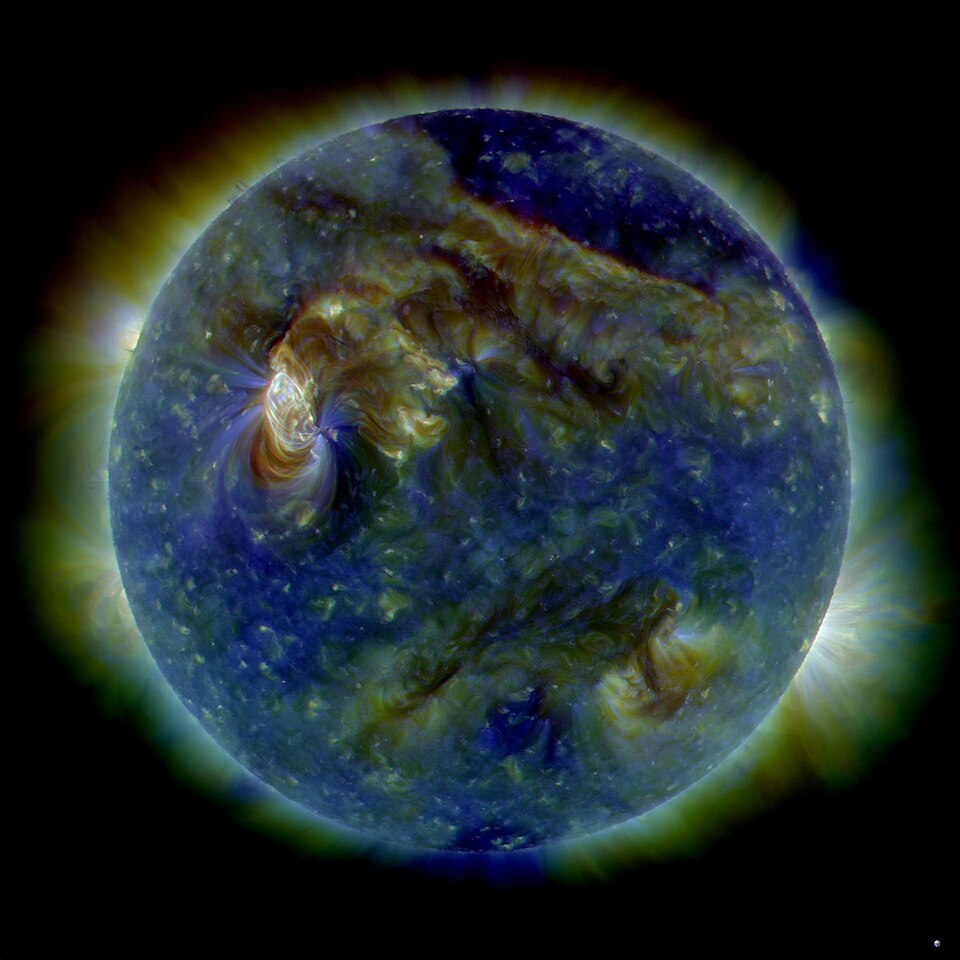
Solar Superflares, Cosmic Impacts, and Fire-and-Flood Mythology
The paper concludes that extreme solar particle events like the Miyake-class storms demonstrably strike Earth far more often than the instrumental record suggests, with Sun-like stars confirmed capable of 10^34 erg superflares on 800–5,000 year timescales, while cross-cultural flood-and-fire mythology shows convergent symbolic structures predating modern catastrophism that resist explanation as literary borrowing. However, the proposed ~12,000-year cycle linking solar superflares, cosmic impacts, and Younger Dryas cooling remains speculative: the Younger Dryas trigger is still contested, no consistent periodicity in Miyake events has been demonstrated, and whether the 12,350 BCE event was sufficient to cause civilizational collapse is unresolved.
At approximately 12,350 BCE, a burst of solar radiation so intense it left a permanent carbon-14 signature in the tree-ring record washed over Earth. It was one of at least six confirmed Miyake events catalogued in tree-ring radiocarbon and ice-core beryllium-10 and chlorine-36 — others struck at 7176 BCE, 5259 BCE, 664–663 BCE, 774–775 CE, and 993–994 CE. The 1859 Carrington Event, the strongest storm in the instrumented record, left no detectable 14C spike at all — placing it well below the energy threshold of the Miyake events. The catalogue of what Sun-like stars actually do is far more dramatic: in 2024, Vasilyev and colleagues identified 2,889 superflares on 2,527 of 56,450 Sun-like stars surveyed by Kepler, with earlier estimates suggesting events of ~10^34 erg could strike a Sun-like star every 800 to 5,000 years. And at 11,700 years before present, the NGRIP ice core in Greenland marks the abrupt end of the Younger Dryas, a 1,200-year cold reversal whose mainstream explanation points to a shutdown of North Atlantic thermohaline circulation. [1] [2] [3]
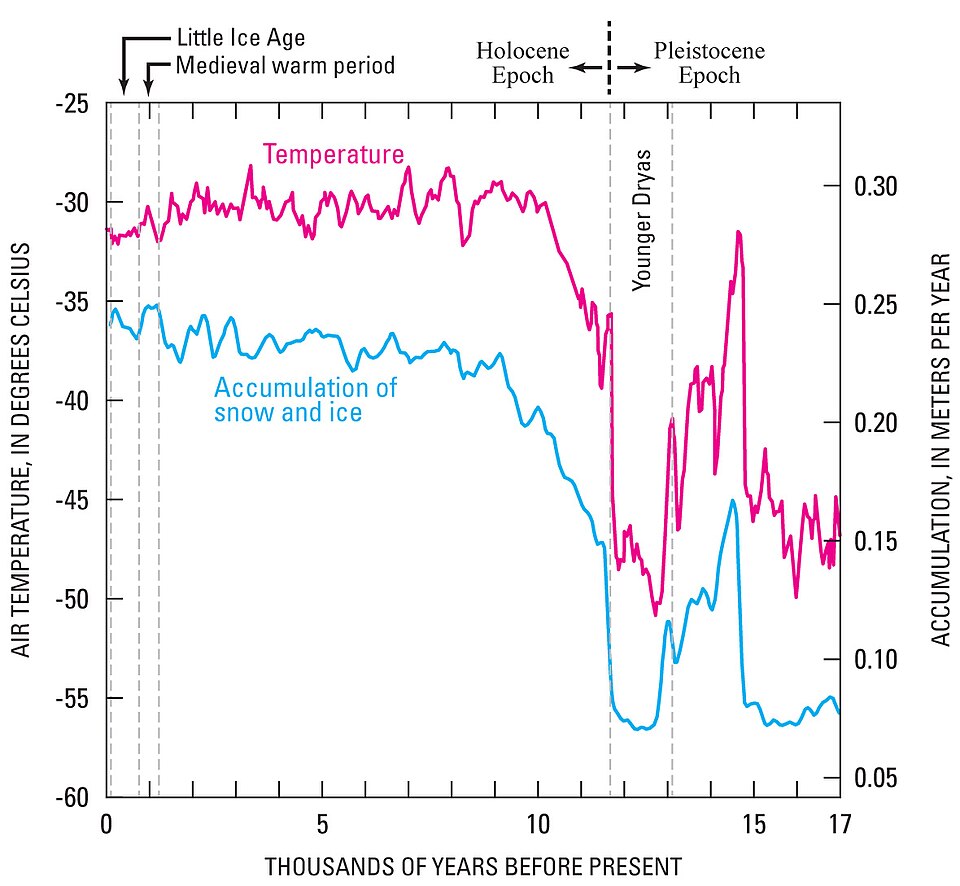
Illustration: Younger Dryas and Air Temperature Changes. Photo: United States Geological Survey, Williams, R.S., Jr., and Ferrigno, J.G., eds., 2012, State of the Earth’s cryosphere at the beginning of the 21st century–Glaciers, global snow cover, floating ice, and permafrost and periglacial environments: U.S. Geological Survey Professional Paper 1386–A, 546 p. (Also available at https://pubs.usgs.gov/pp/p1386a.) Modified from Alley (2000, p. 9, fig. 12). / Wikimedia Commons. Source
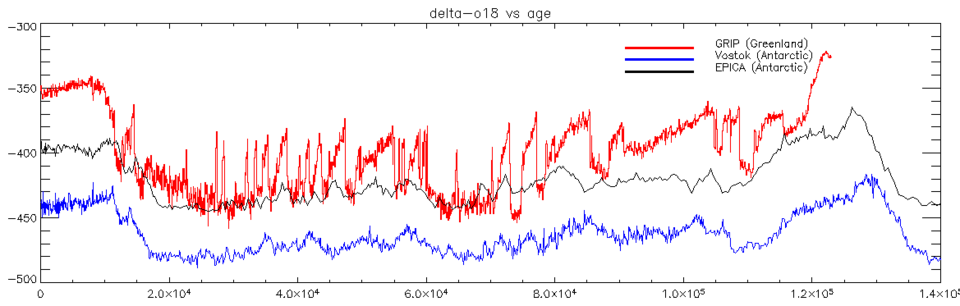
Illustration: Epica-vostok-grip-140kyr. Photo: Vostok Ice Core Data (Petit, J.R., et al., 2001); North Greenland Ice Core Project members (2004); EPICA community members (2004); this image file: William M. Connolley (2005). / Wikimedia Commons. The paragraph names NGRIP as the specific physical archive that marks the Younger Dryas boundary…. Source
The Miyake Events and the Carrington Baseline
The Carrington Event of 1–2 September 1859 remains the largest directly observed geomagnetic storm in the 165+ year instrumental record, with current extreme-value estimates placing the probability of a comparable storm in the next decade at 0.46–1.88% (95% confidence interval) — substantially lower than often-cited figures in the older risk literature. The Carrington flare has now been calibrated to a GOES soft-X-ray equivalent of X105 (+41/−24), placing it within the regime of ordinary large-flare scaling rather than requiring superflare physics. This matters because the Carrington event itself produced no detectable ¹⁴C spike in mid-latitude tree rings, a null result that established the upper bound of the 1859 SEP fluence and demonstrated that not every historically observed great storm registers as a cosmogenic-isotope event. The May 2024 “Gannon” (Mother’s Day) storm brought this benchmark back into focus: it reached G5 intensity with a minimum Dst of −406 nT, compressed the magnetopause to roughly five Earth radii, and is statistically a 1-in-12.5-year event by magnitude but a 1-in-41-year event by duration. [4] [5]
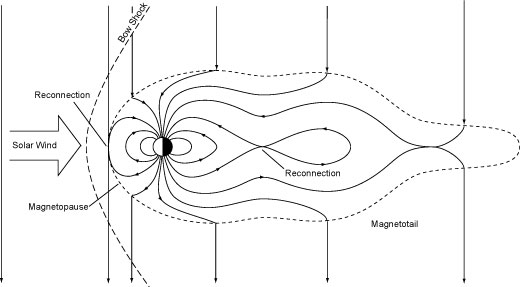
Illustration: Magnetosphere simple. Photo: Wikimedia Commons. Source
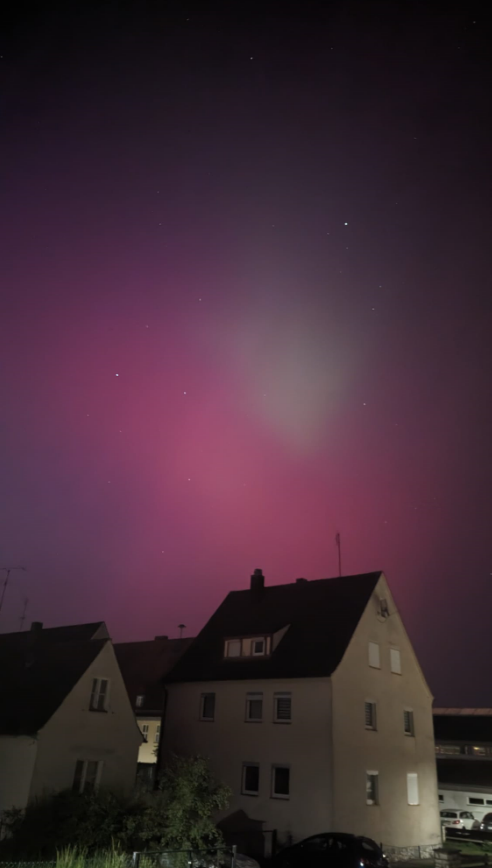
Aurora borealis in Pleinfeld, Germany, 2024 May 11. Photo: Cavaliere grande / Wikimedia Commons. Aurora borealis in Pleinfeld, Germany, 2024 May 11. Source
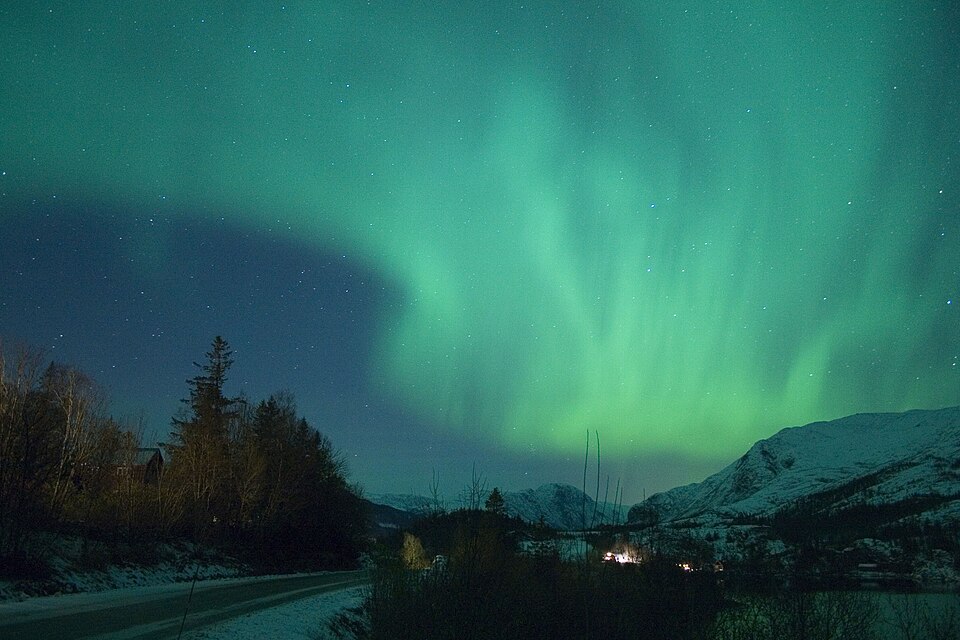
Illustration: Aurora Borealis NO. Photo: Rafal Konieczny / Wikimedia Commons. Aurora Borealis observed in Norway on 2006-10-28. Source
The empirical picture of extreme solar events expanded dramatically in 2012 when Fusa Miyake and colleagues identified a rapid ~1.2% atmospheric ¹⁴C increase in Japanese cedar tree rings beginning in boreal summer 774–775 CE — the largest and most rapid ¹⁴C rise ever recorded in dendrochronological data, and approximately twenty times the normal year-to-year variation. Subsequent work confirmed the event globally in tree rings on five continents (Japan, Germany, Russia, USA, Finland, New Zealand) and matched it to an ~80% enhancement of ¹⁰Be in the Antarctic Dome Fuji ice core, demonstrating the global reach and single-year resolution of the signature. The 774–775 event was at least five times (and by some atmospheric-impact models forty-to-fifty times) stronger than any instrumentally recorded solar event, with multiradionuclide analysis (¹⁴C, ¹⁰Be, ³⁶Cl) confirming a very hard energy spectrum containing high fluxes of >100 MeV solar protons. A second event was soon identified at 993–994 CE, and the catalogue has since grown to include confirmed Miyake events at approximately 664–663 BCE, 5259 BCE, 5410 BCE, 7176 BCE, and — most strikingly — ~12,350 BCE (~14,300 years ago), the only confirmed extreme SEP event outside the Holocene epoch. [6]
The intervals between confirmed Miyake events are highly irregular: approximately 219 years between the 774–775 and 993–994 events, then 1,438 years back to 664–663 BCE, 4,595 years to 5410 BCE, 1,917 years to 5259 BCE, and 5,174 years to the most recent Holocene event at 7176 BCE. The ~12,350 BCE event adds another ~4,800 years beyond that, and not one of these intervals approximates a 12,000-year cycle. The mainstream literature estimates recurrence at roughly every 400 to 2,400 years — orders of magnitude shorter than a 12-ka period — and Bayesian carbon-cycle modeling of all six Holocene events finds no correlation with the 11-year solar cycle, no latitude dependence expected for a simple solar-flare origin, and at least two events lasting longer than a single year. These inconsistencies complicate the dominant “single solar superflare” hypothesis for Miyake events, even as the events themselves remain reliably identified by their multiradionuclide signatures in tree rings and ice cores. [7]
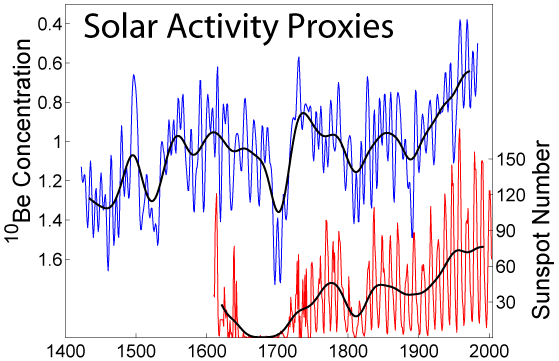
Illustration: Solar Activity Proxies. Photo: Wikimedia Commons. Source
The solar-class explanation received its strongest statistical support from stellar photometry. The 2024 Vasilyev et al. re-analysis of 56,450 Sun-like stars in the Kepler archive identified 2,889 superflares on 2,527 stars, implying that superflares with energies >10³⁴ erg occur roughly once per century per Sun-like star. This frequency is about ten times higher than the Shibayama 2013 estimate of once per 800–5,000 years, and it means that any direct superflare on the modern Sun would be orders of magnitude larger than the Carrington event — the Carrington flare’s total bolometric energy of 4–6 × 10³² erg is only about one-hundredth of a typical superflare. The first spectroscopically confirmed stellar filament eruption associated with a superflare was observed on the young Sun-like star EK Draconis, with a filament mass of 1.1 × 10¹⁸ g — roughly ten times the largest solar CME filaments — providing direct evidence that the physics required to power a Miyake-class event is realized on at least some Sun-like stars. [8]
Illustration: Kepler space probe crashes. Photo: Europeana. Source
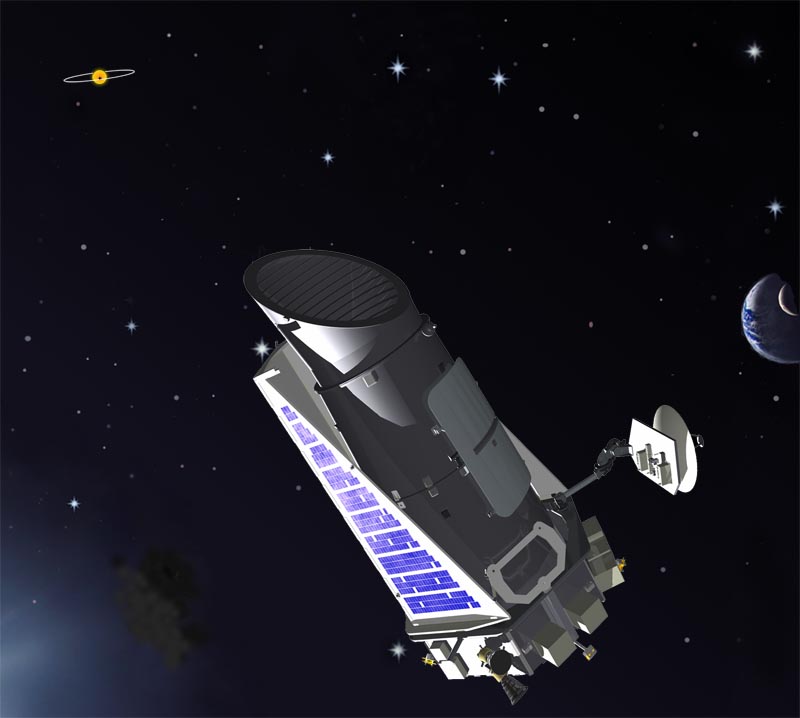
Kepler bkgd.sm. Photo: Wikimedia Commons. Source
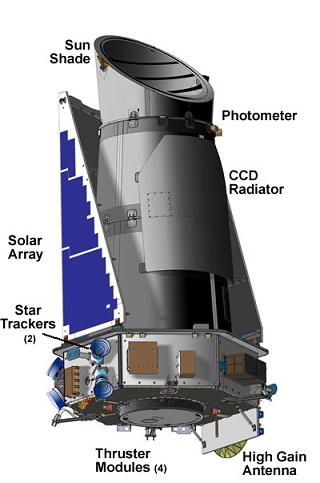
Kepler Mission Space Photometer smaller. Photo: NASA / Wikimedia Commons. Illustration of Kepler Spacecraft with labels. Source
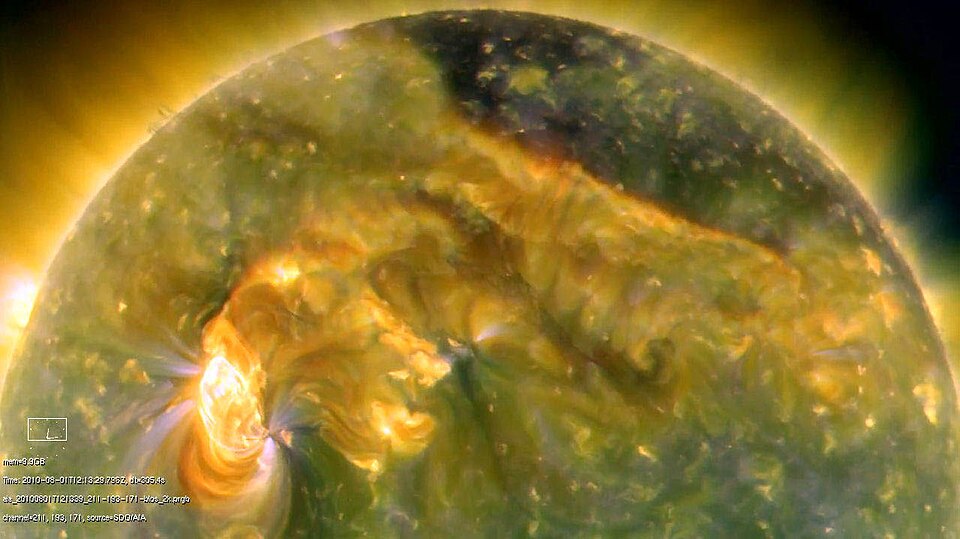
Illustration: Coronal Mass Ejection Headed for Earth?. Photo: NASA Goddard Space Flight Center from Greenbelt, MD, USA / Wikimedia Commons. Source

Great Ball of Fire - Activity from August 1 CME Subsides. Photo: NASA Goddard Space Flight Center from Greenbelt, MD, USA / Wikimedia Commons. Source
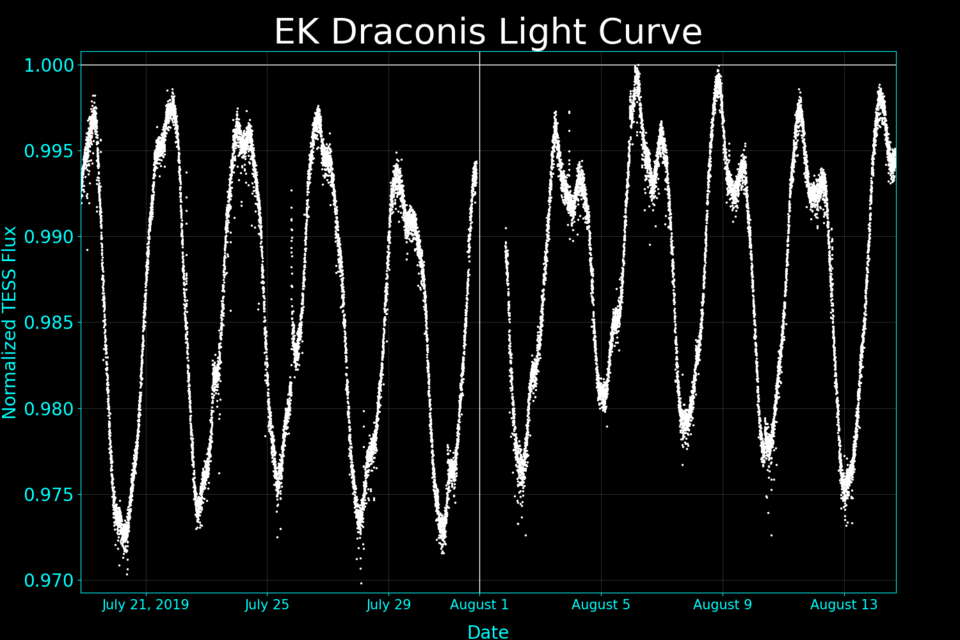
EKDra TESS data. Photo: YCVn / Wikimedia Commons. EK Draconis light curve plotted from TESS data. Source
The most extreme SEP event on record sits at the boundary of the empirical catalogue: the ~12,350 BCE radiocarbon spike, identified in subfossil Scots Pine from the Drouzet River in the French Alps and matched to a ¹⁰Be anomaly in Greenland ice cores, has been reconstructed by the new SOCOL:¹⁴C-Ex chemistry–climate model as approximately 18% stronger than the 774–775 CE event and over 500 times more intense than the largest modern satellite-era storm (2005). This makes it both the largest known extreme solar particle event and the only confirmed one outside the Holocene epoch. The catalogue is not saturation-limited: only a fraction of the past ~14,500 years of available tree-ring data has been searched for these single-year spikes, and the COSMIC initiative is extending the search into floating chronologies from Europe and the Great Lakes region. The empirical baseline now runs from Carrington-class ¹⁴C-undetected geomagnetic storms, through 1859-equivalent Miyake-class ¹⁴C spikes in polar trees, all the way to a Late-Glacial 500×-modern event at the edge of the Holocene — a continuum that mainstream stellar and cosmogenic-isotope work treats as evidence the Sun can produce events orders of magnitude larger than anything in the modern instrumental record. [9]
Galactic Superwaves and the Twelve-Thousand-Year Cycle
Paul LaViolette’s “Earth Under Fire,” first published in 1997, proposes that the Galactic center explodes on a roughly 12,900-year cadence — half of the 25,800-year axial-precession period — emitting shells of cosmic rays and interstellar dust that descend on the Solar System and ignite worldwide fire-and-flood cataclysms. The author anchors the proposal in his interpretation of polar ice-core layers he identifies as interstellar-dust deposits and frames Hopi “Blue Star” Kachina tradition, Egyptian “Eye of Ra” mythology, and Barasana star lore as encoded testimony of past superwave arrivals. LaViolette further claims to have predicted the entry of interstellar dust into the Solar System about a decade before the 1993 Ulysses in-situ confirmation. But here’s the part that doesn’t sit right: that priority claim appears only in author biographies on book editions, not in independent historical reconstruction or contemporaneous Ulysses-team acknowledgment. The underlying “Subquantum Kinetics” framework — a reaction-kinetic ether theory that postulates continuous creation of matter — is widely characterized by mainstream commenters as pseudoscience inconsistent with relativity and standard physics. No quantitative new-matter-creation prediction from the framework has survived experimental bounds set by energy-density measurements or the electron g-factor. [10]
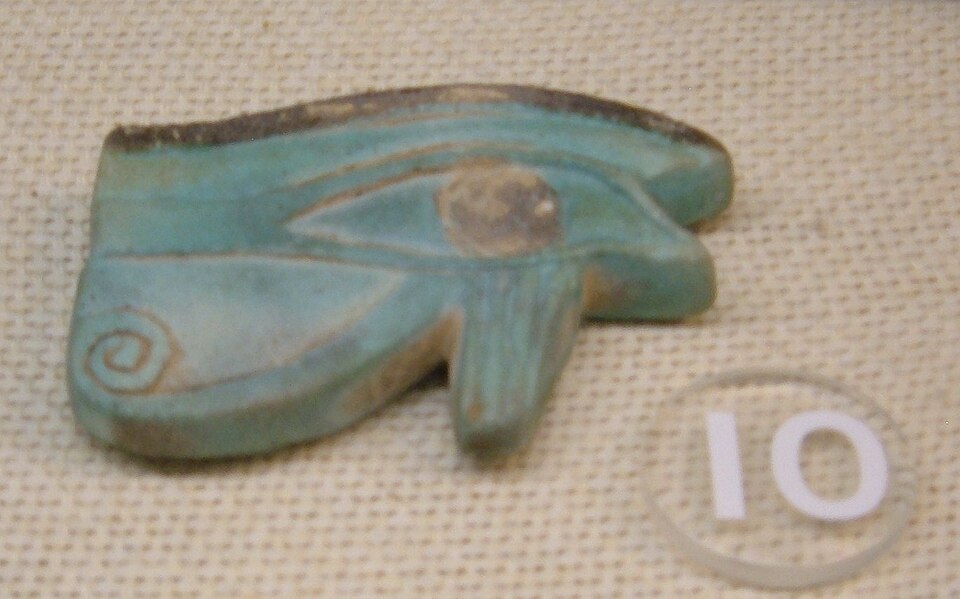
Illustration: 18th Dynasty Eye of Ra. Photo: BrokenSphere / Wikimedia Commons. Source
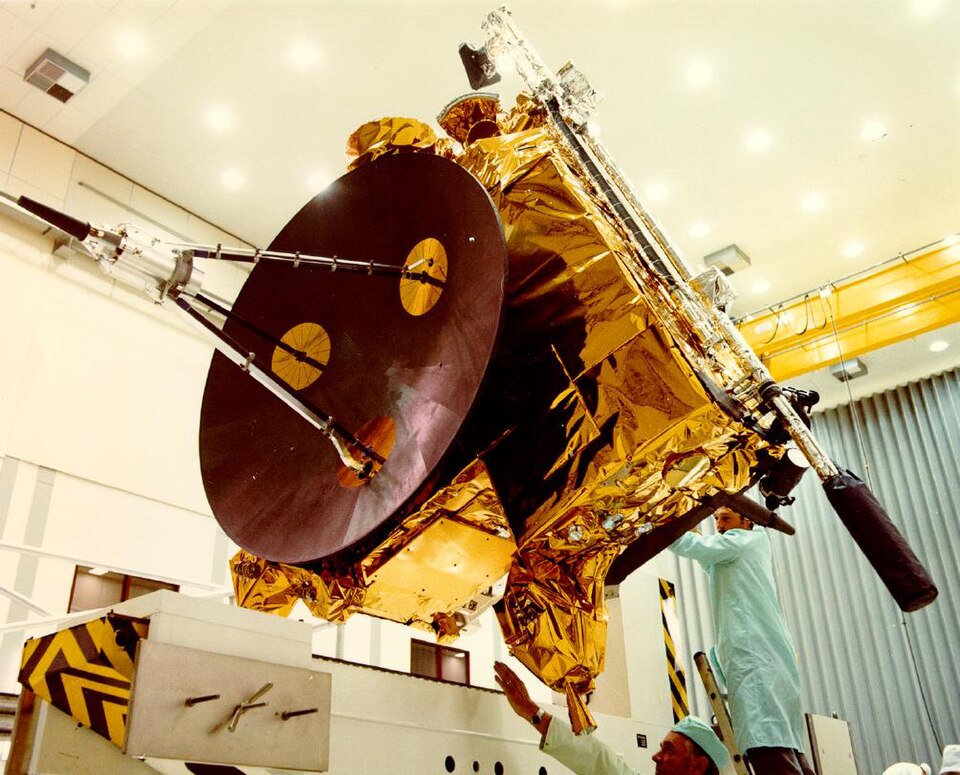
Ulysses spacecraft. Photo: Wikimedia Commons. Source
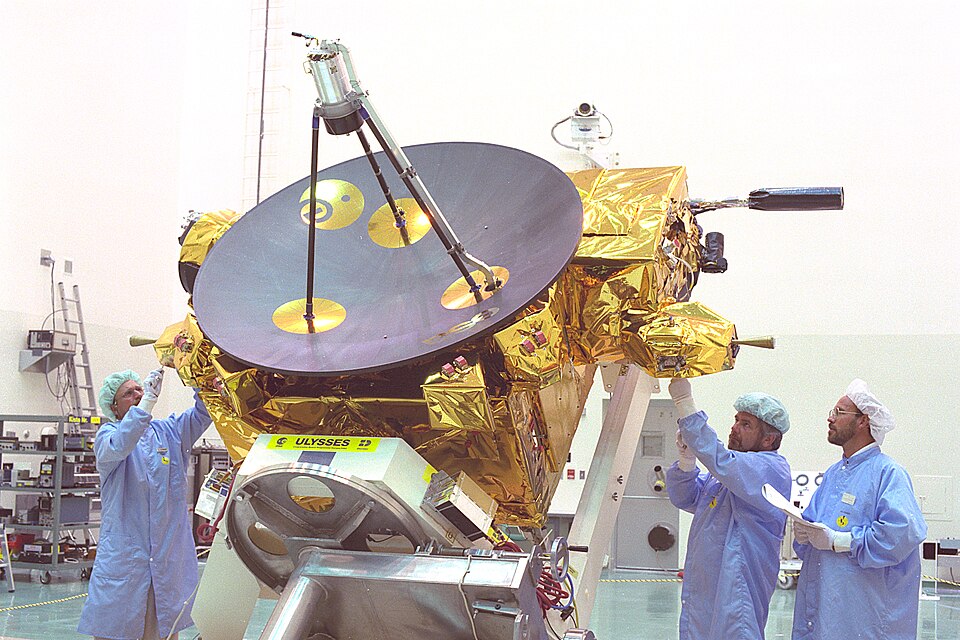
Ulysses preparations. Photo: NASA, photographer unknown / Wikimedia Commons. Source
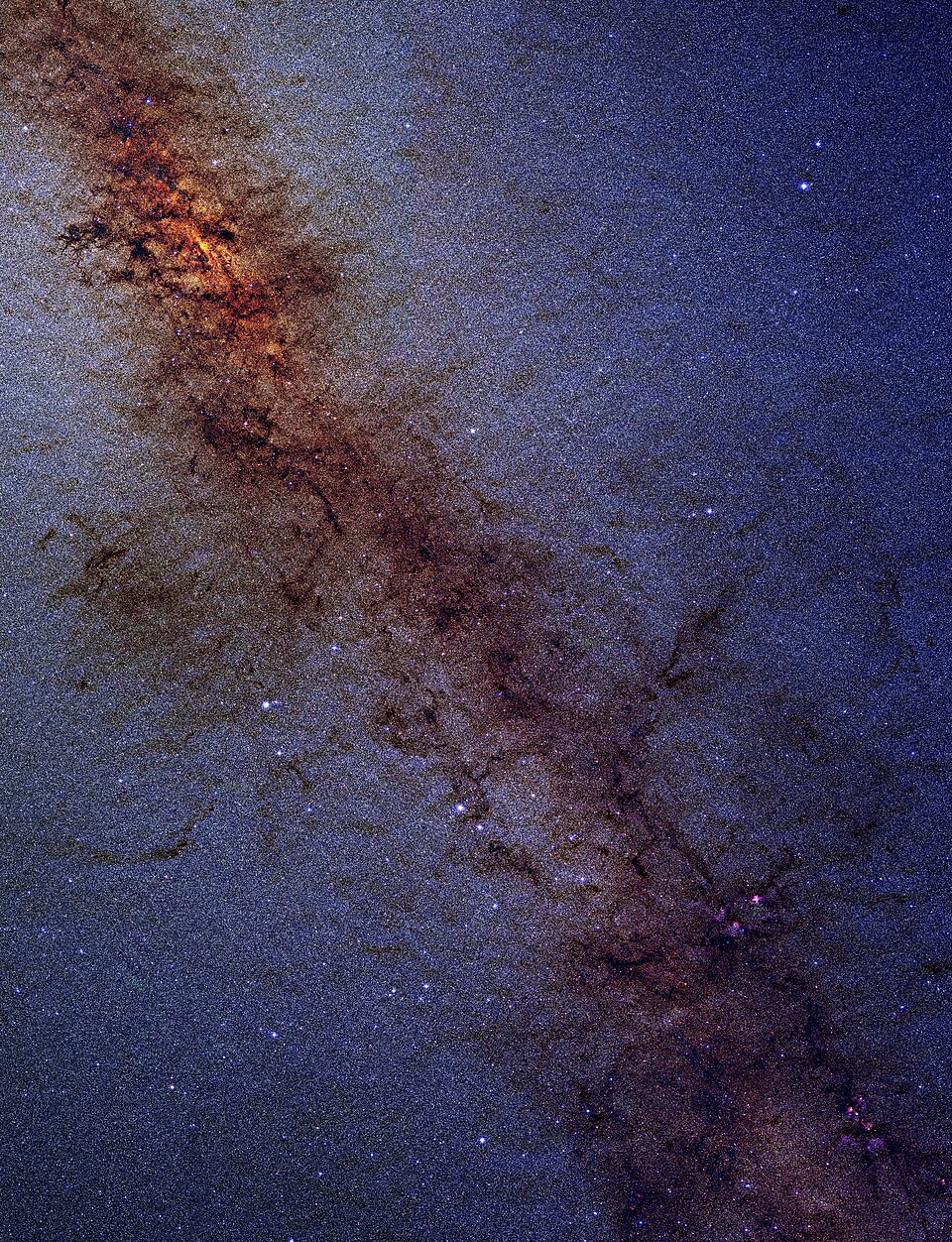
Illustration: Galactic Cntr full cropped. Photo: 2MASS/G. Kopan, R. Hurt / Wikimedia Commons. Source
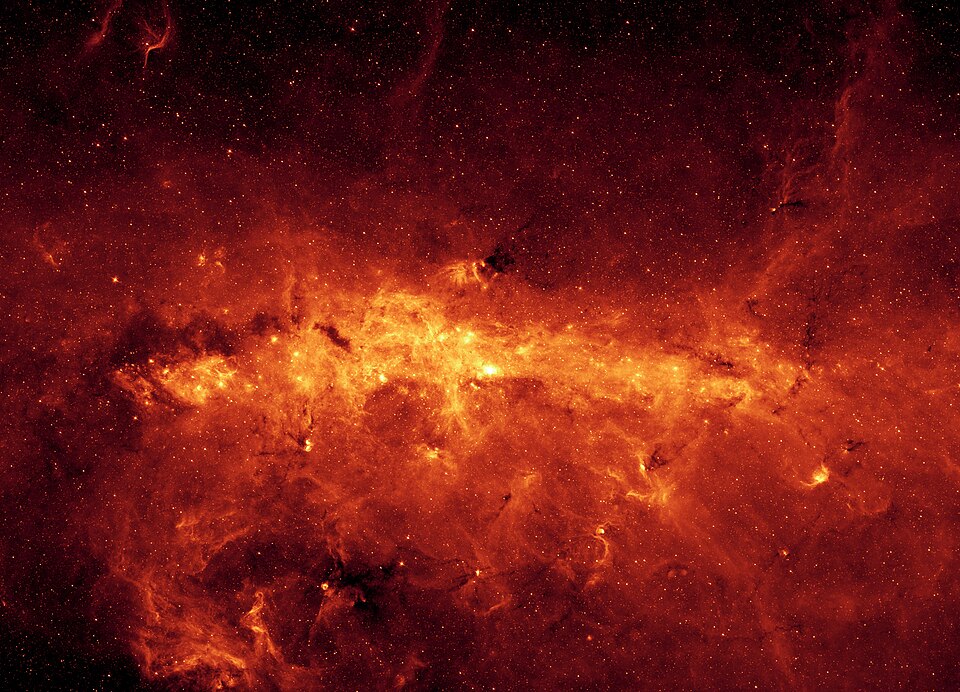
Galactic Center Of Milky Way. Photo: NASA/JPL-Caltech / Wikimedia Commons. Source
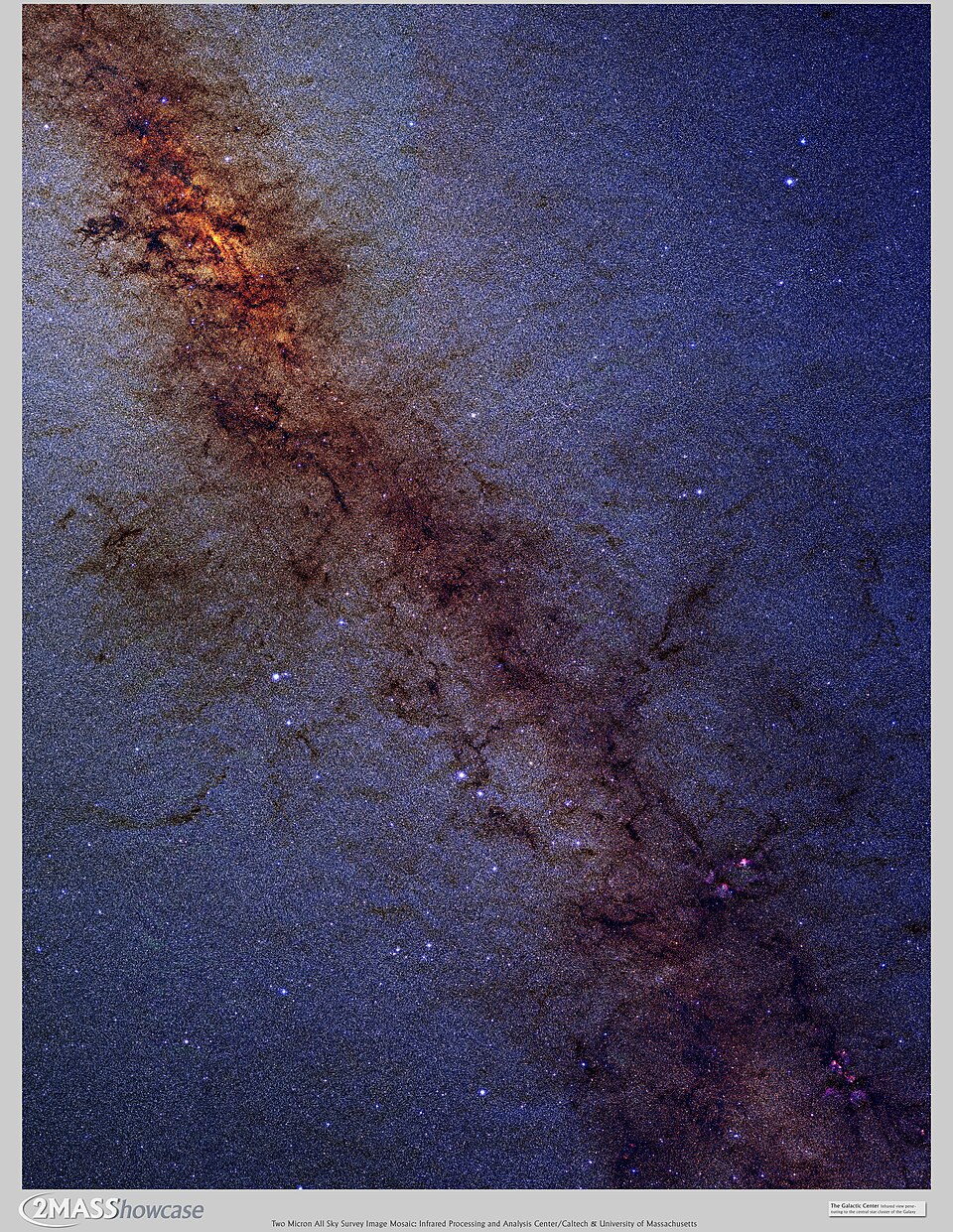
The Galactic Center. Photo: 2MASS/G. Kopan, R. Hurt / Wikimedia Commons. Source
Chan Thomas’s “The Adam and Eve Story,” written in 1963 and declassified by the CIA in 2013 as document CIA-RDP79B00752A000300070001-8, proposes a different periodic framework: a helicoid (spiral) cycle in which Earth’s 60-mile-thick outer shell periodically slips over the inner mantle when the planet transits galactic “null zones” of weakened magnetic field, with reported prior cataclysm dates of ~11,500, ~18,500, ~29,000, and ~43,750 years before present. The book predicted an imminent event near the year 2000 — a prediction that did not materialize, undermining the test of the model. Thomas cites the Solon/Egyptian tradition of a cataclysm 9,000 years before Solon’s ~600 BCE visit, totaling 11,550 years, which he equates with the end of the Younger Dryas. In 2025 popular media resurfaces the document and treats the “every 6,500 years” pole-shift cadence as overdue. Mainstream commentary explicitly distinguishes rapid true polar wander (slow, millions of years) from Thomas’s hypothesised catastrophic crustal slippage on a human timescale, noting that the Younger Dryas does not require a pole shift to explain and the geological record shows no such crustal displacement. [11]
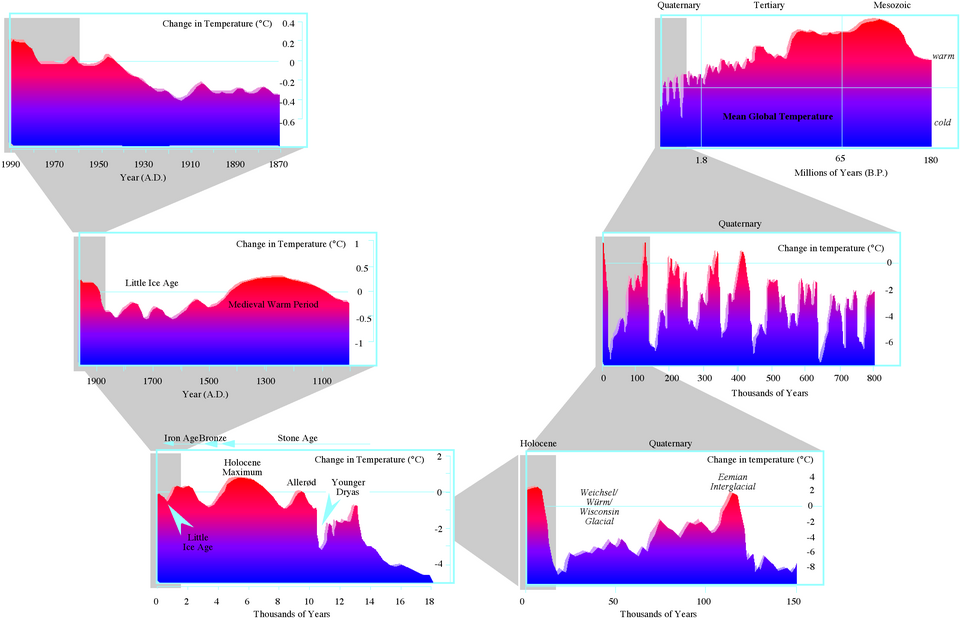
Illustration: Iceage time-slice hg. Photo: Hannes Grobe/AWI / Wikimedia Commons. Source
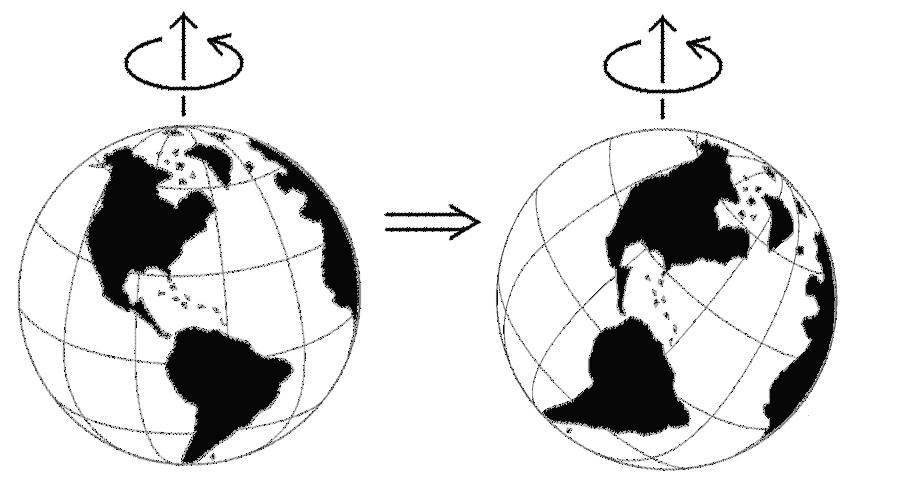
True polar wander. Photo: Victor C. Tsai / Wikimedia Commons. Diagram showing solid-body rotation of the Earth with respect to a stationary spin axis due to true polar wander. Source
The term “micronova” was appropriated by fringe “Lost Civilizations” researchers, including Richard Firestone in Cosmic Summit panel contexts, to describe hypothetical recurrent solar or near-Earth plasma events — distinct from the actual phenomenon reported by Scaringi et al. in Nature 2022. In mainstream astrophysics, “micronovae” are localized thermonuclear explosions on the surfaces of magnetic, accreting white dwarfs in binary systems — about one millionth the energy of a classical nova — not a solar phenomenon. Each event releases roughly one-millionth the energy of a classical nova, lasts hours, and burns about 20 million trillion kilograms of material per burst, confined to the magnetic poles of the white dwarf by its magnetic field. The 2026 detection of a burst in the intermediate polar IGR J17014-4306 — the eighth confirmed micronova system — reinforces that the term refers to stellar, not solar, runaways. Fringe commentators invoke the white-dwarf label as if it applied to hypothetical coronal mass ejection events at the Younger Dryas, blurring a firmly bounded astrophysical phenomenon into speculative solar catastrophism. [12]
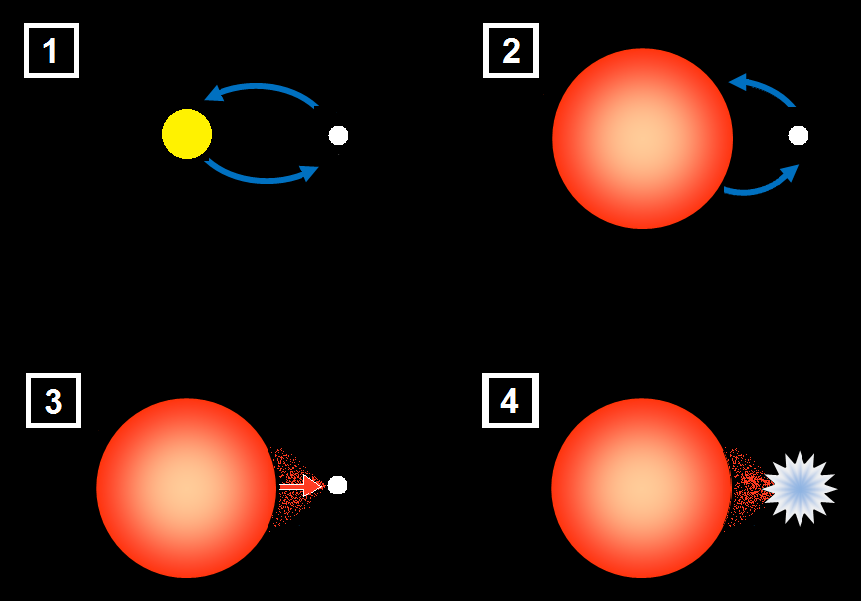
Illustration: White dwarf accretion to type 1a supernova. Photo: FT2 / Wikimedia Commons. Diagram showing accretion by a binary white dwarf star, leading to a type 1a supernova. Source
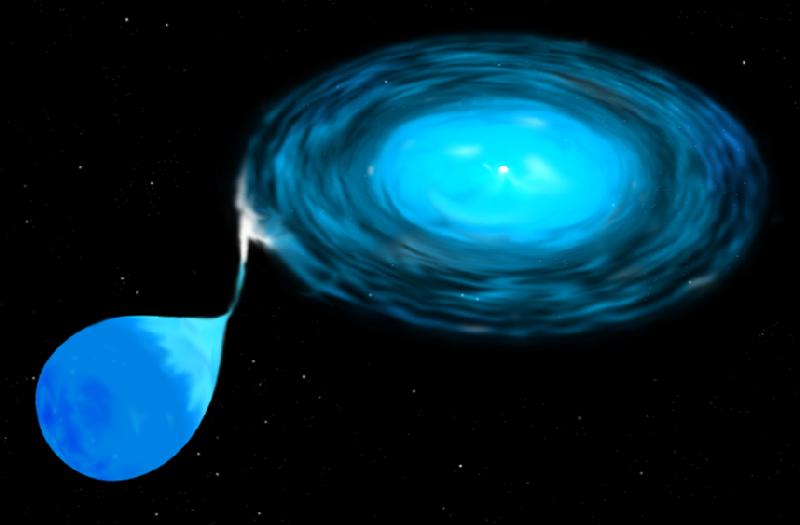
Accretion Disk Binary System. Photo: Wikimedia Commons. Source
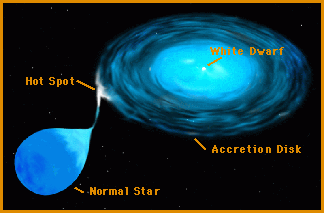
Diagram of a Cataclysmic Variable. Photo: Wikimedia Commons. Source
Matthew LaCroix, in Cosmic Summit and YouTube panel contexts, explicitly anchors the ~12,000-year cycle to the Laschamps geomagnetic excursion (~41,000–42,000 BP) and ties the Younger Dryas-era catastrophe to solar activity, naming the so-called “Adams event” as a benchmark and attributing recurrence to events “mostly related to the sun”. LaCroix states, “13,000 is half of 26,000 which is exactly what the great year cycle is” — explicitly mapping the cycle onto half of the precessional period rather than onto any independently documented astronomical cadence. The connection is interpretive, not derived from peer-reviewed literature: mainstream summaries of the Younger Dryas onset, dated 12,870 ± 30 yr BP on the GICC05 chronology, find no support for a ~12,000-year catastrophe cycle in paleoclimate or astronomical records. The closest established Milankovitch cycles — precession (~26,000 years), obliquity (~41,000 years), eccentricity (~100,000 years) — operate at different scales. Bond events recur roughly every 1,470 ± 500 years, not every 12,000, and even that cyclicity is contested. [13] [14]
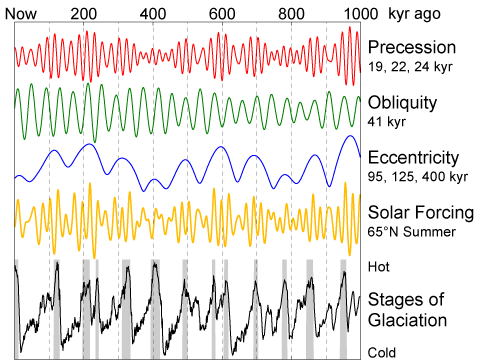
Milankovitch Variations. Photo: This image was produced by Robert A. Rohde from publicly available data, and is incorporated into the Global Warming Art project. / Wikimedia Commons. Source
The broader context for this catastrophism is well-established fringe literature. Immanuel Velikovsky’s “Worlds in Collision” (1950) proposed that Venus was ejected from Jupiter as a comet ~1500 BC and nearly struck Earth — a claim mainstream astrophysics rejected on orbital-mechanics grounds, with the probability of the observed eight-planet near-coplanarity under random capture at P ≈ 6.9 × 10⁻²⁶. The “Electric Universe” alternative — which holds stars are powered by plasma discharge rather than fusion — fails observational tests: solar neutrinos are detected (and even imaged), the solar spectrum is continuous rather than bright-line, and protoplanetary disks are observed around stars in stellar nurseries. Randall Carlson, in Cosmic Summit and YouTube recordings, ties ancient Greek “cataclysmos” fire-and-flood traditions to recurring catastrophes ‘when the planets came together in certain signs of the zodiac’. The most important unresolved question is not whether the ~12,000-year cycle is real — no such cycle appears in any peer-reviewed astronomical or paleoclimate dataset — but why these specific framings (superwave, helicoid null-zone, micronova-as-CME) continue to gain traction in YouTube and panel milieus despite formal refutation. [15]
Fire-and-Flood Traditions Across the Ancient World
The Aztec Five Suns myth describes a sequence of five world-ages, each ending in elemental destruction: the First Sun ended by jaguars consuming giants; the Second Sun by a great wind that turned humans into monkeys; the Third Sun by a rain of fire after Tlaloc’s grief; the Fourth Sun by a 52-year flood of blood-tears that turned humans into fish; and the Fifth Sun is prophesied to end in catastrophic earthquakes. Hesiod’s Five Ages of Man in Works and Days (~8th c. BCE) presents a declining metallic sequence — Golden, Silver, Bronze, Heroes, Iron — in which the Bronze Age was destroyed by the flood of Deucalion and Pyrrha, and the present Iron Age is prophesied to be destroyed by Zeus when moral order collapses. In Norse Ragnarök mythology, the world is destroyed through combined fire and flood: the fire giant Surtr leads the Sons of Muspell who set the world ablaze with a flaming sword, while the Midgard Serpent Jörmungandr thrashes the sea until it floods the land, and only the human pair Líf and Lífþrasir survive in a forest to repopulate. The Greek philosophical tradition — transmitted through Plato, the Stoics, and later writers — formalized this alternation as ekpyrosis (conflagration) and kataklysmos (deluge), often tied to astronomical conjunctions, with at least six destructions of the world attested in accounts given to Solon by Egyptian priests. [16] [17] [18]
Mesopotamian tradition includes both fire-deity and flood-deity motifs associated with cosmic destruction: the god Erra/Nergal was originally a personification of “scorched earth” from grass or forest fire and later became god of war and plague, while the Atrahasis epic and its derivatives (Gilgamesh, Genesis) feature a divinely sent deluge as a deliberate destruction of humanity. Flood myths are documented across hundreds of unrelated cultures on every inhabited continent, including traditions with no local flooding experience (Hawaii, China, Greece, Mesopotamia, Aztec, Norse, Aboriginal Australia), suggesting either deep shared ancestry of narrative, independent invention from observation of floods, or both. [19] [20] [21]
Indigenous oral traditions across multiple North American tribes independently preserve accounts of a cataclysmic past involving floods or destruction, which 19th- and early-20th-century observers such as George Catlin noted as a cross-tribal commonality. The destruction layer at Bronze Age Tall el-Hammam in the Jordan Valley has been interpreted by proponents of the cosmic-airburst hypothesis as a single-moment catastrophic event consistent with the biblical account of Sodom: melted pottery, burned bones, airborne ceramics, and salt blown in from hypersaline Dead Sea soils. [22] [23] [21]
Connecting the Dots
The empirical starting point is that extreme solar events exist but are not periodic: a 2024 analysis of 56,450 Sun-like Kepler stars identified 2,889 superflares at a frequency of roughly one per century, and six confirmed Miyake events now span approximately 14,000 years at ~12,350 BCE, 7176 BCE, 5259 BCE, 664–663 BCE, 774–775 CE, and 993–994 CE. The pattern that does not fit any ~12,000-year cycle is the irregular cadence itself — the five intervals between those six events run approximately 5,174, 1,917, 4,595, 1,438, and 219 years, an irregularity that mainstream reviewers emphasize as decisive against any regular periodicity. Fringe frameworks such as Paul LaViolette’s “~12,900-year” galactic superwave — claimed to be half the 25,800-year axial-precession period — anchor instead in polar ice dust layers and ancient fire-and-flood myths, while popular commentators have appropriated the word “micronova” from the 2022 Scaringi et al. discovery of thermonuclear bursts on accreting magnetic white dwarfs, where each event burns ~20 million trillion kilograms of hydrogen over hours. Those bursts occur only on white dwarfs in binary systems accreting from a companion, not on a solitary G-type main-sequence star like the Sun, and the “solar micronova” framing invoked by researchers in the fringe literature has no peer-reviewed support in the available sources. [24] [25]
A fire-from-heaven reading would predict that the largest ancient solar proton events register directly in the polar archive and align chronologically with the major climate catastrophes of the Holocene and late Pleistocene. The pattern that does not fit is twofold. First, the ice-core nitrate archive registers historical supernovae but not the largest confirmed solar proton storms: Motizuki and colleagues identified high-nitrate layers dated to AD 1006 and AD 1054 matching the Vela and Crab supernovae, plus a third ~AD 1060 spike attributed to an unrecorded event, while multiple independent analyses of 14 polar ice cores found NO coincident nitrate spikes for the 774/5, 993/4, February 1956, or 1859 Carrington benchmark storms — an asymmetric geochemical record that constrains how directly any ancient fire imagery can be tied to a specific solar proton event, because the proxies that would record one do not reliably register the other. Second, the ~12,350 BCE Miyake event — the largest in the entire record at roughly 18% stronger than the 774/5 event and over 500 times more intense than the 2003 Halloween storm — sits only ~450–550 years before the Younger Dryas cold reversal, dated to approximately 12,900–11,700 years before present, with the base of the Holocene formally set at 11,700 yr b2k (2σ uncertainty 99 yr) in the NGRIP GSSP. Fringe commentators cite this proximity as evidence that the storm triggered the cooling, but mainstream chronologies place the YD trigger outside the Miyake window, attributing the cooling instead to a slowdown or shutdown of North Atlantic thermohaline circulation triggered by freshwater influx from glacial Lake Agassiz, with volcanic forcing precursors such as the Laacher See eruption also proposed as contributing factors. [26] [27]
SN 1006 Supernova Remnant. Photo: NASA, ESA, and the Hubble Heritage Team (STScI/AURA) / Wikimedia Commons. The Vela/SN 1006 event is one of two named historical supernovae that left nitrate traces;…. Source
The cross-cultural fire-and-flood motif is empirically robust — it appears across continents and centuries, from the Aztec Five Suns, where the Third Sun ended in a rain of fire and the Fourth in a 52-year flood of blood-tears, to Hesiod’s Bronze Age, destroyed by the flood of Deucalion and Pyrrha, to Norse Ragnarök, where Surtr’s flaming sword and Jörmungandr’s flood arrive together, to Mesopotamian Erra/Nergal as personified scorched earth paired with the Atrahasis divinely-sent deluge, and to the Greek philosophical tradition of alternating ekpyrosis (conflagration) and cataclysmos (deluge) recurring periodically, with at least six destructions attested in the accounts given to Solon by Egyptian priests. Mainstream scholarship attributes the fire component to combined post-glacial flooding, oral memory of eruptions and bright apparitions, and abrupt climate shocks; fringe researchers read the same imagery as literal encoding of cosmic catastrophes such as the Taurid Complex impacts proposed by Napier at ~12,800 years ago, where the broader complex is the disintegration product of a larger progenitor associated with comet 2P/Encke. The Younger Dryas Impact Hypothesis, introduced in 2007 by Firestone et al. as one or more extraterrestrial airbursts or impacts triggering the cooling, megafaunal extinctions, and end of Clovis culture, was comprehensively rejected by the 2023 Holliday et al. Earth-Science Reviews assessment, which found that none of the 12 original impact signatures were corroborated by independent tests, no craters are dated to YD onset, and the proposed impactors violate impact physics. The same empirical pattern — a regular mytheme across cultures, irregular geophysics in the ice core record, and an absent nitrate signature for solar events — supports both readings only weakly, but the geophysical asymmetries point away from any single periodic mechanism. [28] [29] [30] [31]
The Other Side
The mainstream scientific response to the Younger Dryas Impact Hypothesis has crystallized over more than a decade into a broad consensus that the proposed airburst or impact ~12,800 years ago lacks reproducible physical evidence. Holliday et al. (2023) published a ~96,000-word comprehensive refutation with co-authors including Christian Koeberl, Philippe Claeys, and Jeffrey Severinghaus, finding that 7 of the original 12 alleged impact signatures could not be reproduced in independent labs and that no impact crater of Younger Dryas age has ever been identified. Daulton and colleagues, using transmission electron microscopy and electron energy-loss spectroscopy, demonstrated that the carbon-rich grains previously identified as cubic and hexagonal nanodiamonds at Younger Dryas sites are actually graphene, graphane, and graphene-oxide aggregates, while materials once labeled “n-diamond” proved to be nanocrystalline copper. The Hiawatha crater beneath the Greenland Ice Sheet, initially cited as a candidate impactor, was argon-dated by Kenny et al. (2022) to 57.99 ± 0.54 million years ago—Late Paleocene—definitively excluding it as a Younger Dryas-age structure. A 2025 reanalysis by Green and Baldini of 17 Laacher See pumice samples found platinum concentrations below detection limits, placing the GISP2 Younger Dryas platinum spike roughly 45 years after the onset of Younger Dryas cooling with a ~14-year duration more consistent with an Icelandic volcanic fissure eruption than with a cosmic impact. [32]
On the question of whether ice-core nitrate spikes can reliably record solar proton events, mainstream space physics has reached a notably skeptical position. Duderstadt et al. concluded that nitrate ion spikes in ice cores are not suitable proxies for solar proton events, and a comprehensive reanalysis by Mekhaldi et al. found no coincident nitrate enhancement events in polar ice cores following the largest known solar storms, including the benchmark 1956, 1989, and 2003 events. Even the 1859 Carrington Event, the largest directly observed geomagnetic storm in modern records, fails to leave a clear nitrate signature in most ice cores. This means that claims linking individual nitrate spikes in ancient ice to specific extreme solar events rest on a proxy that has not been validated against events of known magnitude. [33] [34]
The astronomical terminology deployed in some catastrophist circles also fails under scrutiny when applied to the Sun. “Micronovae,” as identified by Scaringi et al. (2022) in Nature, are localized thermonuclear bursts occurring on the surface of accreting magnetic white dwarfs in binary systems—a phenomenon that requires a degenerate stellar core drawing material from a companion; the Sun is a solitary main-sequence G2V star with no companion, no surface accreted hydrogen layer, and no mechanism to trigger such bursts, so the term has no peer-reviewed application to solar physics. Immanuel Velikovsky’s “Worlds in Collision” (1950) was rejected on quantitative orbital-mechanical grounds by Cecilia Payne-Gaposchkin in the same year of publication, with subsequent statistical analyses calculating the joint probability of observed planetary co-planarity under Velikovsky’s proposed orbital histories at approximately P ≈ 6.9 × 10⁻²⁶—effectively impossible. Likewise, the strongest superflare observed on a genuine Sun-like (G-type) star during the Kepler extended mission occurred on κ¹ Ceti, but even these events appear limited to roughly once-per-century frequencies on truly solar analogs—orders of magnitude too rare to explain multiple catastrophic events within a single 12,000-year window. [35]
Statistical re-examination of the claimed climate cycles has further eroded the empirical scaffolding of the periodic-catastrophe framework. Ditlevsen (2007) demonstrated that Dansgaard-Oeschger events during the last glacial are statistically indistinguishable from a random occurrence and may simply represent noise in the climate system rather than a coherent ~1,470-year pacing [36]. Similarly, the Holocene Bond-event sequence, which some researchers invoke as evidence of a ~1,500-year cycle spanning nine ice-rafted- debris peaks across the last 12,000 years, has been shown to lack the statistical coherence required for a true quasi-periodic cycle. The 14,300-year Miyake-class radiocarbon spike and the 12,350-BC event do demonstrate that extreme solar storms can and do occur, but their spacing shows no ~12,000-year periodicity, no consistent relationship to the 11-year Schwabe cycle, and no reliable signature in ice-core nitrate—making the case for any repeating cosmic catastrophe tied to a 12,000-year cycle empirically unsupported.
What We Actually Know
The case for periodic cosmic catastrophe rests on something solid: extreme solar events have repeatedly struck Earth, and the largest of them are far beyond anything in the modern instrumental record [37]. At least six confirmed Miyake events have been catalogued through tree-ring 14C and ice-core 10Be/36Cl at approximately 12,350 BCE, 7176 BCE, 5259 BCE, 664–663 BCE, 774–775 CE, and 993–994 CE. The 12,350 BCE event is the most powerful known — approximately 18% stronger than the 775 AD benchmark and over 500 times more intense than the 2003 Halloween Solar Storm. The 1859 Carrington Event, long treated as the worst-case scenario, produced no detectable 14C spike in tree rings, placing it well below the energy threshold of these Miyake-class storms. Sun-like stars are demonstrably capable of superflares: Vasilyev et al. 2024 identifies 2,889 superflares on 2,527 of 56,450 observed Kepler stars, with earlier work estimating 10^34 erg events every 800–5,000 years on stars with rotational periods similar to the present Sun. The hypothesis does not require inventing a new class of event. It only requires that such events hit Earth more often than the instrumental record suggests — and the cosmogenic isotope record confirms that they do.
The mythological record offers structural support that does not depend on mechanism. Cross-cultural flood myths are documented across hundreds of cultures on every inhabited continent, with recurring features — divine warning, chosen survivor, vessel preservation, repopulation. Norse Ragnarök explicitly combines fire and flood: the fire-giant Surtr burns the world with a flaming sword while the Midgard Serpent floods the land, with Líf and Lífþrasir surviving to repopulate. The Aztec Five Suns cycle through jaguars, wind, fire-rain, flood, and earthquakes as successive elemental destroyers. Hesiod’s Works and Days places the flood of Deucalion at the terminus of the Bronze Age. The Greek philosophical tradition — Plato, the Stoics, later writers — framed cosmic destruction in terms of alternating fire (ekpyrosis) and flood (cataclysmos) catastrophes recurring periodically, often tied to astronomical conjunctions. These are not isolated literary curiosities. They are convergent symbolic structures that predate modern catastrophism and cannot be explained as borrowing. [38]
What the well-documented record does not, by itself, establish is a ~12,000-year cycle. The Younger Dryas cold reversal is securely dated to approximately 12,900–11,700 years before present, with the Holocene base formally set at 11,700 yr b2k (2σ uncertainty 99 yr) in the NGRIP GSSP. The mainstream scientific explanation for this cooling is a slowdown or shutdown of North Atlantic thermohaline circulation triggered by freshwater influx — not an extraterrestrial impact. Plausible but uncertain findings sit on top of that contested ground: a 2025 Baffin Bay marine-sediment study reports YDB impact proxies — metallic debris, Fe/silica microspherules, Pt/Ir/Ni/Co nanoparticles — in four cores, the first ocean-sediment confirmation of the Younger Dryas boundary layer; Napier and colleagues hypothesize that Taurid Complex debris could have produced a cluster of impacts ~12,800 years ago, plausibly triggering Younger Dryas cooling; and Hamacher (2023) provides empirical evidence that primary oral traditions can preserve specific environmental information across more than 10,000 years [39]. None of these individually proves a cosmic trigger. Together they keep the Younger Dryas as an open case.
The speculative tier is where the cycle claim itself lives. Whether confirmed Miyake events exhibit a ~12,000-year periodicity or any consistent relationship to the 11-year solar cycle remains undemonstrated. Whether ice-core nitrate spikes can reliably record solar proton events — even for the largest benchmark storms — is unsettled: the 774/5 Miyake event, at least ten times stronger than Carrington, produced no detectable nitrate spike in ice cores [40]. The fringe frameworks that propose a ~12,000-year cycle — LaViolette’s galactic superwaves, LaCroix’s Adams event anchored to the Laschamps excursion and explicitly tied to half of the ~26,000-year precessional Great Year, Chan Thomas’s galactic null zones, Velikovsky’s Worlds in Collision — are not in peer-reviewed astrophysics. The structural parallel to precession is suggestive but is not evidence.
The biggest unanswered question this research surfaced is not whether extreme solar and cosmic events strike Earth — they demonstrably do — but whether the largest known Miyake-class SEP event (12,350 BCE) and the onset of the Younger Dryas (~12,800 years ago) are causally connected or merely chronologically adjacent. If a single SEP storm of 12,350 BCE magnitude is insufficient to cause civilizational collapse, the cycle hypothesis loses its mechanism. If it is sufficient, then the unresolved question becomes why no nitrate spike has been unambiguously tied to it, and whether the proxies researchers expect even preserve in the ice [40].
References
[1] Solar superflares hit Earth multiple times — https://earthsky.org/earth/solar-superflares-tree-rings/ (accessed 2026-08-31)
[2] “A new worst case scenario.” Biggest solar storm ever … — https://www.skyatnightmagazine.com/news/solar-storm-12350-bc (accessed 2026-08-31)
[3] 14000 years ago, the most powerful solar storm ever … — https://www.space.com/astronomy/sun/14-000-years-ago-the-most-powerful-solar-storm-ever-recorded-hit-earth-this-event-establishes-a-new-worst-case-scenario (accessed 2026-08-31)
[4] Investigation of extreme solar events in the 19th century … - PoS — https://pos.sissa.it/444/1346/ (accessed 2026-08-30)
[5] Carrington Event — https://en.wikipedia.org/wiki/Carrington_Event (accessed 2026-08-30) [Reputable]
[6] Florian Mekhaldi, Raimund Muscheler, Florian Adolphi, Ala Aldahan, Jürg Beer, Joseph R. McConnell, Göran Possnert, Michael Sigl, Anders Svensson, Hans‐Arno Synal, K. C. Welten, and Thomas E. Woodruff (2015). Multiradionuclide evidence for the solar origin of the cosmic-ray events of AD 774/5 and 993/4. Nature Communications. DOI: 10.1038/ncomms9611 (accessed 2026-08-30) [Academic]
[7] Sun-like stars produce superflares roughly once per century — https://pubmed.ncbi.nlm.nih.gov/39666785/ (accessed 2026-08-30) [Academic]
[8] A filament eruption and coronal mass ejection from a superflare on a young Sun-like star — https://core.ac.uk/download/555666132.pdf (accessed 2026-08-31) [Academic]
[9] Researchers identify largest ever solar storm in tree rings — https://www.leeds.ac.uk/news-science/news/article/5427/researchers-identify-largest-ever-solar-storm-in-tree-rings (accessed 2026-08-31) [Academic]
[10] Earth Under Fire: Humanity’s Survival of the Apocalypse - Paul LaViolette — https://www.abebooks.com/9780964202528/Earth-Under-Fire-Humanitys-Survival-0964202522/plp (accessed 2026-08-30)
[11] PDF Summary:The Adam And Eve Story, by Chan Thomas — https://www.shortform.com/pdf/the-adam-and-eve-story-pdf-chan-thomas (accessed 2026-08-30)
[12] Astronomers Capture Evidence of a Micronova - Physics - UC Berkeley — https://physics.berkeley.edu/news-events/news/astronomers-capture-evidence-of-micronova (accessed 2026-08-30) [Academic]
[13] Discovery to CHANGE History | NEW Lost Civilization Evidence in Egypt, Türkiye - Matthew LaCroix [12:03-13:48] — Matthew LaCroix (YouTube) — https://youtu.be/M0THC-h1htY?t=723 (accessed 2026-08-30)
[14] New Underwater Ruins | Flower of Life | Lost Civilization Evidence - Matthew LaCroix, Sean Kelly [59:18-61:01] — Matthew LaCroix (YouTube) — https://youtu.be/_UtS6GjJQ1M?t=3558 (accessed 2026-08-31)
[15] Worlds in Collision — https://adsabs.harvard.edu/full/1950PA.....58..278P (accessed 2026-08-30) [Academic]
[16] The Five Suns: the End of the World as We Know It. — https://mythcrafts.com/2019/03/12/the-five-suns-the-end-of-the-world-as-we-know-it/ (accessed 2026-08-30)
[17] Legend of the Fifth Sun (Mesoamerican myth) — https://www.ebsco.com/research-starters/religion-and-philosophy/legend-fifth-sun-mesoamerican-myth (accessed 2026-08-30)
[18] Five Suns — https://en.wikipedia.org/wiki/Five_Suns (accessed 2026-08-30) [Reputable]
[19] List of flood myths - Wikipedia — https://en.wikipedia.org/wiki/List_of_flood_myths (accessed 2026-08-30) [Reputable]
[20] World Flood Myths - Ark Encounter — https://arkencounter.com/flood/myths/ (accessed 2026-08-30)
[21] A Flood of Myths and Stories | Blog | Independent Lens - PBS — https://www.pbs.org/independentlens/blog/a-flood-of-myths-and-stories/ (accessed 2026-08-30)
[22] Sacred Geometry and Lunar Mysteries with Randall Carlson [76:46-78:33] — Brothers of the Serpent (YouTube) — https://youtu.be/oaDDVtNklH4?t=4606 (accessed 2026-08-30)
[23] A Comet, a Cover-Up, and a Crater in Greenland, ft CRG’s Allen West [67:25-69:10] — The Cosmic Summit (YouTube) — https://youtu.be/UNNRL-QT0oE?t=4045 (accessed 2026-08-30)
[24] Triggering micronovae through magnetically confined … — https://ui.adsabs.harvard.edu/abs/2022MNRAS.514L..11S/abstract (accessed 2026-08-31) [Academic]
[25] Localized thermonuclear bursts from accreting magnetic … — https://pubmed.ncbi.nlm.nih.gov/35444319/ (accessed 2026-08-31) [Academic]
[26] The Global Stratotype Section and Point (GSSP) for the base of the Holocene Series/Epoch (Quaternary System/Period) in the NGRIP ice core — https://core.ac.uk/download/29194966.pdf (accessed 2026-08-30) [Academic]
[27] The Big Freeze: Rapid Cooling During the Younger Dryas — https://scied.ucar.edu/learning-zone/how-climate-works/big-freeze-rapid-cooling-during-younger-dryas (accessed 2026-08-31) [Academic]
[28] R. B. Firestone, A. West, J. P. Kennett, L. Becker, T. E. Bunch, Z. S. Revay, P. H. Schultz, T. Belgya, D. J. Kennett, J. M. Erlandson, O. J. Dickenson, A. C. Goodyear, R. S. Harris, G. A. Howard, J. B. Kloosterman, P. Lechler, P. A. Mayewski, J. Montgomery, R. Poreda, T. Darrah, S. S. Que Hee, A. R. Smith, A. Stich, W. Topping, J. H. Wittke, and W. S. Wolbach (2007). Evidence for an extraterrestrial impact 12,900 years ago that contributed to the megafaunal extinctions and the Younger Dryas cooling. Proceedings of the National Academy of Sciences. DOI: 10.1073/pnas.0706977104 (accessed 2026-08-31) [Academic]
[29] The Case for the Younger Dryas Extraterrestrial Impact Event: Mammoth, Megafauna and Clovis Extinction — https://core.ac.uk/download/71276342.pdf (accessed 2026-08-31) [Academic]
[30] Analysis of the Younger Dryas Impact Layer — https://core.ac.uk/download/484388052.pdf (accessed 2026-08-31) [Academic]
[31] Bayesian chronological analyses consistent with synchronous age of 12,835-12,735 Cal B.P. for Younger Dryas boundary on four continents — https://core.ac.uk/download/239088213.pdf (accessed 2026-08-31) [Academic]
[32] A Late Paleocene age for Greenland’s Hiawatha impact structure - Science — https://www.science.org/doi/10.1126/sciadv.abm2434 (accessed 2026-08-31) [Academic]
[33] No Coincident Nitrate Enhancement Events in Polar Ice Cores … — https://agupubs.onlinelibrary.wiley.com/doi/10.1002/2017JD027325 (accessed 2026-08-30) [Academic]
[34] Nitrate ion spikes in ice cores not suitable as proxies for solar proton … — https://agupubs.onlinelibrary.wiley.com/doi/full/10.1002/2015jd023805 (accessed 2026-08-31) [Academic]
[35] [PDF] Classifying Optical (Out)bursts in Cataclysmic Variables - ePrints Soton — https://eprints.soton.ac.uk/487367/2/I_kiewicz_2024_ApJL_962_L34.pdf (accessed 2026-08-31) [Academic]
[36] Peter Ditlevsen, K. K. Andersen, and Anders Svensson (2007). The DO-climate events are probably noise induced: statistical investigation of the claimed 1470 years cycle. Climate of the past. DOI: 10.5194/cp-3-129-2007 (accessed 2026-08-31)
[37] Cosmogenic radionuclides reveal an extreme solar particle … — https://epic.awi.de/55797/1/Paleari_2022.pdf (accessed 2026-08-30)
[38] The Shaman and The Philosopher - Ep. 37 [40:50-43:09] — Institute for Natural Philosophy (YouTube) — https://youtu.be/Vk3O0j1C2hU?t=2450 (accessed 2026-08-31)
[39] The archaeology of orality: Dating Tasmanian Aboriginal … — https://www.sciencedirect.com/science/article/pii/S0305440323000997 (accessed 2026-08-31) [Academic]
[40] Timofei Sukhodolov, Ilya Usoskin, Eugene Rozanov, Eleanna Asvestari, William T. Ball, Mark A. J. Curran, Hubertus Fischer, G. A. Kovaltsov, Fusa Miyake, Thomas Peter, Christopher Plummer, W. Schmütz, Mirko Severi, and Rita Traversi (2017). Atmospheric impacts of the strongest known solar particle storm of 775 AD. Scientific Reports. DOI: 10.1038/srep45257 (accessed 2026-08-30) [Academic]
Keep exploring
Every site on this page sits on the globe, and the people who research them are on the Discord.
3D Globe · Sites by country · Story Archive · Research Library · Weekly Journal · Search