 ANCIENT NERDS
Pineal Gland DMT in Near-Death and Cross-Cultural Mysticism
The paper concludes that while DMT experiences show genuine phenomenological overlap with near-death experiences and cross-cultural mystical traditions, the central causal claim — that the pineal gland releases enough DMT at the moment of death to produce NDE phenomenology — remains unmeasured and unsubstantiated in humans. The canonical DMT biosynthetic pathway has been undermined by recent knockout-tissue evidence, INMT is most highly expressed in thyroid, adrenal, and lung tissue rather than pineal, and rat extracellular DMT concentrations sit orders of magnitude below psychoactive thresholds. Endogenous DMT may still function as a neurotransmitter, neuromodulator, hormone, or immunomodulator in subtler physiological roles, but the dying-brain neuroscience (gamma surges, DMT surges) and the popular pineal-NDE hypothesis have not yet been linked in a single experiment.
Between 1990 and 1995, psychiatrist Rick Strassman administered approximately 400 doses of DMT to 60 human volunteers at the University of New Mexico — the first federally sanctioned clinical research with psychedelics at a U.S. academic medical center in over twenty years. The compound acted on a clock unlike any other agent in his clinical experience: effects began almost immediately, peaked at 90 to 120 seconds, and were almost completely resolved by 30 minutes. Three decades of subsequent research [1] [2] [3] have converged on a sharper question — not whether exogenous DMT produces extraordinary states, but whether the human brain makes its own. [4] [5] [6]
In 2018, Timmermann et al. at Imperial College London’s Psychedelic Research Group gave 13 healthy participants 20 mg of IV DMT and recorded significant increases in near-death experience phenomenology on the Greyson scale, with scores correlating to DMT-induced ego-dissolution and baseline trait absorption. In 2019, Dean et al. measured endogenous DMT in living rat brain extracellular fluid at 0.05 to 2.2 nM — comparable to but lower than canonical monoamine neurotransmitters — with both baseline levels and post-cardiac-arrest surges independent of an intact pineal gland. And in 2023, Borjigin et al. published in PNAS EEG recordings from two comatose patients following withdrawal of ventilatory support, identifying gamma wave surges in the temporal-parietal-occipital junction, a region previously associated with dreaming and visual hallucinations. [7]
Strassman’s UNM Clinical Research and the Pineal Hypothesis
Rick Strassman walked into the University of New Mexico School of Medicine in 1990 with federal approval to inject DMT into humans for the first time in over two decades. Between 1990 and 1995, his team administered approximately 400 doses of N,N-dimethyltryptamine to 60 volunteers, generating the first federally sanctioned clinical data on a classic psychedelic in the United States since the early 1970s. The 1994 dose-response study, published in the Archives of General Psychiatry, established the time course that would define DMT research for decades: psychological effects began almost immediately after intravenous administration, peaked at 90 to 120 seconds, and were almost completely resolved by 30 minutes—a profile mirroring DMT blood levels. Strassman and Qualls administered doses of 0.05, 0.1, 0.2, and 0.4 mg/kg to 11 experienced hallucinogen users in a double-blind, saline placebo-controlled design, finding threshold hallucinogenic effects at 0.2 mg/kg and dose-dependent elevation of blood pressure, heart rate, pupil diameter, rectal temperature, beta-endorphin, corticotropin, cortisol, and prolactin. [6]
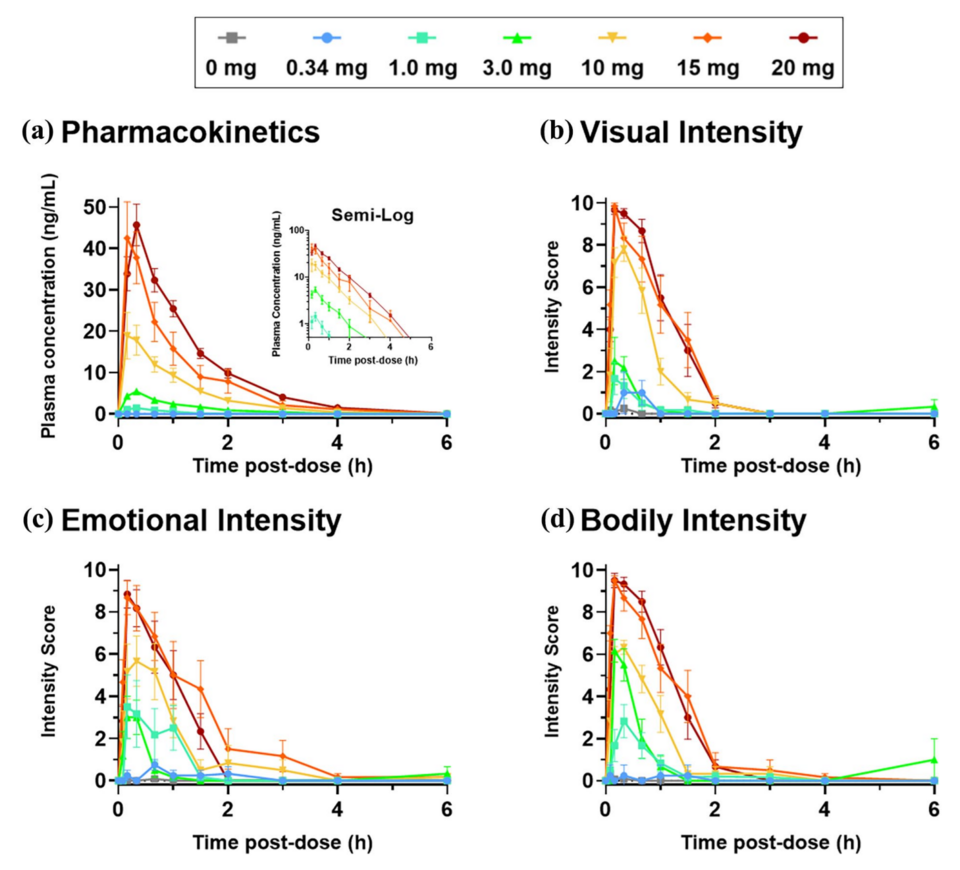
Pharmacokinetics and effects of bretisilocin at different doses by intravenous injection in humans. Photo: Marek GJ, Makai-Bölöni S, Umbricht D, Christian EP, Winters J, Dvorak D, Raines S, Hughes ZA, Austin EW, Klein AK, Leong W, Krol FJ, Graaf AJ, Juachon MJ, Otto ME, Borghans LG, Jacobs G, Kruegel AC, Sporn J / Wikimedia Commons. The defining pharmacological finding of the study is the ultra-rapid onset and short duration; a…. Source
The instrument Strassman built to capture these acute states, the Hallucinogen Rating Scale, was drafted from phenomenological interviews with 19 experienced DMT smokers and refined through approximately 25 non-blind low-dose (0.05 mg/kg) and high-dose (0.4 mg/kg) sessions. The original 126-item questionnaire was organized into six empirical clinical factors: Affect, Somaesthesia, Intensity, Perception, Cognition, and Volition, arranged in temporal stages (Beginning, Middle, Ending, Wrap-up). A 2024 multistudy reanalysis by Calder, Qualls, Hasler, Elmiger, and Strassman resolved the HRS into 8 factors with good-to-excellent internal consistency, using 991 questionnaires across 13 substances; the “Meaningfulness” factor uniquely differentiated classic psychedelics (psilocybin, DMT) from dissociatives, empathogens, stimulants, and THC. The HRS has since become the standard psychometric instrument for DMT research, validated across multiple studies and substances. [8]
The UNM data did not establish a pharmacological footing for the pineal hypothesis on its own. DMT is an endogenous compound naturally present in human tissues, though its biological purpose remains unclear, and over 60 studies have attempted to correlate endogenous DMT concentrations in blood or urine with psychiatric diagnoses without establishing any clear-cut or repeatable correlation. Whether endogenous DMT release occurs in sufficient concentrations or with sufficient selectivity to produce psychoactive effects remains an open question, directly noted by DMT researchers. The Strassman “Spirit Molecule” hypothesis—that the pineal gland produces and releases DMT at birth, death, and during near-death experiences—is acknowledged in the literature but characterized as “unproven and controversial,” with Strassman himself presenting it as speculative rather than demonstrated. The hypothesis acquired its popular reach through his 2001 book DMT: The Spirit Molecule, which traces the history of the UNM research project and frames endogenous DMT in relation to near-death, mystical, and shamanic experience. [9] [10]
What Strassman’s UNM studies did establish was a striking phenomenological map. Phenomenological analyses consistently document entity encounters as a major feature of the DMT experience: a Reddit-based analysis found entity encounters in 45.5% of 3,778 naturalistic inhaled-DMT reports, and a separate naturalistic field study found encounters with “beings” in 94% of 36 post-DMT interviews. Timmermann et al. (2018) demonstrated in a within-subjects placebo-controlled study of 13 participants that IV DMT significantly increased phenomenological features associated with near-death experiences compared with placebo, with significant overlap in nearly all NDE features when DMT-induced states were compared against a matched group of actual NDE experiencers. DMT produces its psychoactive effects primarily through serotonin 5-HT2A receptor agonism, with additional action at sigma-1 receptors and trace amine-associated receptors (TAARs). Strassman’s 1996 study documented a distinctive property: DMT uniquely does not induce tolerance to its psychological effects across four closely spaced doses, while biological measures (ACTH, prolactin, cortisol, heart rate) showed some tolerance—a feature distinguishing it from LSD, psilocybin, and mescaline. [9] [11] [12]
The skeptical pushback came organized. David Nichols, a Purdue medicinal chemist and longtime collaborator on Strassman’s regulatory work, argued in 2018 that the adult pineal gland weighs less than 0.2 grams and produces only about 30 micrograms of melatonin per day, and that the minute concentrations of DMT detected in brain tissue are insufficient to produce psychoactive effects. A 2026 study by Palner and colleagues at the University of Southern Denmark reported failure to detect endogenous DMT in the adult rat brain, even after inhibiting MAO-mediated breakdown—contradicting earlier detection claims. The field has settled into three live positions: a strong experiential view (Strassman) holding endogenous DMT plays a substantive role in altered states including NDEs; a strong skeptical view (Nichols) treating DMT as a low-abundance trace amine inadequate to support experiential claims; and a subtle-physiological view (Frecska, Szabo, Olson) holding endogenous DMT may matter through intracellular signaling at sub-psychedelic concentrations. The strongest version of the popular claim—that DMT explains birth, death, and NDEs—requires affirmative answers to detection, biosynthesis, functional role, and psychoactive sufficiency, and the evidence does not resolve all four. [13]
Endogenous DMT in the Mammalian Brain
In the early 1990s, Rick Strassman administered graded intravenous doses of DMT fumarate (0.04–0.4 mg/kg) to twelve experienced hallucinogen users at the University of New Mexico, characterizing the subjective effects — rapidly moving colored visual displays, dissociation, alternating euphoria and anxiety, full resolution by thirty minutes — and building the Hallucinogen Rating Scale to capture them. From those clinical sessions grew a hypothesis that would define the next thirty years of debate: that DMT is endogenously synthesized by the human pineal gland, with release at birth, during dreaming, and at the moment of death producing the visionary experiences Strassman later branded “Spirit Molecule”. The hypothesis rested on a structural resemblance between DMT and melatonin, on the presence of relevant synthetic enzymes in the pineal, and on speculation — not measurement. As Strassman himself would later admit to Jimo Borjigin, the claim that the pineal “makes and secretes DMT” was a hypothesis without prior supporting evidence, a starting point rather than a finding. [6]
The hypothesis triggered the search for the molecule. Endogenous DMT had first been detected in human blood and urine in 1965 by Franzen and Gross using early chromatographic methods, but live-tissue measurement in brain remained elusive. The breakthrough came in 2013, when Barker, Borjigin, Lomnicka, and Strassman reported the first detection of DMT in rat pineal gland microdialysate using an LC/MS/MS method that simultaneously analyzed twenty-three chemically diverse compounds including melatonin precursors and metabolites. 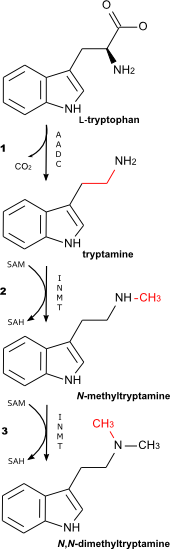 [14] [15]
DMT biosynthetic pathway. Photo: –Doctorcito (talk) / Wikimedia Commons. N,N-dimethyltryptamine biosynthetic pathway. Source Six years later, Dean et al. (2019, Scientific Reports) demonstrated that the transcripts for INMT and AADC — the two enzymes required for DMT biosynthesis from tryptophan — are colocalized in rat visual cortex, hippocampus, pineal gland, and choroid plexus, and that extracellular DMT concentrations in the rat cerebral cortex are comparable to those of canonical monoamine neurotransmitters including serotonin. Then came the finding that put the cardiac-arrest hypothesis on the map: DMT levels in the rat visual cortex rose significantly following experimental cardiac arrest, and did so whether or not the pineal gland was intact. Borjigin later described the discovery plainly: her team found neurons in the brain that make DMT at levels similar to other monoamine neurotransmitters.
The canonical INMT-catalyzed pathway came under direct assault in 2023. Glynos and colleagues generated an INMT-knockout rat using CRISPR/Cas9 and showed that brain and lung tissues of INMT−/− rats retain tryptamine-dependent methylation activity equal to wild-type — but the enzymatic products are neither N-methyltryptamine nor DMT, and recombinant rat INMT alone is insufficient to produce either. The implication is stark: if INMT is dispensable for endogenous tryptamine methylation, then whatever enzyme is doing the work in the mammalian brain has not yet been identified. The 2025 functional characterization of human INMT by Ardini et al. confirmed the enzyme’s instability and unusual pH/salt requirements, but did not resolve the missing-pathway question. A 2026 pharmacological study took the dissection further: pargyline (MAO-A inhibition), escitalopram (serotonin reuptake blockade), and dihydrotetrabenazine (VMAT2 inhibition) all failed to detect an endogenous DMT pool in rat brain, leading the authors to conclude the data do not support DMT acting as a serotonin co-transmitter. The finding that the DMT surge in Dean et al. was independent of the pineal gland, combined with the INMT-knockout result, leaves mammalian DMT biosynthesis in an unsettled state: detected, but enzymatically unaccounted for. [16] [3]
The skeptical case has sharpened in parallel. David Nichols (2018, Journal of Psychopharmacology) made the size-of-the-gland argument: the adult human pineal weighs less than 0.2 g and produces approximately 30 µg/day of melatonin as its principal secretion — a biosynthetic scale that constrains what else the gland could plausibly manufacture. Enzo Tagliazucchi added a quantitative floor: endogenous DMT concentrations are in the microgram range, below psychoactive levels by orders of magnitude, and the metabolic pathways cannot support the ~25 mg required for a full psychedelic state. Over sixty studies have attempted to correlate peripheral DMT levels with psychiatric diagnoses, and no clear-cut or repeatable correlation has emerged. Stephen Page’s 2026 critical review crystallizes the field into four sub-questions — detection, biosynthesis, functional role, and psychoactive sufficiency — and observes that almost all experimental evidence comes from rats while direct human evidence is limited to peripheral fluid detection and mRNA expression in archived autopsy material. [17]
The unresolved question is no longer whether DMT exists in the mammalian brain — it does, measurably, at concentrations comparable to serotonin in rat cortex — but whether it does anything there. Szabo, Frecska, and colleagues have argued for a sub-psychoactive role via sigma-1 receptor activation, demonstrating that DMT robustly increases survival of human iPSC-derived cortical neurons, macrophages, and dendritic cells under severe hypoxia (0.5% O₂) through Sig-1R-mediated suppression of HIF-1α. This positions endogenous DMT as a candidate neuroprotective signal at the point of death rather than a producer of visions. The Strassman “Spirit Molecule” narrative, Nichols’s skeptical quantitative challenge, and the Frecska/Szabo subtle-physiological view via sigma-1 remain the three live positions. The cardiac-arrest DMT surge in rats is real; the pineal hypothesis that motivated its discovery is, by Strassman’s own retrospective admission, unproven; and the enzyme that actually makes brain DMT in mammals has not been named. [18]
DMT, Near-Death Experiences, and Out-of-Body Phenomenology
On August 24, 2018, a team at Imperial College London published what became the most cited experimental study in this corner of the literature: Timmermann and colleagues administered intravenous DMT to 13 healthy volunteers in a within-subjects, placebo-controlled design and found significant increases in phenomenological features associated with near-death experiences on the Greyson NDE Scale, with all participants scoring above the NDE threshold. The overlap between DMT-induced phenomenology and a matched group of actual NDE experiencers was statistically significant across nearly every Greyson item — a striking result, since the Greyson Scale itself is a 16-item instrument scored 0–2 per item, with a cut-off of 7 defining an NDE for research purposes and a mean of 15 in criterion NDEr groups. The 2018 study was designed precisely to test whether DMT could serve as an “NDE-mimetic” — a pharmacological probe for the dying-brain state — and the answer, on the surface, was yes. But the Timmermann team also noted that the relationship was modulated by baseline trait “absorption” and delusional ideation, suggesting that personality factors shape how powerfully the DMT experience converges with NDE phenomenology. The result has now been cited over 600 times and frames the entire contemporary debate. [19] [20]
That convergence has a real-world echo. In a naturalistic field study published in 2021, Michael and colleagues observed 36 experienced DMT users inhaling 40–75 mg in non-clinical home settings; 94% of reports involved encounters with apparently autonomous “beings” — figures strikingly consistent with the experimental data on the same dose range. A larger Johns Hopkins survey of approximately 2,500 DMT users who reported an entity encounter found that the majority described the entity as “conscious, intelligent, benevolent, and sacred,” with 80% saying the experience fundamentally altered their perception of reality and 72% saying the entity continued to exist in “a different plane of reality” — and more than half of prior atheists in the sample reported new belief in a higher power after the experience. A 3,778-report Reddit analysis found entity encounters in 45.5% of cases, with the most common phenotypes being feminine (24.2%), deities (17.0%), and aliens (16.3%). DMT users describe environments with stable structure — alternate dimensions, rooms, tunnels — and entities that interact, communicate, and frequently behave as guides or teachers. The phenomenological stability of these reports across settings and methodologies is what makes them scientifically interesting rather than merely anecdotal. [21]
But here’s the part that doesn’t sit right. Michael, Luke, and Robinson’s 2025 comparative thematic analysis of 36 naturalistic DMT experiences against an equal number of NDE narratives found that 95% of DMT participants reported at least one canonical NDE theme — Translocation, Bright Light, Sense of Dying, The Void, Disembodiment, Tunnel-like Structures, Light Being-esque Entities, Deceased Family, Life Review-like experiences, and Hyper-empathic Experiences. The authors labeled DMT an “NDE-mimetic” — but the qualifier matters: five classical NDE features were entirely absent from the DMT reports, and DMT exhibited a broader, more prodigious array of stereotypical content than the NDE narratives did. The phenomenology overlaps at the level of the Greyson Scale, but diverges at finer-grained qualitative levels. A 2024 within-subjects comparison by Martial and colleagues reported similar findings — overlap in phenomenology, attribution of reality, psychological insights, and enduring effects, but with persistent differences that resist simple equivalence. The conservative reading: DMT and NDEs share a phenomenological skeleton but diverge on the flesh. The dissenting reading, articulated by philosopher Michael Potts, holds that the differences are substantial enough to undermine any causal inference from DMT to NDEs. [22]
The baseline against which all of this is measured is the prospective NDE literature, anchored by Pim van Lommel’s 2001 Lancet study of 344 consecutive cardiac arrest survivors across ten Dutch hospitals — 62 patients (18%) reported an NDE, of whom 41 (12%) described a core experience, with no correlation between NDE occurrence and duration of cardiac arrest, medication, fear of death, or general physiological factors. The matching phenomenological distribution has been documented in subsequent work: a 2018 large-scale semantic similarity comparison of 625 NDE narratives with over 15,000 psychoactive substance reports found that hallucinogens as a class produced experiences more similar to NDEs than stimulants, sedatives, or antipsychotics — with ketamine most similar, followed by Salvia divinorum, then serotonergic psychedelics including DMT. The Greyson NDE Scale remains the principal measurement instrument, though Martial and colleagues’ 2020 Near-Death Experience Content (NDE-C) scale — a 20-item instrument with a 5-factor structure and Cronbach α = 0.85 — was developed to address its known weaknesses. Out-of-body experiences, the third pillar of the comparative phenomenology, have been localized to the temporoparietal junction: Blanke and colleagues’ 2002 Nature paper demonstrated that electrical stimulation of the right TPJ in an epileptic patient induced the classic OBE sensation of floating near the ceiling and looking down at one’s own body. That result has been replicated by De Ridder and by lesion studies, and immersive VR experiments using visuomotor conflict have been shown to induce OBE-like states and reduce self-reported fear of death — paralleling the observation that naturally occurring OBEs are associated with enhanced belief in life after death. [23]
The mechanistic story is incomplete. Borjigin’s 2013 PNAS study in rats demonstrated a transient surge of synchronous, globally coherent gamma oscillations within the first 30 seconds after cardiac arrest, with high-frequency activity exceeding the conscious waking state — a finding extended to dying human patients in Xu and colleagues’ 2023 PNAS study, which documented a gamma surge in 2 of 4 comatose patients after withdrawal of ventilatory support, concentrated in the posterior cortical “hot zone”. Christof Koch’s 2023 PNAS commentary endorsed the dying brain as “not necessarily the quiet place, electrically speaking, that it was thought to be,” but raised the possibility that the gamma surges reflect epileptiform activity triggered by anoxia and may be contaminated by myogenic artifacts. A 2024 F1000Research critique by Nigel Shaw argued that the gamma-band activity model of NDEs lacks sufficient evidence to function as a neurobiological substrate, contending that the signal may arise subcortically (in the amygdala) and reach the cortex via volume conduction rather than reflecting genuine cortical processing. The parallel DMT neuroscience picture is also unsettled: DMT acts primarily as a 5-HT2A agonist with secondary activity at 5-HT1A, 5-HT2C, and sigma-1 receptors, and DMT alters cortical travelling waves in a direction consistent with the REBUS model of psychedelic action — decreasing top-down alpha and increasing bottom-up forward wave propagation. What remains unresolved is whether the phenomenological convergence between DMT and NDEs reflects a shared neurochemical substrate, a shared cortical dynamic, or simply convergent phenomenology generated by distinct mechanisms — and whether the dying brain’s gamma surge is signature, artifact, or something in between. [24]
The Eye of Horus, Ajna Chakra, and the Cross-Cultural Third Eye
The Eye of Horus — the wedjat or udjat, “the sound one” — enters the written record in the Pyramid Texts of the Old Kingdom, around 2400 BCE, where it appears as a supreme ritual symbol presented to the deceased king to secure his restoration, transfiguration, and ascent into the sky. The myth underwriting the symbol is mechanical and surgical: Set tears out Horus’s left eye during their contest for the throne, and Thoth the god of wisdom subsequently restores it to wholeness. In funerary practice this logic of restoration was operationalized. Udjat amulets were placed on mummified bodies, commonly over the embalming incision on the left abdomen; the eye was painted on coffins during the First Intermediate Period and Middle Kingdom; and in the Book of the Dead Spell 140 the deceased declares directly, “I am the Eye of Horus, the sound one” — merging human and divine identity to navigate the underworld. The symbol was also a mathematical instrument. Each anatomical part of the eye encoded a fractional heqat unit — right side 1/2, pupil 1/4, eyebrow 1/8, left side 1/16, curved tail 1/32, teardrop 1/64 — summing deliberately to 63/64, with Thoth’s magic supplying the missing fraction to close the series. Critically, the Eye of Horus (the lunar, restored left eye of Horus) was distinguished from the Eye of Ra (the solar, right-eye disk of violent retribution, associated with lioness/uraeus forms such as Sekhmet, Hathor, Bastet, and Tefnut); conflation is common in popular sources, but the distinction is fundamental to Egyptian theology. [25]
The Hindu counterpart developed along a different trajectory. The “third eye” appears in the iconography of deities — most prominently Shiva — where it symbolizes awakening, enlightenment, and the capacity to perceive realms beyond ordinary sight. In tantric and yogic systems this faculty is located at the Ajna chakra, whose Sanskrit name means “command,” “perceive,” or “guidance”. The canonical textual description comes from the Ṣaṭ-chakra-nirūpaṇa (“Explanation of the Six Chakras,” 1577 CE) by Pūrṇānanda Yati, which describes the Ajna as a two-petalled lotus inscribed in silver-white behind the eyebrow center, with the seed syllables “Ham” representing Shiva and “Ksham” representing Shakti, marking the union of opposites at the meeting point of the Ida, Pingala, and Sushumna nadis. The Ṣaṭ-chakra-nirūpaṇa system — codified in the 15th–16th century CE and elaborated across the Yoga Upanishads — does not invoke any anatomical structure called the pineal gland; that linkage is a later development. Buddhist and Taoist traditions register analogous but independent concepts — the “Eye of Wisdom” or “Divine Eye” in Buddhism, linked to the doctrine of emptiness, and the “upper dantian” between the eyebrows in Taoism, a focus of meditation and qi cultivation — none of which originally couple the metaphor to a glandular location. [26]
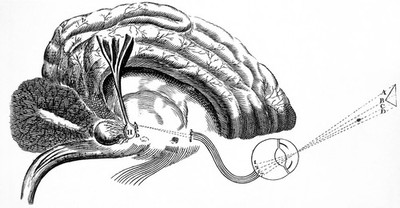
Long before the modern esoteric overlay, the pineal organ itself had accumulated a Western mystical reputation. Galen in the 2nd century CE named it kônarion (“small cone”), after the stone pine, and regarded it as a structural support for blood vessels with no functional role, explicitly rejecting contemporaries who believed it regulated “psychic pneuma”. René Descartes revived the claim in the 17th century, identifying the pineal as “the principal seat of the soul” and “the place in which all our thoughts are formed,” largely because it was the only solid unpaired structure in the brain. The claim was already contested in Descartes’s own time — Thomas Willis, Spinoza, Leibniz, and Kant each attacked it — and modern scholarship treats the identification as a “famous error” that nevertheless persisted in esoteric channels. Helena Blavatsky in 1888 explicitly augmented Descartes’s framework by importing Indian chakra references, calling the pineal the “Devākṣa” or “Third Eye” and “the chief and foremost organ of spirituality in the human brain,” citing the New Zealand tuatara’s parietal eye as evidence that the human pineal had once been a literal eye. Rudolf Steiner in 1922/1923 connected the pineal’s calcite deposits to cosmic energies. The modern Western seven-chakra system with its rainbow color scheme was assembled in this same period — beginning with H. P. Blavatsky in the 1880s, formalized in Charles W. Leadbeater’s 1927 monograph The Chakras, and shaped by Sir John Woodroffe’s 1919 translation The Serpent Power — and not from continuous classical Indian doctrine. Even within Theosophy the gland-chakra correspondence was unstable: Leadbeater attached the brow chakra to the pituitary, not the pineal, while Blavatsky and Alice Bailey placed the pineal at the crown. [26]

Descartes: The Nervous System. Diagram of the brain and the pineal gland. Photo: Europeana. This diagram is the single visual artifact that crystallizes Descartes’ identification of the pineal as…. Source
Rick Strassman, a psychiatry professor at the University of New Mexico, picked up this braided tradition in the early 1990s. He conducted the first federally approved U.S. clinical research program administering DMT (in injectable form) to human volunteers in more than 20 years. The 1994 dose-response study documented subjective effects peaking at 90–120 seconds and resolving by 30 minutes, with dose-dependent cardiovascular and neuroendocrine responses. Strassman conjectured — by his own acknowledgment to colleagues, including Jimo Borjigin, “just a hypothesis” — that the pineal gland produces and secretes endogenous DMT, possibly in surges at birth, death, or near-death. The empirical record that has accumulated since is genuinely mixed and has hardened into three live positions rather than a believer/skeptic binary. Dean et al. (2019) reported that the rat brain synthesizes and releases DMT at concentrations comparable to canonical monoamine neurotransmitters including serotonin, with INMT and AADC transcripts co-localized in the cerebral cortex, pineal gland, and choroid plexus; crucially, a significant rise in DMT occurred in the rat visual cortex following experimental cardiac arrest independent of an intact pineal gland. In 2013, Strassman and Borjigin had reported DMT in rat pineal gland microdialysate — a finding the authors later acknowledged their 2019 work failed to replicate in the same form, with the original DMT likely originating from adjacent cortical tissue sampled by the probe. David Nichols’s 2018 critical review argued the data do not support the popular scenario: the adult pineal weighs less than 0.2 g and produces only about 30 µg of melatonin per day, while detected brain DMT concentrations are not sufficient to produce psychoactive effects. Then a 2026 Palner and Cumming study in Neuropharmacology failed entirely to detect an endogenous DMT pool in rat brain even after pargyline (MAO-A inhibitor) pretreatment, finding scant evidence that administered DMT is retained in serotonin terminals — directly challenging the Strassman hypothesis at the level of measurable endogenous DMT. And Glynos et al. (2023), generating INMT-knockout rats via CRISPR/Cas9, demonstrated that indolethylamine-N-methyltransferase is not essential for endogenous tryptamine-dependent DMT production, suggesting an alternative, still-unidentified enzymatic pathway. [27]
The corporate linkage of the Eye of Horus to the pineal gland and the linkage of the Ajna chakra to the same gland are both modern Western projections, not attested in the primary ancient Egyptian or classical Sanskrit sources. A 2019 Cureus paper by Mayo Clinic neurosurgeons (ReFaey et al.) proposed that the six heqat fractions of the Eye of Horus, when superimposed on a mid-sagittal section of the human brain, appear to align with specific neuroanatomical features — olfactory trigone, auditory cortex (Brodmann areas 41/42), and adjacent structures. The authors themselves explicitly framed the exercise as “possible scientific speculation” about ancient Egyptian “insight,” not as an established anatomical finding, and acknowledged that they could locate no prior neuroanatomical analysis of the symbol. C.W. Leadbeater’s 1927 monograph described the brow chakra as connected specifically with the pituitary, not the pineal. The contemporary synthesis that fuses Eye of Horus, pine cone iconography, kundalini, and “spirit-molecule” DMT into a single continuous esoteric tradition circulates primarily through New Age blogs and commerce sites — Elizabeth Ellames, the Third Eye Pinecones store, YouTube tours of Giza — none of which has standing as Egyptological or peer-reviewed scholarship. The eye of Horus, the Ajna chakra, the Cartesian soul, and the pineal DMT hypothesis are four distinct objects of inquiry with separate evidentiary bases, and the evidence has settled into a clearly non-aligned configuration: the Egyptian and Hindu symbols carry rich original meanings in their own corpora; the pineal-soul identification is documented as a “famous error” that nevertheless propagated; and the strongest modern popular claim — that the pineal produces psychoactive DMT surges at birth, dreaming, or death — has, by Nichols’s reckoning and the 2026 Palner and Cumming failure, “no scientific basis”, with endogenous DMT nevertheless present at concentrations comparable to serotonin in the rat cortex and elevated in the dying rat visual cortex by a mechanism that does not actually require the pineal. The contemporary state is one of unresolved but narrowing claims rather than vindicated symbology. [28]
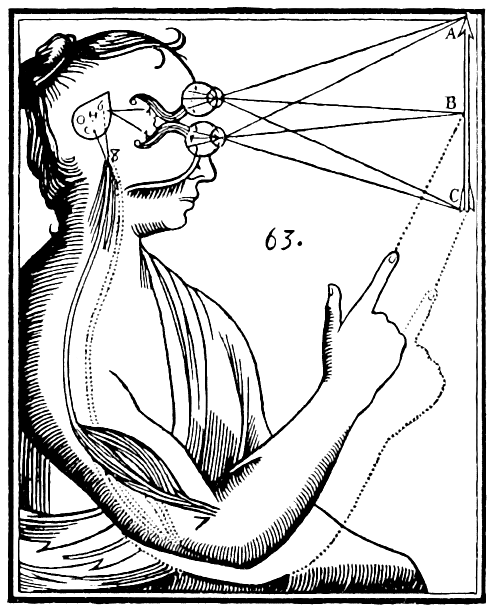
Descartes mind and body. Photo: René Descartes / Wikimedia Commons. Drawing from René Descartes’ (1596-1650) in “Treatise of Man” supposing the function of the pineal gland. Source
Connecting the Dots
Timmermann et al. (2018) administered intravenous DMT to 13 healthy volunteers and found significant increases in phenomenological features associated with near-death experiences as measured by the Greyson NDE Scale, with significant overlap between DMT-induced NDEs and a matched group of actual NDE experiencers. A 2025 thematic and content analysis (Michael, Luke, Robinson) comparing naturalistic DMT experiences with NDE narratives found that 95% of DMT participants reported at least one canonical NDE theme — translocation, bright light, sense of dying, void, disembodiment, tunnel-like structures, light-being-esque entities, deceased family, and life review-like experiences. The mundane explanation: DMT acts primarily as an agonist at the 5-HT2A serotonin receptor with additional sigma-1 activity, the same receptor mechanism as LSD and psilocybin, and Preller et al. demonstrated in a double-blind cross-over study that the selective antagonist ketanserin fully blocked both the subjective and neural effects of LSD. The pattern that does not fit: Dean et al. (2019) demonstrated that DMT levels in rat visual cortex rose significantly following experimental cardiac arrest, an effect independent of an intact pineal gland, and Borjigin et al. (2013) demonstrated coherent gamma oscillations exceeding waking-state levels within 30 seconds of rat cardiac arrest. The phenomenology of NDEs is reproduced by exogenous DMT and also appears in dying brains where the DMT surge is pineal-independent, and the same 5-HT2A-mediated mechanism offers a single explanatory layer across both. [19] [20]
Strassman proposed that the pineal gland produces DMT, which he termed the “spirit molecule,” and speculated that pineal DMT release may underlie near-death and mystical experiences. This framing connects to a popular claim that the Eye of Horus is an ancient Egyptian encoding of the pineal “third eye.” The Egyptological record: the Eye of Horus (Wedjat/Udjat) represented protection, healing, and restoration, derived from the myth in which Set tore out Horus’s eye during their contest for the throne and Thoth subsequently restored it. The Eye of Horus served specific funerary functions — udjat amulets were placed on mummified bodies, commonly over the embalming incision on the left abdomen; painted on coffins during the First Intermediate Period and Middle Kingdom; and used as offerings in the Pyramid Texts and Book of the Dead to ensure the deceased’s restoration and safe passage through the underworld. The Eye of Horus also functioned as a system of mathematical notation in which each part represents a fractional unit summing to 63/64, with Thoth supplying the missing fraction. It was conflated with but is distinct from the Eye of Ra: the Eye of Horus (usually left/udjat) represents lunar healing and restoration after being damaged, while the Eye of Ra (usually right, sun disk) represents solar power and violent retribution. No ancient Egyptian text identifies the Eye of Horus with a pineal or third-eye concept. Similarly, the modern Western identification of the Ajna chakra with the pineal gland was developed by Theosophists in the 1880s and shaped by Woodroffe’s 1919 translation “The Serpent Power,” based on Pūrṇānanda Yati’s 16th-century Ṣaṭ-chakra-nirūpaṇa — not by classical yogic texts. The pattern that does not fit: both the “ancient Egyptian third eye” and the modern Ajna-pineal identifications are modern Western syntheses, yet Strassman’s hypothesis is routinely illustrated by appeal to them. [29] [30]
The mundane explanation: the canonical biosynthetic pathway for endogenous DMT is tryptophan → tryptamine via AADC → DMT via INMT-mediated methylation. The pattern that does not fit: Glynos et al. (2023) generated an INMT-knockout rat using CRISPR/Cas9 and showed that brain and lung tissues of INMT−/− rats have tryptamine-dependent methylation activity equal to wild type, but the enzymatic products are neither N-methyltryptamine nor DMT, indicating that INMT is not essential for endogenous tryptamine-dependent methylation and suggesting an alternative enzymatic pathway for endogenous DMT biosynthesis in mammals. Dean et al. (2019) demonstrated that INMT and AADC transcripts are co-localized in rat and human cerebral cortex, pineal gland, and choroid plexus, and that extracellular DMT concentrations in rat visual cortex are comparable to those of canonical monoamine neurotransmitters including serotonin. Endogenous DMT has also been characterized as an endogenous sigma-1 receptor regulator. The combination — that the enzymatic machinery for DMT production appears not to have been selected for DMT production specifically, that DMT exists in the brain at monoaminergic concentrations, and that DMT binds sigma-1 receptors at sub-psychoactive levels — supports a framework in which endogenous DMT, if functional, modulates intracellular 5-HT2A and sigma-1 signaling at sub-psychoactive concentrations rather than producing psychedelic surges from the pineal at death. [16] [3]
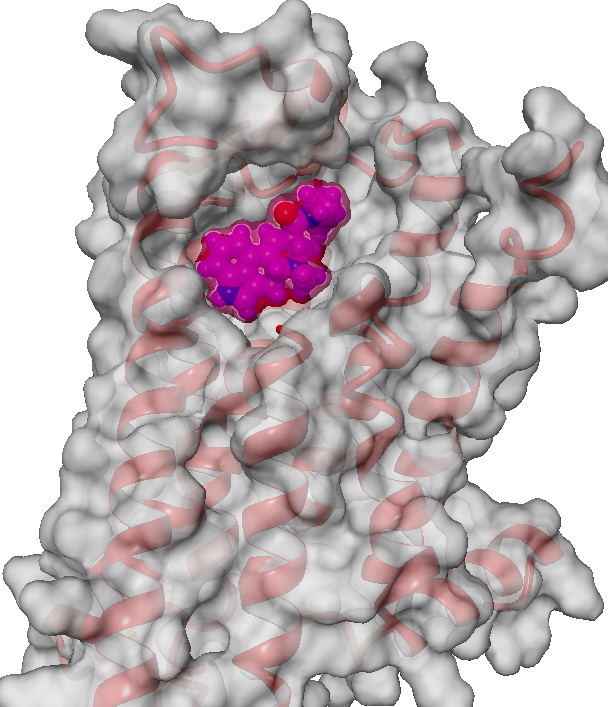
6wgt 5-HT2A-Rezeptorstruktur. Photo: C22H31NO2 / Wikimedia Commons. The paragraph’s reframing argument requires the reader to see that 5-HT2A is a canonical monoamine…. Source
Out-of-body experiences can be experimentally induced through manipulation of visual perspective in conjunction with correlated multisensory information from the body, and right TPJ electrical stimulation has been shown to induce classic OBE phenomena. The mundane explanation: OBEs are mechanistic consequences of multisensory integration disturbance, not requiring any endogenous hallucinogen release. The pattern that does not fit: Martial et al. (2025) proposed an integrated cascade model treating DMT release, gamma surge, hypercarbia, NMDA-receptor activation, and REM intrusion as potentially cooperating mechanisms for NDEs — multiple competing models no single one of which fully explains the phenomenology. In rock-art studies, the dominant alternative for cross-cultural geometric motifs — grids, parallel lines, dots, zigzags, catenary curves, filigrees — explains these recurrences as “form constants” arising as entoptic phenomena during altered states of consciousness, a model that has never been displaced by alternative explanations and which accounts for worldwide rock-art iconography without requiring the DMT/pineal hypothesis at all. The independent lines — 5-HT2A pharmacology, multisensory integration, entoptic form constants, and sub-psychoactive endogenous DMT signaling — point to a different picture: Strassman’s spirit-molecule framework captures a real phenomenological signature, but assigns it to the wrong anatomical source and the wrong scale of action. [31]
The Other Side
The strongest biochemical objections to the hypothesis that the pineal gland produces behaviorally active endogenous DMT converge on three independent lines of evidence. First, the assumption that indolethylamine N-methyltransferase (INMT) is the key methylating enzyme in the canonical pathway has been directly undercut: Glynos and colleagues (2023) used CRISPR/Cas9 to generate INMT-knockout rats and found that brain and lung tissues of the knockouts still showed tryptamine-dependent methylation activity equal to wild type, with the enzymatic products being neither N-methyltryptamine nor DMT. If INMT is not essential for endogenous DMT biosynthesis, the field’s textbook pathway is at minimum incomplete, and an alternative, still-unidentified enzymatic pathway is implied. Second, the empirical case for detectable endogenous DMT in the mammalian brain has been directly contradicted by Palner and colleagues (2026, Neuropharmacology), who failed to detect any endogenous DMT pool in adult rat brain even after blocking monoamine oxidase A with pargyline, and observed no retention of administered DMT within serotonin terminals via SERT or VMAT2 uptake, directly contradicting Dean et al. 2019 at the level of basal detection. Third, the pharmacological-impossibility argument developed by Nichols (2018) remains unaddressed: the adult human pineal weighs less than 0.2 g and produces only about 30 micrograms of melatonin per day, so achieving a psychoactive DMT dose of ~25 mg within minutes would require the pineal to produce roughly a thousand times its normal metabolic output in a brief window, a quantitative impossibility that proponents of the strong version of Strassman’s hypothesis have not engaged with. Strassman’s original 1990s clinical work and his popularization of the “spirit molecule” framing are now widely cited as the cultural origin of claims that run ahead of the supporting biochemistry. [32]
The phenomenological evidence linking DMT to NDEs is considerably weaker than it initially appears when subjected to systematic content analysis. Michael, Luke and Robinson (2025) compared 36 naturalistic DMT interviews with 34 NDE narratives and concluded that DMT is best characterized as an “NDE-mimetic”: five classical NDE features — life review, deceased relatives, the threshold of no return, the specific sense of dying, and the panorama — are entirely absent from DMT, while DMT exhibits features absent from NDEs, leading the authors to state that endogenous DMT may only play a small role in actual NDEs. The same direction of evidence comes from Martial et al. (2018), whose semantic-similarity analysis of 625 NDE narratives against more than 15,000 psychoactive-substance reports placed ketamine as most similar to NDEs, followed by Salvia divinorum, and only then by serotonergic psychedelics including DMT, suggesting that if an endogenous neurochemical substrate for NDEs exists, an NMDA antagonist matches the phenomenology better than DMT[33]. Alternative neurophysiological accounts of the dying brain — including the gamma-coherence surge and the broader neuroscientific NDE models treating NDEs as arising from anoxia/hypercarbia and temporoparietal disruption — require no endogenous DMT release at all.
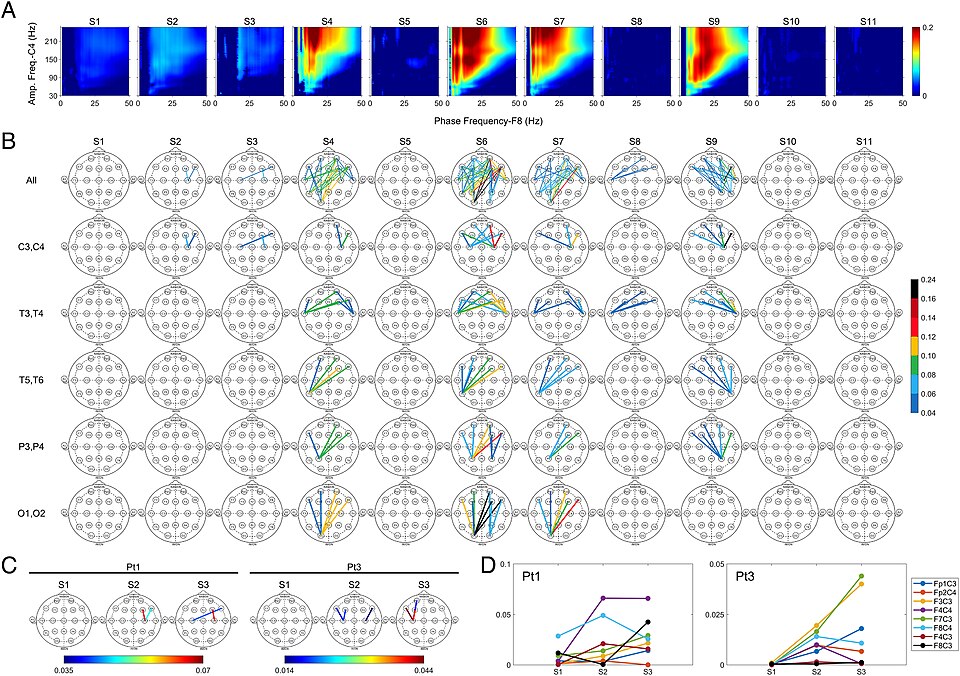
Increase of Cross-Regional Phase-Amplitude Coupling at Near-Death. Photo: Authors of the study: Gang Xu https://orcid.org/0000-0001-6233-0388, Temenuzhka Mihaylova https://orcid.org/0000-0002-9323-5823, Duan Li, Fangyun Tian, Peter M. Farrehi https://orcid.org/0000-0003-1576-7557, Jack M. Parent https://orcid.org/0000-0002-2972-1528, George A. Mashour, Michael M. Wang https://orcid.org/0000-0002-5670-2496, and Jimo Borjigin / Wikimedia Commons. The paragraph invokes the gamma-coherence surge as an alternative neurophysiological account requiring no endogenous DMT…. Source
On the ancient Egyptian side, the proposed Eye of Horus = pineal identification does not survive scrutiny against the actual textual and iconographic sources. Egyptological scholarship documents no Pyramid Text, Coffin Text, or Book of the Dead spell that identifies the wedjat with a pineal-like inner organ, the brow location, or a “third eye”. The wedjat is the Set-tore-out-Horus-eye myth plus a heqat fractional notation system (1/2 + 1/4 + 1/8 + 1/16 + 1/32 + 1/64 = 63/64), where the symbol denotes protection, healing, and restoration. Even the strongest pharmacology-side endorsement of the Eye = pineal identification, Nichols (2018), explicitly frames that reading as part of the “romantic history” rather than documented ancient attribution. The Mayo Clinic-affiliated ReFaey et al. (2019) brain-mapping paper proposes a mid-sagittal sensorium mapping (smell, sight, thought, hearing, taste, touch) rather than the specific Brodmann-area attributions sometimes retroactively attached to it, and does not endorse a pineal identification. The Lewis-Williams and Dowson 1988 neuropsychological model provides a separate naturalistic alternative for the worldwide recurrence of geometric motifs in rock art — interpreting them as entoptic form constants arising during altered states of consciousness produced by sleep deprivation, drumming, hyperventilation, or sensory deprivation rather than necessarily requiring psychedelic substances — and remains influential despite ongoing critique. [34]
The Hindu/Yogic side fares no better once the actual textual history is consulted, because the Ajna = pineal identification turns out to be an internally inconsistent Western-Theosophical synthesis rather than a received doctrine. Leadbeater’s 1927 Theosophical system specifically associated the Ajna chakra with the pituitary gland rather than the pineal gland, while Blavatsky and Bailey associated the pineal with the Sahasrara (crown chakra); the Lonerider yoga source notes that “there is no universal agreement in yoga where the Ajna is exactly located” and that “in some schools, they say the Ajna is the pineal gland” rather than treating the identification as established. The historical literature is explicit that the modern Western chakra system — including its pineal mappings — is a 19th- and early-20th-century Theosophical construction, not an inheritance from the classical Sanskrit Yoga or Tantric traditions it is now presented as descending from. The classical sources most often cited — the Ṣaṭ-chakra-nirūpaṇa, the Gheranda Samhita, the Hatha Yoga Pradipika, and the Yoga Sutras of Patanjali — do not contain an unambiguous anatomical-pineal identification of the Ajna, and the chakra system itself likely crystallized in the late tantric period rather than as an ancient Vedic inheritance. The “third eye” framing in modern Shaiva iconography (Shiva’s trinetra) is real but functions as a mythological symbol of wisdom and destruction rather than as a documented neuroanatomical reference. Taken together, the Egyptian and Hindu attributions are modern retrojections onto the same Western template, not independent corroborations of the hypothesis. [35]
What We Actually Know
The investigation built a substantial case. Strassman’s 1990–1995 University of New Mexico program administered approximately 400 doses of DMT to 60 human volunteers under federal sanction, producing the most rigorously characterized dose-response profile of IV DMT in existence: effects onset within seconds, peak at 90–120 seconds, resolution by 30 minutes, with threshold hallucinogenic effects at 0.2 and 0.4 mg/kg and dose-dependent elevations across cardiovascular, endocrine, and pupillometric measures. The program included psilocybin as well as DMT. Subsequent work has expanded the case in directions Strassman could not. Timmermann et al. (2018) at Imperial College London found that 20 mg IV DMT significantly increased NDE-phenomenology scores on the Greyson scale in 13 healthy participants compared to placebo, with NDE scores correlating with ego-dissolution, mystical-type experiences, baseline trait absorption, and delusional ideation. Michael, Luke and Robinson (2025) compared 36 semi-structured DMT interviews with 34 written NDE narratives and found 95% of DMT participants reported at least one canonical NDE theme, prompting the authors to coin the compound term “NDE-mimetic” for the relationship — while explicitly concluding endogenous DMT “may only play a small role” in actual NDEs. [36]

190603 Door name plate, Imperial Centre for Psychedelic Research. Photo: Thomas Angus, Imperial College London / Wikimedia Commons. The paragraph anchors the convergence of DMT phenomenology and NDE phenomenology in a specific 2018…. Source
The dying-brain evidence is now real, not speculative. Borjigin et al. (2023) recorded EEG in dying human brains and identified surges of gamma wave activity in the temporal-parieto-occipital junction of 2 of 4 comatose patients following withdrawal of ventilatory support, a region previously linked to dreaming, visual hallucinations in epilepsy, and altered states. This builds on the same group’s 2013 rat PNAS study documenting transient synchronous gamma oscillations within 30 seconds of cardiac arrest that exceeded waking-state levels. Paralleling this, Dean et al. (2019) measured endogenous DMT in living rat brain extracellular fluid at 0.05–2.2 nM — comparable to but lower than canonical monoamine neurotransmitter concentrations — with both baseline levels and post-cardiac-arrest surge independent of an intact pineal gland. Out-of-body experiences can be experimentally induced via temporoparietal junction disturbance: Blanke et al. (2002) electrically stimulated right TPJ in an epileptic patient, De Ridder et al. (2007) confirmed via electrode stimulation, Ehrsson and Blanke (2007) lab-induced OBEs via camera goggles, and Smith et al. (2014) showed voluntary extra-corporeal experience activates regions overlapping the TPJ[37]. Bourdin et al. (2017) used VR with visuomotor synchrony to show the disconnected-from-body group exhibited reduced fear of death compared to controls. Entity encounters during DMT use are now robustly documented across independent methods: 45.5% of 3,778 r/DMT experiences in Lawrence et al. (2022), 94% of 36 interviews in Michael et al. (2021), and a majority of ~2,500 respondents in Davis et al. (2020) describing a “conscious, intelligent, benevolent, and sacred entity,” with 80% reporting fundamental alteration of their perception of reality and 72% saying the entity continues to exist in “a different plane of reality”.
The cross-cultural symbolism evidence is real but narrower than popular treatments suggest. Hindu trinetra (three-eyed) iconography is independently attested: the Ardhanarishvara (Shiva-Parvati composite) form appears from the Kushan period beginning in the first century CE, and Sanskrit “trinetra” and “Triambaka” are morphologically transparent compound epithets. The Shvetashvatara Upanishad (~5th century BCE) provides early textual descriptions of Rudra-Shiva later associated with third-eye symbolism. Buddhist and Hindu tantric traditions both contain chakra systems with varying counts — medieval Buddhist texts from the 8th century CE mention four or five chakras. In Taoism, the Third Eye is associated with the “upper dantian” between the eyebrows and cultivated through the “microcosmic orbit” practice. In Buddhism, the Third Eye is termed the “Eye of Wisdom” or “Divine Eye,” associated with the doctrine of emptiness and developed through meditation. Lewis-Williams and Dowson (1988) developed the neuropsychological model explaining the worldwide recurrence of geometric rock-art motifs as six universal “form constants” arising as entoptic phenomena during altered states. The NDE-C scale (Martial et al. 2020) — a 20-item scale with 5-factor structure, Cronbach α = 0.85, and concurrent validity above 0.76 — represents methodological maturation of NDE measurement [38]. David Gordon White’s analysis found the Yoga Sutras of Patanjali were historically marginal in Indian manuscript traditions — a mere 260 Yoga Sutra manuscripts among ~20,000 catalogued, with virtually no one copying the Yoga Sutra after the late 16th century until Colebrooke found it.
The speculative tier is where the case thins. The canonical DMT biosynthetic pathway (tryptophan → tryptamine via AADC → DMT via INMT) is now in question after Glynos et al. (2023) demonstrated via three converging methods (radiometric, TLC, uHPLC-MS/MS) that INMT-knockout rat tissues retain tryptamine-dependent methylation activity, but the products are neither N-methyltryptamine nor DMT, and recombinant rat INMT alone is not sufficient for NMT or DMT biosynthesis[39]. INMT tissue distribution shows highest expression in thyroid, adrenal gland, and lung — not pineal[2]. Rat extracellular concentrations are orders of magnitude below psychoactive threshold, and over 60 studies have found no peripheral-DMT/psychiatric correlation. The Egyptian links are weaker than popular accounts imply: a Mayo Clinic mapping of Eye of Horus heqat fractions to the six human senses is presented by its authors as “possible scientific speculation,” not as substantive neuroanatomical finding; a claimed Staff of Osiris (~1224 BC) depicting serpent-and-pinecone derives from a single commercial vendor, and standard Osiris iconography uses crook and flail, djed-pillar, and atef-crown; proposed Vedic-Egyptian linguistic cognates (Asar/Asura, Sekhmet/Shakti, Punt/Pani, Imhotep/Purohit, Amun-Ra/Indra) lack systematic phonological reconstruction and are classified as folk etymology rather than comparative linguistics. Davis et al. (2020) findings on ontological belief change derive from a self-selected online survey of DMT users who specifically chose to report entity encounters, not a probability sample. Strassman’s Vice-interview assertion that pineal DMT release into a fetus “roughly seven weeks after conception marks the entrance of the spirit” is the most specific and falsifiable prediction in the hypothesis — and no source in the research addresses whether it has been empirically tested. Martial et al. (2018) semantic-similarity comparison of 625 NDE narratives against 15,000+ psychoactive-substance reports found ketamine highest in similarity to NDEs, followed by Salvia divinorum, then serotonergic psychedelics including DMT — supporting speculation about endogenous NMDA antagonists rather than DMT. Moretti et al. (2023) reports that Ayahuasca-induced Personal Death experiences occur in more than half of ceremony participants and are associated with certainty in continuation of consciousness after death [40].
The investigation’s strongest open question is the one the rat-human gap creates: whether endogenous DMT concentrations ever reach psychoactive levels in the human brain during birth, death, cardiac arrest, or NDEs remains undetermined, because current data are from rats. Almost all experimental evidence for endogenous DMT comes from rats; direct human evidence is limited to peripheral fluid detection and mRNA expression in archived autopsy material. Page (2026) frames the contemporary debate as three live positions — Strassman’s strong experiential view, Nichols’ strong skeptical view, and Frecska and Szabo’s subtle-physiological view — rather than a believer/skeptic binary. Hidalgo and Bouso (2022) conclude data are consistent with DMT acting as a neurotransmitter, neuromodulator, hormone, and immunomodulator, fitting the subtle-physiological framing[1]. Borjigin-style gamma surges and Dean-style DMT surges have not been correlated in a single experiment. The hypothesis has accumulated solid phenomenological overlap, plausible cross-cultural parallels, and a real dying-brain neuroscience — but the central causal claim, that the pineal gland releases enough DMT at the moment of death to generate the phenomenology of near-death experience, remains unmeasured in humans.
References
[1] Significance of mammalian N, N-dimethyltryptamine (DMT) — https://www.ovid.com/journals/jpsyc/pdf/10.1177/02698811221104054~significance-of-mammalian-n-n-dimethyltryptamine-dmt-a (accessed 2026-07-27)
[2] Indolethylamine N-methyltransferase — https://www.abcam.com/en-us/targets/indolethylamine-n-methyltransferase/15961 (accessed 2026-07-27)
[3] Nicolas G. Glynos, Lily Carter, Soo Jung Lee, Youngsoo Kim, Robert T. Kennedy, George A. Mashour, Michael M. Wang, and Jimo Borjigin (2023). Indolethylamine N-methyltransferase (INMT) is not essential for endogenous tryptamine-dependent methylation activity in rats. Scientific Reports. DOI: 10.1038/s41598-023-27538-y (accessed 2026-07-27) [Academic]
[4] Psychedelic Therapies and Research | School of Medicine — https://hsc.unm.edu/medicine/departments/family-community/research/psychedelic_studies/ (accessed 2026-07-27) [Academic]
[5] UNM Health Sciences Researchers to Test Psychedelic Drugs as … — https://hscnews.unm.edu/news/hsc-newsroom-post-psychedelics (accessed 2026-07-27) [Academic]
[6] Dose-response study of N,N-dimethyltryptamine in humans … — https://pubmed.ncbi.nlm.nih.gov/8297217/ (accessed 2026-07-27) [Academic]
[7] Jon G. Dean, Tiecheng Liu, Sean Huff, Ben Sheler, Steven A. Barker, Rick J. Strassman, Michael M. Wang, and Jimo Borjigin (2019). Biosynthesis and Extracellular Concentrations of N,N-dimethyltryptamine (DMT) in Mammalian Brain. Scientific Reports. DOI: 10.1038/s41598-019-45812-w (accessed 2026-07-27) [Academic]
[8] The Hallucinogen Rating Scale: Updated Factor Structure … — https://sonar.ch/documents/330977/files/1-s2.0-s2667174324001496-main.pdf (accessed 2026-07-27)
[9] Phenomenology and content of the inhaled N, N … — https://www.nature.com/articles/s41598-022-11999-8 (accessed 2026-07-27) [Academic]
[10] N, N-Dimethyltryptamine (DMT), an Endogenous Hallucinogen — https://www.frontiersin.org/journals/neuroscience/articles/10.3389/fnins.2018.00536/full (accessed 2026-07-27) [Academic]
[11] David W. Lawrence, Robin Carhart‐Harris, Roland R. Griffiths, and Christopher Timmermann (2022). Phenomenology and content of the inhaled N, N-dimethyltryptamine (N, N-DMT) experience. Scientific Reports. DOI: 10.1038/s41598-022-11999-8 (accessed 2026-07-27) [Academic]
[12] Pascal Michael, David Luke, and Oliver Robinson (2021). An Encounter With the Other: A Thematic and Content Analysis of DMT Experiences From a Naturalistic Field Study. Frontiers in Psychology. DOI: 10.3389/fpsyg.2021.720717 (accessed 2026-07-27) [Academic]
[13] Why N,N-dimethyltryptamine matters: unique features and … — https://www.frontiersin.org/journals/psychiatry/articles/10.3389/fpsyt.2024.1485337/full (accessed 2026-07-27) [Academic]
[14] Steven A. Barker, Jimo Borjigin, Izabela Lomnicka, and Rick J. Strassman (2013). LC/MS/MS analysis of the endogenous dimethyltryptamine hallucinogens, their precursors, and major metabolites in rat pineal gland microdialysate. Biomedical Chromatography. DOI: 10.1002/bmc.2981 (accessed 2026-07-27) [Academic]
[15] Brain hallucinogens: Tryptamines found in pineal gland — https://analyticalscience.wiley.com/content/article-do/brain-hallucinogens-tryptamines-found-pineal-gland (accessed 2026-07-27) [Academic]
[16] Indolethylamine N-methyltransferase (INMT) is not … — https://www.nature.com/articles/s41598-023-27538-y (accessed 2026-07-27) [Academic]
[17] Endogenous DMT in Humans: A Critical Review of the State … — https://www.ardmt.com/endogenous-dmt-critical-review/ (accessed 2026-07-27)
[18] The Endogenous Hallucinogen and Trace Amine N … — https://www.frontiersin.org/journals/neuroscience/articles/10.3389/fnins.2016.00423/full (accessed 2026-07-27) [Academic]
[19] DMT Models the Near-Death Experience — https://www.semanticscholar.org/paper/DMT-Models-the-Near-Death-Experience-Timmermann-Roseman/f5665eb24f180b276740b6c15cf4274d5c2735dc (accessed 2026-07-27) [Academic]
[20] DMT Models the Near-Death Experience — https://www.frontiersin.org/journals/psychology/articles/10.3389/fpsyg.2018.01424/pdf (accessed 2026-07-27) [Academic]
[21] A spiritual experience - JHU Hub - Johns Hopkins University — https://hub.jhu.edu/magazine/2020/fall/psychedelics-god-atheism/ (accessed 2026-07-27) [Academic]
[22] An encounter with death: a comparative thematic and content … — https://www.frontiersin.org/journals/psychology/articles/10.3389/fpsyg.2025.1532937/full (accessed 2026-07-27) [Academic]
[23] Comparing Near-Death and Psychedelic Experiences — https://psychedelic.support/resources/comparing-near-death-psychedelic-experiences/ (accessed 2026-07-27)
[24] DMT alters cortical travelling waves — https://elifesciences.org/articles/59784 (accessed 2026-07-27)
[25] Eye of Horus (Udjat): Symbol, Myth, and Mathematics — https://mythologis.com/mythologies/africa-middle-east/egyptian/symbols/eye-of-horus (accessed 2026-07-27)
[26] The Pineal Gland & The Eye of Horus I OBN — https://ophthalmologybreakingnews.com/ophthalmologynews-the-pineal-gland-the-eye-of-horus (accessed 2026-07-27)
[27] Meetings With the Ancient Teachers of Mankind | Graham Hancock | Megalithomania 2006 (Audio) [36:22-38:16] — MegalithomaniaUK (YouTube) — https://youtu.be/6uNVfcOFaPM?t=2182 (accessed 2026-07-27)
[28] The Eye of Horus: The Connection Between Art, Medicine, and … - PMC — https://pmc.ncbi.nlm.nih.gov/articles/PMC6649877/ (accessed 2026-07-27) [Academic]
[29] eye of Horus | Fashion History Timeline — https://fashionhistory.fitnyc.edu/eye-of-horus-3/ (accessed 2026-07-27) [Academic]
[30] The Udjat Eye in Daily Life Marlaina Miller — https://preview.memphis.edu/wmst/student_projects/hist_4057/pdfs/miller.pdf (accessed 2026-07-27) [Academic]
[31] H. Henrik Ehrsson (2007). The Experimental Induction of Out-of-Body Experiences. Science. DOI: 10.1126/science.1142175 (accessed 2026-07-27) [Academic]
[32] Inmt-KO Mouse: C57BL/6JCya-Inmtem1/Cya Strain — https://www.cyagen.com/mouseatlas/S-KO-16504 (accessed 2026-07-27)
[33] ORBi: Neurochemical models of near-death experiences — https://orbi.uliege.be/handle/2268/231971 (accessed 2026-07-27)
[34] The Squatter Man Petroglyph and Auroral Sky Mythology — The Other Side (AncientNerds Research) — https://ancientnerds.com/theo/public/the-squatter-man-petroglyph-and-auroral-sky-mythology (accessed 2026-07-27)
[35] The Western chakra system from theosophy to contemporary fringe … — https://www.academia.edu/79444860/The_chakras_beyond_yoga_The_Western_chakra_system_from_theosophy_to_contemporary_fringe_New_Age_thinking (accessed 2026-07-27) [Academic]
[36] DMT Models the Near-Death Experience - OPEN Foundation — https://open-foundation.org/dmt-models-the-near-death-experience/ (accessed 2026-07-28)
[37] Andra Smith and Claude Messier (2014). Voluntary Out-of-Body Experience: An fMRI Study. Frontiers in Human Neuroscience. DOI: 10.3389/fnhum.2014.00070 (accessed 2026-07-27) [Academic]
[38] The Near-Death Experience Content (NDE-C) scale — https://pubmed.ncbi.nlm.nih.gov/33227590/ (accessed 2026-07-27) [Academic]
[39] Indolethylamine N-methyltransferase (INMT) is not essential for … - PubMed — https://pubmed.ncbi.nlm.nih.gov/36609666/ (accessed 2026-07-27) [Academic]
[40] Jonathan David, José Carlos Bouso, Maja Kohek, Genís Oña, Nir Tadmor, Tal I. Arnon, Yair Dor‐Ziderman, and Aviva Berkovich‐Ohana (2023). Ayahuasca-induced personal death experiences: prevalence, characteristics, and impact on attitudes toward death, life, and the environment. Frontiers in Psychiatry. DOI: 10.3389/fpsyt.2023.1287961 (accessed 2026-07-27) [Academic]
Keep exploring
Every site on this page sits on the globe, and the people who research them are on the Discord.
3D Globe · Sites by country · Story Archive · Research Library · Weekly Journal · Search