 ANCIENT NERDS
Panspermia and Directed Panspermia in Scientific and Cultural Context
This paper argues that Crick and Orgel's 1973 directed panspermia hypothesis, built on molybdenum's terrestrial scarcity and the universality of the genetic code, was founded on two "weak facts" already rebutted by 1974 and had been prefigured in Olaf Stapledon's 1930 novel and J.B.S. Haldane's 1954 essay decades before the scientific version. It concludes that panspermia remains fringe science because it sidesteps abiogenesis itself and resists experimental test, though extremophile space-survival data and 105 confirmed Martian meteorites support only the narrower "pseudo-panspermia" view that prebiotic molecules were delivered to early Earth. The Dresser Formation benchmark at roughly 3.48 billion years constrains when life appeared without demonstrating complete biological transfer through the ejection-exposure-entry-colonization cycle.
In July 1973, Francis Crick and Leslie Orgel published a paper in Icarus (vol. 19, pp. 341-346) arguing that Earth’s first living cell had not originated on this planet. Their proposal, formally titled “Directed Panspermia,” had first been floated two years earlier at a Soviet-Armenian conference on extraterrestrial intelligence organized by Carl Sagan, and it rested on two pieces of reasoning: the puzzling scarcity of molybdenum in Earth’s crust — roughly 0.02 percent — and the strange universality of the genetic code, which the two scientists read as evidence that all life on Earth descended from a single clone dispatched from elsewhere. [1]
Findings
Francis Crick and Leslie Orgel published “Directed Panspermia” in Icarus in July 1973, proposing that life on Earth was deliberately transmitted by an extraterrestrial civilization. The paper rested on two specific biochemical anomalies: molybdenum’s biological essentiality despite its scarcity on Earth (~0.02% of crustal composition, compared with chromium at ~0.2% and nickel at 3.16%), and the universality of the genetic code across all terrestrial organisms. Crick and Orgel themselves characterized their evidence as “two weak facts” rather than strong arguments. The proposal had conceptual precedent: Olaf Stapledon’s 1930 science fiction novel Last and First Men depicted an eighteenth “Men” species on Neptune deliberately disseminating “seeds of a new humanity” across interstellar distances 43 years before the scientific paper. J.B.S. Haldane’s 1954 essay “The Origin of Life” conjectured that life came from seeds “launched into space by intelligent beings”. The scientific community’s response was swift: within a year, biologists at the University of Colorado (Chappell, Meglen, and Runnells) published a direct rebuttal in Icarus arguing that molybdenum is “relatively abundant in sea water” and that Crick and Orgel had used misleading whole-Earth averages. Carl Sagan labeled directed panspermia “untenable as a fundamental concept,” citing the improbability of intelligent life in the early universe. [2]
Leslie Orgel abandoned the hypothesis; Crick continued to advocate for it through the 1980s. [3]
The panspermia framework found more durable support outside the Crick-Orgel lineage through Fred Hoyle and Chandra Wickramasinghe, who from the 1970s onward developed a separate “cometary biology” program. They argued from interstellar-dust spectroscopy that complex organics and possibly primitive organisms form on cosmic dust grains and are delivered to Earth by comets. This tradition has continued to argue that complex organics and possibly primitive organisms formed on interstellar or cometary dust grains and were delivered to Earth. Critics have noted that panspermia in its strong form “pushes the question backward” rather than answering it, since the abiogenesis problem merely relocates to the donor system. The Hoyle-Wickramasinghe programme has been formally critiqued in the peer-reviewed literature as a “modern day reincarnation” of methodologically inadequate theories, and their disease-from-space claims, including attributions of the 1918 flu and mad cow disease to cometary dust, have been rejected by the scientific community. [4]
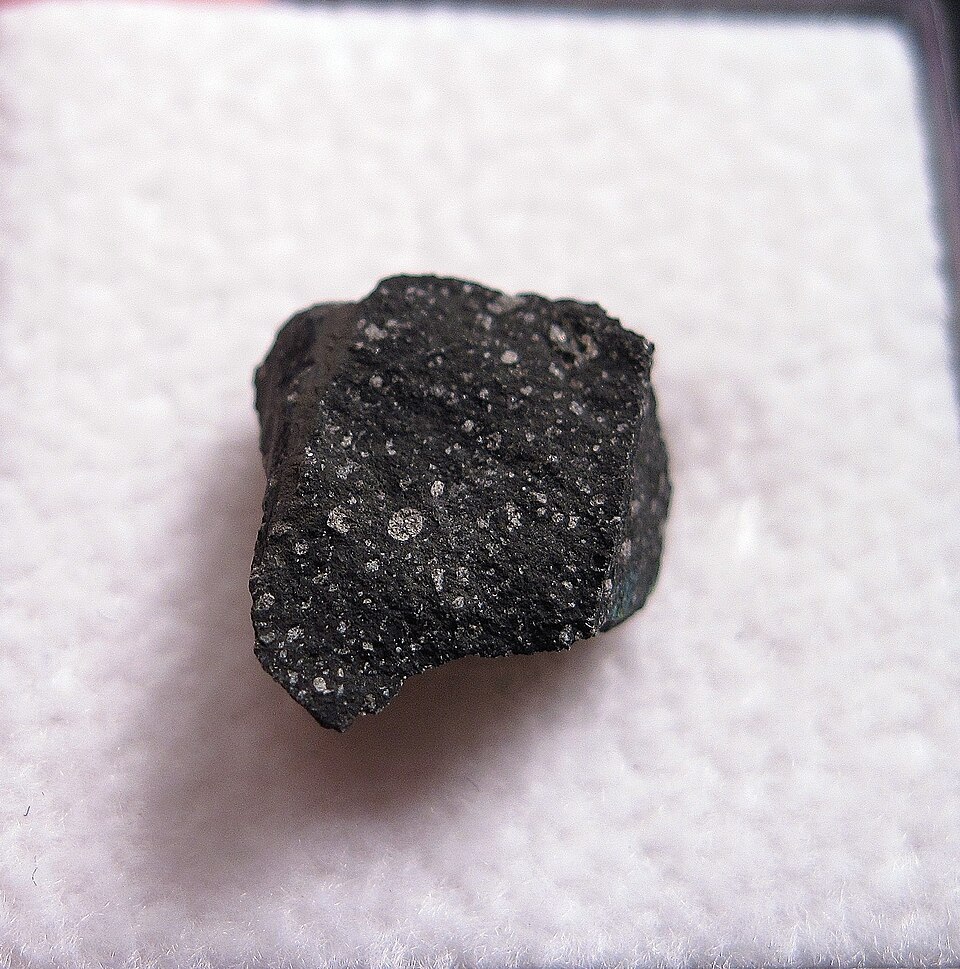
Illustration: Murchison meteorite 0.459g. Photo: Jon Taylor / Wikimedia Commons. Source
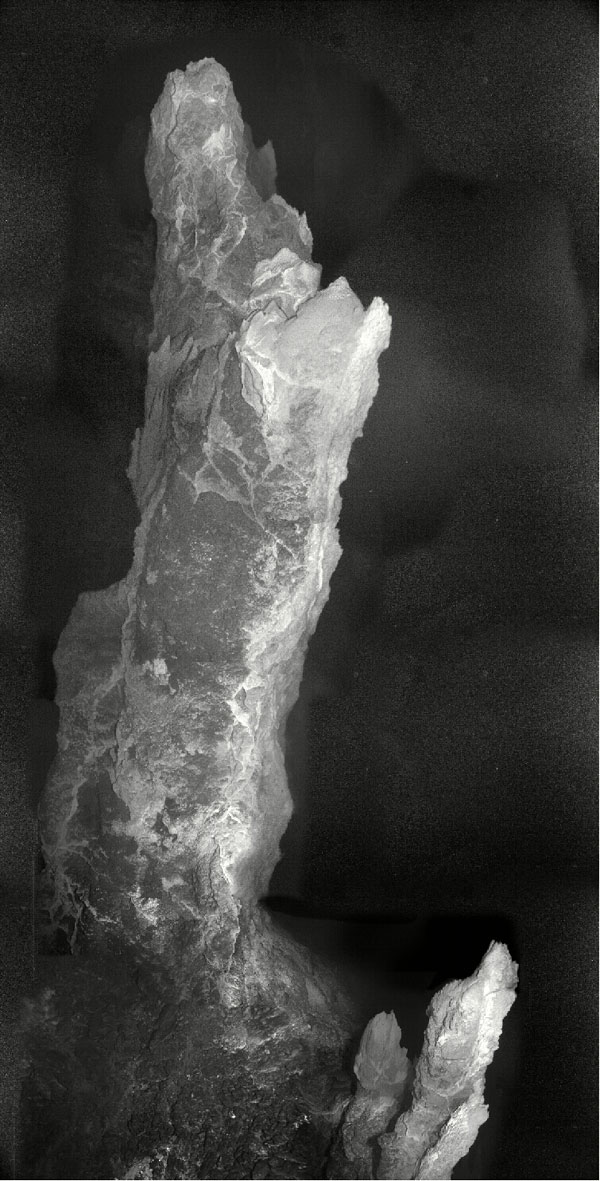
Illustration: Lost City (hydrothermal field)00. Photo: National Science Foundation (University of Washington/Woods Hole Oceanographic Institution) / Wikimedia Commons. Source
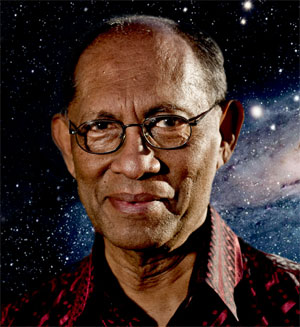
Illustration: Chandra-Wickramasinghe. Photo: Davidnoy / Wikimedia Commons. Photo of Professor Chandra Wickramasinghe at the University of Buckingham. Source

Wickramasinghe. Photo: Chandra Wickramasinghe / Wikimedia Commons. Photo of Chandra Wickramasinghe. Source
The experimental foundation for lithopanspermia rests on a series of increasingly ambitious space-exposure missions. Horneck et al. (2008) subjected Bacillus subtilis spores, Chroococcidiopsis cells, and the lichen Xanthoria elegans to shock pressures of 5–50 GPa in Mars-analog rock, establishing a “vital launch window” for of impact ejection: spores and lichens survived 5–40 GPa, cyanobacteria only 5–10 GPa. The Japanese Tanpopo mission aboard the ISS Kibo module tested microbial survival directly in low Earth orbit: dried cell pellets of Deinococcus radiodurans at 500 μm thickness remained viable after 3 years of continuous exposure, and 1 mm-diameter pellets are extrapolated to survive 2–8 years. The Tanpopo investigators formalized this as “massapanspermia” — microbial cell aggregates, not rock-embedded spores, acting as the interplanetary transfer vehicle. Tanpopo molecular analysis identified the uvrA and uvdE gene products as responsible for nucleotide-excision repair of UV-induced DNA damage accumulated during space exposure. [5]

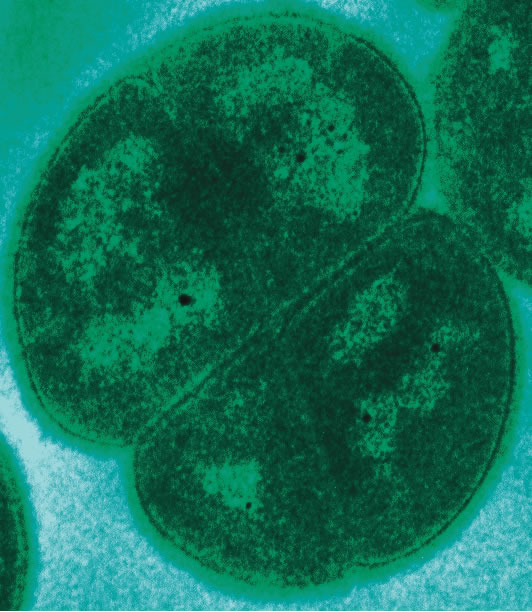
Illustration: Deinococcus radiodurans. Photo: Credit: TEM of D. radiodurans acquired in the laboratory of Michael Daly, Uniformed Services University, Bethesda, MD, USA. http://www.usuhs.mil/pat/deinococcus/index 20.htm / Wikimedia Commons. Transmission electron microgragh (TEM) of Deinococcus radiodurans. Source
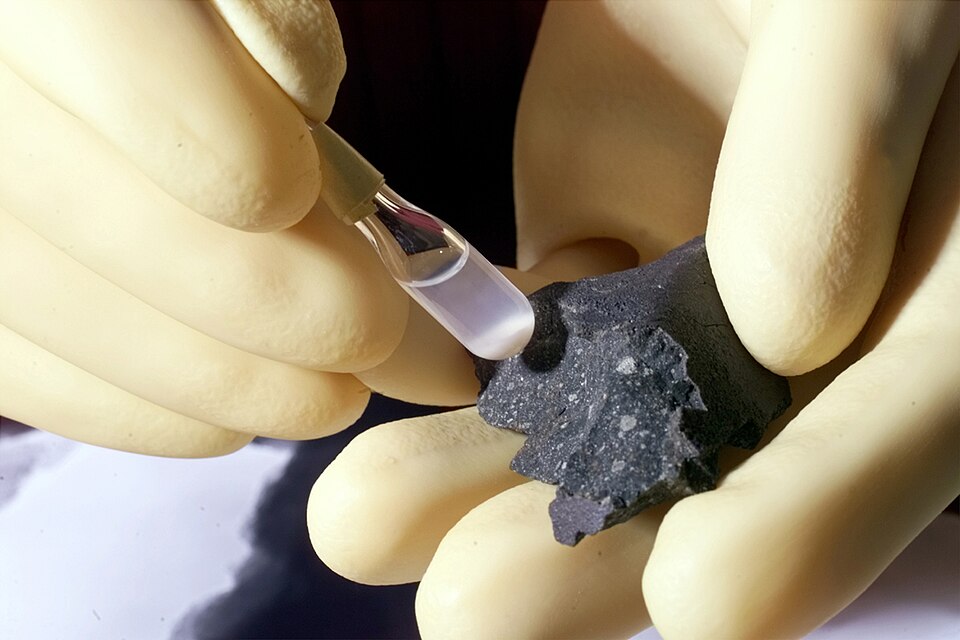
Murchison-meteorite-ANL. Photo: United States Department of Energy; uploaded en wikipedia by en:User:Carl Henderson. / Wikimedia Commons. Fragment of the Murchison meteorite (at right) and isolated individual particles (shown in the test tube). Source
The ESA BIOMEX and BOSS experiments on EXPOSE-R2 found that dried Chroococcidiopsis biofilms showed greater survival than planktonic counterparts after 16 months of LEO and Mars-simulated conditions. The critical bottleneck, however, is atmospheric re-entry: in ESA’s Lithopanspermia tests, lichens that survived 10 days of full outer space exposure were killed when their granite substrate transformed into “glassy, nearly homogenous material” during simulated re-entry, and no lichen cells survived. Tardigrades survived 10 days of space vacuum on the Foton-M3 TARDIS mission in 2007, though solar UV proved the limiting factor — only three Milnesium tardigradum specimens survived combined vacuum-plus-UV exposure. [6] [7]
The 1996 McKay et al. claim of relic biogenic activity in Martian meteorite ALH84001 became the focal point for panspermia-adjacent claims about Mars-to-Earth transfer. The original paper reported four lines of evidence: carbonate globules, polycyclic aromatic hydrocarbons, single-domain magnetite and iron sulfides, and putative nanofossils. Thomas-Keprta et al. (2002) argued that approximately 25% of ~600 extracted magnetite crystals displayed a “truncated hexa-octahedral” morphology identical to magnetosomes produced by terrestrial magnetotactic bacterium strain MV-1, which “no known inorganic process” reproduces. But the biogenic interpretation has been substantially challenged: Golden et al. demonstrated that thermal decomposition of Fe-rich carbonate at 470°C produces magnetite crystals of the same morphology, while Barber and Scott showed that ALH84001 magnetite crystals are crystallographically aligned (epitaxial) with their host carbonate, consistent with in-situ inorganic formation rather than bacterial precipitation. [8]
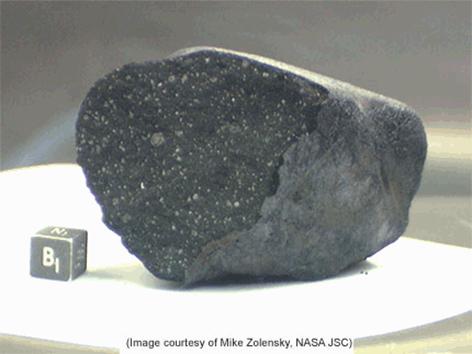
Tagish Lake meteorite. Photo: Mike Zolensky, NASA JSC / Wikimedia Commons. Tagish Lake meteorite. Source
The chemical inventory of extraterrestrial bodies now provides the empirical backbone for the “soft panspermia” variant — delivery of prebiotic organic molecules rather than intact organisms. The Murchison CM2 carbonaceous chondrite, which fell in Australia in September 1969, contained 92 different amino acids of which only 19 are also found in terrestrial biology, with non-protein amino acids showing L-enantiomeric excesses attributable to aqueous alteration on the parent body. NASA’s OSIRIS-REx returned samples from asteroid Bennu containing 14 of the 20 amino acids used by terrestrial biology, all five canonical DNA/RNA nucleobases, ammonia at “exceptionally high” abundances, formaldehyde, ribose, and glucose. Notably, amino acids in Bennu samples are racemic or nearly so, providing no evidence for the chiral bias that characterizes terrestrial biology. [9]
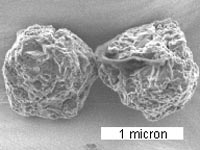
Murchison-meteorite-stardust. Photo: Wikimedia Commons. Source
ESA’s Rosetta mission detected glycine and phosphorus in the coma of comet 67P/Churyumov-Gerasimenko, confirming cometary delivery of prebiotic ingredients. Quantitative dynamical modeling has now constrained the panspermia question: Worth, Sigurdsson & House (2013) estimated ~3×10⁸ viable rock fragments ejected from Earth and ~6×10⁸ from Mars over 3.5 Gyr, while a 2026 quantitative analysis concluded that for Earth specifically, “early Mars is the only quantitatively serious external hard-panspermia donor” and that extrasolar or intergalactic hard panspermia “is not competitive” with indigenous terrestrial origin once capture, shielding, and transit survival are jointly imposed. The ALH84001 transfer itself remains physically credible — magnetic data indicate it traveled from Mars to Earth without exceeding 40°C, a temperature too low to sterilize most bacteria. The empirical record thus supports two distinct categories: well-established chemical delivery from carbonaceous bodies, and physically plausible but quantitatively constrained lithopanspermia within the inner Solar System. Directed panspermia remains a logical extension neither confirmed nor refuted by the evidence — which is precisely the position Crick and Orgel occupied in 1973. [10]
Connecting the Dots
Panspermia is characterised in the academic literature as a fringe hypothesis that does not address how life originates, only how it might be distributed, and is explicitly distinguished from “pseudo-panspermia,” the well-supported scientific claim that prebiotic organic molecules in space were delivered to planetary surfaces. The Murchison meteorite contains a wide diversity of extraterrestrial amino acids, including non-protein amino acids such as isovaline, α-aminoisobutyric acid, β-alanine, and pipecolic acid, with isotopic signatures confirming their non-terrestrial origin. Both purine and pyrimidine nucleobases have been detected in carbonaceous meteorites, indicating that all five informational building blocks of nucleic acids are present in extraterrestrial materials. The Rosetta mission detected glycine and phosphorus directly in the coma of comet 67P/Churyumov-Gerasimenko [11][12][13]. Samples returned from asteroid 162173 Ryugu by Hayabusa2 contain a rich array of soluble organic molecules (~20,000 distinct molecular compositions including CHNOS species), with amino acids present as racemic mixtures indicative of abiotic synthesis. This empirical record supports the delivery of life’s chemical ingredients to early Earth, but explicitly does not require living organisms to have made the journey - and that asymmetry is what keeps pseudo-panspermia inside the scientific mainstream while full panspermia remains outside it.
Francis Crick and Leslie Orgel published “Directed Panspermia” in Icarus in 1973, founding the directed-panspermia hypothesis with two principal scientific arguments: the universality of the genetic code, and the anomalously high biological dependence on molybdenum (at ~0.02% Earth abundance) relative to its scarcity. Within one year, biologists at the University of Colorado (Chappell, Meglen & Runnells, Icarus 21, 1974) directly rebutted the molybdenum argument, noting that molybdenum is “relatively abundant in sea water” and that Crick and Orgel used whole-Earth averages that were misleading. Carl Sagan characterised directed panspermia as “untenable as a fundamental concept”. After 1973, Crick continued to advocate for the theory while Orgel eventually abandoned it. [3] [14]
The panspermia hypothesis that life on Earth originated from an external source in space is being tested through space-exposure experiments, and the cargo Crick and Orgel specified has been empirically vindicated in ways they could not have anticipated. Tardigrades have been experimentally shown to survive the vacuum of space and combined exposure to space vacuum plus solar UV in low Earth orbit[15]. Deinococcus radiodurans displays extraordinary ionizing-radiation resistance (5,000 Gy with virtually no viability loss; 37% survival at 15,000 Gy), making it a leading model organism for testing the interplanetary transfer of microbes. The Tanpopo mission aboard the ISS Exposed Facility is explicitly designed to test the panspermia hypothesis through both microbial survival experiments and capture of microparticles using ultralow-density silica aerogel. The lithopanspermia hypothesis - that microbes could survive interplanetary transfer inside rocks - is being actively tested using external ISS exposure facilities[16]. The specific 1973 scientific arguments were rebutted within a year; the biological-plausibility case for the specified cargo has only thickened since.
The timing argument panspermia theorists invoke is real but contested, and the pattern that does not fit this empirical picture is the cultural one. The earliest widely accepted evidence for life on Earth comes from stromatolites in the 3.48 Ga Dresser Formation, Pilbara Craton, Western Australia, dated by U-Pb zircon geochronology. Earlier putative biosignatures have been reported from the Isua supracrustal belt (3.7–3.8 Ga graphite) and from metasedimentary rocks in Labrador (≥3.95 Ga graphite), but these claims remain contested. Biogenic graphite has been claimed in a 4.1 Ga Jack Hills zircon, pushing the proposed origin of life close to the formation of the oceans, though the scientific community treats this as plausible but unproven. Panspermia is referenced in popular-science discussion as a mechanism for transporting life between planetary bodies, but the cited source explicitly notes that “panspermia… doesn’t create life” - it presupposes a living organism capable of surviving transfer. The 400 Myr window between the Late Heavy Bombardment and the Dresser stromatolites is cited as panspermia evidence, yet the same inventory of extraterrestrial amino acids, all five nucleobases, and soluble organics in Murchison, Ryugu, and comet 67P reframes this timeline as evidence for pseudo-panspermia - the delivery of ingredients, not organisms. Alkaline hydrothermal vent theory provides a “proof of principle” geochemical origin path that does not require extraterrestrial seeding. [17]
Olaf Stapledon articulated the core concept of directed panspermia in his 1930 science fiction novel Last and First Men, depicting a doomed civilisation deliberately disseminating “seeds of a new humanity” to other worlds via solar-radiation propulsion. That was 43 years before Crick and Orgel, and the cultural template of “beings mistaken for gods who created humanity” - which Raëlism and von Däniken’s ancient-astronaut hypothesis would later draw on - long predates the 1973 scientific formulation. Crick himself, identified as a Nobel Prize winner, proposed directed panspermia as the theory that life on Earth was seeded by bacteria deliberately sent by a distant civilization. Some proponents invoke directed panspermia to explain the rapid diversification of the Cambrian explosion, framing it as a “deliberate act of creation” rather than an undirected phenomenon. The scientific hypothesis entered the literature in 1973 carrying a cultural template it had not generated, and a half-century of empirical work has strengthened the case for delivery of chemical ingredients, weakened the case for Crick and Orgel’s specific arguments, and left the deliberate-seeding narrative structurally unchanged - because that narrative was never relying on the science to carry it. [18]
The Other Side
The mainstream origin-of-life research community treats abiogenesis on Earth as a tractable problem well within the explanatory reach of chemistry and geology, and treats panspermia as at best a secondary, not a primary, contributor to life here. The iron–sulfur world hypothesis, the RNA world, and alkaline hydrothermal vent models such as those developed for the Lost City field each describe coherent, testable pathways from prebiotic chemistry to self-replicating systems without invoking extraterrestrial delivery. Work on the acetyl-CoA pathway suggests a metabolism-first route, while laboratory simulations of vent conditions have demonstrated peptide formation, membraneless droplet assembly, and protocell growth under plausible early-Earth conditions. These research programs, not panspermia, define the active scientific frontier of the field, and reviews of the origin-of-life problem consistently treat it as an open but chemically addressable question rather than a settled cosmic import. [19] [20]
A series of once-cited pieces of “earliest life” evidence that panspermia advocates lean on have been re-examined and reinterpreted as non-biological. The 3.46 Ga Apex Chert microfossils that J. William Schopf described as biogenic were reassessed by Wacey, Noffke and colleagues and attributed to phyllosilicate and carbonate mineral artefacts produced during hydrothermal alteration. The Akilia quartz-pyroxene rocks once claimed to host Earth’s oldest life have been re-dated and re-interpreted as metasomatic in origin with no preserved biogenic signature[21]. The 1996 claim of biogenic features in the Martian meteorite ALH84001 has likewise been challenged by subsequent work offering non-biological explanations for the observed structures, eliminating the requirement for biology [22][23][24]. Even the 4.1 Ga Jack Hills zircon graphite, sometimes invoked to argue that life emerged almost as soon as the oceans condensed, is described in its source paper as “potentially” biogenic rather than confirmed [25][26].
The Cambrian “explosion,” often cited as the signature event that panspermia proponents attribute to cosmic intervention, has well-developed terrestrial explanations. Rising atmospheric oxygen, the evolution of predation, ecological feedback, and the prior assembly of developmental gene repertoires in the Ediacaran all contribute to the documented acceleration in morphological disparity, and trilobite evolutionary rates constrain the radiation to a geologically extended interval rather than a sudden external injection[27]. These are not residual mysteries awaiting an extraterrestrial answer; they are active research programs with empirical traction that do not require cosmic inputs.
What We Actually Know
The investigation found genuine substance in the scientific case for panspermia — though not where proponents often claim it. Carbonaceous chondrites like the Murchison meteorite contain extraterrestrial amino acids and all five DNA/RNA nucleobases at concentrations distinct from surrounding soils, with isotopic signatures confirming non-terrestrial origin. Samples returned from asteroid 162173 Ryugu by Hayabusa2 yielded approximately 20,000 distinct prebiotic molecular compositions and 15 amino acids present as racemic mixtures consistent with abiotic origin. Tardigrades have survived space vacuum combined with solar UV at doses over 1000× Earth’s surface levels, with survivors reproducing normally afterward [15]. Deinococcus radiodurans shows 37% viability at 15,000 Gy of ionizing radiation. And of over 53,000 meteorites found on Earth, 105 are confirmed Martian — empirical proof that natural interplanetary rock transfer occurs, with dynamical models estimating roughly 6×10^8 survivable fragments ejected from Mars alone over the last 3.5 Gyr. These findings establish that life’s building blocks travel through space and that some Earth organisms can survive the journey’s conditions.
The well-documented record shows where the hypothesis stands. Francis Crick and Leslie Orgel formally founded directed panspermia in their July 1973 Icarus paper, first presented at Carl Sagan’s 1971 Byurakan CETI conference. The hypothesis has a literary prehistory reaching back decades earlier — Olaf Stapledon’s 1930 novel “Last and First Men” depicted a doomed civilization on Neptune deliberately disseminating “seeds of a new humanity” via solar radiation. Crick and Orgel’s two principal scientific arguments were the anomalous terrestrial scarcity of molybdenum (~0.02% crustal abundance) and the universality of the genetic code as evidence for a single extraterrestrial clone. The molybdenum argument was directly rebutted in 1974 by Chappell, Meglen, and Runnells, who showed it is “relatively abundant in sea water” and that Crick and Orgel had used misleading whole-Earth averages. Panspermia remains classified as fringe within mainstream science, criticized for not addressing how life arises — only how it might be distributed — and for resisting experimental test. It is explicitly distinguished from “pseudo-panspermia,” the well-supported view that prebiotic organic molecules formed in space and were delivered to planetary surfaces. The Dresser Formation in the Pilbara Craton anchors the early-life record at ca. 3.48 Ga, dated via U-Pb zircon geochronology at 3481.0 ± 3.6 Ma (2σ) and supported by stromatolitic laminates and pyrite-hosted carbonaceous matter. [28] [29]
The plausible-but-uncertain tier contains the cultural and chronological bridges. Popular discourse explicitly links directed panspermia to seeding and engineered-creation narratives, framing it as a scientific reframing of ancient ideas. Fred Hoyle and Chandra Wickramasinghe have argued since the 1970s that genetic programs for major evolutionary transitions are of cosmic origin — a position still contested. Carl Sagan himself rejected directed panspermia as “untenable as a fundamental concept,” citing the improbability of life existing in the early universe and constraining radiopanspermia donor stars to spectral types G5 to A0. The chronology permits roughly 1.06 billion years between Earth’s formation (~4.54 Ga) and the 3.48 Ga Dresser benchmark, but this is a broad interval rather than a measured abiogenesis duration; the Late Heavy Bombardment (~3.9 Ga) tightens the plausible habitable window to ~400–500 Myr. Lithopanspermia has limited physical plausibility from rock survival data, but no evidence demonstrates viable biological transfer through the complete ejection-exposure-entry-colonization cycle. The early-life record constrains when life was present but does not measure how long abiogenesis took — and no single geochemical setting has been shown to drive all stages of the transition. [30] [31]
The speculative tier holds claims the evidence cannot yet support. The extremophile and space-exposure data are consistent with full panspermia but do not demonstrate it. The narrow window between Earth’s formation and life’s appearance is sometimes cited as evidence for panspermia, though the timing could equally reflect rapid terrestrial abiogenesis. A 4.1 Ga Jack Hills zircon reportedly contains biogenic graphite, pushing life’s origin close to ocean formation — a finding that remains under dispute. The Apex Chert microfossils originally claimed at 3.46 Ga by Schopf have been reinterpreted by Wacey et al. (2016) as phyllosilicate-carbonate mineral artefacts produced during hydrothermal alteration. Hoyle-Wickramasinghe’s broader claim of continuous delivery of bacteria, viruses, eukaryotic cells, and fertilized ova as drivers of terrestrial evolution is not supported by the supplied evidence. Tardigrades are reported to have acquired approximately 17% of their genes via horizontal gene transfer from foreign organisms. [32] [33] [34]
References
[1] Crick, F. H. C., & Orgel, L. E. (1973). Directed Panspermia. … — https://doi.org/10.1016/0019-103 (accessed 2026-09-11) [Academic]
[2] Directed panspermia - ADS - Astrophysics Data System — http://ui.adsabs.harvard.edu/abs/1973Icar...19..341C/abstract (accessed 2026-09-11) [Academic]
[3] The Origins of Directed Panspermia — https://www.scientificamerican.com/blog/guest-blog/the-origins-of-directed-panspermia/ (accessed 2026-09-11) [Reputable]
[4] PANSPERMIA: UNLIKELY, UNSUPPORTED, BUT JUST … — https://www.sciencedirect.com/science/article/pii/0094576588901361/pdf?md5=e35b1d692000aaf255a696e2249351ad&pid=1-s2.0-0094576588901361-main.pdf (accessed 2026-09-11) [Academic]
[5] DNA Damage and Survival Time Course of Deinococcal Cell … — https://pmc.ncbi.nlm.nih.gov/articles/PMC7479814/ (accessed 2026-09-11) [Academic]
[6] Rosa de la Torre, Leopoldo G. Sancho, G. Horneck, Asunción de los Rı́os, Jacek Wierzchoś, Karen Olsson‐Francis, Charles S. Cockell, Petra Rettberg, Thomas Berger, Jean‐Pierre de Vera, S. Ott, Jesús Martínez‐Frías, Pablo González‐Melendi, M. Mercedes Lucas, Manuel Reina, Ana Pintado, and René Demets (2010). Survival of lichens and bacteria exposed to outer space conditions – Results of the Lithopanspermia experiments. Icarus. DOI: 10.1016/j.icarus.2010.03.010 (accessed 2026-09-11)
[7] (PDF) Testing the Lithopanspermia Theory in the Foton-M3 … — https://www.researchgate.net/publication/235927435_Testing_the_Lithopanspermia_Theory_in_the_Foton-M3_Mission_Simulation_of_Interplanetary_Transfer_and_Re-entry_Process_of_Epi-_and_Endolithic_Microbial_Communities_with_the_Lithopanspermia_Experiment (accessed 2026-09-11)
[8] Truncated hexa-octahedral magnetite crystals in ALH84001: Presumptive biosignatures — https://core.ac.uk/download/216168816.pdf (accessed 2026-09-11) [Academic]
[9] D. P. Glavin, Jason P. Dworkin, C. M. O’d. Alexander, José C. Aponte, Allison A. Baczynski, Jessica Barnes, H. A. Bechtel, E. L. Berger, Aaron S. Burton, P. Caselli, Angela H. Chung, S. J. Clemett, George D. Cody, G. Domínguez, Jamie E. Elsila, K. Farnsworth, Dionysis I. Foustoukos, Katherine H. Freeman, Yoshihiro Furukawa, Z. Gainsforth, Heather V. Graham, Tommaso Grassi, B. M. Giuliano, V. E. Hamilton, Pierre Haenecour, P. R. Heck, Amy E. Hofmann, Christopher H. House, Yongsong Huang, H. H. Kaplan, L. P. Keller, Bumsoo Kim, Toshiki Koga, Michael A. Liss, Hannah L. McLain, Matthew A. Marcus, Mila Matney, T. J. McCoy, Ophélie McIntosh, Angel Mojarro, Hiroshi Naraoka, A. N. Nguyen, Michel Nuevo, Joseph A. Nuth, Yasuhiro Oba, Eric T. Parker, T. Peretyazhko, Scott A. Sandford, Ewerton Santos, Philippe Schmitt‐Kopplin, Frédéric Séguin, Danielle N. Simkus, Anique Shahid, Yoshinori Takano, K. L. Thomas-Keprta, Havishk Tripathi, Gabriella M. Weiss, Ya‐Jun Zheng, N. G. Lunning, K. Righter, H. C. Connolly, and D. S. Lauretta (2025). Abundant ammonia and nitrogen-rich soluble organic matter in samples from asteroid (101955) Bennu. Nature Astronomy. DOI: 10.1038/s41550-024-02472-9 (accessed 2026-09-11) [Academic]
[10] Natural Lithopanspermia to Earth: Transport, Shielding, and Survival Limits for Solar-System and Extrasolar Donor Classes — https://arxiv.org/pdf/2604.03916 (accessed 2026-09-11) [Academic]
[11] Prebiotic chemicals—amino acid and phosphorus—in … - PMC — https://pmc.ncbi.nlm.nih.gov/articles/PMC4928965/ (accessed 2026-09-11) [Academic]
[12] Rosetta’s comet contains ingredients for life — https://www.esa.int/Science_Exploration/Space_Science/Rosetta/Rosetta_s_comet_contains_ingredients_for_life (accessed 2026-09-11)
[13] Rosetta’s Comet Contains Ingredients For The Origin of Life — https://astrobiology.com/2016/05/27/rosettas-comet-contains-ingredients-for-the-origin-of-life/ (accessed 2026-09-11)
[14] Last and First Men: The Origins of Directed Panspermia … — https://retrospectjournal.com/2024/03/17/last-and-first-men-the-origins-of-directed-panspermia-and-its-implications-on-the-present/ (accessed 2026-09-11)
[15] ‘Water Bears’ Able To Survive Exposure To Vacuum Of Space — https://www.sciencedaily.com/releases/2008/09/080908135906.htm (accessed 2026-09-11)
[16] EXPOSE — https://en.wikipedia.org/wiki/EXPOSE (accessed 2026-09-11) [Reputable]
[17] The Roundtable Chronicles - Ep. 12 [126:03-128:03] — Institute for Natural Philosophy (YouTube) — https://youtu.be/G9R55XFjz2c?t=7563 (accessed 2026-09-11)
[18] The Shaman and The Philosopher. Ep.27 [30:51-33:06] — Institute for Natural Philosophy (YouTube) — https://youtu.be/yFTbl65GNL8?t=1851 (accessed 2026-09-11)
[19] B. J. Weimann, R. Lohrmann, L. E. Orgel, H. Schneider-Bernloehr, and J. E. Sulston (1968). Template-Directed Synthesis with Adenosine-5′-phosphorimidazolide. Science. DOI: 10.1126/science.161.3839.387 (accessed 2026-09-11) [Academic]
[20] R. Lohrmann, P. K. Bridson, and L. E. Orgel (1980). Efficient Metal-Ion Catalyzed Template-Directed Oligonucleotide Synthesis. Science. DOI: 10.1126/science.6247762 (accessed 2026-09-11) [Academic]
[21] Metasomatic origin of quartz-pyroxene rock, Akilia, … — https://pubmed.ncbi.nlm.nih.gov/12029129/ (accessed 2026-09-11) [Academic]
[22] Origin of supposedly biogenic magnetite in the Martian … — https://www.pnas.org/doi/10.1073/pnas.102045799 (accessed 2026-09-11) [Academic]
[23] Formation of “Chemically Pure” Magnetite from Mg-Fe-Carbonates Implications for the Exclusively Inorganic Origin of Magnetite and Sulfides in Martian Meteorite ALH84001 — https://core.ac.uk/download/10544233.pdf (accessed 2026-09-11) [Academic]
[24] Experimental Shock Decomposition of Siderite and the Origin of Magnetite in Martian Meteorite ALH84001 — https://core.ac.uk/download/10536761.pdf (accessed 2026-09-11) [Academic]
[25] Elizabeth A. Bell, Patrick Boehnke, T. Mark Harrison, and Wendy L. Mao (2015). Potentially biogenic carbon preserved in a 4.1 billion-year-old zircon. Proceedings of the National Academy of Sciences. DOI: 10.1073/pnas.1517557112 (accessed 2026-09-11) [Academic]
[26] Potentially biogenic carbon preserved in a 4.1 billion-year- … — https://www.semanticscholar.org/paper/Potentially-biogenic-carbon-preserved-in-a-4.1-Bell-Boehnke/4127284283d6adb055ca2bf4c485f7af4f7633d0 (accessed 2026-09-11) [Academic]
[27] John R. Paterson, Gregory D. Edgecombe, and Michael S. Y. Lee (2019). Trilobite evolutionary rates constrain the duration of the Cambrian explosion. Proceedings of the National Academy of Sciences. DOI: 10.1073/pnas.1819366116 (accessed 2026-09-11) [Academic]
[28] Panspermia — https://en.wikipedia.org/wiki/Panspermia (accessed 2026-09-11) [Reputable]
[29] panspermia — https://www.daviddarling.info/encyclopedia/P/panspermia.html (accessed 2026-09-11)
[30] Norio Kitadai and Shigenori Maruyama (2017). Origins of building blocks of life: A review. Geoscience Frontiers. DOI: 10.1016/j.gsf.2017.07.007 (accessed 2026-09-11) [Academic]
[31] Nora Noffke, Daniel Christian, David Wacey, and Robert M. Hazen (2013). Microbially Induced Sedimentary Structures Recording an Ancient Ecosystem in the ca. 3.48 Billion-Year-Old Dresser Formation, Pilbara, Western Australia. Astrobiology. DOI: 10.1089/ast.2013.1030 (accessed 2026-09-11) [Academic]
[32] Earliest known life forms — https://en.wikipedia.org/wiki/Earliest_known_life_forms (accessed 2026-09-11) [Reputable]
[33] If These Researchers Are Right, Life On Earth Started Earlier … — https://cen.acs.org/articles/93/i48/Researchers-Right-Life-Earth-Started.html (accessed 2026-09-11)
[34] Early trace of life from 3.95 Ga sedimentary… : Nature — https://www.ovid.com/00006056-201709280-00038 (accessed 2026-09-11)
Keep exploring
Every site on this page sits on the globe, and the people who research them are on the Discord.
3D Globe · Sites by country · Story Archive · Research Library · Weekly Journal · Search